Category: Travels
Markets in Everything: Replacement Drivers
The NYTimes reports on Korean replacement drivers – they drive drunks home in the drunk’s own car.
Their work has become such an essential part of life in Seoul and other
major cities of South Korea that the national statistical office last
year began monitoring the price of replacement driver services as an
element in calculating the benchmark consumer price index. An estimated
100,000 replacement drivers handle 700,000 customers a day across the
country, the number increasing by 30 percent on Fridays, according to
the Korea Service Driver Society, a lobby for replacement drivers.
This seems like a great idea and it’s obviously a huge success in Korea. Why not in the United States?
Denver bleg
In July I will have one day in Denver, what should I do? Mentions of superb spicy food are not to be ruled out.
China journal entry of the day
There is no sun in Chengdu. Or in Ningbo, where I am tonight. The humidity and the coal-burning power plants blot out the sun. There is light, but it is never sunny. It is my understanding that I shall not see the sun except when we are in an airplane.
Here is more, from a loyal MR reader.
Hell Money
I’ve always liked this joke.
Paddy O’Brien died and as is the Irish custom the mourners were throwing money into his coffin. The town miser, whom everyone despised, cried out "I loved Paddy O’Brien. Whatever anyone else puts into the coffin, I will double!" Thinking the miser a little bit drunk the townspeople took this as an opportunity to teach him a lesson. Gathering all their money they showered the coffin with $3012 in bills and coins, more than had ever before been given at a funeral. The miser then gathered the money, wrote a cheque for $6024 and threw that in.
The Chinese have a similar custom of burying the dead with money but like the miser they understand monetary economics (if not perhaps signalling theory). Big white guy explains in his interesting post on Chinese hell money.
Hat tip to Marcus at the Mises Economics Blog.
Norway thoughts
Oslo first struck me as more like Scotland than Sweden, most of all the craggy, weather-beaten faces and the wandering derelicts. I mean Inverness and Aberdeen, not Edinburgh. How could such a wealthy and well-organized country have such an ugly capital city? Only the surrounding waters and greenery were pretty. And why were so many people so poorly dressed? Then we went to Bergen — a "Hansa-Stadt" — which felt like familiar emotional territory. People were stylish and the faces were happier and everything seemed more intellectual. The visual synthesis of land, water, industry, and homes was first-rate, and yes sardine factories in the right setting are stunning. Usually I end up liking the uglier city more. Which city is the real Norway, or must I now see Trondheim? How can this country be the best place in the world to hear jazz? It is the young who listen, not the old; the players are sincere and convincing, imagine a blond guy named Thor Gustavsen riffing around a flattened third. We went almost every night, taking one break to hear Varese’s Ameriques, by the Oslo Symphony Orchestra. Yana loved it. The fjords bored me. They are as good as scenery comes, but they felt like a repetition of southern Chile and New Zealand. I admired the homes which had outlets only to the water. I wished I had brought an iPod full of heavy metal for that boat trip.
I asked for Voss water on several occasions, but no one had it. Not even in the train station in Voss. Some Norwegian servers had never heard of it.
I kept on toying with the theory that the country moved quickly from folk paganism to postwar secularism, with only a short Christian interlude in between.
We were never willing to spend on splendid food and the less than splendid food never came cheap. In Bergen I had one of the best fish and chips servings of my life, I told the happy cook he was a genius, equaled only by the fish and chips geniuses of New Zealand. I like to eat fish and chips at least once in every country I visit. Somehow that was my favorite moment of my travels. He gave us a free piece of fish and chips.
Does it make sense to wonder in which countries people are "the most normal" or "the least normal"? I’m fine with the exercise being about the wonderer, not the subjects. On the Continent the French seem the most normal to me. In the North the Swedes seem the most normal.
The joke ends with the exchange: "A: Does it always rain here in Bergen? B: I don’t know, I’m only fourteen years old."
Near Death Experiences and State-Space Consistency
Tyler (and Ryan) ask, Should near death experiences change your life? The answer is no. The reason, however, may surprise you. It’s not because NDEs are unimportant it’s because they are very important.
Recall that a rational choice-plan is time-consistent, you should not plan today to make choices for tomorrow when you know today that you will renege upon those choices tomorrow. Eating cake today because you will diet tomorrow is not a rational choice if you will not in fact diet tomorrow. Time-consistency does not require that you always follow through on today’s plans – new information arrives which may cause you to rationally change your plans – but it does require that you expect to follow through on today’s plans which means that if no new information arrives then you should follow through.
The same idea explains why if you are rational you should not change your life if you experience an NDE. NDEs are not new information. You know that you are mortal, right? You know that you could die today. You know that experiences like Ryan’s are not uncommon. Thus, if you are rational you should not change your life if you experience an NDE.
Do I advise, therefore, that Ryan get on with his life as before? No, not at all. My advice is not for Ryan, it’s for everyone else; Choosing rationally requires that you choose today so that if you have an NDE you will not change your life.
The fact that many people who have an NDE do change their lives is evidence that most people do not choose rationally. Thus the ways in which people who have had NDEs change their lives is important information for the rest of us who want to choose rationally.
Do you recall the secret to happiness offered by Gilbert, the one you almost certainly will not accept? It is to accept that your own anticipations of what you will do and feel if certain things occur is not as good a guide to what you will actually do and feel as are the actions and feelings of other people who actually have experienced those events. Thus, if near death experiences tend to make people more giving, caring and less fearful of change then this is how you should act today.
Long-time readers will know that I take the idea of reflective equilibrium quite seriously.
Random impressions
Yes, I would buy Tanzania Fund.
The calm and reserved Dar Es Salaam is remarkably safe; I haven’t once felt threatened or even
"watched." It is the women who stare, not the men, as is common in Islamic countries. Throughout East Africa the country has a reputation for
politeness and courtesy.
If a 45-year-old Muslim woman tells you she took out a micro-credit
loan to open a "saloon," she usually means a "salon." In the interviews the Tanzanians are eager to be helpful, but they do not take over
the conversation, as might happen in West Africa.
Although there are no tourist sites of note, the city is a
pleasant green and backs into the water. You might see an Indian Dhow
pulling into the harbor. Every now and then you see an impressive Masai walking down the street.
Food prices are falling and the economy is
booming. Per capita gdp in Tanzania is about $700 but the city is
prosperous. Squalor can be found, but only with effort. There are plenty
of new buildings, a few real bookshops, and a bunch of OK shopping
malls. Spiderman 3 is already in the theatres. Given that
migration is possible, and the city is not crushingly overcrowded, how
bad can the countryside be? (Don’t answer that one.)
They carry eggs on the bicycles and everything else on the top of
womens’ heads. SUVs are common. Crafts are not impressive. Tanzania,
though large and populous, is far from an African cultural leader.
The Indian and Chinese restaurants are spicy and genuine. The crab and the vegetables are superb. Ugali is the native
dish; you get some ground cornmeal, roll it in a ball with your
fingers, and then dip it into a coconut sauce with vegetables. They
cook "pullau" rice with cloves, cinnamon, black pepper, and coriander. Goat biryani is also common; it bears only a passing resemblance to the Indian concept of the same name.
Zanzibar, a two hour ferry ride away, has splendid old Arabic and
Indian doors and many Arabic-style buildings. Children play in the
narrow streets. Most of the women wear headscarves and a few wear the
full veil. The beaches appear perfect though I did not have time to
swim. For nightly street food there is spicy lobster, grilled fish,
large fresh prawns, and french fries.
My guide in Zanzibar explained:
I decide to sell to muzungu [in Swahili this means "white person," plus
some local nuances of expression] for my living. The Tanzanian custom is go to witch doctors. The muzungu custom is go to travels.
How to prepare for your trips, culturally
At this point in life the answer is usually that I do nothing other than call up memories of previous cultural consumption. If you are not at that point, Wikipedia is an excellent source for fiction and movies from a country. When it comes to music, consult the various Rough Guides to music; I mean the books, not the mediocre CD collections or the so-so travel guides. Also try the AllMusic guide, either paper or on-line; when it comes to music neither Amazon nor Wikipedia is to be trusted ("why not?" is an interesting question, is it because too many people feel entitled to have an opinion about music?). Bring music on cassette, CD, or iPod, as soundtrack for your trip, and ask your driver to put on Radio East Africa. Finding the best non-fiction books is the hardest category to master. I still prefer shelf browsing at libraries and book superstores.
An MR request is another option. Matt Dreyer asks what I recommend for a trip to Greece and Turkey. Offhand I’ll say Herodotus, the usual Greek classics, Pamuk’s Snow and Istanbul books, Sarkan (a Turkish singer), Sufi music, Greek traditional music from 1930-1950 (there are some wonderful collections, look for the word rembetika), a study of Turkish and also Greek textiles, a picture book on Cycladic art, a book on Greek sculpture at the National Museum in Athens, Norwich on the Byzantine empire, Michael Grant on the ancient world, Lord Kinross on the Ottoman centuries, a biography of Ataturk and there are a few good recent books which survey contemporary Turkey.
Your tips, either general or specific, are of course welcome.
Memo to self
Visit London every year. Bar Shu, 28 Frith St., near Leicester Square, is the best Sichuan food I have had. The "Exploded Pork Kidneys" are especially fine, as are the green beans. Also noteworthy is Hot Stuff, 19 Wilcox Rd., a small Pakistani takeaways place which is rapidly gaining global fame.
For the first time in my life, I no longer feel I live in or near the center of the world.
Odd signs in taxicabs
Red light indicates Your voice may be Heard by the Driver.
If they are going to have little flashing red lights (it was off on today’s trip from the Tate to Harrod’s), that is not one of the five verifiable contingencies I am most curious about. It’s not even my greatest curiosity about the driver.
Travel book panic
As the weeks before a trip approach, I assemble piles of books on the dining room table. Each pile is constructed with care. There is a travel guide pile, a fiction pile, a "needed for work" pile, and a "maybe I won’t take this one at all" pile. The most important is the "I’ll probably read this one before the trip comes along" pile.
The books take on a life of their own. At times I lose track of the planned trip and I think of it as little more than a chance to read, free of the usual interruptions.
The excitement mounts. I frequently visit the piles and think about how it will be to experience those books.
But the day or two before the trip, panic sets in. The piles seem totally inadequate. Totally inadequate for my reading. Totally inadequate for my development as a human being. Most of all, totally inadequate for the trip.
I rush to Borders and buy a whole new set of books.
Hrak!
Be afraid, be very afraid
On his travels to almost 100 countries, Barry Goldsmith, a creator of tours for General Tours, says he has worried about risks like terrorism, crime and infectious disease. But one trumps all the others.
“It’s traffic accidents,” Mr. Goldsmith said.
Road accidents are “the largest cause of nonnatural death among U.S. citizens overseas,” said Betsy L. Anderson, a senior consular official at the State Department.
Here is the full story. Some of the lessons are simple: insist on a vehicle with seat belts, sit in the back whenever possible, try to avoid driving or being driven at night, and don’t take too many car trips. Avoid the "Andean bus plunge."
Thomas Kaminski has another good observation
I also wonder how anyone in Italy makes a buck. Rome is filled with small shops that apparently provide one small good or service–in my neighborhood alone, there are at least 3 competing herbalists (besides 3 or 4 farmacie), 2 guys who sell stuff for remodeling your bathroom, 4 tire stores or auto repair shops (each in a space no bigger than my living room at home), at least 4 small dry cleaners, 3 barbers, 3 hair dressers for women, a furniture restorer, a guy who sells wood and tile for floors, a different guy who sells only paint, a guy who does hand-painting on china (at least I think that’s what he does), and a dozen other small businesses. In fact, from my limited experience here, Rome seems to have far more small shopkeepers (i.e., small entrepreneurs) than Chicago. And I don’t see how any of the proprietors can make enough to keep his doors open.
And I wonder how so many used book stores survive in the expensive districts of central Paris. I also wonder why Italy has so many stores for fancy underwear, and why so many Italians conduct their arguments out in the street.
100 Greatest Trips
That’s the title of a fun, new book. Here is my personal selection of 10, in no particular order, and not counting the U.S.:
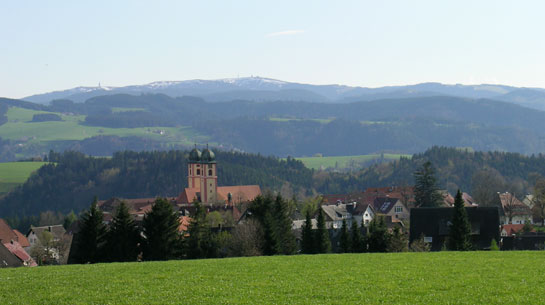
1. Glottertal to St. Maergen, through the Black Forest. Maybe only two hours by car, but sheer magic.

2. The East Coast of Taiwan, Suao down to Hualien and then into Taroko, the marble gorge. The best coastal route I know.

3. Mostar and Sarajevo, to remind us of the thinness of civilization. They’re also beautiful cities with great food and moving graveyards.
4. Susten Pass, in Switzerland, the best route through the Alps.

5. The bus from Punta Arenas to Torres del Paine, Patagonia, Chile. You see flamingos, rheas, and end up in a stunning national park.

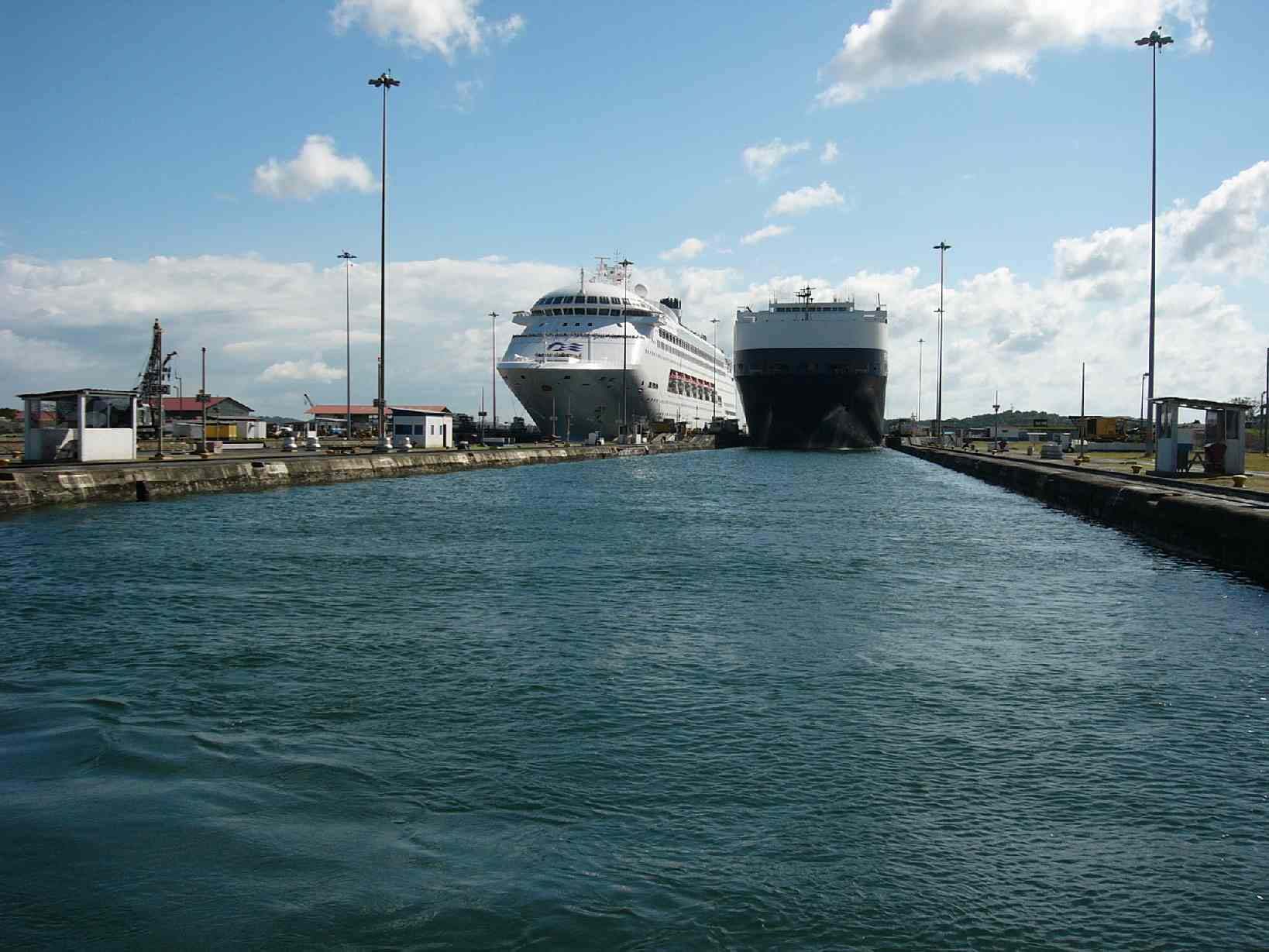
6. The Panama Canal
— perhaps the most underrated sight; you feel like you are in the jungle,
you are in a jungle, then a large steamer comes by. The tour of
Rotterdam Harbor is a close runner-up.
7. To and through the Tiong Bahru food stalls in Singapore.

8. Thingvellir, Iceland, home of the first Icelandic Parliament. Such a long trip to see just four homes.

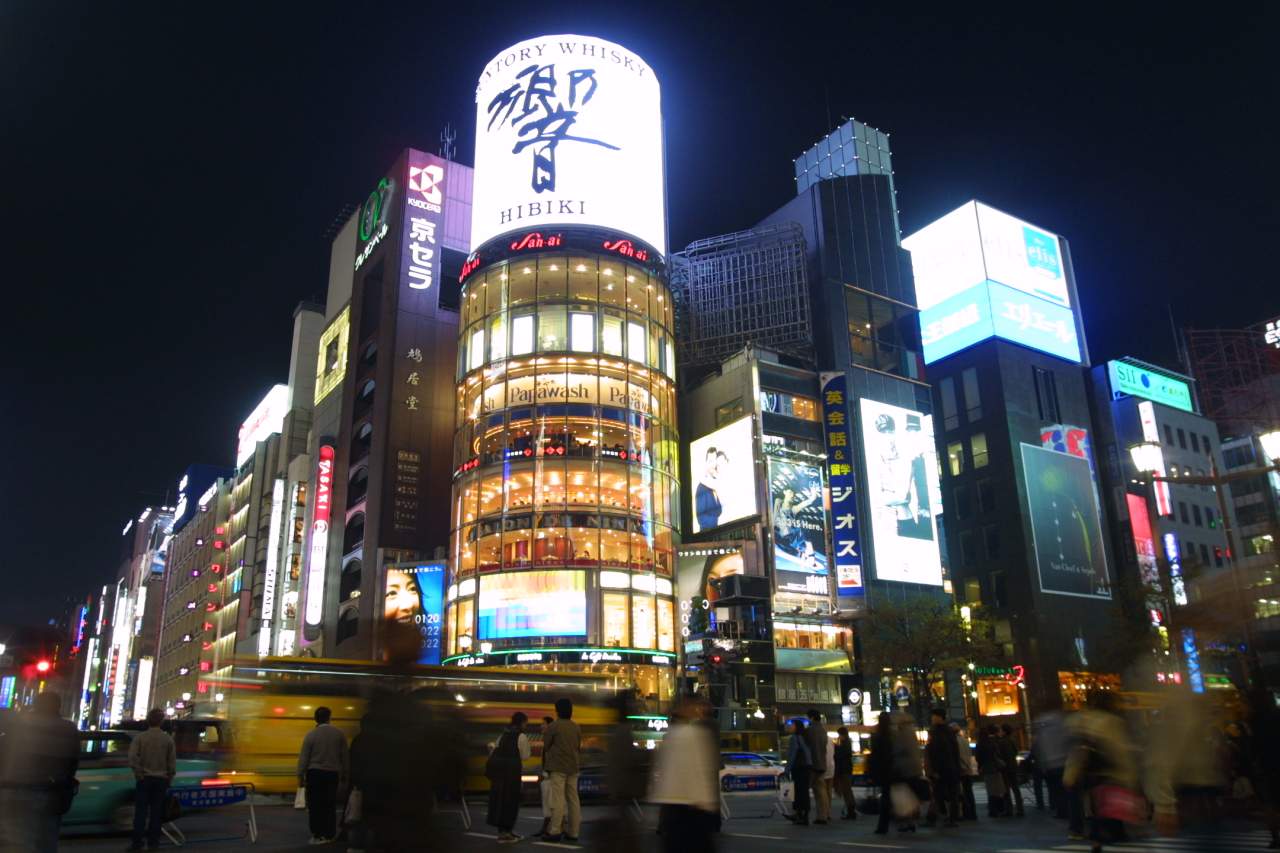
9. A walk through Ginza District in Tokyo, or perhaps Shinjuku subway station, with its dozens of maze-like paths to varioius streets. Don’t even try the map, just be happy with wherever you end up.

10. Walking Paris end to end, pick just about any route.
I’ve never been to East Africa, and I’m not counting the Iron Market in Port-Au-Prince.
Home
I arrived three hours early and went through six different and thorough searches at the airport; I do look like a drug dealer. By my fourth day it had become clear how many wealthy Colombianas have had plastic sugery, of the disproportionate kind if you get my drift. Colombia now has more people than Spain. The American government freezes the funds of the families of Americans who have been kidnapped. I found Bogotá safer than Madrid.
The Italian edition of Vanity Fair just listed Bogotá as one of the six up-and-coming tourist hotspots; Sibiu, Romania and the Kurile Islands (Russia) also made the list, enjoy.