Category: Travels
Facts about Mexican Mennonites
2. Many of them came from rural Western Canada in the 1920s.
3. They left Western Canada, as they had left Holland, Prussia, and Russia before that, for fear they would be forcibly assimilated, in this case through public education. Mexico offered them a special (Spanish-language) contract.
5. Each village has a number, not a name.
6. Unlike many of the American Amish, they use cars and electricity without hesitation. They are quite prosperous, in a Mennonite sort of way.
7. They still make cheese using methods from centuries ago.
8. Their best cheeses, which are non-pasteurized, are illegal in the United States.
9. Many of their road signs and advertisements are written in hochdeutsch, but they speak eighteenth century plattdeutsch. Their Spanish is sing-song and halting all at once.
10. They bake little cookies called "Galletas Menonitas," and they eat borscht and tacos.
11. The adjacent Tarahumaras make for a striking contrast.

Hermosillo, Mexico
To paraphrase Samuel Johnson, when a man is tired of Mexico he is tired of life and death. My short time here has been just splendid:
1. From the air one sees many enclaves of small condominiums and townhomes, a’ la Orange County. This is the Mexico of the future.
2. When it comes to median income, this is the wealthiest part of Mexico I have seen. It is not a city of peaks and excess, but real poverty is hard to find.
3. The town is neat and orderly and the streets lie in a near-perfect grid. Imagine Mexico run by the Swiss or the Singaporeans.
4. Downtown there appear to be more Chinese than Mexican restaurants. The Chinese, however, came here in the 1880s, and have since had little contact with Szechuan grannies. Imagine them having imported the menus for Chinese food, but not the recipes, and trying to recreate those titled dishes using their imagination and Mexican ingredients.
5. The weather is truly perfect. In January, that is.
6. My guide insists on telling people I am from the more-recognized "Carolina," even though he knows full well I live in Virginia.
7. The town square has lovely fig and orange trees; both fill with squawking blackbirds as night approaches. Otherwise there is absolutely nothing to see here in the way of tourist sights.
8. Sonoran beef compares favorably to that of Argentina. Eat in Jardin Xochimilco, better yet are the street places.
9. The flour tortillas are much grainier (and better) than what we receive in the States. They are wonderful toasted over burning sugar cane.
10. Try the coyota, the town specialty. It is the most delicious baked sweet I have sampled, ever. Scroll down to this recipe. A coyota alone is worth the price of the trip, which was only $120 and 75 minutes from LA.
My misguided and delusional plan to visit every major urban area in the New World
I am willing to fly to Nova Scotia for the heck of it. There is a direct flight from Haiti to Suriname. I expect Colombia will be the hard part. Salvador, Brasil is the outstanding gem. I’ve heard Villahermosa is lots of concrete and not so much fun. Honduras is only a matter of time. Santa Cruz, Bolivia to northern Argentina can be done overland; I love Latin American buses. Santiago, Cuba will require a Democratic President. I wonder how easily you can get from Guyana to French Guiana. I have never visited Birmingham or Mobile, Alabama.
Northern Mexico bleg
In seven days’ time I will spend a few days in northern Mexico. I am researching, among other topics, how health and safety regulations influence food markets and why a border can matter so much for foodstuffs. My sites will be Hermosillo, Chihuahua, and Tijuana. Do you have any recommendations? I won’t have much free time. No whales, no Copper Canyon, etc., but of course I will eat three (or more?) meals a day and have some time in each city. I thank you in advance for your ideas.
Someday I will relate to you my misguided and delusional plan to visit every major urban area in the New World. I would not have otherwise made it to Hermosillo, so perhaps the gods are on my side.
Would I be a Good Dictator?
The train from Casablanca to Marrakech is packed, I stand at the window and look out at the land; the land is rich but the people are mostly poor (GNI per capita of around $4200 in PPP adjusted terms). If I were in charge would it be different? Would I make a good dictator? My good friend Bryan Caplan says yes! My good friend Tyler Cowen is not so sure. The question is not really about me, of course, the question is about what sorts of constraints are holding back poor countries. Is it constraints about ideas, political/social constraints or even deeper geographic constraints? Could one person at the top make a difference?
The great man theory of history, receives some interesting support in a paper just published in the QJE by Jones and Olken, Do Leaders Matter? National Leadership and Growth Since World War II. Jones and Olken look at changes in economic growth around the time of the natural or accidental deaths of leaders and they find that leaders matter, especially, as one might expect, in dictatorships. A one standard deviation increase in leader quality leads to a huge increase in economic growth, an extra 1.5 percentage points a year.
It’s much easier to ruin a nation than build one, however, so the effect of leader quality on growth says less about how good a dictator I would be than about how bad a dictator were say Mao, Mugabe, and Amin, call it the great evil man theory of history.
Still, if you are a poor country eager for a better biography, email me and we can talk terms.
Bargaining in the Souk
Bshhal? (How much?), I say, pointing to an objet d’art.
He gives a figure.
La?! (No?!), in mock shock at the price he has quoted. Bezzaf! (Expensive!)
How much you pay?
I get out a small pad of paper and pen (invaluable in the souk) and write a much lower figure.
Now it is his turn to be "shocked," handmade, silver, he says launching into a spiel.
We bargain some more back and forth. The call to prayers starts in the background, he says, "listen, good sign."
I say, yes but for which one of us? He laughs. I am not budging much on the price so he tries to distract me with a less valuable piece.
C’est la ou rien, I reply. For some reason the use of English, Arabic and French is not confusing.
Then he says "you give me maximum price, top, price serioux."
La, I reply, you give me minimum price, price serioux.
He laughs. You professor?
Now, I am shocked. Yes, how did you know?
I smelt it, he says touching his nose. "Everywhere professors have good eye but no money."
I seize an unexpected advantage, na’am (yes) no money.
We bargain some more and come to a deal. I ask for my pen back. He says no, small gift, small gift, mon amis.
Twenty dirhams!, I reply.
Professor, you must be Berber.
I laugh. He keeps the pen.
Addendum: If you go, ask for mon amis Rashid at Zemouri Ahmed Belhaj in the Souk. Tell him that the Professor, day after Christmas, sent you. He says he will remember.
Random thoughts from Marrakesh
I see about as many women in Marrakesh in full scale (eye slit only) chadora as on a typical day on the campus of George Mason University. Tyler is correct; globalization makes every place increasingly different and all places increasingly similar. Of course, I have yet to see snake charmers in GMUs central square.
The dates and apricots from the street sellers are the best I have ever tasted. I could subsist on the dates, apricots, pistachios and the incredible orange juice alone.
I visited a harem today; alas the women were long gone or at least moved to the new palace.
The monkeys look sad.
As I am blogging I can hear the call to prayers in the background. Ancient and modern in one experience; how cool is that (insert exclamation point here).
Would you take an architectural pilgrimage?
Donald at www.2blowhards.com nominates some architectural pilgrimages worth taking. I suggest the Ford Rouge plant in Dearborn, Michigan:
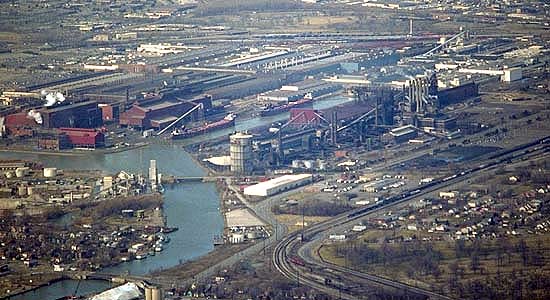
Here is a brief history, with some stunning black and white photos. I also enjoyed my pilgrimages to Tulsa and Kansas City (barbecue too). Buenos Aires has the best public sculptures. I’ll nominate the Taj Mahal for the most overrated site; it looks just like the postcard and I liked the saris of the visitors more than the site itself. Here is a picture of Magnitogorsk, which I hope to visit. Here is a broader index of Magnitogorsk pictures. Brasilia is another dream of mine, and yes I do find that image attractive.


Here is an on-line version of Ludwig Lachmann’s Capital and its Structure, courtesy of Liberty Fund.
In Marrakech
The streets of Marrakech run with blood today. It is Eid Al Adha, the feast of the sacrifice, to comemorate Ibraham’s (Abraham) willingness to obey God by sacrificing his son Ishmael (Ishmael/Isaac, who can say?). (If a booming voice told me to sacrifice my son, I’d tell him to go to hell. My failure to see the virtue in Abraham’s more faithful actions lets me reject three religions in one go. Convenient.) In anycase, God relented at the last minute and said sacrifice a ram instead. So today rams are being sacrificed all over town, the heads are then cooked in the streets over barbecues made from old bedsprings. It’s not to my taste but if I wanted things to my taste I would have gone to Starbucks.
Many thanks to all who gave tips earlier. I will write more later the kybrd here is hard to use.
Alex needs your help
You may have heard that Alex is going to Marrakesh. But is he ready to deal with the touts?
The fundamental problem: for most of the day you don’t want a (Moroccan) guide at all. But having a guide, if nothing else, keeps away trouble. If you walk around without a guide, you are pestered incessantly by all the other would-be guides. It is like choosing which giant leech should be attached to your head, knowing that the space will not remain empty.
The guides don’t cost much up front ("I am your friend. I love United States. I show you for free. Very good friend. No charge nothing."), but at the end of the day they ask you for money. I don’t just mean ask, I mean beg, plead, cajole, and finally, if need be, demand. Avoiding this spectacle — humiliating to both parties — is itself worth at least twenty dollars. In the meantime the guides bring you around to merchants of their choosing, and receive kickbacks on anything you buy. So don’t expect the guide to do your bidding or to bring you where you want to go.
In Marrakesh you cannot do without a guide altogether. You will get lost in the souks and never come back to your blogging life. And you might wish to visit two or three quality stores, rather than the twenty your guide has in mind. A guide can, in principle, bring you to the good ones. But little do you know just how interesting he thinks the carpet factory will be [hey, you can’t see child labor like this just anywhere…].
So how should Alex structure an optimal compensation package for his guide? How can he avoid being ferried to stores he does not wish to visit? Can the end-of-day performance art be dampened if not avoided? When should he pay the guide, how much, with what instructions, and contingent on what? Must he use the same guide for more than one day?
Comments are open; whether Alex knows it or not, he needs your help. Badly.
Marrakech
Next week I am off to Marrakech. Why? Can any economist claim to understand markets who has not been? I will also spend a few days in Casablanca. Comments are open if you know a good gin joint.
Further subjective impressions of Argentina
…the good stores just don’t have the larger sizes for their finest items. What else?
Piegari was the best food, Olsen the best restaurant decor (they serve Swedish food, oddly enough), and Ataneo (the Santa Fe branch, set in a former Art Deco movie theater) is the most attractive bookstore I have seen anywhere. If it wasn’t for that tiny matter of per capita wages, I would live here. It is my favorite city, period. I don’t care that I go to bed before most of them wake up; I am not that social anyway.
The people here don’t seem very Catholic. But most of the politics revolves what has happened to various dead bodies. Older people still speculate about what happened to Eva’s corpse during its missing years, a topic fraught with political implications. And for two decades the "desaparecidos" (disappeared ones), killed under the military dictatorship, have dominated the national consciousness.
When the New Year comes everyone rips out the pages of their old calendars and leaves them on the street. It makes for a mess. You can walk just about anywhere in the central bank without encountering hostile or even inquisitive security guards.
I recognized only one name on the top ten music charts, namely Madonna at number four. The new Saramago book — not yet available in English — is number one in book sales. Taxi drivers know not only Borges but also Ernesto Sabato.
A quality apartment in an excellent part of town can sell for as little as $U.S. 50,000. I have stocked up on DVDs of recent Argentine movies.
Have you heard of the appropriately-named "Faena Hotel and Universe"? The Hotel as Womb. The people who stay here (that’s not us) are pampered by a personal assistant and barely leave their quarters. The modern world has not ceased to produce architectural wonders.
Get the bitter [amargo] chocolate ice cream. Go to Uruguay with low expectations and you will be charmed.
Tango shows are mostly a waste, unless you have an inside connection to a dance group or some good lessons. And don’t be put off by the fact that two-thirds of your meals boil down to a choice of either lomo or pasta; both are superb.
Woe to the young Argentine woman who is perceived as overweight.
Our guide at Recoleta had indigenous features, but she insisted repeatedly (and to a foreign audience) that her family was white and she simply had too much of a sun tan. She has been learning about the histories of the families in the graves since she was five years old; she can talk for hours about them without notes and has an opinion of each and every family and its moral character. Auto-Icon, or the cemetary as Panopticon.
Why do so many stores and restaurants use the "ring the bell" system? These are not diamond merchants seeking to protect their wares. I suspect that clientele effects are especially strong in this city. Perhaps "regulars" are more willing to ring the bell, and these same regulars are more valuable as customers. Signalling is rampant.
Don’t expect major sights of the kind you find in a Frommer’s guidebook. Use the Time Out guide to find experiences.
Contrary to what my wife thinks, people here are not happier than in the United States. She won´t go to the parts of town that prove her wrong. Nine years ago, there were no beggars opening taxi doors for you, expecting a peso in return. The shanties near the airport are extreme. The poor of Buenos Aires have it good compared to parts of northern Argentina, but Salta and Jujuy will have to wait for another trip.
Go to Kumana’ for the best corn empanadas, fifty cents a piece. El Obrero is excellent Italian home cooking, with amazing soccer decor, again for a pittance. Cafe Uriarte was first-rate. La Brigada has the best baby lamb intestines you can imagine.
You have a status quo bias. And like most people, you probably overinvest in goods and underinvest in experiences. Get off your bum and go. Many major cities in the USA have direct connections to Buenos Aires. You fly overnight and sleep on the plane. You wake up in a new universe.
In the meantime, thank god or luck that you were born where you were, unless of course that was northern Argentina. Happy New Year to you all.
Using the state to counter social conformism
Women in search of fashionable clothes the world over have a similar problem: What do you do if you are not a size 6?
Some government leaders in Argentina have an answer. They have passed a controversial law designed to break what they see as the tyranny of tiny sizes. Starting Dec.21, Buenos Aires province, which includes the capital’s glitzy suburbs but not the fashion-forward city itself, will require shops catering to adolescent girls to stock clothing in a minimum range of sizes roughly equivalent to sizes 6 to 16 in the U.S.
Provincial inspectors will scrutinize merchants’ clothing racks, "tape measure in hand," says Ana Serrano, the province’s director of commerce and designated sizing sheriff. Shops that don’t have the prescribed sizes in stock will face fines of up to $170,000. Officials maintain that the small clothes put pressure on young women to take up extreme dieting. That in turn contributes to one of the highest rates of anorexia and bulimia in the world, they say.
In a nation where stylishness is a national religion, the sizes law is triggering a fevered debate…Argentina women who aren’t extremely thin have an unusually tough time finding fashionable clothes.
There is another angle:
Some of the problem has to do with the fragmented structure of the local clothing industry, says Donna Reamy…High tariffs, along with Argentina’s history of economic instability, have kept many big foreign chains out of Argentina, leaving only one department store in the city of Buenos Aires and provincial suburbs.
Argentina, by the way, is a leader among Latin American nations in plastic surgery, exercise, eating disorders, and psychoanalysis. This new policy is a funny kind of paternalistic anti-paternalism: "hey, you, I pull out my gun: tell her it is OK to grow a little fat."
That is all from the 26 November Wall Street Journal. A good micro question would be to outline the underlying (implicit) theory of market failure here.
Purely subjective Argentina impressions
1. It now feels much less safe, and the rate of apparent "derelictism" is much higher. The streets are noticeably dirtier.
2. Big shopping centers are more prominent.
3. It feels less like people are pretending to be Europeans, and more like a part of Mercosur.
4. The country has average nine percent growth over the last three years. Some of this is the soya boom, but much of it is making up for financial collapse. Destruction of a country´s banking system will lead to poverty, coordination failures, and an inability to evaluate and implement new projects. Old projects will lose their access to liquidity and unemployment will rise steeply. But few real resources are destroyed. Once you get over the coordination problems, the factories and pampas are still there and rates of growth will be high. But don´t be fooled, Argentina has not yet found a recipe for economic stability. Furthermore the distributional consequences of this "experiment" have destroyed a significant part of the already-tattered social fabric. Right now they are riding the crest of the psychology of an increasing first derivative. But beware…
5. I have a new theory about the Argentina economic boom of (roughly) 1890 to 1920. The country put a large amount of resources into cattle right before refrigerated transport revolutionized the global demand for beef.
6. There is much ruin in a nation.
Buenos Aires bleg
Not for barbecue, but rather Christmas vacation. Advice and suggestions about all facets of the place are welcome, leave them in the comments. Yes I have the relevant guidebooks, but during my previous visit they were not much use for this splendid city, which lacks major sights.
By the way, many readers ask me what is "bleg" is. This neologism combines the ideas of "blog" and "beg," the latter referring to a plea for assistance.