Results for “satellite radio” 36 found
#ConfessYourUnpopularOpinion
Stephen Stills is underrated.
He was the driving force behind three of the best (non-Beatles) songs of the 1960s/early 1970s: Bluebird, Wooden Ships, and Suite: Judy Blue Eyes; in the process he anchored two of the major super-groups of that era. “For What It’s Worth” is one of the most recognizable and oft-used iconic songs of the 1960s. “Helplessly Hoping” is good too. He was an underrated guitarist, try Super Session, with Michael Bloomfield and Al Kooper.
One of his problems may be that his underlying personal aesthetic is often corny and unappealing (“Love the One You’re With,” “Change Partners”), and that comes out all too strongly when he is removed from monitoring collaborators of equal or greater stature.
On satellite radio the other day I heard the acoustic solo demo version of Suite: Judy Blues Eyes (try “Stephen Stills Suite Judy Blue Eyes” on Spotify) and thought “People don’t praise this guy enough!” In general, artists should be judged by their best work, and his is very good indeed. I’d rather hear one of those Stills songs than anything by the Rolling Stones.
Bob Dylan, Nobel Laureate!
I had heard the rumors for years, but I didn’t think it actually would happen. My takes on a few Dylan albums:
FreeWheelin’ Bob Dylan: One of his most listenable and underrated albums, the same is true for Another Side of Bob Dylan.
Bringing It All Back Home: The album I fell in love with as a kid. Some of it is overwrought but mostly still amazing, perhaps his highest peaks.
Highway 61 Revisited: Half of it is wonderful, but it contains excess and some so-so judgment.
Blonde on Blonde: Many see this as Dylan’s peak, but I don’t listen to it much. Somehow the sound is a little harsh for my taste.
The Basement Tapes: The most overrated, too much murky slush and slosh.
Bob Dylan’s Greatest Hits, vol.II: The perfect medley.
Blood on the Tracks: Maybe the most consistent and listenable album, though it’s not pathbreaking in the way that the mid-sixties work was.
Time Out of Mind: An amazing “late career” work.
Dylan’s memoir is excellent, and his most underrated contribution outside of creating music is the CDs he edited for satellite radio, many hours of Dylan selecting and playing classics from early American musical history, blues, country, mixed styles, perhaps the single best look at the early evolution of American popular music. Many hours of listening pleasure. Bob Dylan Radio Hour. And the Martin Scorsese four-hour bio-documentary on Dylan is one of the better movies ever made, No Direction Home it is called.
If I recall correctly, three of the Conversations with Tyler turned to the topic of Bob Dylan. Camille Paglia loves the song “Desolation Row,” Cass Sunstein is a big fan, especially of some of the early period work, and Ezra Klein feels he is overrated, I guess that means especially overrated now.
Here are my earlier posts on Bob Dylan. Complain all you want, I say Bob Dylan is a better and more important artist than say Philip Roth. It’s not even close.
Congratulations to Bob Dylan, polymath!
Friday assorted links
1. Did Singapore’s National Service improve you?
2. Research position at GiveWell. And is Norway taking too much from its sovereign wealth fund?
3. Is materialism and interest in “stuff” in decline?
4. Should we regulate medicine like public utilities?
5. It is sad how much they play Steely Dan on satellite radio — could it be some strange form of payola?
Observations on seeing Paul McCartney
1. Many of the best songs were from his solo or Wings period, especially those designed to be played live, and designed to work without the backing voices of the other Beatles.
2. The first two-thirds of the concert pulled out an impressive number of obscure songs, most of which worked, including a bluesy “Letting Go” (can anyone other than Kelly Jane Torrance place that one without using Google?). Paul flat out told the crowd he doesn’t care if they like these other songs less.
3. Often the best Beatle song vocals were Paul doing either John or George parts, because you didn’t know exactly what to expect and thus you were let down less by his 74-year-old vocal cords.
4. His stamina was remarkable. The show was almost three hours long, with little in the way of breaks for him, and he is playing two nights in a row.
5. At the time of its release, “Hi Hi Hi” seemed like a commercial piece of crud, but it has become iconic and satellite radio treats it with respect as well.
6. Paul has been with his current touring band for fifteen years, far longer than he ever was with either Wings or the Beatles.
7. There is a fellow who collects “album covers that are parodies of Beatle album covers,” and he has over 2,000 of them. How is that for markets in everything?
Assorted links
1. Bob Dylan’s satellite radio theme hour to return.
2. New uses for old soda bottles. And looming peak dirt?
3. Really fast urban evolution of animals.
4. Nudging the poor to consume more medical services: is time more important than money?

Bob Dylan’s 70th birthday
It is today, here are a few underrated highlights of his career:
1. No Direction Home, the biopic directed by Martin Scorsese. It’s one of the best documentaries on American music more generally, and a superb albeit hagiographic portrait of Dylan and his music.
2. The Freewheelin’ Bob Dylan and Another Side of Bob Dylan and Blood on the Tracks and most of all Bob Dylan’s Greatest Hits volume II are the albums I listen to most often. The last one sounds horrible from its name, but it was conceived conceptually, avoids the traditional problems of greatest hits albums (unlike Vol. I), and has some not otherwise available tracks; highly recommended. Then comes Time Out of Mind. I think of Bringing it All Back Home as the “best” Dylan album, but I enjoyed it so much at age fifteen that I don’t listen to it much today. Blonde on Blonde is overreaching and Highway 61 Revisited is half wonderful, half embarrassment in the lyrics.
3. Dylan as disc jockey is first-rate, and you can buy his XM Satellite Radio selections of early American music. He has an encyclopaedic knowledge of the period.
4. As a singer Dylan is influenced by Al Jolson and Bing Crosby, as an acoustic guitarist he remains underrated.
5. Dylan once said that Barry Goldwater was his favorite politician.
The Tyranny of the Market
This new book is by sometimes Slate.com columnist and U. Penn economist Joel Waldfogel, of "Deadweight Loss of Christmas" fame. The subtitle is "Why You Can’t Always Get What You Want."
This well-written monograph is the best extant non-technical treatment of fixed costs and how they limit product diversity. On a given night, you can’t see a live performance of Samuel Beckett in Topeka, Kansas but maybe you can in the larger New York City; fixed costs are why they won’t set up the stage and hire the cast for only five viewers.
But Waldfogel is more pessimistic about the market than I am. The book’s opening example is about how hard it is to find radio stations in underpopulated areas; satellite radio is mentioned on p.120 but I would have started with its reach and also its limitations (and here). There is internet radio as well. The first example in the empirical chapter is that it takes $900 million on average to develop a new drug, but regulations and the FDA are not mentioned.
I can recommend this book but I do not agree with its central conclusion: "Markets do not avoid the tyranny of the majority." There are very few areas of my life, if any, where markets force me to follow the wishes of the majority.
Oddly the biggest problem is not mentioned and that is style and marketing. Retail outlets do not carry many items, not because they couldn’t hang some of the stuff from the ceiling, but rather because they wish to project a focused image. In other words, the real problem, when there is one, is the very limited attention spans of the consumers and the ad watchers and the product line gossipers.
My podcast, #2
Tyler Cowen, professor of economics at George
Mason University, talks with Bloomberg’s Tom Keene from Fairfax, Virginia, the
impact of celebrities on politics and the economy, XM Satellite Radio Holdings
Inc.’s possible combination with Sirius Satellite Radio Inc., and the effect
of blogs on the news industry.
Scroll down from here, there are many other economist podcasts as well. I predict that both XM and Sirius will go under, the iPod is the real competitor.
Addendum: Here is the new podcast link.
Markets in everything
Welsh expatriates missing the sweet smell of home can now buy a bottle of air from the hills of Wales – for £24.
Businessman John Gronow will launch walesinabottle.com on Thursday to sell Welsh atmosphere around the world.
Here is the full story, and thanks to Chris Tracey for the pointer. And while we are on the "Markets in Everything" topic, did you know Sirius Satellite Radio is starting an all-Elvis channel?
Markets in everything
Price a Chilean cemetary charges for an alarm built into coffins to ensure against mistaken live burial: $462
That is from Harper’s Index, in the latest issue of Harper’s. Here is a related link.
Here is some evidence on the likelihood of being buried alive.
The Italians take things further, albeit at a higher price:
In 1995 a $5,000 Italian casket equipped with call-for-help ability and survival kit went on sale. Akin to bleeping devices which alert relatives to an elderly family member’s being in trouble, this casket is equipped with a beeper which will sound a similar emergency signal. The coffins are also fitted with a two-way microphone/speaker to enable communication between the occupant and someone outside, and a kit which includes a torch, a small oxygen tank, a sensor to detect a person’s heartbeat, and even a heart stimulator.
What I would want: Satellite radio, Spenser’s The Faerie Queene, and a cell phone with a good battery.
Does anyone listen to XTC anymore?
I’ve had satellite radio for over a year now, and even they don’t play XTC. Once seen as one of the UK most vital independent pop bands, XTC first rose to popularity and now seems to have fallen out of both indie and pop markets.
To be sure, the group had its problems. They don’t have a single album you can listen to straight through without wincing at least occasionally [Black Sea comes closest, though English Settlement has their highest peaks], the fey Britishisms can be offputting, and the vocals are sometimes monotonous [have I sold you on them yet?]. Plus they don’t have a truly convincing greatest hits collection. But their very best songs are among the most significant achievements of rock and roll. Andy Partridge’s songwriting, polyrhythms and studio sense have given me some of my most treasured musical moments. Let’s hope they stand the test of time.
I don’t do iPod (I can’t stand the poor sound quality), but buy the following if you can: 1) No Language in our Lungs [Partridge’s favorite song from the group], 2) Helicopter, 3) Ladybird, 4) Snowman [my favorite], 5) No Thugs in Our House, 6) Senses Working Overtime, 7) I’d Like That, 8) Crocodile, 9) Rocket from a Bottle, 10) Yacht Dance, 11) Brainiac’s Daughter [technically by the “Dukes of Stratosphere”], and 12) Holly up on Poppy, just to name a few. Those songs are my nomination for what belongs in the canon but isn’t yet there.
Addendum: Economist Dan Klein, who first turned me on to XTC, adds the following:
“I liked Tyler’s post on the British rock band XTC. But there is something about XTC he didn’t mention. Not sure how to describe it. Something like the soul wrenching sound of focus and determination. In Led Zeppelin and NWA you also get a pure sense of masculine being, but there’s something special about it in XTC. The self as a team of men in a boiler room making a machine serve an over-riding purpose. I think of songs like “Paper and Iron,” “Travels in Nihilon,” “Heaven is Paved with Broken Glass,” “Tissue Tigers,” and, above all, “Roads Girdle the Globe.” I’d say the peaks come on the albums Go 2, Drums and Wires, and Black Sea.”
“Hail mother motor!
Hail piston rotor!
Hail wheel!””
CDs as loss leaders
An increasing percentage of compact discs are sold in mega-chains, such as Best Buy or Wal-Mart, as loss leaders. Offer the CD at a very cheap price, and hope that the buyers also take home a television set. This practice is the central reason why Tower Records recently went bankrupt.
Loss leader CDs push music in a more mainstream direction. The impulse buy is for the TV, the musical purchase is planned, which favors established stars with new releases. Sudden impulse buys of unknown musical products, by definition, do not bring people into the store. In essence consumers have decided they would rather bundle hit musical releases with TV sets and computers (the Best Buy model), than with more obscure musical releases (the Tower model).
Consumers with mainstream musical tastes are better off, but how about consumers who prefer the niche products? On the downside, hit CDs are cross-subsidizing obscure CDs to a lesser degree than before.
Nonetheless not all hope is lost for buyers with indie tastes. Amazon.com and other Internet services offer a wide variety of releases and lessen the need for such a cross-subsidy. And keep in mind that the cross-subsidy went two ways. The customers who prefer music from Madagascar no longer have to cross-subsidize the Eminem displays in Tower. The CDs are held in Amazon-linked warehouses, which is cheaper, even once you take shipping into account. Furthermore the desire to build up the Amazon brand name cross-subsidizes obscure products of all kinds, many of which Amazon makes little or no money from.
The other key musical trend of our time is illegal downloading, which hurts the top artists most of all. Indie releases use the Internet for publicity, and world music artists learned to live without copyright protection a long time ago. Legal downloading, through iPod, subsidizes music of all kinds. None of the iTunes songs make money for Apple, rather music of your choice (if they can get the rights) is a loss leader for hardware. Most people buy iTunes, not for the latest hits, but to hold a diverse mix of their past and yet-to-be-known future favorites. And most satellite radio channels do not play hits but rather serve niche tastes. XM offers a wide variety of channels, in part to make its brand name well-known and focal.
The bottom line: Don’t worry about music as a loss leader. Cross-subsidies all over the place, and point in many differing directions. But at the end of the day, both the demand and supply for musical diversity are alive and well.
Media concentration
It is commonly alleged that media concentration is on the rise. Ben Compaine, in the January issue of Reason magazine (not yet on-line), debunks this myth. In the mid 1980s, the top ten media companies accounted for 38 percent of total revenue. In the late 1990s the figure was higher, but only barely, up to 41 percent. More importantly, different companies shape our media experiences. Where was Comcast, now the largest cable company, twenty years ago? Bertelsmann, now a giant, was barely visible in American markets. Amazon.com and other Internet-related enterprises are new on the scene as well. If media companies are monopolies, their market power is extremely fragile.
Nor are smaller media outlets necessarily better than the larger conglomerates. The larger outlets are much more likely to win awards for their quality, nor are they obviously more biased. Clear Channel radio is now a poster boy for media critics, but its 1200 stations comprise only slightly more than ten percent of a total of 10,500 American stations. Note also that there were only 8000 radio stations in 1980. We now have satellite radio and Internet radio as well.
Compaine makes a nice point in closing:
It may indeed be that at any given moment 80 percent of the audience is viewing or reading or listening to something from the 10 largest media players. But that does not mean it is the same 80 percent all the time, or that it is cause for concern.
The bottom line: When it comes to media, we have more choice and more competition than ever before.
The economics of classical music
A search on Amazon.com yielded 276 distinct performances of Beethoven’s 5th symphony, many at bargain prices. Attendance at classical concerts is steady or slightly up. The classical share of the CD market is roughly constant at 3 to 5 percent. On the other hand, many orchestras are experiencing financial difficulties, and some are closing.
Complaints about the economic fate of classical music have been common for many decades. In fact parts of the 1980s and 1990s — not long ago — were a financial golden age for the classics, driven by The Three Tenors, Gorecki, and replacing albums with CDs. The entire story comes from the Federal Reserve Bank of Boston, click here.
In my view, the biggest single dilemma is whether the next generation of philanthropists will have any loyalty to classical music institutions.
How about classical music on the radio?
Classical music stations have disappeared in many cities; one-third of the nation’s top 100 radio markets do not have a classical station. After 63 years, ChevronTexaco’s radio broadcast from the Metropolitan Opera House will be off the air next year.
I suspect that the future of classical music on the radio lies in satellite radio, read this article from today’s Washington Post. XM satellite radio has about one million subscribers and its classical stations are excellent, long pieces with high sound quality, not just another rendition of a Telemann shortie or a Boccherini guitar quintet.
Thanks to William Sjostrom for the pointer to the article.
Addendum: Kevin Brancato tells us that fewer than one percent of American symphony orchestras have gone bankrupt in recent years.
Creative Stagnation
Legislation requiring cars and trucks, including electric vehicles, to have AM radios easily cleared a House committee Wednesday, although it could run into opposition going forward.
H.R. 979, the “AM Radio for Every Vehicle Act,” would require the Department of Transportation to enforce the mandate through a rulemaking. It passed the Energy and Commerce Committee by a 50-1 vote. Rep. Jay Obernolte (R-Calif.) was the only “no.”
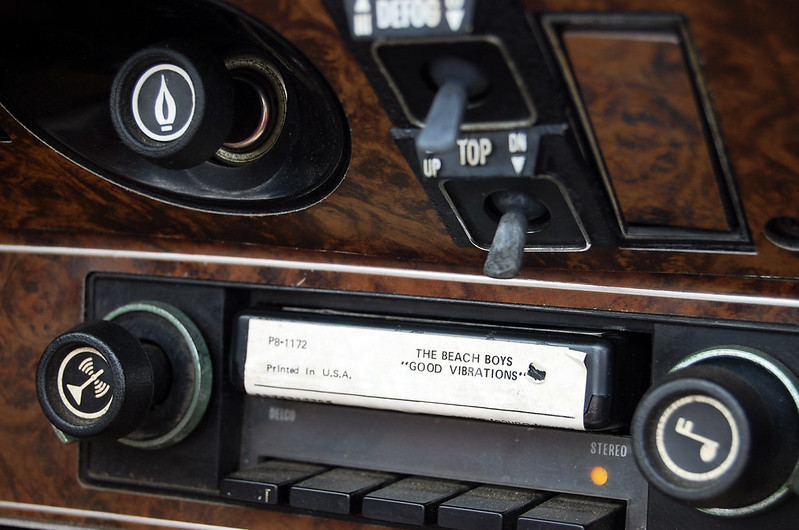
What’s next—mandating 8-track players in every car? Fax machines in every home? Floppy disks in every laptop? If Congress actually cared about emergency communication, it would strengthen cellular networks, not cling to obsolete technology. Congress is a den of old busybodies.
Hat tip: Nick Gillespie.
Addendum: If AM radio is so valuable for emergencies then the market will provide or you could, you know, put an AM radio in your glove box. No need for a mandate. We already have FM, broadcast TV, cable, satellite, cell, and Wireless Emergency Alerts; resilience can be met without specifying AM hardware.