Category: The Arts
My favorite things Danish
1. Movie: A strong category for this country. Babette’s Feast used to be one of my favorite movies, though it now strikes me as sentimental. I much prefer The Celebration, or the recent After the Wedding. The Best Intentions, with a Bergman screenplay, is directed by Dane Billie August. Dreyer’s The Passion of Joan of Arc is technically a French movie but the director is Danish, in any case it is one of cinema’s greatest achievements. Ordet has splendid shots but I can’t bear the ending. I don’t rate Lars von Trier with these other creators though I did like his recent The Boss of it All, a study in the social construction of leadership.
2. Short story: "The Caryatids, An Unfinished Tale," by Karen Blixen [Isak Dinesen], in Last Tales. This one shows the influence of the now-sadly-taken-for-granted Hans Christian Andersen; read it.
3. Novel: Smilla’s Sense of Snow, by Peter Hoeg; lovely and mysterious, yet driven by plot. His History of Danish Dreams I find too baroque.
4. Composer: Poul Ruders, one of the most listenable contemporary composers, writes compelling melodies and offers a broad palate of sound colors. I most prefer his Variations on a Theme by Paganini, Concerto in Pieces, the guitar music, Tundra, and Gong. His major influences are Brahms, Berg, Sibelius, and Hindemith. I’ll buy anything by him, though I’ve never much enjoyed his operas.
5. Popular music: Help!
6. Philosopher: Kierkegaard’s Either/Or is the place to start, and don’t skip over "Diary of a Seducer" or the discussion of Don Giovanni. There are few philosophers who think more like an economist, or who use more metaphors from economic life.
7. Painting: Danish Impressionism is one of the most underrated fields in art, noting that the subtle textures and colors do not reproduce well on the web. Try this picture. Here is a nice landscape, here is a nice door. This one is lots of fun, too.


My Favorite Things Tanzania
1. Music: Opt for Taarab, the Arabic style from Zanzibar, start here. Bongo Flava: Swahili Rap from Tanzania is above average for its genre. By the way, the Rough Guide Tanzania music CD is a bit lame.
Then there is Freddie Mercury, who was born in Zanzibar. Right now I’d rate "Killer Queen" and the "Bicycle/Fat Bottomed Girls" medley as my favorites. The Manichean element (Mercury’s parents were Parsees) is evident in "Bohemian Rhapsody," among other songs. Queen remains underrated, and I never tire of listening.
2. Cinema: This movie comes recommended, I’ve never seen it. Darwin’s Nightmare is set in the country, I haven’t seen it.
3. Film, set in: Hatari!, with John Wayne, isn’t bad in a jokey sort of way. It is, after all, directed by Howard Hawks. Hatari, by the way, means "danger" in Swahili.
4. Sculpture: Makonde is the dominant style. Try this older one.


5. Painting: The best-known naive style is Tingatinga. Here is one of the better pieces. It doesn’t compare to Haiti. Here is more. The leading Tanzanian naive painter was — can you guess? — E.S. Tingatinga.


6. Fiction? Ask me again once I’ve learned Swahili.
The bottom line: Freddy is long gone, and they play Congolese "lingala" music in the clubs, so it’s culturally a little dull here; in any case I am working on a micro-credit project with Karol Boudreaux.
Assorted links
1. Classical music recording is bigger than ever
2. Profile of Chilean writer Roberto Bolaño
3. Markets in everything: durians that don’t smell
4. Virginia Postrel’s next book, on glamour, an outline
5. It seems that fascist Lawrence Dennis was actually black
6. History’s 100 most influential people, as selected by the Japanese
My favorite things Venice
1. Painting. This is, of course, a bit ridiculous. Three is gobs and gobs and gobs, but I have to opt for late Titian as the peak of painting, ever, by anyone. Except for Velazquez. Here is one image, here is another. Moving past the Renaissance, Tiepolo remains underrated; visit Wurzburg for one of Europe’s best artistic thrills. Rosalbe Carriera portraits are underrated.


2. Work of fiction, set in: Death in Venice, Thomas Mann, is the obvious pick, here is a long list of fiction set in Venice. There is Calvino’s Invisible Cities, and Henry James, The Aspern Papers, I’ll give the nod to the latter, unless we can count bits of Proust.
3. Movie, set in: Scroll down for a list. I love the best parts of From Russia with Love, and Lara Croft: Tomb Raider (really), but the clear winner is Orson Welles’s Othello.
4. Play, set in: Duh.
5. Techno group, named after: Venetian Snares, juicy stuff, high information content. Not for the faint hearted.
6. Music: Monteverdi will get his own post, Vivaldi bores me, Gabrieli is OK. Luigi Nono comes next, I like the Pollini recording of his work for piano and tape. There is Bruno Maderna as well.
7. Theatre: Carlo Goldoni, I once saw The Stag Hunt and loved it.
8. Writer: Casanova is fun to browse, more conceptual than you might think.
9. Librettist: Lorenzo da Ponte, who wrote Don Giovanni for Mozart.
The bottom line: Making this list was more interesting than I had expected. I have never felt "near" to Venice, but perhaps this trip — for a UNESCO conference — will change that.
My favorite things Italy
Sitting here in the Frankfurt Airport, on my way, I’m not going to rehash the Ghiberti-Brunelleschi feud, so let’s stick to the twentieth century:
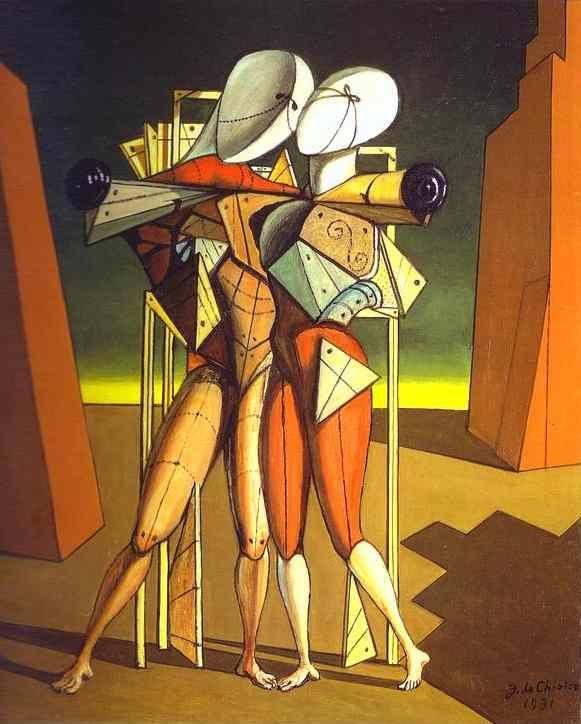
Painter/artist: There is Morandi, Lucio Fontana, and the Arte Povera group, all of whom remain underrated. The Futurists are dated, but early de Chirico hits the spot. This category is strong. For sculptors throw in Manzu, Burri, Merz, Marini, and many others.


Composer: Puccini I’ve never loved. Scelsi is an acquired taste but for me his drones hold up. Busoni bores me once you get past the Bach transcriptions. I’ll opt for Berio, most of all the songs, Sinfonia, and Points on the Curve to Find, all excellent and surprisingly accessible.
Pianist: Maurizio Pollini started steely and evolved to poetic; try his Stravinsky/Webern disc, and his Chopin Nocturnes. Arturo Benedetti Michelangeli is pure rippling glitter, try his Ravel/Rachmaninoff disc.
Conductor: Only rarely is Toscanini’s stuttering whiplash listenable, try his Tchaikovsky #1 with his then son-in-law Vladimir Horowitz. Abbado wins this category, his Beethoven symphonies are the best available.
Maria Callas performance: I am torn between Norma and Barber of Seville, the latter with Tito Gobbi, another notable Italian.
Author: Baron in the Trees and Invisible Cities are my favorite Italo Calvino. When I courted Natasha, she was impressed that I had a working knowledge of The Cloven Viscount at my disposal. Alberto Moravia has compelling psychological portraits, Eco’s The Name of the Rose is fun.
Playwright: Pirandello and Dario Fo.
Film: Most of neo-realist cinema bores me. I do admire Umberto D, most of Pasolini (Arabian Nights as my favorite), and I’ll pick Visconti’s The Leopard as my favorite, with Sergio Leone’s Spaghetti Westerns a close second. Satyricon is my favorite Fellini, but otherwise he leaves me cold. Sadly Italian cinema has been getting worse for thirty years.
The bottom line: The twentieth century brought a remarkable cultural renaissance in Italy. This is not as widely recognized as it ought to be.
When to boycott
Should we refrain from consuming the cultural products of those producers who hold morally objectionable views, when our consumption of such products will benefit said producers?
I think of this as a Ramsey tax problem: we are willing to sacrifice a certain amount of goods and services to do the world some good, how can we do so at minimum damage to our utility?
Just as lump sum taxation is efficient, so should we give away money, rather than distort the MB=MC ratios on our consumption decisions. So my inclination is to avoid boycotts. It is better to just send money to the people or groups you wish to help.
Sometimes boycotts are motivated by the wish to hurt other people — the target of the boycott – rather than by desires to help some oppressed group. Or punishing a group’s critics may be the best way to help that group. Then boycotts make more instrumental sense, especially if the target of your hate has a declining MC curve, as would a movie star or music star with an easily reproducible product. There is less point in boycotting someone in a relatively competitive industry, who is earning little on selling extra units of the product.
Note that if you are facing a monopolist with a durable good, boycotts can make that monopolist better off by helping him to restrict quantity. In other words, boycott rock stars, not painters or sculptors.
A boycott also might be preferable to sending money if your action has a snowball effect on the behavior of others, but that will not be the general case. In fact boycotts often give more publicity to the person or cause you are trying to oppose. "You opposing X" is not, in the eyes of the world, always a negative signal about X.
Sorry.
#21 in a series of 50.
Addendum: See also my post on fair trade.
My favorite things Connecticut
Being from New Jersey, this is a tough post for me to write, but I recognize many virtues in our mirror enemy to the north:
Composer: Charles Ives, most of all Central Park in the Dark and The Unanswered Question, plus some of the piano music. The Concord Sonata is wonderful to hear live, but he often loses his bearings in the longer pieces. Bernstein or Michael Tilson Thomas are the best conductors for his music.
Popular music: There is Moby (the early stuff), Liz Phair (more consistent than her reputation), and Thurston Moore of Sonic Youth ("Daydream Nation" is amazing, but most of their CDs leave me cold), and that’s not counting the rich rock stars who have moved in, like Keith Richards or Diana Ross.
Poet: Wallace Stevens worked for an insurance company in Hartford for many years, but the people in his office did not know he was a poet. "He was an imaginative claims man," later opined one colleague.
Artist: Chuck Close (here is the portrait of Philip Glass), honorary mention to Maya Lin.

Writer: I enjoyed Philip Roth when I read him, but it leaves a bitter taste in my mouth. Mark Twain lived in Hartford a while, but that answer doesn’t feel right. Harriet Beecher Stowe I could not finish.
Food: CT has the best pizza in the USA, most of all in New Haven but not only.
Movie, set in: I hated Mystic Pizza, nor can I imagine Christmas in Connecticut could have been any good. Help!
The bottom line: The state is close to having a Grand Slam.
While I am here, I hope to see the new Howard Hodgkin exhibit, there is an excellent slide show within the link.
Cultural Amnesia
Donne and Marvell get the beloved into bed, but lavish all their lyricism on reassuring her that she remains as attractive as she was when she played it coy.
That is from Clive James, Cultural Amnesia: Necessary Memories from History and the Arts, a series of fascinating biographical vignettes. Thanks to Slate.com for the pointer to this book.
The greatest women artists of the 20th century?
David Galenson gets out his measuring stick:
A survey of the illustrations of the work of women artists contained in
textbooks of art history reveals that art historians judge Cindy
Sherman to be the greatest woman artist of the twentieth century,
followed in order by Georgia O’Keeffe, Louise Bourgeois, Eva Hesse, and
Frida Kahlo.
We need to distinguish between fame in books and fame in the art world, not to mention fame with the general public. Textbooks pass through a "least common denominator" filter, which includes the need to appear balanced and representative. Cindy Sherman is unique and memorable, and her work reproduces well on the printed page. Frida Kahlo was of course Latina. O’Keeffe, Hesse, and Susan Rothenberg are better candidates for the top slots., with the German Hesse as my personal favorite I’m also a fan of Rachel Whiteread, Agnes Martin, and Kiki Smith (this one too). Quiltmakers, as a category, deserve top recognition, although there is no dominant name linked to the field. If we are talking about the general public, Grandma Moses (overrated), Yoko Ono, O’Keeffe and Kahlo all do well.


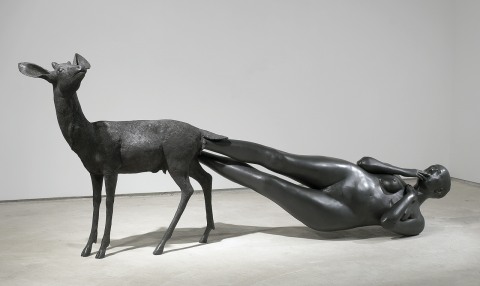


Perhaps the more important observation is that women have done best in the arts (and, for that matter, in economics) precisely when we left the era of "The Great Artist."
The Wealth of Nations
In March, the Bank of England will issue a new 20 pound note featuring Adam Smith and the pin factory. (Click to Enlarge).
Cultural imperialism?
My column from today offers my latest thoughts on globalization and culture, drawing on the very interesting work of Omar Lizardo, a sociologist at Notre Dame. We are often interested in culture for its symbolic value, and its ability to signal where we stand in local hierarchies. The more egalitarian a society, the less important this signaling function becomes. Here is one bit:
Hollywood movies are popular in Europe in part because of the successes
of European welfare states and of European economic integration.
Western Europe has become more equal in its treatment of citizens, it
has moved away from an aristocratic class society, and it has strong
global connections. All those factors favor an interest in American and
global popular culture; Hollywood movies often capture 70 percent or
more of a typical European cinematic market. Social democracy, which
the Europeans often hold up in opposition to the American model, in
fact aided this cultural invasion by making Europe more egalitarian.
Here is Omar’s home page. Here is Omar’s essay which I drew upon. Here is one further bit:
…the data supplied by Professor Lizardo show that the poorer a country,
the more likely it will buy and listen to its own domestic music. This
makes sense given that music is a form of social networking and the
relevant networks are primarily local.
MarginalRevolution peddles fakes
I found the following in my email a few days ago:
I regularly surf in google, and I came across The Marginal Revolution, where there is a painting and a nice comment of yours about Pedro Figari [TC: the link is mine]. This is enough motive for me to write, but more precisely because the painting is a Figari fake (coincidentally I own the legitimate one!). My current life and whatever is left of it you can appreciate in www.pedrofigari.com. If you have any doubts, suggestions, questions, feel free to email me, and I will be only too pleased.
The man is a descendant of Figari, but most of all a lover of art.
Review of me
Or rather of Good and Plenty: The Creative Successes of American Arts Funding, my last book. Here is the review, taken from The Art Newspaper, mentioned below. I like this sentence and its mixed metaphor:
One of most compelling aspects of the book is its ruthless evenhandedness.
Onion or not Onion?
Three
Death Row inmates say the three-drug cocktail used in lethal injections have
not been approved by the Food and Drug Administration for executions and want a
federal judge to issue an injunction to stop the state from using the drugs
until it complies with federal drug laws.
According to sources at the Allstate Insurance Company, CIA
Director Michael Hayden purchased nuclear-attack insurance Wednesday, paying a
$100,000 monthly premium for his homes in suburban Washington, Pittsburgh, and
near Cheyenne Mountain, CO.
Thanks to Monique van Hoek and Daniel Rothschild for pointers.
My favorite things Colombia
1. Literature. Here is my previous post on Garcia Marquez; I forgot to mention Love in the Time of Cholera.
2. Painter: Fernando Botero. Most of the Boteros you are likely to see are very weak, but his early work can be stunning; at ArtFair in Miami I saw a watermelon still life from the 1950s. Rest assured, he was once a painter of genius, but I cannot find a convincing reproduction on-line. I don’t think he sold out, rather he felt compelled to paint as much as possible, I don’t know why.
3. TV show: Betty La Fea, I have yet to see the U.S. "Betty the Ugly." Here is what the actress really looks like, or try this one.


4. Music: I don’t feel ready to judge Aterciopelados until I see them live. Yana has played plenty of Juanes for me, it is good Latin pop with hooks. Afro-Colombian music is noteworthy, here are some styles. I’ve never found a really good CD of Cumbia.
5. Movie: I thought Maria Full of Grace was overrated — too predictable, yes cocaine mules run great risks — but it is the only one I know.
6. Continental Liberator: Simon Bolivar.
7. Blogger and sociologist: Fabio Rojas, occasional guest-blogger here at MR. Here is his page on art and music, recommended.
8. Random category: Sofia Vergara ought to count for something. Often she dyes her hair dark to look more Latina for U.S. roles.
The bottom line: My knowledge here is patchy, and that is one reason why I am visiting. By the way if you live in Bogota, do drop me a line.