Results for “best book” 2008 found
What I’ve been reading
1. Methland: The Death and Life of an American Small Town, by Nick Reding. Maybe I should define a new category: "Good enough to finish." This is one of the better recent books on the economics of culture.
2. The Great Contraction, Friedman and Schwartz. Classic economics books like this are almost always worth a reread. I had forgotten just how bad was the year 1931.
3. Chop Suey: A Cultural History of Chinese Food in the United States, by Andrew Coe. There is way too much well-known diplomatic history in this book, but the best fifty pages are good enough to make it worthwhile. That said, I could have saved a lot of time, by flipping rapidly through the boring pages. had I not been reading it on my Kindle.
4. A Schoolteacher in Old Alaska: The Story of Hannah Breece, collated and edited by Jane Jacobs. A reasonably interesting look at Alaskan, Aleut, and Russian culture around the turn of the century, as told through the eyes of a settler woman and edited by Jacobs (with how much intervention I am not sure). This makes for a good contrast with Jacob's work on urban economies. It's not thrilling all the time but overall I would recommend it.
5. Middlemarch, by George Eliot. No other book I have tried so profits by a reread on Kindle. Given its density of information, it's simply much better when there is less on each page.
*Imperial*, by William Vollmann
It is glorious in its 1100 pp. plus of text, analytical diatribes, love stories, monomaniacal rants, ecological analyses, and unevenly eloquent prose. I'm on p.206 and so far it's a first-rate book on the Mexican-American border (Imperial is a county in California), low lifes, the desperation of America's empty spaces, and this is from an author who issues books like others do blog posts.
Suddenly I turn the page and see a heading: Warning of Impending Aridity. Some text follows:
This book represents my attempt to become a better-informed citizen of North America. Our "American dream" is founded on the notion of the self-sufficient homestead. The "Mexican dream" may be a trifle different, but requires its kindred material basis. Understanding how these two hopes played out over time required me to cultivate statistical parables about farm size, waterscapes, lettuce prices, etcetera. I have harvested them (doubtless bruising overripe numbers on the way), and now present them to you. Some of them may be too desiccated for your taste. If you skip the chapters devoted to them, you will finish the book sooner, and never suspect the existence of my arithmetical errors. As for you devotees of Dismal Science, I hope you will be awestruck by my sincerity about Mexicali Valley cotton prices.
Jason Kottke has an excellent post on Vollmann's book, with links and excerpts. One description is: "Just write that it's like Robert Caro's The Power Broker," she said, "but with the attitude of Mike Davis's City of Quartz"…but even that turns out to be inadequate:
Imperial is like Robert Caro’s The Power Broker with the attitude of Mike Davis’s City of Quartz, if Robert Caro had been raised in an abandoned grain silo by a band of feral raccoons, and if Mike Davis were the communications director of a heavily armed libertarian survivalist cult, and if the two of them had somehow managed to stitch John McPhee’s cortex onto the brain of a Gila monster, which they then sent to the Mexican border to conduct ten years of immersive research, and also if they wrote the entire manuscript on dried banana leaves with a toucan beak dipped in hobo blood, and then the book was line-edited during a 36-hour peyote séance by the ghosts of John Steinbeck, Jack London, and Sinclair Lewis, with 200 pages of endnotes faxed over by Henry David Thoreau’s great-great-great-great grandson from a concrete bunker under a toxic pond behind a maquiladora, and if at the last minute Herman Melville threw up all over the manuscript, rendering it illegible, so it had to be re-created from memory by a community-theater actor doing his best impression of Jack Kerouac. With photographs by Dorothea Lange.
How's that for the best sentence I read last night (it's from Sam Anderson)? As Vollmann himself once said: 'I used to think the Imperial Valley was hot, flat and boring,'
You can buy it here. Here is an Imperial slide show.
Assorted links
1. Top ten books in international economic history?
2. Slovakian review of Create Your Own Economy.
3. Eric Falkenstein on high-frequency trading.
4. Cronenberg to film DeLillo's Cosmopolis.
5. Surprising facts about best-selling authors; yes Sidney Sheldon is the same guy behind I Dream of Jeannie.
High-frequency trading
A few MR readers ask about high-frequency trading. Senators are calling it unfair because some traders have access to more powerful computers,and better quants, than do others. The traders with the most powerful aids get there first and make more money. Here is a typical critique. Felix Salmon is also skeptical.
I do not worry about high-frequency trading. Telegraphs and telephones also brought their own, earlier versions of high-frequency trading. As did stock index futures. There are second-best arguments relating to hockey helmets and the like but that is the case with most forms of progress and greater economic speed. You don't have to think that the current profits measure the current social value of high-frequency trading to argue that the overall trend should be allowed. The correct judgment of efficiency occurs at the system-wide level, not at the level of the individual trading strategy. The short-run story is that private profits exceed social returns but in the longer run the trading activity and liquidity brings increasing social returns and better communication of information.
I'm not a believer in the strong versions of efficient markets hypotheses, so I do admit that high-frequency trading, like just about every other trading strategy, can bring short-run "whiplash" effects on market prices. But if you don't like it, you can trade yourself at much lower frequencies, which is probably what you should be doing anyway. At the same time high-frequency trading smooths out or shortens many other cases of price whiplash. High-frequency trading brings more liquidity into the market. Call it "low quality liquidity" if you wish, but it still looks like net liquidity to me.
The complaint is that this liquidity sometimes vanishes. Maybe high-frequency trading can scare other traders out of the market;
that charge has been leveled against every method of informed
trading. In the short run it is sometimes true but markets respond by
upping the general requirements for quality trading and many market
participants rise to meet the new standard or else switch to longer
time horizons.
On the critical side there is lots of talk of "unfairness" and "manipulation," combined with snide references to the financial crisis. I'd like to see a serious efficiency argument against high-frequency outlined and defended, without the polemics. That would include a case that regulation will prove workable and catch only the "bad liquidity," while at the same time avoiding capture by envious and inferior competitors.
If high-frequency trading is used to trick other traders into revealing their demand schedules, and then canceling orders, I can see a case for regulating that particular practice. On that issue, here is background, from a critic, but note that these charges seem to be unverified.
The philosophical question is why it might possibly be beneficial to have market prices adjust within five seconds rather than within fifteen. One second rather than five? 0.25 rather than one? If you had been writing in the year 1800, what comparisons would you have chosen?
Remember that old comic book where they had Superman race against The Flash? The Flash won. Someone had to, just keep that in mind.
Assorted links
1. The courageous Bruce Bartlett, on taxes.
2. Harvard University Press will publish one thousand digital books.
3. Countercyclical assets: remaindered books.
My favorite things Alabama
1. Popular music. Emmylou Harris is from Birmingham and I like her albums with Gram Parsons. "The New Soft Shoe" is an excellent song. While I appreciate Nat King Cole in the abstract I never choose to put it on. Lionel Richie has a nice voice but the sound is too bland for my taste.
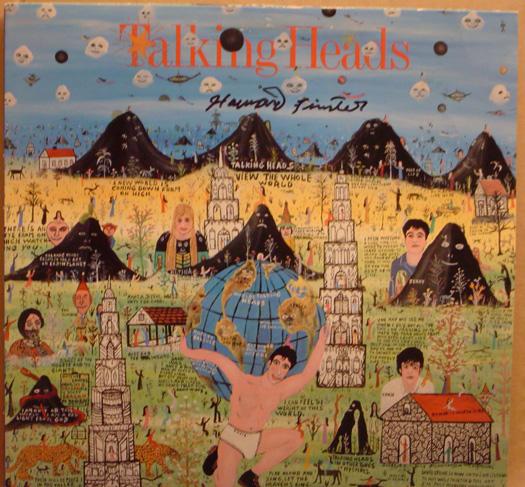
2. Painter: The early Howard Finster is excellent, although he churned out weak material for a long time later on.
3. Jazz: Lionel Hampton is the obvious choice, but I will pick Sun Ra, who is a musical god of sorts for me. Jazz in Silhouette is the best place to start, although it does not communicate the overall diversity of his work. He remains an underrated musical figure.
4. Country music: Hank Williams. Even if you hate country music you should buy the two CDs of his collected works. I also love Shelby Lynne; start with I am Shelby Lynne.
5. Bluegrass: The Louvin Brothers. Tragic Songs of Life is one of my favorite albums as it has a deeply scary and tragic feel; again you can love it even if you hate country and bluegrass. Do you know the song "The Great Atomic Power"?
6. Writer: I can't make my way through To Kill a Mockingbird. Who else is there? Wasn't one of Charles Barkley's books funny? I've never finished a Tobias Wolff novel, too stilted. Booker T. Washington and Martin Luther King were very good writers, though they don't quite fit the category. Same for James Agee. Truman Capote would be an easy pick except I don't enjoy his books. Zora Neale Hurston was born in the state though I am inclined to classify her under "Florida."
7. Quilters: From Gee's Bend, Alabama, there is an entire tradition. The traveling exhibits of these works are excellent.

8. Gospel: Blind Boys of Alabama. They transfer better to disc than do a lot of gospel groups.
9. Song, about: Don't go there.
10. Movie, shot in. Close Encounters of the Third Kind. As for "Movie, set in" here is a worrying list. Maybe I'll go with Fried Green Tomatoes, although the book is supposed to be better and more open about the sexuality of the main characters.
The bottom line: There are some major stars here and I haven't even mentioned the famous athletes.
Markets in everything; the culture that is Japanese
This year Japan has gone konkatsu-crazy, with the trend spawning countless magazine articles, a weekly TV drama and a best-selling book.
A Tokyo shrine now offers konkatsu prayer services, a Hokkaido baseball
team has set up special seats for those looking for mates, and a Tokyo
ward office arranges dating excursions to restaurants and aquariums.
A lingerie maker has even come up with a konkatsu bra with a ticking clock that can be stopped by inserting an engagement ring.
Here is much more. I thank KunLung Wu for the pointer.
Getting stuck in the bad equilibrium in India
The poor in India are victims of state indifference and corruption; somewhere between a quarter and a half of all subsidized food meant for them, for example, is stolen by corrupt government officials. And yet if one asks the poor what jobs they would like their children to have the number one answer is to work for the government. (See also my earlier post on Regulation and distrust for a model.)
To the poor the state is both an enemy and a friend. It tantalizes them with a ladder that promises to lift them out of poverty but it habitually kicks them in the teeth when they turn to it for help. It inspires both fear and promise. To India's poor the state is like an abusive father whom you can never abandon. It is through you that his sins are likely to live on.
*A Happy Marriage*
That is the title of the new novel by Rafael Yglesias. Here is a tiny excerpt:
I devoured this book eagerly on a plane flight and I recommend it highly to those who are married, have been married, will be married, should be married, and should not be married.
The blogger son Matt, in the form of a fictional persona, makes numerous cameo appearances. The economist Paul Joskow, in the form of a fictional persona, makes a cameo appearance. In real life he is Matt's uncle.
How many other novels explain to you — tongue in cheek — the exact difference between microeconomics and macroeconomics?
In my view Rafael Yglesias is one of the best American novelists of the last twenty years and probably the most underappreciated. Here is my earlier post on his earlier novel Dr. Neruda's Cure for Evil.
John Calvin as behavioral economist
Tomorrow marks the 500th birthday of John Calvin. If you read John Calvin you will find a great deal of what we now call behavioral economics.
For there is no medium between the two things: the earth must either be worthless in our estimation, or keep us enslaved by an intemperate love of it.
Here is one reason why there is "evil" in the world:
Whatever be the kind of tribulation with which we are afflicted, we should always consider the end of it to be, that we may be trained to despise the present, and thereby stimulated to aspire to the future life. For since God well knows how strongly we are inclined by nature to a slavish love of this world, in order to prevent us from clinging too strongly to it, he employs the fittest reason for calling us back, and shaking off our lethargy.
Adam Smith and David Hume were influenced by Calvin:
If we see a funeral, or walk among graves, as the image of death is then present to the eye, I admit we philosophise admirably on the vanity of life. We do not indeed always do so, for those things often have no effect upon us at all. But, at the best, our philosophy is momentary. It vanishes as soon as we turn our back, and leaves not the vestige of remembrance behind; in short, it passes away, just like the applause of a theatre at some pleasant spectacle. Forgetful not only of death, but also of mortality itself, as if no rumour of it had ever reached us, we indulge in supine security as expecting a terrestrial immortality.
It is odd to call someone so famous an "underrated thinker" but indeed Calvin is. You'll find the whole text of the Institutes of Christian Religion here; it makes for good browsing.
This chapter is John Calvin imitating Robin Hanson.
Buy the book here on Kindle for 99 cents.
*Create Your Own Economy*, special offer
As an economist I believe in the power of incentives.
If you order or buy my book before midnight tomorrow (it comes out tomorrow in stores), I will send you a free, special bonus chapter. If you've already bought or ordered the book, don't worry, you still qualify.
Just email me and tell me you bought the book, I will take your word for it. You can send me a copy of your on-line order if you wish.
No, it's not a bonus chapter from Create Your Own Economy.
Did you know that for years I have been, on and off, drafting a book on the philosophic foundations of a free society? The book is still years from completion. It won't even be my next book to come. But I do finally have an introductory chapter for that book which I will send you. This book is my no-holds-barred attempt to answer all of the tough questions about the philosophic foundations of our belief in freedom. It also gives a shorthand version of why I have significant reservations about the standard neoclassical approach to economic policy. No, it is not the book's full treatment of these issues but the chapter outlines the scope of the argument and the six major problems that any philosophy of freedom must solve.
In return I ask only that you give me your word you will not post the chapter on-line. (Comments, however, are welcome.)
This offer will not be repeated and I do not expect other people to see this chapter (much less the manuscript-in-progress) for some time to come. So now is the best, highest return time to order or buy Create Your Own Economy.
If you're having trouble clicking through to other book outlets, the link for Barnes&Noble.com is here, the link for Borders.com is here.
Administrative Costs
In the latest debate: Paul Krugman attacks Greg Mankiw for linking to a study by Robert Book arguing that administrative costs under Medicare are not as low as many people think. Book defends against Krugman's attack here. I find the debate peculiar for a number of reasons:
1) Picking out one measure of health care "costs" to compare systems is sadly reminiscent of the arguments for socialism. Do you remember those arguments? Under socialism:
-
"Think of how much money we will save on advertising!"
-
"Socialism will lower costs by maximizing economies of scale!"
-
"Money will be used for production not profits!"
Exactly these arguments are regularly trotted out in the debate over administrative costs in health care so color me unimpressed. To be clear, the point is not that these statements are false – the point is that these premises to the argument are all in some sense true it's just the conclusion, socialism is more efficient than capitalism, which turned out to be false. We tried that and it didn't work. In other words, you have to compare systems not arbitrarily pick out for comparison one type of costs.
2) Closely related to this point is the bizarre habit of taking about costs without mentioning benefits. The implicit argument appears to be that administrative costs are simply waste – this is the ancient cutting out the middleman fallacy. Administrative benefits, for example, reduce fraud and are a necessary consequence of making it easy for patients to get second and third opinions from different doctors.
3) Even if we could switch from a private to a public system and save administrative costs, the deadweight costs of taxation will far exceed any reasonable savings.
4) Any savings on administrative costs is a one-time level effect but the real issue with health care costs is growth as a share of GDP. (By the way, this same point explains why the debate over whether the public plan will discipline private monopolies is not especially important, monopoly–even if it is a problem–could at best explain a level effect not a growth effect which is where the action is.)
5) I'm not surprised that administrative costs under Medicare and under Canada's system suggest some potential cost reductions from moving to a single-payer system–again, Lada did save on marketing expenses–but it's a complete blunder to use Medicare administrative costs as an argument in favor of a "public option." The whole point of the public option, so we are told, is to compete on a level footing with private plans which means marketing expenses and all the rest.
Addendum: n.b. this post is about administrative costs not other reasons for preferring one system to another. See also Tyler on administrative costs further below.
Aid Realism for the Idealist
The failure of foreign aid to lead to economic development has left many cynics in its wake. For this reason, I enjoyed The Blue Sweater, Jacqueline Novogratz's story of moving from aid-idealism to aid-realism without ever passing through the way-station of aid-cynicism. As a naive, aid-idealist Novogratz spent a lot of time on the circuit in Africa; eventually hard lessons wore away the naivety but not the idealism. Of course, Novogratz learned a lot about the corruption, failure to experiment, and lack of accountability of the aid agencies but she also learned to be realistic about the do-gooders:
Philanthropy can appeal to people who want to be loved more than they want to make a difference.
But the hardest lessons were about the poor. In the late 1980s, Novogratz worked with a group of native women to build up a thriving business in Rwanda. Inevitably some of her friends became terrible victims of the 1994 genocide. Perhaps even worse, some of her friends became perpetrators. Hard lessons like these drove Novogratz's evolution.
I've read the following sort of thing many times:
It is so often the people who know the greatest suffering–the poor and most vulnerable–who are the most resilient, the ones able to derive happiness and shared joy from the simplest pleasures.
I've heard it so many times, I tend to dismiss it but Novogratz follows up with this:
That same resilience, however, can manifest itself in passivity, fatalism, a resignation to the difficulties of life that allows injustice and inequity to strengthen and grow…
Which, for me at least, turned a trite observation into an important insight.
Novogratz's experiences eventually developed into the Acumen Fund, a venture capital firm for aid. The idea is to invest patient capital in scalable, for-profit businesses that deliver services to the poor. The fund, for example, has invested in a firm producing drip irrigation systems in Pakistan, a Tanzanian firm that produces mosquito nets and an Indian firm producing internet-telephone kiosks in small villages.
The fact that the businesses have been for-profit has been critical. In selling bed nets for example the Tanzanian firm learned that talking about malaria doesn't sell. What sells, in the words of one of their top salespersons is, "The color is beautiful, and you can hang the nets in your windows so that your neighbors know how much you care about your family." As Novogratz puts it:
Beauty, vanity, status and comfort….The rich hold no monopoly on any of it. But we're a long way from integrating the way people actually make decisions into public policy instead of how we think they should make them.
Patient capital is no panacea–what is?–but by investing in entrepreneurs who must listen to their customers a charitable venture-capital firm can multiply the effectiveness of its philanthropy.
There is a powerful role both for the market and for philanthropy…Philanthropy alone lacks the feedback mechanism of markets, which are the best listening devices we have; and yet markets alone too easily leave the most vulnerable behind.
MJ, R.I.P
He's one of the few musicians I've been listening to since I was six years old. I've long thought I Want You Back is one of the best songs, period. She's Out of My Life has for a long time been a personal favorite, as is Girlfriend. Billie Jean survives being overplayed on muzak. Off the Wall is an underrated album, as is History. His personal legacy is perhaps a dubious one, but he was one of the great dancers and entertainers of his century and it is a shock to read of his passing. The J. Randy Taraborelli biography, despite stopping in the early 90s, is very good.
Today was not a good day for the 1980s (Fawcett, McMahon).
Kindle and DRM and Netflix too
After reading this post, I realize I don't understand my status quo DRM rights with Kindle. That's not a good sign. I did notice this sentence, which I didn't feel the need to parse any further:
Here is the major problem with this scenario.
As a reader, I find it good policy to keep the number of books on my Kindle to below twenty. That forces me to read the ones I order and it also protects me from "stranded" consumer durables. Uncertainty and confusion about my rights only strengthens my desire to keep that policy.
As a writer, I expect the Kindle is temporarily in my financial self-interest, as it gets more "influentials" reading my work and perhaps talking it up. In the longer run I suspect it means a lower equilibrium price for books. One question is whether publishers use "sticky" or inconvenient DRM practices as an implicit collusive method for limiting the spread of Kindle.
Today I was struck by this passage about the origins of Netflix:
Netflix's selection of more than 100,000 DVD rental titles is made possible by the "first-sale doctrine" of U.S. copyright law, which permits buyers of DVDs to lend them out without studios' consent.
In Netflix's early days, its buying team would sometimes purchase DVDs at local Wal-Marts or Best Buys if it couldn't get copies through studios, says Ted Sarandos, Netflix's chief content officer.
In contrast, to deliver movies and television shows over the Internet, Netflix has to license them from studios. So far, it has gotten only about 12,000 titles, a hodgepodge of older films such as "Diehard," episodes of popular TV shows including "30 Rock" and a smattering of new releases.
That's right, we had more innovation because some of the usual copyright strictures about negotiating rights did not apply. I am pro-copyright, but once again the default settings make it too hard for successful negotiations to occur.