Why can’t you choose your cable channels?
I don’t ever watch Bravo but still I must pay for it:
In the dream world of some television viewers, they would pay their cable or satellite companies only for the channels they want. Some might not pay for MTV, because they don’t want their 8-year-olds watching it. Others would turn down ESPN Classic, because they’ve already seen the 1975 World Series. Others would eschew TeleFutura, because they don’t speak Spanish.
Reality is far different.
No U.S. cable or satellite company offers what are called “a la carte” plans. In order to get the Discovery Channel from Comcast Corp. cable company, for instance, Washington viewers have to pay for an “expanded basic” package that includes MTV, FX, MSNBC and 33 other channels.
Here is one relevant article.
Why are consumers forced to buy a bundle? Cable companies claim that choice would require expensive boxes, but few observers believe this claim.
More plausibly, price discrimination is at work. Consider a simple example with two individuals. John values Disney at $100 a year and FoxNews at $10 a year; Sally has the reverse valuations. Without bundling, the cable company will offer each channel for about $99, and sell a channel to each consumer, reaping $198 in revenue (N.B.: I am assuming that the cable company has a good idea of demand in general, although it cannot identify which consumer is willing to pay how much for what.)
In lieu of this set up, sell the bundle for $109 to each consumer, reaping a greater revenue of $218. The company makes greater profit.
More importantly, aggregate welfare is higher. In this case each consumer receives two channels instead of one.
Monopolies, regulated or otherwise, tend to bundle commodities when demands are scattered and the marginal cost of additional service is low. In this context, once the program is made, you can sell it cheaply to additional customers. So why not try to get the entire package into everyone’s hands?
You can spin your own numbers, with varying results, but the overall lesson is clear. While there is a general problem with monopoly in the cable market, bundling can make that problem better rather than worse. So don’t complain next time you have to “click-remote” through those Farsi and exercise channels.
Thanks to Curtis Melvin and Robert Saunders and James for relevant pointers. The ever-excellent Arnold Kling offers useful remarks on bundling as well.
Marquee blogger
We’ve got one, at least as a guest, check out the photo.
More on graduate study in economics
Four months ago Tyler enthusiastically recommended EconPhd.net for students thinking about graduate work in economics. I second his recommendation and add some observations:
1. The site makes clear that getting accepted to the top tier economic graduate programs is difficult. Christian Roessler, who runs the site, discusses “PhD fields in order of difficulty of entry” and concludes that of 28 graduate fields, economics ranks fourth-toughest (below computer science, physics, and math). In strong support of this conclusion is some information about individual students accepted and rejected during 2002 and 2003 for 47 schools (Excel spreadsheet). These students were not randomly selected, so we must take care in generalizing, but if one examines the thumbnail sketches of the applicants who were rejected by Harvard, MIT, and Stanford, the conclusion seems inescapable.
2. If an applicant is undeterred by these odds, it’s clear that he or she should be well prepared in math. Susan Athey, Stanford professor, writes, “Real analysis is an especially important class because it tends to be demanding everywhere, and forces you to do logical and formal proofs. Get a good grade in this class.” Roessler writes, “If you really want to delight the adcoms (you do), take topology and functional analysis (real analysis II) too.” For more on the math used, Google “math camp” economists. The ambitious student can also look at what mathematics courses Professor Thomas Sargent suggests for economics Ph.D. students .
3. Fortunately, there are a lot of very fine economics programs below the ones in the top tier. Roessler has listed, for many schools, each school’s particularly strong fields (Excel spreadsheet).
4. It seems like a good idea for any student applying to graduate school in economics to apply to more than just a couple of schools. One aspiring economist, Chris Silvey, has posted his results:
Rejections: Duke, UCLA, Minnesota, Rochester, Wisconsin, U. of Washington, Berkeley.
Acceptances: UC San Diego, Ohio State, Maryland, Cornell, Texas A&M (all with money); UC Davis and Virginia (financial aid to be announced).
Wait-listed: U. of North Carolina, Chapel Hill.
5. It also seems like a good idea to read about the experiences of some current graduate students. Here are three who have many interesting things to say: Ngan Dinh (U. of Chicago) first year, second year; Santosh Anagol (Yale); and Rob McMillan (Stanford).
6. The economics department at Davidson College has collected some useful information and links.
Explicit rules have costs
Relationships between people can be governed by explicit rules and also by informal understandings. Explicit rules often seem more efficient and more equitable, but they can have significant costs, too. A recent incident in the National Hockey League illustrates. Discussing Todd Bertuzzi’s blindside attack on Steve Moore, which resulted in Moore sustaining a concussion and three fractured vertabrae in his neck, Los Angeles Times reporters Helene Elliott and Elliott Teaford write (unfortunately, no longer free):
The incident ignited a firestorm of criticism of the NHL’s tolerance of fighting and rough play. But many players, observers and officials say Bertuzzi’s attack was an indirect consequence of the instigator rule, which was adopted in 1992 as part of the league’s effort to minimize the fighting that bloodied its image in the 1970s.
In its current form, the instigator rule mandates penalties and suspensions for players who start fights and accumulate instigator infractions over the course of a season. However, many say it has made players reluctant to retaliate against cheap shots for fear they’ll get an instigator penalty and put their teams at a disadvantage.
Ladies and gentlemen, we have a deal
Fair is fair, Brad DeLong shall now name the forbidden candidate. Brad and I have reached agreement on sundry matters concerning immigration, liberalism, and the welfare state. Here is Brad’s response to my challenge:
“In response to my evangel, Tyler Cowen throws down the gauntlet:
Marginal Revolution: Brad DeLong tries to convert me: Finally, I’ll offer Brad a deal. I will refuse to vote for the Presidential candidate he specifies (guess who that might be), if he will write in his blog, with no subsequent irony or repudiation the following: “The classical liberal recipe of increased immigration is superior to strengthening the welfare state. I just don’t think it will or can happen, so I will advocate the next best thing.” As a pure freebie, I will in advance volunteer the concession that most tax systems should be mildly progressive rather than flat or regressive. [That’s Brad quoting me, if you are confused, now back to Brad.]
I can deal with the no irony or repudiation part, but there do have to be three clarifying footnotes:
Footnote 1: As Robert Waldmann has pointed out, you can’t be an economist without asking “how much?” How much immigration does an extra unit of social insurance crowd out? Marginal rates of transformation matter. If the answer is “almost zero,” the implications for public policy are very different from what they are if the answer is “a lot.” This is an empirical question on which there is some (but not a lot of convincing) evidence, and Tyler and I disagree. If I believed (as he does) that we would have a much more liberal immigration policy if we had a smaller social insurance state, I would reach the conclusions he does. This is an example of Milton Friedman’s dictum that in the end almost all disagreements between economists can be phrased as disagreements over matters of fact rather than matters of value.
Footnote 2: I’m not a cosmopolite: I care about myself and my family first; my friends second; my country third; and the world fourth. There are policies that would be good for the world as a whole and yet be bad for my country, and I would have to think long and hard before advocating such policies. I don’t think expanded immigration is one such (although I fear that totally open borders may be one such). But it is worth bearing in mind.
Footnote 3: When the share of commodities that can be cheaply traded across national borders is large, trade can effectively substitute for migration. To the extent that freer trade avoids (some of) the political problems generated by freer migration, we economists should concentrate our attention on the first rather than the second (and here too marginal rates of transformation matter).
But with those footnotes, then yes, Tyler is right: Increased immigration is superior to strengthening the welfare state. I just don’t think it will or can happen, so I will advocate the next best thing. From a cosmopolitan world perspective, almost all of the costs of maldistribution come from income gaps between nations and very little come from within-nation inequality. Development is far more important from a world welfare perspective than social insurance within rich countries. And immigration is a powerful tool for world development.”
Scroll down two posts on MR for background context, in case you haven’t been following the exchange.
The bottom line: This is fun, can we deal some more? (Do not forget the Virginia governor’s race, much is at stake. Perhaps Atrios will repudiate the Democrats in return for my vote.) And now Lynne Kiesling has to tell me whether I am the mutton or the lamb.
The sorry state of economic literacy
…there is a great deal of confusion about basic facts relevant to policy. Almost half the public, and a quarter of those over age 55, thought Medicare already provided drug benefits for outpatients before legislation providing such coverage was enacted. More than half could not hazard a guess about the size of the budget deficit. The average person thinks 37 percent of Americans lack health insurance, more than twice the actual percentage.
From where do Americans learn about the economy? By far the most common source is television. Those who rely on television the most, however, tend to be among the least informed.
The second most common source is local newspapers, which were cited much more frequently than national or big-city papers.
Friends and relatives came in third, followed by political leaders, radio and economists. The Internet was next, although a sizable contingent listed it as their most important source.
Those who consulted more sources, and consulted them more often, were a bit better informed – but not much. That’s a sobering fact for the media.
People who said they voted in the last presidential election were better informed than nonvoters.
Liberals, moderates and conservatives all did about equally well on the test of economic facts. But those who said they hadn’t thought much about their ideological leanings – one in three people – were appreciably less knowledgeable.
That’s all from Alan Krueger, writing in The New York Times. His bottom line is that ideology, not self-interest, predicts public opinions about economics.
On the same topic, here is one of my favorite essays by Bryan Caplan. Here is one good bit:
In stark contrast to income, education exerts a powerful influence over a wide range of economic beliefs… The typical cab driver with a Ph.D. in philosophy shares the economic outlook of other Ph.D.’s, not other cab drivers. Given the strong correlation between income and education, though, widespread misconceptions about the “beliefs of the rich” are quite understandable.
Further below Craig Newmark offers remarks on related topics.
Brad DeLong tries to convert me
Yesterday on The Volokh Conspiracy I wrote that modern liberals should become classical liberals. Increased immigration is superior to increased spending on the welfare state, whether for the poor or otherwise; see the link for the full argument. Brad DeLong felt I was pointing in the wrong direction. He responded:
…Tyler should become a liberal, for where the rubber meets the road in modern American politics it is simply not the case that immigration and social insurance are substitutes. The labor side of the Democratic coalition doesn’t like large-scale immigration because it puts downward pressure on the wages of the unskilled. The nativist side of the Republican coalition doesn’t like large-scale immigration because… because… because it threatens “our” culture, because it makes terrorism easier, because it threatens to make America look not like America anymore. In the immortal words of Margaret Thatcher, immigration threatens us because we will be “swamped by people of a different race.”
Read Brad’s entire post, entitled “Yes, Tyler Cowen! You Really Are a Liberal! You Just Don’t Know It Yet!”. I have the not-so-secret fear that co-blogger Alex will agree with his title, though perhaps for different reasons.
On the substance of the matter, Brad’s response puzzles me. First, if we think increased immigration is a superior recipe, should we not try to make it more feasible through our advocacy? Why not think big and push for classical liberalism? (It’s actually far more complicated than this, here are forty pages of Cowen on the topic, but for the hard cores only.)
Second, we have had a huge immigration reform in the 1960s, another significant set of changes in the Reagan years, and Bush has proposed yet further immigration reform. The recent Bush plan appears stillborn, but the issue is hardly a dead one. Even if you don’t think we will take in more immigrants anytime soon, we may well take in fewer. The same is true in Western Europe. I don’t see current immigration levels as carved in stone, quite the contrary.
More directly, welfare/educational/fiscal issues appear central to the immigration question. Try reading these posts from PrestoPundit, or Victor David Hanson’s Mexifornia. Here is an [ugh] Pat Buchanan quotation, you don’t have to agree with him to know that many voters do. Both in reality and rhetoric, extensive welfare systems make it harder to accommodate more immigrants (noting that some welfare will ease their transitions). The Western Europeans face this constraint every day, it would not be an overstatement to describe it as an obsession of theirs.
Finally, I’ll offer Brad a deal. I will refuse to vote for the Presidential candidate he specifies (guess who that might be), if he will write in his blog, with no subsequent irony or repudiation the following: “The classical liberal recipe of increased immigration is superior to strengthening the welfare state. I just don’t think it will or can happen, so I will advocate the next best thing.” As a pure freebie, I will in advance volunteer the concession that most tax systems should be mildly progressive rather than flat or regressive.
Since Brad and I each think we are on the verge of converting each other, surely some huge misunderstanding is going on. That being said, I think this kind of direct written exchange is massively undervalued in academia (I would like to see an entire journal of direct written debates, for one thing). My compliments to Brad and to the blogosphere.
Update: Read Matt Yglesias as well. I’ll add that immigration is only one alternative to domestic welfare, why not a helicopter drop of dollar bills over Haiti? At certain margins immigration and welfare are or can be complements (we all agree on this), but at some point the modern liberal still must resort to anti-cosmopolitan intuitions.
Miracles
Freeman Dyson introduces us to Littlewood’s Law of Miracles:
Littlewood was a famous mathematician who was teaching at Cambridge University when I was a student. Being a professional mathematician, he defined miracles precisely before stating his law about them. He defined a miracle as an event that has special significance when it occurs, but occurs with a probability of one in a million. This definition agrees with our common-sense understanding of the word “miracle.”
Littlewood’s Law of Miracles states that in the course of any normal person’s life, miracles happen at a rate of roughly one per month. The proof of the law is simple. During the time that we are awake and actively engaged in living our lives, roughly for eight hours each day, we see and hear things happening at a rate of about one per second. So the total number of events that happen to us is about thirty thousand per day, or about a million per month. With few exceptions, these events are not miracles because they are insignificant. The chance of a miracle is about one per million events. Therefore we should expect about one miracle to happen, on the average, every month. Broch [co-author of the book Dyson is reviewing] tells stories of some amazing coincidences that happened to him and his friends, all of them easily explained as consequences of Littlewood’s Law.
The law echoes a comment I’ve seen attributed to another mathematician, Persi Diaconis. Diaconis supposedly said that if you study a large enough population over a long enough time period, then “any damn thing can happen.”
A reason why more people should learn some economics
A Philadelphia Inquirer profile (free registration required, or see here) of economist Sophia Koropeckyj makes an important point:
Koropeckyj’s work stands for a psychologically reassuring idea in a world that seems all too chaotic. . . .
In other words, life is orderly and the future predictable as long as the proper patterns are discerned, then applied.
“Every facet of human life can be explained in economic terms,” Koropeckyj, 47, of Jenkintown, said.
The late Paul Heyne put it this way: “In a democratic society, ignorance of economics is fertile breeding ground for perverse government policies. Ignorance of economics also interferes with human flourishing, because it leaves people anxious and uncertain about powerful but mysterious relationships whose intimidating character could be dispelled through understanding of the kind that economic theory can provide.” The Economic Way of Thinking, Ninth Edition (Prentice Hall, 2000), p. ix.
(Andrew Chamberlain at The Idea Shop, one of Prof. Heyne’s students, wrote a fine tribute to him here.)
The world’s richest man?
Do you trust the Swedes on a question like this? They say it’s not him. Instead meet Ingvar Kamprad, founder of IKEA. Forbes put him at #14 last year, the Swedes tell us the dollar has fallen. By the way, he lives in Switzerland and flies economy class. This link will tell you what IKEA stands for, which otherwise only loyal Smalandians would know.
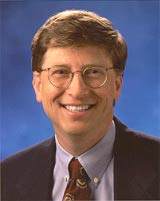
Thanks to Geekpress.com for the pointer.
Update: IKEA says no. Here is the real answer, along with analysis.
Question of the day
John Kerry’s energy plan calls for reducing U.S. oil imports by two million barrels per day, roughly the amount the country brings in from the Persian Gulf. So how come Kerry is simultaneously blasting George W. Bush for not pressuring OPEC to sell us more oil?
That is Gregg Easterbrook. But in lieu of the resource pessimism in the rest of Gregg’s post, read Nick Schulz:
One way to determine if gas is too expensive is to compare it to other products to see how much bang you get for your buck. Sen. Kerry chose to speak in San Diego in part because that city has, according to Reuters, the highest gas prices in the country at $2.12 a gallon. So how does that compare with other consumer products like, say, the source of the Heinz-Kerry fortune: ketchup?
At the big-box retail outlets Sam’s Club and Costco, ketchup sells for about $0.04 an ounce or $5.12 a gallon – a little more than twice the price of gas.
But that’s not the best comparison. Americans typically don’t buy gas in bulk the way they buy foodstuffs at Costco. Ketchup at a retail grocery store is $0.16 an ounce meaning it rings in at an impressive $20.48 a gallon, almost ten times what gas costs.
Gas is also cheaper than orange juice ($6.64 a gallon), Snapple ($10.32 a gallon); olive oil ($51.04 a gallon), eye drops ($995.84 a gallon) and nasal spray ($2,615.28 a gallon) according to figures from the Department of Labor, Consumer Price Index.
Follow Nick’s links as well, including to Lynne Kiesling, keep scrolling to get her full treatment of this issue.
Ask not for whom the road tolls…
The Federal government has for a long time prohibited the use of federal funds in toll road projects. Amid the pork in the approx. $300 billion highway bill, however, are provisions that would lift this ban. Gasoline taxes are not raising enough revenue to support road construction and maintenance at desired levels but no one wants to propose an increase in the gas tax today! In addition, policy makers are finally beginning to understand that there’s no such thing as a free lunch or a free highway. Mary Peters, the administrator of the Federal Highway Administration said recently:
Our Interstate system left the public with the perception that roads are free and price shouldn’t vary according to the demand you place on roads, but that’s a fallacy. If you use the road at a peak time when many other people want to use it, then you should pay a higher price.
I don’t expect to see “free” roads converted to toll roads anytime soon but new roads financed by electronic tolls will become increasingly common and this move will encourage the creation of HOT lanes (high occupancy/toll lanes) in the median or alongside currently congested highways. Northern Virginia, the San Francisco Bay area, Chicago and other centers of heavy congestion for example, could all benefit from HOT lanes. Fairfax endorsed such a road not long ago.
Addendum: Here is a good report on road pricing around the world. And here is my debate with Tyler on this subject.
Tyler I, Alex 1, Tyler I, Alex II.
The Two Things
Glen Whitman, Cal State Northridge economist, presents an elegant idea: The Two Things.
A few years ago, I was chatting with a stranger in a bar. When I told him I was an economist, he said, “Ah. So . . . what are the Two Things about economics?”
“Huh?” I cleverly replied.
“You know, the Two Things. For every subject, there are really only two things you really need to know. Everything else is the application of those two things, or just not important.”
“Oh,” I said. “Okay, here are the Two Things about economics. One: Incentives matter. Two: There’s no such thing as a free lunch.”
It would be hard to do better than that! And Glen has gathered an terrific group of Two Things statements from readers. A sample:
The Two Things about Marketing:
1. Find out who is buying your product.
2. Find more buyers like them.
-RacehorseThe Two Things about Software Engineering:
1. Pick two, and only two: stable, feature-complete, on-time.
2. One great coder is better than two good coders, except when not.
-MattThe Two Things about Teaching History:
1. A good story is all they’ll remember, not the half hour of analysis on either side of it.
2. They think it’s about answers, but it’s really about questions.
-Jonathan DresnerThe Two Things about Art Criticism:
1. If it isn’t novel, critics aren’t interested.
2. If it is novel, no one else is interested.
-TheLetterMThe Two Things about Writing:
1. Include what’s necessary.
2. Leave everything else out.
-Nicholas KronosThe Two Things about World Conquest:
1. Divide and Conquer.
2. Never invade Russia in the winter.
-Tim LeeThe Two Things about Star Trek:
1. Don’t beam down in a red shirt.
2. You can always talk evil computers into destroying themselves.
-Tim Lee
My modest attempt to match these is
The Two Things about Life:
1. Be brave, work hard, save: live for the long run.
2. In the long run, we’re all dead.
A possible cost of diversity?
Professor Joanna Shepherd (Clemson) presented “Racial Diversity, Residential Segregation, and Crime: An Industrial Organization Analysis of Racial Competition” at N. C. State. She finds that, other things equal, more racially diverse areas have more crime. From her conclusion:
My econometric analysis of counties from 1990-1999 and metropolitan areas in 1980,
1990, and 2000 finds that both diversity and segregation increase crime. Moreover, tests of the
combined effect of diversity and segregation reveal that segregation worsens diversity’s effect on
crime. My results are robust to many alternative specifications. Moreover, tests confirm that my
diversity measures are not proxying for racial groups that disproportionately commit crime. Nor
are the results caused by any potential endogeneity between crime and diversity. Finally, my
estimations are designed so that my racial diversity measure is not picking up other types of
diversity, such as income diversity or religious diversity, which could increase crime.The results from my econometric analysis confirm the predictions of my industrial organization theory of racial competition. The theory suggests that diversity increases both inter and intra-racial crime as racial groups compete. Segregation sharpens the competition.
My results in no way establish that diversity is bad; diversity provides countless benefits such as awareness of other racial groups and an intermingling of cultures. However, this paper, for the first time, focuses on one of diversity’s costs: increased crime. To determine the optimal amount of diversity in a region, one must weigh diversity’s numerous benefits against the costs.
She hypothesizes that a primary means by which diversity affects crime is provision of local goods. Areas that are more diverse tend, other things equal, to provide less public goods.
Craig Newmark to guest blog!
We are delighted that Craig Newmark of Newmark’s Door will be guest blogging with us this week. Tyler and I read Craig’s blog every day for the links that no one else finds. In his regular job, Craig teaches economics at North Carolina State University. Craig’s wife Betsy is also a well known blogger at Betsy’s Page which makes me wonder if they argue over the DSL line the way other couples argue over the TV remote?
Thanks also to our colleague Russ Roberts for blogging with us last week.