Can more bonuses improve the NBA?
If every player had money on the line in every game based upon a victory, you’d see some unbelievable competition. Sports and team concept would change dramatically.
Of course "per-victory" contracts are possible now, but most incentive clauses are based on individual performance or a victory or playoff threshold. Why?
1. Star players might injure themselves too frequently if they try hard every game. Their value to the league involves an external benefit which they do not internalize when deciding how much injury to risk. Plus an owner wants them to conserve their energy for the playoffs or for critical opponents.
2. Most fans don’t know the difference between a good game and a bad one. They want only to see the stars, and maybe a few slam dunks. So why impose more pecuniary risk on the players?
3. Players already try hard on offense. Making them play tough defense would deaden the game. This doesn’t explain why a single team doesn’t use per-victory bonuses, but it does suggest there will be no league pressure to do so.
4. Per-victory compensation will lead the players to blame each other too much for particular losses. Team morale and thus team productivity will decline.
5. Incentives of fame and approbation already impose this incentive structure, and in a more powerful way than money could do.
6. When bargaining over a contract, a player would reveal negative information about his self-estimated talent level by accepting high-powered incentives. If you cut a deal with big bonuses, the team must think your low-effort state of output is pretty crummy.
I put weight on all of these, but on #6 least. Of course this relates to the general question of why firms don’t use more high-powered incentives. Could the lesson be that fewer business variables matter than you might think? (A related question is why don’t more firms use idea futures.)
Would Rick Barry’s idea improve the NBA? Comments are open…
Word clouds
Here are the images, thanks to Virginia Postrel, and it seems you can get a MarginalRevolution.com T-shirt for $18.

The best sentence I read yesterday (previous post retraction edition)
Herr Andrew Hammel believes that German can be a happy language too:
I have tried smiling while saying umlauted vowels, and it seems to work just fine, it’s only a little tricky with the ‘ü’, since you’ve got to tighten your cheek muscles a bit to really get it right.
Hammel’s blog is frequently interesting, here is a good post on German compound nouns.
Indoor free throws — a paradox of exercise
Outdoors I am a mediocre free throw shooter. I hit 50 percent. Indoors I hit about 70 percent. This is close to the NBA average, and divided by my hourly wage it would put me at number one in the league. How can this difference be? Virginia is not that windy. My outdoor free throw shooting is best when dusk is approaching, and the air is hot, thick, and still. (I also feel I play tennis much better indoors, although that is harder to measure.) The Great Outdoors are wonderful, but it is disturbing when the basketball clunks on the rim. Each time I wonder what other life tasks I might perform much better, if only for some simple change in framing.
Addendum: Forget free throws, here are videos of NBA dunks from the recent slam-dunk contest, courtesy of http://kottke.org. My percentage there is the same, indoors or outdoors.
China fact of the day
That the [Shanghai pedestrian traffic] guards have no powers of arrest, or even the ability to issue tickets, allows many pedestrians to feel free to ignore them. What is worse, they are frequent targets of aggression from crowds of sneering and cursing pedestrians. According to the city government, they are physically assaulted at a rate of about 20 times a month. [emphasis added]
Here is the full and fascinating story of the traffic mess we call Shanghai. Any predictions on when the city turns into a mass of frozen gridlock? Or will they develop the technical infrastructure to institute road pricing, as Singapore has done?
Five open questions about prediction markets
Here is the new version of the paper, for $5. Here are older versions of the paper. Here is a summary of the five questions. Of these five, I worry most about getting uninformed traders to participate in a game with zero-sum (at best, assuming no trading costs) pecuniary returns. I doubt if idea futures will be the sexiest form of gambling for most people. Insofar as traders look for fun, only the celebrity-obsessed and current events-obsessed will find idea futures more attractive than Las Vegas or Baden-Baden. (That is why contracts on politicians and Michael Jackson have been so popular.) If you are simply looking to earn money for the longer run, Wall Street, with its positive expected rates of return, offers better odds. That being said, as the fixed costs of market creation fall, a relatively small number of traders may suffice to keep most of the important idea futures going.
Prudie blows it again
The question: I have a friend who is a functional alcoholic. Every day after work he stops by a bar, and within two hours consumes two pitchers of beer. Needless to say he drives home. He’s not sloppy drunk, nor does he exhibit signs of being drunk, but I’m sure his reaction time is impaired. Two years ago he was arrested for drunk driving. After hiring a lawyer who used to work as a police officer, he got the charges dropped to reckless driving. The lawyer advised him that next time he is pulled over not to submit to any tests, but to request a lawyer. He was pulled over again last week and did as he’d been advised. He spent the night in jail, allowing the alcohol level in his blood to drop, making it pointless to test him. I don’t want to see him get away with this anymore. I don’t know what to do. I fear that confronting him will do nothing. I feel if I make an ultimatum in regard to our friendship, he will choose alcohol, which won’t stop his drinking and driving. Part of me wonders if I should anonymously inform the police of information that would help prove their case against my friend, but I feel this would be a huge betrayal. I just want to stop this behavior and help him avoid harming an innocent bystander.
—Afraid for a Friend
Read Prudie’s answer here, but basically she says lie in wait for him at a bar and then call in the police to track him and arrest him. I suggest a different approach…
1. He shouldn’t be your friend in the first place.
2. Turning him in to the police will make him your ex-friend. That is in some ways a good start, but I suggest you have only weak duties to help your "soon to be ex-friends."
3. If you wish to help innocent bystanders, forget about your friend and stand outside a popular bar with a cell phone. Or work overtime and invest the money in third world micro-finance. There is no good consequentialist reason to target your friend’s drinking and driving. (Did I just call him your "friend"?) It is unlikely that is the area of your greatest effectiveness, especially since the guy doesn’t care much about you.
4. What is she trying to get out of her system? Has he neglected her in favor of the alcohol? Often you can infer the real motivations by taking the opposite of the "pen name," in this case "Afraid for a Friend."
Let us do one more:
Question: I have a fiance who has an anxiety problem for which he takes medication. He wants to bring his guitar with him on our honeymoon because he said since he can’t bring his piano (he’s a classically trained pianist), he needs some instrument to play. He said that he needs the guitar or else he will feel anxious, because he would not have any instrument to practice. It irks me to no end that if he doesn’t have an instrument and he’s sharing company with me, that’s what he’s focusing on even though we’re watching TV or at dinner, etc. When we have gone away for a weekend and he has not brought his guitar, he drinks instead. He does not get drunk, but he does drink enough over time that the alcohol keeps him from "performing." Is it selfish to want to have my honeymoon with just my husband and not have him leaving to go to another room to practice for a couple hours? I want undivided attention! Yet, I don’t want to have him drinking and not able to perform, nor yearning to play an instrument while he is with me. Shouldn’t I be enough, at least for our honeymoon?
—Feeling Not Important Enough
Prudie says you are a pain in the neck and you should split with a man you obviously do not love or even like. I’ve been known to offer this advice myself, but let’s give it another spin. There is a reason why "Feeling Not Important Enough" made a bad choice in the first place. If she splits with him, she will be "drawing from the urn without replacement," as they say. And what a very special urn it is. Should she think that simply making another choice will yield something much better? At least this first pick a) plays at least two musical instruments, and b) is taking medication, which is more than you can say for the median impotent, nervous, obsessive-compulsive, alcoholic musician.
On-line economics education?
A loyal reader writes:
I’d like to expand my economics knowledge. However, as I just finished 4 years of night school, I do I want to start another degree program in a brick and mortar institution. Indeed, my wife would likely divorce me if I did.
Do you know of any reputable on-line Masters degrees in Economics? I need something more structured than independent reading but less time consuming than attending class. I am not that concerned if the degree and/or the granting institution is not generally accepted in the Econ field as long as the content is sufficient. I do not plan on using it as a major résumé item. I am skeptical of online degrees, but that cannot mean all are worthless. I’ve googled the subject, but I do not have enough information to pick the good from the bad. Any information will be appreciated.
I have no idea. Readers…? Comments are open. In the early days of MR Alex argued that professors will soon become obsolete (and follow up here) as technology like CDs and podcasts of [fill in your favorite economist] come to dominate the market. I said no way, there is something about having the person right in front of your face that triggers your biological "pay attention" alert mechanisms…
Which students are most likely to complete an economics Ph.d.?
The best predictors would appear to be a high math GRE score, being foreign, and having recommendation letters from "quality professors." Here is the paper and data. Those indicators also predict research productivity. Thanks to Craig Newmark for the pointer; here is his source.
Do beware the general problem with this kind of study. It is easy to set up a model where GRE scores do not predict later academic success, precisely because GRE scores are used as a dominant criterion for admission. An admitted student with low scores presumably has some other virtue in his favor. Yet it would be wrong to conclude that scores, in the population pool, are not correlated with quality. The real trick would be to look at a broader pool of applicants, not just those who were accepted and attended.
The A-D ban
Let us say we passed a law banning some people from the shoe trade. In particular, we would ban all people with last names starting with the letters A-D.
How much would this matter? Surely the E-Z people are numerous enough to enforce a perfectly competitive solution, or as close to that solution as we would have come anyway. But what if Mr. Brown would have been the Steve Jobs or the Bill Gates of the shoe trade?
This is a demarcation question for your vision of economics. What is the chance that individual agents will matter for final outcomes, or do good rules suffice to set things right?
If you think the A-D ban would matter, must you also believe in increasing returns to scale?
These queries are not unrelated to whether Wal-mart should be allowed to enter commercial banking.
Epistemology
A few points:
1. "Transcendental" arguments fail in epistemology, as in most other realms. "Well, if you couldn’t know things, really know them, you couldn’t even be here to doubt that we can know things…" etc. Please. Don’t bring this up. It is not logically impossible to imagine a non-knowing computing device spewing out all sorts of true claims.
2. I love Thomas Reid, but I run away when I meet others who like him, much less love him. He is too often used to dismiss the doubts that others have about your ridiculous, completely unsound philosophical positions.
3. The relevant real world question is why we ignore obvious truths, rather than how we come to know the tough things we do.
4. The quest for "justified true belief," a’ la Nozick, is a chimera. Gavagai, I say, and no, Quine does not require behaviorist roots, even though Quine was a behaviorist. As a general rule, expect either underdetermination or overdetermination in your theoretical endeavors. For that same reason, don’t think that epistemology can be reduced to neuroscience.
5. Ask an agnostic to give you betting odds on the existence of God. Most of them hate this question, but I do not see how they can eschew it. Hard-core atheists will be torn between "zero" and "one in a trillion," but when you ask them where the "one" comes from, they get flustered.
6. Bryan Caplan still mocks me for saying "one in twenty."
7. When they shoot phasers ("set to kill") in the original Star Trek, how does the phaser "know" to wipe out the person and his clothes, but not the ground nor the boulder he is leaning upon.
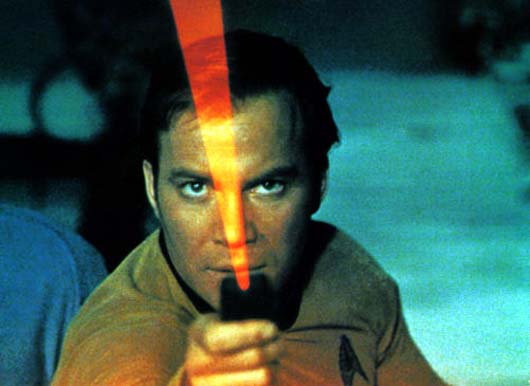
8. You are wrong so, so, so often. That is, or rather should be, the central lesson of epistemology. It is a lesson which hardly anybody ever learns. And you don’t need the fancy philosophical machinery to get there. That is why the rest of epistemology is so often so fruitless.
The versatility of conceptual innovators
David Galenson writes:
Art scholars have puzzled over the behavior of Pablo Picasso, Gerhard Richter, and Sigmar Polke – important modern painters who have made frequent and abrupt changes of style. Yet in each case the scholars have assumed this behavior to be idiosyncratic, and have consequently failed to recognize its common basis. Versatility is in fact often a characteristic of conceptual innovators, whose ability to solve specific problems can free them to pursue new goals. This contrasts sharply with the practice of experimental artists, whose inability to achieve their goals often ties them to a single style for a whole career. The phenomenon of the conceptual innovator who produces diverse innovations is an important feature of twentieth-century art; Picasso was the prototype, and he was followed by a series of others, from Marcel Duchamp through Damien Hirst. Versatility has furthermore been a characteristic not only of modern conceptual painters, but also of conceptual innovators in other arts, and conceptual scholars. Recognizing the common basis of this behavior increases our understanding of human creativity.
Are you too thinking "Kenneth Arrow"? How about Leibniz for that matter? Here is "the last man who knew everything." Here is the paper.
Are some languages happier than others?
Germans can be grumpy, unpleasant people–and it’s not because of post-Nazi guilt or a diet filled with bratwurst, says one American researcher. It’s because of their vowels. Hope College psychology professor David Myers says saying a vowel with an umlaut forces a speaker to turn down his mouth in a frown, and may induce the sadness associated with the facial expression. Myers added that the English sounds of "e" and "ah" naturally create smile-like expressions and may induce happiness. Clearly the solution for the Germans, much like the solution for every other people in the world, is to become more like Americans. The German Embassy would not comment on the findings, saying they were "too scientific."
Here is the link, which contains a few other tidbits as well. Thanks to Alina Stefanescu for the pointer.
Do competitive House seats make for ideologues?
It has been suggested that congressional polarization is exacerbated by new districting arrangements that make each House seat safe for either a Democratic or a Republican incumbent. If only these seats were truly competitive, it is said, more centrist legislators would be elected. That seems plausible, but David C. King of Harvard has shown that it is wrong: in the House, the more competitive the district, the more extreme the views of the winner. This odd finding is apparently the consequence of a nomination process dominated by party activists. In primary races, where turnout is low (and seems to be getting lower), the ideologically motivated tend to exercise a preponderance of influence.
Thanks to Eric Rasmusen for the pointer, comments are open. The implication, of course, is that electoral competition is overrated. If we think of more moderate outcomes as better on average (debatable, admittedly), we can view the problem of politics in a new way. Do aggregation mechanisms produce better decisions when individuals feel that less is on the line? Is this the opposite of everything we learned from Anthony Downs?
Game theory and the toilet seat problem
Ilia Rainer and Jacqueline Passey direct my attention to this analysis, which you don’t really need to read. Nor do I need to explain the problem…