The A-D ban
Let us say we passed a law banning some people from the shoe trade. In particular, we would ban all people with last names starting with the letters A-D.
How much would this matter? Surely the E-Z people are numerous enough to enforce a perfectly competitive solution, or as close to that solution as we would have come anyway. But what if Mr. Brown would have been the Steve Jobs or the Bill Gates of the shoe trade?
This is a demarcation question for your vision of economics. What is the chance that individual agents will matter for final outcomes, or do good rules suffice to set things right?
If you think the A-D ban would matter, must you also believe in increasing returns to scale?
These queries are not unrelated to whether Wal-mart should be allowed to enter commercial banking.
Epistemology
A few points:
1. "Transcendental" arguments fail in epistemology, as in most other realms. "Well, if you couldn’t know things, really know them, you couldn’t even be here to doubt that we can know things…" etc. Please. Don’t bring this up. It is not logically impossible to imagine a non-knowing computing device spewing out all sorts of true claims.
2. I love Thomas Reid, but I run away when I meet others who like him, much less love him. He is too often used to dismiss the doubts that others have about your ridiculous, completely unsound philosophical positions.
3. The relevant real world question is why we ignore obvious truths, rather than how we come to know the tough things we do.
4. The quest for "justified true belief," a’ la Nozick, is a chimera. Gavagai, I say, and no, Quine does not require behaviorist roots, even though Quine was a behaviorist. As a general rule, expect either underdetermination or overdetermination in your theoretical endeavors. For that same reason, don’t think that epistemology can be reduced to neuroscience.
5. Ask an agnostic to give you betting odds on the existence of God. Most of them hate this question, but I do not see how they can eschew it. Hard-core atheists will be torn between "zero" and "one in a trillion," but when you ask them where the "one" comes from, they get flustered.
6. Bryan Caplan still mocks me for saying "one in twenty."
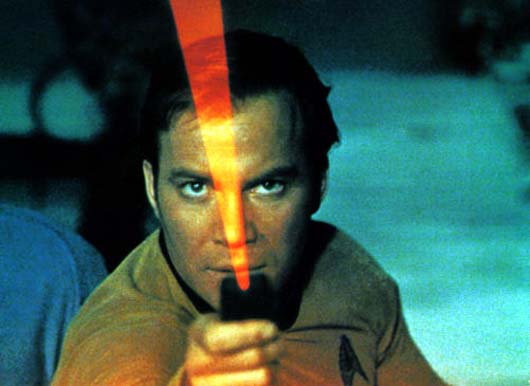
7. When they shoot phasers ("set to kill") in the original Star Trek, how does the phaser "know" to wipe out the person and his clothes, but not the ground nor the boulder he is leaning upon.
8. You are wrong so, so, so often. That is, or rather should be, the central lesson of epistemology. It is a lesson which hardly anybody ever learns. And you don’t need the fancy philosophical machinery to get there. That is why the rest of epistemology is so often so fruitless.
The versatility of conceptual innovators
David Galenson writes:
Art scholars have puzzled over the behavior of Pablo Picasso, Gerhard Richter, and Sigmar Polke – important modern painters who have made frequent and abrupt changes of style. Yet in each case the scholars have assumed this behavior to be idiosyncratic, and have consequently failed to recognize its common basis. Versatility is in fact often a characteristic of conceptual innovators, whose ability to solve specific problems can free them to pursue new goals. This contrasts sharply with the practice of experimental artists, whose inability to achieve their goals often ties them to a single style for a whole career. The phenomenon of the conceptual innovator who produces diverse innovations is an important feature of twentieth-century art; Picasso was the prototype, and he was followed by a series of others, from Marcel Duchamp through Damien Hirst. Versatility has furthermore been a characteristic not only of modern conceptual painters, but also of conceptual innovators in other arts, and conceptual scholars. Recognizing the common basis of this behavior increases our understanding of human creativity.
Are you too thinking "Kenneth Arrow"? How about Leibniz for that matter? Here is "the last man who knew everything." Here is the paper.
Are some languages happier than others?
Germans can be grumpy, unpleasant people–and it’s not because of post-Nazi guilt or a diet filled with bratwurst, says one American researcher. It’s because of their vowels. Hope College psychology professor David Myers says saying a vowel with an umlaut forces a speaker to turn down his mouth in a frown, and may induce the sadness associated with the facial expression. Myers added that the English sounds of "e" and "ah" naturally create smile-like expressions and may induce happiness. Clearly the solution for the Germans, much like the solution for every other people in the world, is to become more like Americans. The German Embassy would not comment on the findings, saying they were "too scientific."
Here is the link, which contains a few other tidbits as well. Thanks to Alina Stefanescu for the pointer.
Do competitive House seats make for ideologues?
It has been suggested that congressional polarization is exacerbated by new districting arrangements that make each House seat safe for either a Democratic or a Republican incumbent. If only these seats were truly competitive, it is said, more centrist legislators would be elected. That seems plausible, but David C. King of Harvard has shown that it is wrong: in the House, the more competitive the district, the more extreme the views of the winner. This odd finding is apparently the consequence of a nomination process dominated by party activists. In primary races, where turnout is low (and seems to be getting lower), the ideologically motivated tend to exercise a preponderance of influence.
Thanks to Eric Rasmusen for the pointer, comments are open. The implication, of course, is that electoral competition is overrated. If we think of more moderate outcomes as better on average (debatable, admittedly), we can view the problem of politics in a new way. Do aggregation mechanisms produce better decisions when individuals feel that less is on the line? Is this the opposite of everything we learned from Anthony Downs?
Game theory and the toilet seat problem
Ilia Rainer and Jacqueline Passey direct my attention to this analysis, which you don’t really need to read. Nor do I need to explain the problem…
Noteworthy links
1. Here are two useful papers on applied econometrics, courtesy of Andrew Gelman.
2. That which does not kill us…
3. The ever-intelligent Timothy Smith writes on what is wrong with Europe.
4. People are spending more on experiences, less on possessions.
One piece of evidence for Blink
“We found that when the choice was for something simple, such as purchasing oven gloves or shampoo, people made better decisions – ones that they remained happy with – if they consciously deliberated over the information,” says Dijksterhuis.
“But once the decision was more complex such as for a house, too much thinking about it led people to make the wrong choice. Whereas, if their conscious mind was fully occupied on solving puzzles, their unconscious could freely consider all the information and they reached better decisions.”
Here is the link.
The dream and lie of Franco
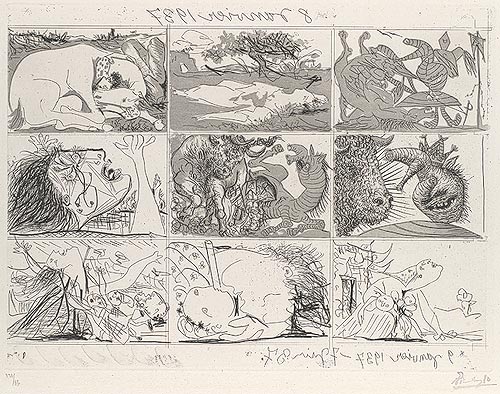
No, it is not backwards. Here are other panels and the accompanying poem. Here are some of Picasso’s other responses to war. Here is a working paper on war and peace in the visual arts, by David Hart, recommended. Here are related links on the arts, of interest to classical liberals and those skeptical of war.


Markets in everything
Describe your soul and rent it out. Here are the available souls, for only $25 for three months, yes they use PayPal. Thanks to Eva for the pointer.
Addendum: Do read Eszter on the ebay exchange point in Zurich; maybe that would work better than PayPal.
When is it bad to disclose good news?
Rick Harbaugh and Theodore To offer an abstract:
Is it always wise to disclose good news? We find that the worst sender with good news has the most incentive to disclose it, so reporting good news can paradoxically make the sender look bad. If the good news is attainable by sufficiently mediocre types, or if the sender is already expected to be of a relatively high type, withholding good news is an equilibrium. Since the sender has a legitimate fear of looking to anxious to reveal good news, having a third party disclose the news, or mandating that the sender disclose the news, can help the sender. The predictions are tested by examining when economics faculty at different institutions use titles such as "Dr" and "Professor" in voicemail greetings and course syllabi.
Here is the paper. Harbaugh’s home page has many interesting papers, most of all "Too Cool for School," which concerns the underexplored topic of "countersignaling." He also has a paper on why the favorites save up their effort for the final round, and why status can make you risk-averse in gains but risk-loving in losses. He is an underappreciated economist, and I thank Robin Hanson for the pointer to his work.
The bottom line: When it comes to titles, if the book lists "Ph.d." after the author’s name, run the other way. Gregory Stock’s The Book of Questions is one notable exception to this rule.
Does TV harm your kids?
Here is new evidence that the answer is no, thanks to wunderkind Jesse Shapiro, channeled by Austan Goolsbee.
No two are alike
In 1998, a kindly grandmother living in New Jersey wrote a book
about child-rearing that created quite a stir. In "The Nurture
Assumption: Why Children Turn Out the Way They Do," Judith Rich Harris
had the temerity to suggest that the most important influences on
children were not their parents but genes and peers. This was heresy,
and critics immediately attacked the book in reviews with titles such
as "Parents Don’t Count!"Nonetheless, Mrs. Harris had made a very convincing argument, and
she stuck to her guns. Now, with "No Two Alike" (W.W. Norton &
Company, 352 pages, $26.95), she has expanded her thesis and has
attempted to formulate a new theory of personality formation – the
first, in fact, since Sigmund Freud. More specifically, she has
attempted to solve the mystery of why people are different…Basically, Mrs. Harris believes there are three "perpetrators" at
work in the formation of the human personality, each associated with an
aspect of a modular brain. One is the "relationship system," designed
to maintain favorable relationships in society. Another is the
"Socialization System," where the goal is to be a member of a group.
The third is the "Status System," where we compete with our peers for
status.The interplay among these systems accounts for the emergence of
differences between individuals. So it is that even identical twins
develop different personalities because the members of their community
see them as unique individuals and treat them differently. Their
individual striving for status propels them into different modes of
competing, which in turn differentiates their personalities.
Here is more information, I am excited. See also Alex’s related posts here and here. Have you noticed the absence of book reviews on MR lately? It is about time for the publishing industry to awake from its seasonal business cycles slumber…
The tennis ball problem
Natasha often says we should open more cans of tennis balls. Last night we were playing with eight balls and she wanted to play with twelve. Of course once all eight have been plowed into the net, you have to go collect at least some of them.
How many tennis balls should you play with?
Let’s say you had many, many balls and you could open the cans for free and never run out. Opening a new can every four points (four balls fit in a can) would lead to a massive clean-up and carry problem at the end. Furthermore how much help is it having more balls? Once they hit the net you still have to deal with getting another ball into play. In other words, the real trick is to manage your stock well (read: aim for good volleys), not to just to speed up the flow of balls into the court.
Just one ball is not efficient, because when it falls out of play it is probably far from you. The greater the number of balls, the more likely at least one will be close.
Many problems in life, including those of dating, the number of children you should have, and optimal inventory management, resemble the tennis ball problem.
I do not know how to solve the tennis ball problem, but I feel that twelve balls is too many.
The economics of curling
Google often forces you to ponder the multiple meanings of words:
It is a profile bust showing rather handsome features, full forehead, prominent eyeballs, well curved eyebrows, slightly aquiline nose, and firm mouth and chin, and it is inscribed, "Adam Smith in his 64th year, 1787. Tassie F." In this medallion Smith wears a wig, but Tassie executed another, Mr. J. M. Gray tells us, in what he called "the antique manner," without the wig, and with neck and breast bare. "This work," says Mr. Gray, "has the advantage of showing the rounded form of the head, covered with rather curling [emphasis added] hair and curving upwards from the brow to a point above the large ear, which is hidden in the other version."

The text is from John Rae, biographer of Adam Smith. Here is the link. Here are details on the medallion. Here is a post on whether the sport of curling is a province of the rich. It seems not to be. This does not surprise me. It is not income that holds me back. Here are facts about curling, sometimes called "chess on ice." Curling is the provincial sport of Sasketchewan. Here is Slate.com on how curling explains the world.
Here is a Canadian study on the strongly positive economic impact of curling. The study confuses gross and net benefits, regional and national benefits, and nominal expenditures with real resource production, as such economic impact studies usually do. Commit them to the flames.