Category: Political Science
Anglo average is over New Zealand is too small
The world’s highly skilled immigrants are increasingly living in just four nations: the U.S., U.K., Canada and Australia, according to new World Bank research highlighting the challenges of brain drain for non-English-speaking and developing countries.
I don’t think we have thought through well enough the final equilibrium here. English will be the global language for a long, long time to come, and China will remain robust as a major source of indigenous talent. A lot of Chinese could leave and there would still be a lot of smart Chinese around in China. I do fear, however, for the politics in this semi-cosmopolitan but not cosmopolitan enough Anglo-American world in the making…
That is from Adam Creighton at the WSJ.
Why we don’t have a carbon tax
“We have done extensive polling on a carbon tax,” Podesta apparently told Clinton adviser Jake Sullivan back in January 2015. “It all sucks.”
There is further detail at that link. A quite remarkable David Roberts piece at Vox, worth reading in its entirety, lays out why much of “the left” opposes the carbon tax on the ballot in Washington state. It is revenue-neutral, doesn’t produce enough social justice, and as I would say it doesn’t have the right mood affiliation, among other factors. Economist Yoram Bauman plays a key role in the article, and here is a quotation from him:
I am increasingly convinced that the path to climate action is through the Republican Party. Yes, there are challenges on the right — skepticism about climate science and about tax reform — but those are surmountable with time and effort. The same cannot be said of the challenges on the left: an unyielding desire to tie everything to bigger government, and a willingness to use race and class as political weapons in order to pursue that desire.
I’m not so sure about that portrayal of the Republicans, but still that is a perspective you don’t hear enough. (Scott Sumner comments on the piece.) You may recall my earlier post on Republicans and Democrats:
At some level the Republicans might know the Democrats have valid substantive points, but they sooner think “Let’s first put status relations in line, then our debates might get somewhere. In the meantime, I’m not going to cotton well to a debate designed to lower the status of the really important groups and their values.” And so the dialogue doesn’t get very far.
To return more directly to the title of this post, why don’t we have a carbon tax? I would put it this way: for better or worse, the American people expect their government to solve this problem without raising the price of energy. Funny that.
Has Fed policy been favoring the Democrats as of late?
No. I have a longer Bloomberg column on that topic. Here is an excerpt:
Overall, Republican legislators are less comfortable with higher inflation than Democratic lawmakers. In other words, political constraints, to the extent they have had influence, have pushed Fed monetary policy closer to the views of many Republicans than to Democrats. That is not because the Fed is partisan, but rather because it simply cannot afford to alienate the public too much.
In other words, no.
Don’t assume ongoing democratization is the default
Authoritarian leaders are seen as far more trustworthy than politicians in more openly democratic countries across the emerging world, according to data compiled by the World Economic Forum.
Leaders in Singapore, the Gulf states and Rwanda are rated as having the highest ethical standards in the emerging markets, closely followed by their Chinese and central Asian counterparts.
In contrast, politicians in democracies such as Brazil, Paraguay, Nigeria, Mexico and Romania are seen as exhibiting the lowest ethical standards.
“It does look counterintuitive,” says Thierry Geiger, head of analytics and quantitative research at the WEF, which has polled local and expatriate business communities in 138 countries on the issue since 2007 as part of its annual Global Competitiveness Report.
One of the biggest losers in the WEF’s “trust in politicians” ranking over this period has been Tunisia, widely regarded as the sole success story of the 2011 Arab uprisings. Its politicians were ranked as the 15th most trustworthy in the world in 2010, before the overthrow of President Zein al-Abidine Ben Ali. Under democratic rule, the country has fallen to 63rd.
Other countries that saw sharp falls in the ranking include the democracies of South Africa, Barbados, South Korea, Iceland, Cyprus and Spain.
Overall, among the 20 emerging market countries rated as having the most trustworthy politicians in the 2016 survey, 13 are rated as “not free” by Freedom House, a US government-funded non-governmental organisation, with three classed as partly free and just four classed as free.
Among the 20 emerging markets whose politicians are seen as having the lowest ethical standards, not one is classed by Freedom House as not free, with six free and 14 partly free.
That is from Steve Johnson at the FT.
The wisdom of Interfluidity
It is tempting, among those of us who would be appalled by a Trump victory, to try to sway undecided voters by equating voting for Trump with racism full-stop. That’s a bad idea. If it becomes the mainstream view that Trump voters are simply racists, it leaves those who are already committed, those who are unwilling to abandon Trump or to stomach Clinton, little choice but to own what they’ve been accused of. Racist is the new queer. The same daring, transgressional psychology that, for gay people, converted an insult into a durable token of identity may persuade a mass of people who otherwise would not have challenged the social taboo surrounding racism to accept the epithet with defiant equanimity or even to embrace it. The assertion that Trump’s supporters are all racists has, I think, become partially self-fulfilling. In and of itself, that will make America’s already deeply ugly racial politics uglier. It will help justify the further pathologization of the emerging white underclass while doing nothing at all to help communities of color except, conveniently for some, to set the groups at one another’s throats so they cannot make common cause. It will become yet another excuse for beneficiaries of economic stratification to blame its victims. Things were bad before this election. They are worse now, and we should be very careful about how we carry this experience forward. These are frightening times.
Here is more, interesting throughout.
Does Diversity Reduce Freedom or Growth?
The founding father of Singapore, Lee Kuan Yew, credits ‘social discipline’ for the phenomenal economic rise of his country (Sen, 1999). Countries such as Singapore apparently demonstrate that autocratic measures are probably necessary, particularly in culturally fractionalized societies for creating the social stability necessary for economic growth (Colletta et al., 2001). Such thinking informs the so-called “Asian model” (Diamond, 2008).1 Recent studies, particularly in economics, support the logic (Alesina et al., 2006 and Easterly et al., 2006). According to these scholars, the more congruent territorial borders are with nationality, the better the chances for good economic policy to appear endogenously from within these societies because social cohesion determines good institutions and policies for development (Banerjee et al., 2005 and Easterly, 2006b). This paper addresses the question of whether or not social diversity hampers the adoption of sound economic policies, including institutions that promote property rights and the rule of law. We also examine whether democracy conditions diversity’s effect on sound economic management, defined as economic freedom, because the index of economic freedom is strongly associated with higher growth and is endorsed by proponents of the ‘diversity deficit’ argument (Easterly, 2006a).2
…Using several measures of diversity, we find that higher levels of ethno-linguistic and cultural fractionalization are conditioned positively on higher economic growth by an index of economic freedom, which is often heralded as a good measure of sound economic management. High diversity in turn is associated with higher levels of economic freedom. We do not find any evidence to suggest that high diversity hampers change towards greater economic freedom and institutions supporting liberal policies.
Paper here. The data is a panel from 116 countries covering 1980–2012 so this doesn’t rule out a negative long-run effect but it is prima facie evidence that diversity need not reduce freedom or growth.
I guess I was traveling when Congress took the vote on this one
The Americans are providing targeting intelligence and refueling Saudi warplanes involved in bombing rebel positions. But coalition strikes have also destroyed hospitals, markets and residential neighborhoods, killing large numbers of civilians.
Last Saturday, airstrikes by the Saudi-led coalition killed more than 100 people at a funeral in Sana, shown above. More than 10,000 people have been killed in the war, according to the United Nations, and the threat to civilians has increased since the collapse of peace talks in August.
After the Houthi rebels launched two failed missile attacks at an American warship in the Red Sea, another American vessel destroyed three radar installations in Yemen.
I do not know what is correct American policy in this conflict, but is it so wrong to have wished to have seen a Congressional vote and thereby Congressional accountability? Now that the conflict has heated up, will this be happening anytime soon? Is anything stopping the President from requesting it? Didn’t my whole Twitter feed just decide they want a President who respects the Constitution and the rule of law?
Here is the full story (NYT), short but useful and informative in any case.
Why announce your secret, unprecedented cyberstrike against Russia?
My Twitter feed is mocking the policy behind this news report, but of course it makes perfect sense. Here goes:
1. The United States wishes to have it be common knowledge that it can embarrass Putin. But in fact maybe it can’t! (At least not with a policy we are willing to bear the consequences of.) So why not threaten that you can? A truly secret strike probably would hurt him less than an embarrassment. So start investing in the embarrassment now.
2. If the U.S. does do something cyber against Russia, it may wish to signal in advance that it won’t be truly severe, so as to limit retaliation and lower the probability of ongoing escalation. Some public discussion can achieve this end. Truly devastating blows are in fact usually delivered in secret.
3. There is a chance that the U.S. can’t/won’t do much if anything against Russia at all. In that case third parties (Iran, China) may not know this for sure, and the announcement may have a slight deterrent value in their direction.
4. It may not be possible to understand the entire American strategy without knowing the private messages that are being sent to Putin at the same time. For instance, the overall strategy may be “announce a coming mild retaliation and privately threaten a more severe action.” Is that really so out of place? Probably not.
In other words, “announced secrets” sometimes can make perfect sense.
Arbitrary power at the CFPB
That is the Consumer Financial Protection Bureau, part of Dodd-Frank. Here is the Wall Street Journal on the recent court decision to restrict the powers of the Bureau:
The panel’s decision limited the broad discretion granted the five-year-old Consumer Financial Protection Bureau in the name of tilting the balance of power from industry to small borrowers, calling it a “gross departure” from the checks and balances normally imposed on regulatory agencies.
…If it stands, the decision from the U.S. Court of Appeals for the District of Columbia would reduce the agency’s independence, empowering the White House to supervise the agency and remove its director, in contrast to the current arrangement where the director’s five-year term is intended to outlast a president’s.
…In Tuesday’s ruling by a three-judge panel of the U.S. Court of Appeals for the District of Columbia Circuit, Judge Brett Kavanaugh, a George W. Bush appointee, wrote that Congress gave the CFPB director “more unilateral authority than any other officer in any of the three branches of the U.S. government, other than the president.” He said the problem of checks and balances was particularly acute because the CFPB “possesses enormous power over American business, American consumers and the overall U.S. economy.”
Megan McArdle offers comment. Here are remarks from Kevin Drum. I say the regulatory state already has too much arbitrary power, and this is a (small) move in the right direction.
United States fact of the day
On any given day in the United States, at least 137,000 men and women sit behind bars on simple drug possession charges, according to a report released Wednesday by the American Civil Liberties Union and Human Rights Watch.
Nearly two-thirds of them are in local jails. According to the report, most of these jailed inmates have not been convicted of any crime: They’re sitting in a cell, awaiting a day in court which may be months or even years off, because they can’t afford to post bail [TC addendum: this latter part no longer seems plausible to me].
…In fact, police make more arrests for marijuana possession alone than for all violent crimes combined.
From The Adam Smith Institute
So it’s official. As of today we are no longer a libertarian think tank. We’re neoliberals. And maybe you are too.
Here is the link. Here Sam Bowman, the Executive Director, explains:
And I think to most people in Britain the word libertarian connotes a sort of unflexible extremeness – a preoccupation with hard-and-fast rules over policies that actually make people’s lives better. It was this misconception that allowed the Prime Minister get away with equating the libertarian right with the socialist left, as if the two were somehow comparable…
So in embracing the term neoliberal, we’re hoping that we’re being a little clearer about what we already believe in and do. We fight for free markets, property rights, globalisation and an open society, all based on real-world evidence. Those are what have given us the rich, peaceful, prosperous world we live in, and with more of them we can help to make things even better. It’s time for us neoliberals to start going on the offensive and fight for the world we have helped to create.
I do not have sufficient background on the situation to parse this, but perhaps it is also one way of signaling that they are anti-Brexit, and the word libertarian would not do that, and might even suggest they favored Brexit as a means for arriving at a more libertarian society (which by the way is not how things are running). A neoliberal one would think favors arrangements for free trade and migration.
Addendum: Here is their home page.
Private Prisons and Incentive Design: Critiquing Oliver Hart
One of Nobel prize-winner Oliver Hart’s most influential papers (co-authored with Andrei Shleifer and Robert Vishny) is on incentive design and private prisons (see Tyler’s post covering Hart’s work). Yesterday was not the day for a critique but Tyler and I do critique this paper in our principles textbook, Modern Principles. I believe that our textbook is the only principles textbook to have a chapter on contract design and we make this modern material accessible to undergraduates! Here is our explanation and critique:
Should the management of prisons be contracted out to the private sector? The
owners of a private firm have a strong incentive to cut costs and improve productivity because they get to keep the resulting profits. If a public prison cuts
costs, there is more money in the public treasury but no one gets to buy a yacht so the incentive to cut costs is much weaker.
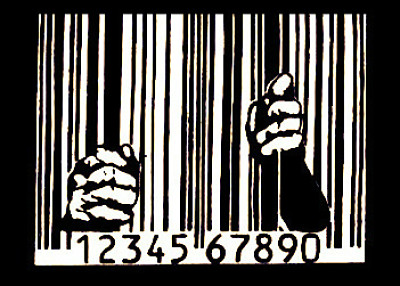 In 1985, Kentucky became the first state to contract out a prison to a for profit firm. Private prisons today hold about 120,000 prisoners in the United
States, about 5 percent of all prisoners. Should efficient private prisons replace
inefficient public prisons? Three economists—Oliver Hart, Andrei Shleifer, and
Robert Vishny (HSV)—say no. HSV don’t question that the profit motive gives
private prisons stronger incentives than public prisons to cut costs—HSV say
that’s the problem! Suppose that we care about costs but we also care about
prisoner rehabilitation, civil rights, and low levels of inmate and guard violence.
What we pay for is cheap prisons, but what we want is cheap but high quality
prisons. If we can’t measure and pay for quality, then strong incentives could
encourage cost cutting at the expense of quality.
The principle is a general one, a strong incentive scheme that incentivizes
the wrong thing can be worse than a weak incentive scheme. One car dealer in
California advertises that its sales staff is not paid on commission. Why would
a store advertise that its sales staff do not have strong incentives to help you?
The answer is clear to anyone who has tried to buy a car. High-pressure dealers
who pounce on you the moment you enter the showroom and bombard you
with high-pressure sales tactics (“I can get you 15 percent off the sticker, but
you have to act NOW!”) may sell cars to first-time buyers, but the strategy is
too unpleasant to win many repeat customers. Car dealers who rely on repeat
business usually prefer a low-pressure, informative sales staff….In theory, a car dealer could have strong incentives and repeat business by
paying its sales staff based on their “nice” sales tactics, but in practice it’s too
expensive to monitor how salespeople interact with clients. Cheating by the
sales staff would be difficult to detect and thus would be common.
…What about prisons? Are HSV correct that weak-incentive public prisons
are better than strong incentive private prisons? Not necessarily. HSV assume
that cutting quality is the way to cut cost. But sometimes higher quality is also
a path to lower costs. Low levels of inmate and guard violence, for example, are
likely to reduce costs. And respect for prisoner’s civil rights? That can save on
legal bills. When quality and cost cutting go together, a private firm has a strong
incentive to increase quality.
HSV may also underestimate how well quality can be measured. Measuring
output pays off more when incentives are high. Unsurprisingly, therefore,
private prison companies and government purchasers have made extensive
efforts to measure the quality of private prisons.
Finally, don’t forget that weak incentives reduce the incentive to cut costs
but they don’t increase the incentive to produce high quality! Public prisons
might use their slack budget constraints to offer high-quality rehabilitation
programs, or they might instead offer prison guards above-market wages.
Which do you think is more likely?
Nevertheless, whether HSV are right or wrong about private prisons, their
argument is clever. The usual argument against government bureaucracy is that
without the profit incentive, public bureaucracies won’t have an incentive to
cut costs. HSV suggest this is exactly why public bureaucracies may sometimes
be better than private firms.
Addendum: We don’t go through the empirical literature in the text but overall it’s not supportive of HSV. As HSV predict, private prisons appear to be cheaper than public prisons but they are not significantly cheaper and the quality of private prisons is comparable to that of public prisons and maybe a little bit higher (faint praise). Basically the government gets what it pays for.
Why was there no Coasean solution to the American Revolution?
Sebastian Galiana and Gustavo Torrens have a new NBER paper on this underappreciated question:
Why did the most prosperous colonies in the British Empire mount a rebellion? Even more puzzling, why didn’t the British agree to have American representation in Parliament and quickly settle the dispute peacefully? At first glance, it would appear that a deal could have been reached to share the costs of the global public goods provided by the Empire in exchange for political power and representation for the colonies. (At least, this was the view of men of the time such as Lord Chapman, Thomas Pownall and Adam Smith.) We argue, however, that the incumbent government in Great Britain, controlled by the landed gentry, feared that allowing Americans to be represented in Parliament would undermine the position of the dominant coalition, strengthen the incipient democratic movement, and intensify social pressures for the reform of a political system based on land ownership. Since American elites could not credibly commit to refuse to form a coalition with the British opposition, the only realistic options were to maintain the original colonial status or fight a full-scale war of independence.
You may recall that Adam Smith wanted to see a continuing empire, but with North America as essentially the more powerful partner, though he did not quite use those words.
Peso says the debate was a draw
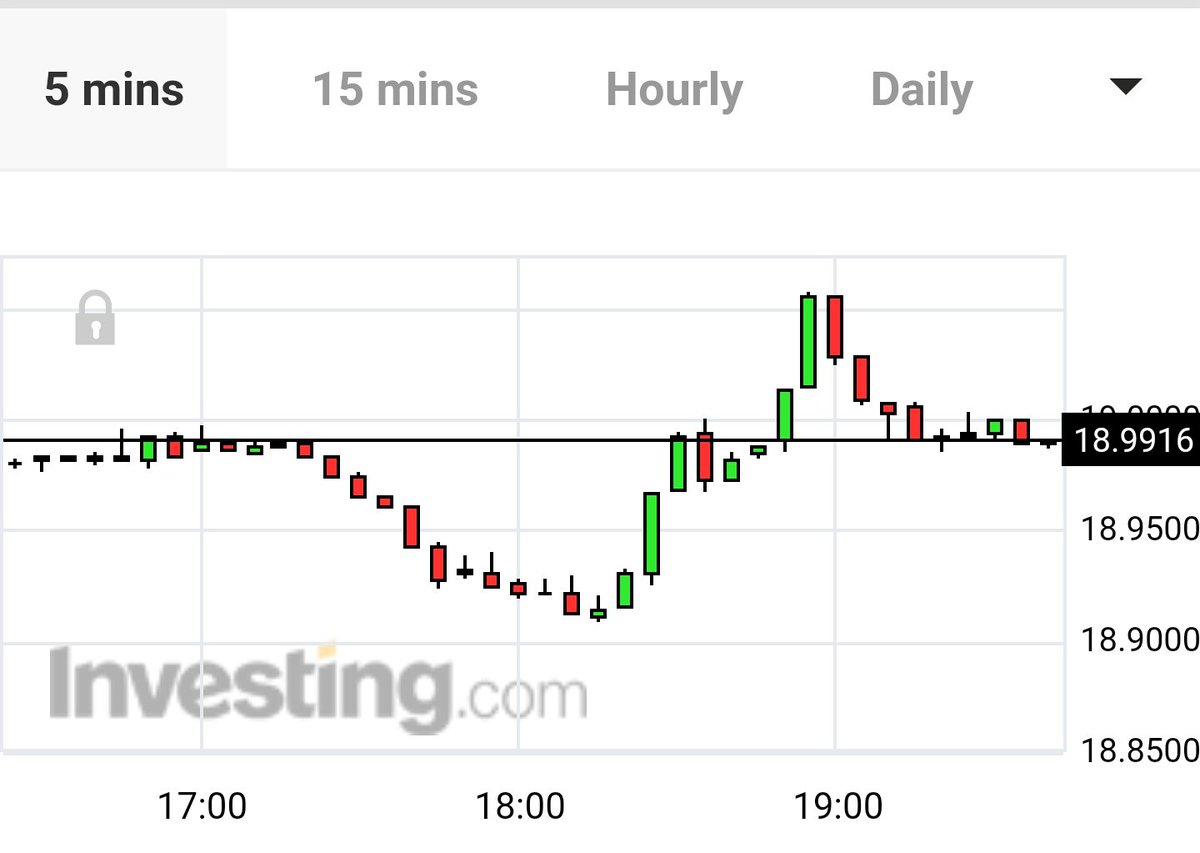
The betting market had Trump go up from 16.8 to 19.0, with Pence falling by a fair amount. Stock market called it a draw. The peso observation comes from a tweet by Noah Smith.
Mr. Trump and the Republicans: a game-theoretic approach
That is my latest Bloomberg column on what is going on right now, here is an excerpt:
Right now, another collective-action problem may be damning the Republicans to a worse fate yet. If the Trump candidacy has no chance of winning or holding close, Republican turnout may collapse, thereby endangering party control of many lower political offices.
Republican turnout, and thus electoral success, might be helped if all the Republicans simply pretended that the Trump gaffe hadn’t happened. But politicians often look to their own self-interest. After Trump appears unacceptable enough in the eyes of enough relevant voters, political candidates and other party members will seek to distance themselves from him so they can try to rebuild their reputations once Trump is no longer on the ballot. You might say those individuals are finally doing the right thing, but under another reading a lot of them are acting in their personal self-interest yet again, and again to the detriment of the Republican party (though perhaps not the American citizenry).
In other words, the Republicans have been on the wrong side of game-theory logic twice, first in delaying their opposition and then later in enacting it. Those are hardly examples of getting Adam Smith’s “invisible hand” metaphor to work in their favor.
There is much more at the link. For related analyses, here are remarks from Sam Wang. Here are tweets from Megan McArdle. Here is Paul Gowder, drawing on Timur Kuran.