Category: Uncategorized
Assorted links
1. The Between Parentheses Reading List, highly original.
4. BELLS vs. PIGS.
The North Korean global happiness index
Here at MR we are always keen to report dissenting viewpoints:
China is the happiest place on earth(!!) according to a new global happiness index released by North Korea’s Chosun Central Television. China earned 100 out of 100 points, followed closely by North Korea (98 points), then Cuba, Iran, and Venezuela. Coming in at 203rd place is America (or rather “the American Empire”, 美帝国), with only 3 happiness points. South Korea got a measly 18 points for 152nd place.
I cannot find the full rankings (which countries came between South Korea and the United States?) but here is a partial screen shot of the results, in Chinese. For the pointer I thank Eapen Thampy.
Assorted links
1. How to write a book, and Will comments.
2. How happy are librarians with their jobs?
3. A new use for BitCoin, but the EFF moves in the other direction, and a new critique here.
4. How well do gdp and population predict a country’s success at chess?
Questions that are rarely asked
To Oded Galor:
As the father of unified growth theory, what does it mean to have a single theory that accounts for the entire growth process since the dawn of civilization?
The answer and full interview is here, concerning Galor’s new book Unified Growth Theory. Here is an earlier interview with Oded Galor.
Assorted links
Should it be illegal to park facing the wrong way?
Jeff writes:
Economic theory suggests that penalties should be attached to behaviors that are correlated with crime and not necessarily to criminal behavior itself. For example, price fixing may be impossible to detect, but conspiracy to fix prices may be much easier. It makes sense to make cheap talk a crime even though the talk itself causes no harm.
When you car is parked facing the wrong way its a sure sign that A) you previously committed the crime of driving the wrong way and B) you will soon do it again.
Is this another of his elaborate jests? The web suggests that Texas has begun to enforce this law only recently, to shore up Medicaid, but the resulting policy uncertainty adds to our current output gap. It also violates Keynesian strictures not to raise taxes during a recession. Up until now, of course, there has been strong net mobility into the state of Texas, so was the previous lack of enforcement so bad?
The practice of parking the wrong [sic] way is at least as safe as turning across lanes of oncoming traffic.
One fear is that traffic will slam into your parked car if your rear reflectors are not facing the proper way. Yet if everyone parks facing the wrong way, does not this risk diminish and indeed a benefit can be seen? And is not a car, if parked for long enough, infinitely dangerous in any case? And are not wrong way parkers the most likely to hurry in and out of a spot quickly, thereby lowering stationary collision probabilities? Or is the argument that a parked car safer is in any case safer than a moving car, and that wrong way parking allows more cars to park more readily, thereby lowering the average velocity of automobiles? In any case, the Peltzmann effect suggests that wrong way parking, and the concomitant dangers, will discourage drunk driving, thereby saving lives. Furthermore the relevant alternative to “wrong way parking” is usually an extremely reckless, immediate, illegal U-turn.
I once “parked the wrong way” in Falls Church City. The policeman told me he could not give me a ticket, since he had not seen me do it, but that there was no way I could leave the space legally. (I so enjoy a dare.) Here in Virginia, or at least in Falls Church City, the rule of law reigns; the policeman recognized the car might have been there forever, or might have been parked by a computer (that’s illegal too, but let him try to prove the computer did it), or might have materialized there through quantum effects. A game of waiting ensued.
Assorted links
What is the evidence on whether cell phones can cause cancer?
The World Health Organization is publicizing this idea (pdf), but to me the evidence still does not look very strong at all. Chat away. Hat tip goes to Mocost on Twitter.
Assorted links
Cowards
The European Court of Human Rights ruled on Tuesday that lawyers for Mikhail B. Khodorkovsky, the former Russian oil tycoon who was jailed after clashing with the Kremlin, had failed to prove that his case was politically motivated, as they had long contended.
If you read through the actual story, you will see the court’s decision is in fact more nuanced than that. It was found that his human rights were violated in prison, that procedural violations were committed before the trial, and that he had not proved a political motivation to his prosecution, not that no such motivation was present. Nonetheless in such issues, it really is the headlines and opening sentences which matter. Imagine how this will play in Russia. The Court should have written an opinion so the headline would read “European Court of Human Rights condemns Russian tyranny and human rights abuses.” Instead we get “European Court Backs Kremlin in Khodorkovsky Case.”
Update: A little later, I see the NYT changed it to “Partially Backs Kremlin,” still not nearly good enough for a court of human rights. By the way, it is an insult for the Court to call for the Russian government to pay Khodorkovsky a $35,000 fine. For a start, for two months he had only four square meters in his prison cell.
Assorted links
1. Has Singapore’s growth been on top of negative TFP? (This result is not a strong endorsement of their industrial policy.)
2. James Heckman to work on health economics at Dublin, but too late to change the country’s fundamental path.
3. Is the New Zealand boom finally arriving?
4. Why is it so hard to learn Danish?
5. I agree with Krugman on core inflation, but still this is a sobering thought.
6. Rumors of Greek bank runs, original story here (in Greek). I am afraid that I agree with this broader radical assessment. Let history prove me wrong, as it probably will.
Assorted links
In praise of driverless cars, don’t regulate them into oblivion
My column is here, one excerpt is this:
The benefits of driverless cars are potentially significant. The typical American spends an average of roughly 100 hours a year in traffic; imagine using that time in better ways — by working or just having fun. The irksome burden of commuting might be lessened considerably. Furthermore, computer-driven cars could allow for tighter packing of vehicles on the road, which would speed traffic times and allow a given road or city to handle more cars. Trips to transport goods might dispense with drivers altogether, and rental cars could routinely pick up customers…
The point is not that such cars could be on the road in large numbers tomorrow, but that we ought to give the cars — and other potential innovations — a fair shot so that a prototype can become a commercial product someday. Michael Mandel, an economist with the Progressive Policy Institute, compares government regulation of innovation to the accumulation of pebbles in a stream. At some point too many pebbles block off the water flow, yet no single pebble is to blame for the slowdown. Right now the pebbles are limiting investment in future innovation.
A few points:
1. I couldn’t fit it in the column, but it is an interesting question why there is no popular movement to encourage driverless cars. Commuting costs are very high and borne by many people. (Here is Annie Lowery on just how bad commutes can be.) You can get people to hate plastic bags, or worry about a birth certificate, but they won’t send a “pro-driverless car” postcard to their representatives. The political movement has many potential beneficiaries but few natural constituencies. (Why? Does it fail to connect to an us vs. them struggle?) This is an underrated source of bias in political outcomes.
2. In the longer run a lot of driverless cars would be very small. Imagine your little mini-car zipping out and bringing you back some Sichuan braised fish, piping hot.
3. If a traffic situation gets really hairy, the driverless car can be programmed to pull over and stop. Oddly I think that perfecting the GPS system might be a trickier problem than making them safer than driver-run cars. Computers don’t drink, but they will drive around the same block forever and ever if they don’t understand the construction situation. Even the best chess-playing computers don’t very well “understand” blockaded positions and perpetual check.
4. This isn’t a column about driverless cars at all. It’s about our ambivalent attitudes toward major innovations. It’s also about how the true costs of regulation are often hidden. A lot of potentially good innovations never even reach our eyes and ears as concepts, much less realities. They don’t have tags comparable to that of the driverless car.
5. Via Michelle Dawson, here is a list of driverless trains. Here are links on robot-guided surgery.
Assorted links
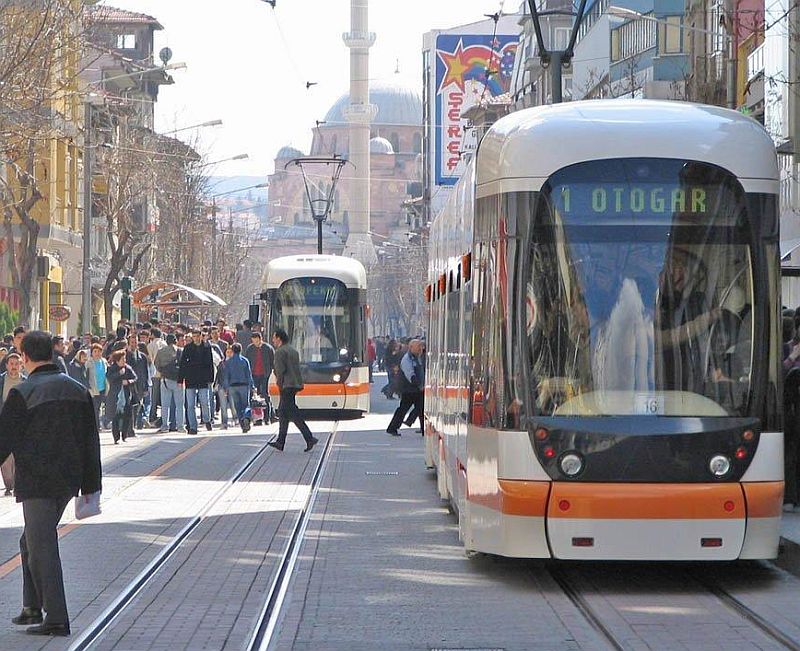
Eskişehir bleg
You know the drill. We’ll be there soon.