Results for “age of em” 17233 found
Is charity a major source of deadweight loss?
From the excellent Stefano DellaVigna, John List, and Ulrike Malmendier:
Every year, 90% of Americans give money to charities. Is such generosity necessarily welfare enhancing for the giver? We present a theoretical framework that distinguishes two types of motivation: individuals like to give, for example, due to altruism or warm glow, and individuals would rather not give but dislike saying no, for example, due to social pressure. We design a door-to-door fund-raiser in which some households are informed about the exact time of solicitation with a flyer on their doorknobs. Thus, they can seek or avoid the fund-raiser. We find that the flyer reduces the share of households opening the door by 9% to 25% and, if the flyer allows checking a Do Not Disturb box, reduces giving by 28% to 42%. The latter decrease is concentrated among donations smaller than $10. These findings suggest that social pressure is an important determinant of door-to-door giving. Combining data from this and a complementary field experiment, we structurally estimate the model. The estimated social pressure cost of saying no to a solicitor is $3.80 for an in-state charity and $1.40 for an out-of-state charity. Our welfare calculations suggest that our door-to-door fund-raising campaigns on average lower the utility of the potential donors.
Do read the whole thing, superb research design. What percentage of human activity might be well-described by a similar hypothesis?
Here is my 2006 NYT column on John List’s work on charity, he is one of the leading economists today.
Defending Independent Invention
In the minds of the public someone who infringes a patent is like a plagiarist or a thief–the infringer has copied someone else’s work or, even worse, stolen their intellectual property. In reality, patent infringement has very little to do with copying or theft. Here’s how I described what is probably closer to the paradigmatic case of patent infringement in Launching the Innovation Renaissance:
Two inventors, Kelly and Pat, work independently, neither aware of the other’s existence. Kelly patents first. Under the present law, if Pat wants to sell or even use his own invention, he must pay Kelly a license fee (!) even though Pat’s idea came from his own head and no other.
If independent invention were uncommon this type of case wouldn’t be important but independent invention is very common. Classic cases include Newton and Leibniz with the calculus, Alexander Graham Bell, Elisha Gray and Johann Philipp Reis with the telephone, Ohain, Campini, and Whittle with the jet engine and so on. And if independent invention is common with great discoveries and inventions then it is surely much more common with ordinary innovations. As a result, it’s not surprising that most patent cases don’t even allege copying.
Independent invention should be a defense in a patent infringement lawsuit. An independent invention defense would allow Kelly to exclude imitators but would prevent Kelly from excluding an independent inventor such as Pat.
Inventors should not have to pay to use their own ideas! An independent invention defense is not only just, it also has good economic properties. An independent invention would create more competition. On the one hand, this does reduce the “pot of gold” incentive to create new ideas, the winner of a patent race might have to sell as a duopolist rather than a monopolist. In this case, however, there are several reasons why we wouldn’t expect the number of ideas to fall and innovation could even rise.
First, firms today are often surprised to find that they are being sued for patent infringement. An independent-inventor defense would give inventors greater security in their ideas, thus increasing the incentive to invest. In this age of cumulative innovation often what innovators want most is the security that they can build on what they have produced already. Lawsuits and associated transaction costs would also be reduced.
Second, the type of inventions that are most likely to be independently invented are those with high value relative to their cost. Thus, an independent-invention defense would automatically tend to offer smaller rewards to low-cost innovations and larger awards to more costly innovations, this is exactly the optimal rule discussed in my paper Patent Theory versus Patent Law (pdf) but unlike the system described in that paper it does not require anyone to examine an inventor’s costs.
The patent system is supposed to be about increasing the progress of science and the useful arts but to often it ends up cudgeling the very people it is meant to protect, the independent inventors.
Greek markets in everything
It’s being called the “negative salary”: Due to austerity measures in Greece, it’s being reported that up to 64,000 Greeks will go without pay this month, and some will have to pay for having a job. Numbers in austerity reports have usually reflected figures in the millions, since they reflect industry-wide cuts (i.e. a 537-million euro cut to health and pension funds). And plans of cutting minimum wage by up to 32% is all but a given in the country. Today’s “negative salary” deal—which could have government employees returning funds— reveals the real human impact of the austerity measures.
Here is more.
Assorted links
1. New Carl Zimmer project on science eBook reviews.
2. Empirical tests of how much “cold start” is a problem in labor economics. From this general blog on on-line labor markets and their implications.
3. Markets in everything: dog TV.
4. NYT symposium on the farm bill, including yours truly.
6. CrookedTimber is running a symposium on Graeber’s debt book.
7. Early John Nash on cryptography, written to the NSA.
Questions that are rarely asked
From Arnold Kling (and the graph is from Karl Smith):

I challenge any supporter of the sticky-wage story (Bryan? Scott?) to write a 500-word essay explaining how this graph does not contradict their view. If employment fluctuations consisted of movements along an aggregate labor demand schedule, then employment should be at an all-time high right now.
My view is “sticky nominal wages for some, negative AD shock, ongoing stagnation and thus low job creation, and the progress we have is in some sectors immense but typically labor-saving rather than job-creating, all topped off with a liquidity shock-induced revelation that two percent of the previous work force was ZMP.” (Try screaming that from the rooftops.) I read the above graph as consistent with that mixed and moderate view. As Arnold notes, it’s harder to square with an AD-only view. If I wanted to push back a bit on Arnold’s take, and save some room for AD stories, I would cite the “Apple Fact of the Day,” and also note that stock prices have not responded nearly as well as have measured corporate profits. Still, we economists are not taking this graph seriously enough.
Addendum: Arnold Kling responds to responses.
Charles Duhigg’s The Power of Habit
The skills necessary to ride a bike are multifaceted, complex and not at all obvious or even easily explicable to the conscious mind. Once you learn, however, you never forget–that is the power of habit. Without the power of habit, we would be lost. Once a routine is programmed into system one (to use Kahneman’s terminology) we can accomplish great skills with astonishing ease. Our conscious mind, our system two, is not nearly fast enough or accurate enough to handle even what seems like a relatively simple task such as hitting a golf ball–which is why sports stars must learn to turn off system two, to practice “the art of not thinking,” in order to succeed.
Habits, however, can easily lead one into error. In the picture at right, which yellow line is longer? System one tells us that the l ine at the top is longer even though we all know that the lines are the same size. Measure once, measure twice, measure again and again and still the one at top looks longer at first glance. Now consider that this task is simple and system two knows with great certainty and conviction that the lines are the same and yet even so, it takes effort to overcome system one. Is it any wonder that we have much greater difficulty overcoming system one when the task is more complicated and system two less certain?
You never forget how to ride a bike. You also never forget how to eat, drink, or gamble–that is, you never forget the cues and rewards that boot up your behavioral routine, the habit loop. The habit loop is great when we need to reverse out of the driveway in the morning; cue the routine and let the zombie-within take over–we don’t even have to think about it–and we are out of the driveway in a flash. It’s not so  great when we don’t want to eat the cookie on the counter–the cookie is seen, the routine is cued and the zombie-within gobbles it up–we don’t even have to think about it–oh sure, sometimes system two protests but heh what’s one cookie? And who is to say, maybe the line at the top is longer, it sure looks that way. Yum.
System two is at a distinct disadvantage and never more so when system one is backed by billions of dollars in advertising and research designed to encourage system one and armor it against the competition, skeptical system two. Yes, a company can make money selling rope to system two, but system one is the big spender.
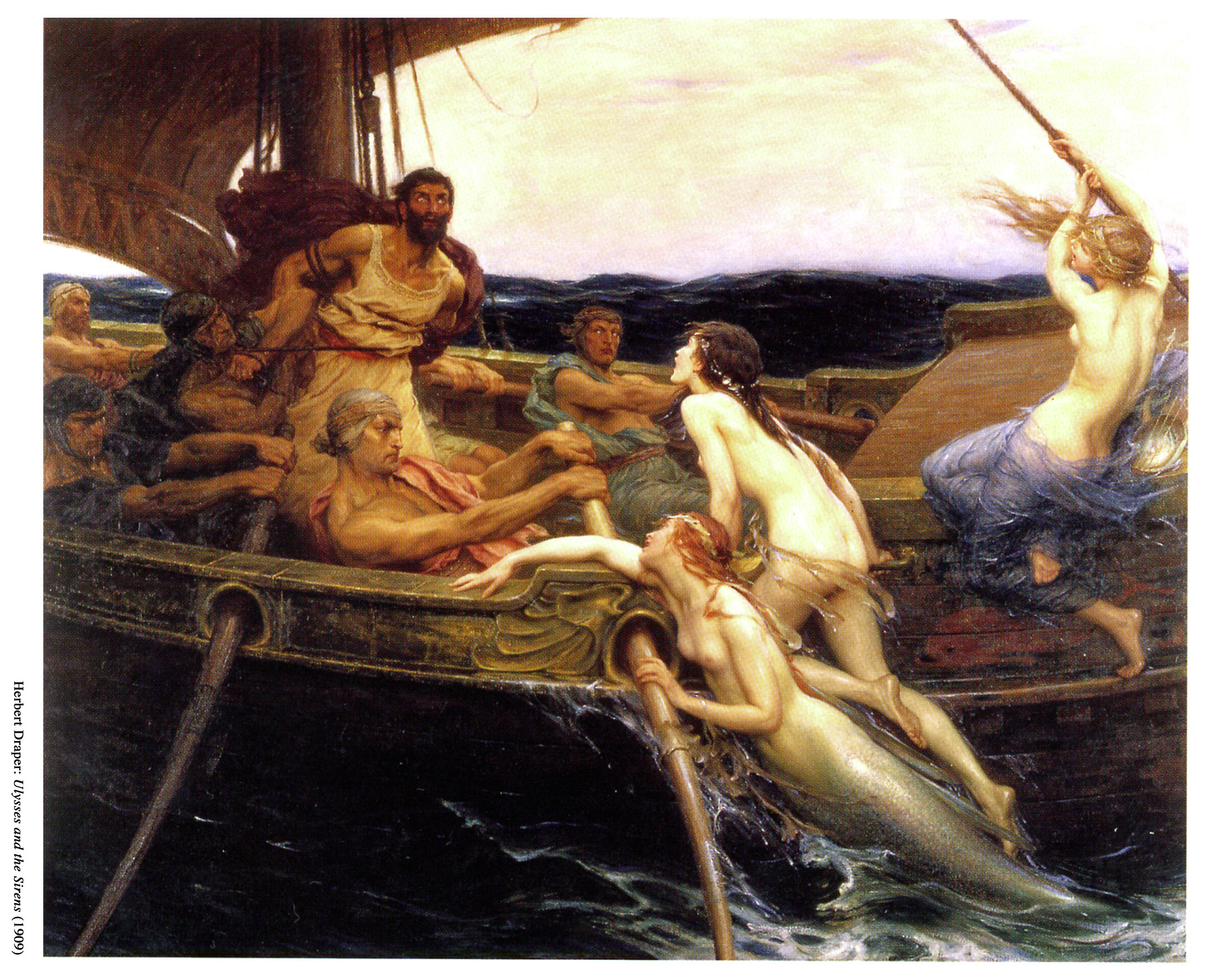
Habits can never truly be broken but if one can recognize the cues and substitute different rewards to produce new routines, bad habits can be replaced with other, hopefully better habits. It’s habits all the way down but we have some choice about which habits bear the ego.
Charles Duhigg’s The Power of Habit, about which I am riffing off here, is all about habits and how they play out in the lives of people, organizations and cultures. I most enjoyed the opening and closing sections on the psychology of habits which can be read as a kind of user’s manual for managing your system one. The Power of Habit, following the Gladwellian style, also includes sections on the habits of corporations and groups (hello lucrative speaking gigs) some of these lost the main theme for me but the stories about Alcoa, Starbucks and the Civil Rights movement were still very good.
Duhigg is an excellent writer (he is the co-author of the recent investigative article on Apple, manufacturing and China that received so much attention) It will also not have escaped the reader’s attention that if a book about habits isn’t a great read then the author doesn’t know his material. Duhigg knows his material. The Power of Habit was hard to put down.
Why doesn’t the right-wing favor looser monetary policy?
Reading Scott’s post induced me to write down these few points. I have noticed that right-wing public intellectuals are skeptical of more expansionary monetary policy for a few reasons:
1. There is a widespread belief that inflation helped cause the initial mess (not to mention centuries of other macroeconomic problems, plus the problems from the 1970s, plus the collapse of Zimbabwe), and that therefore inflation cannot be part of a preferred solution. It feels like a move in the wrong direction, and like an affiliation with ideas that are dangerous. I recall being fourteen years of age, being lectured about Andrew Dickson White’s work on assignats in Revolutionary France, and being bored because I already had heard the story.
2. There is a widespread belief that we have beat a lot of problems by “getting tough” with them. Reagan got tough with the Soviet Union, soon enough we need to get tough with government spending, and perhaps therefore we also need to be “tough on inflation.” The “turning on the spigot” metaphor feels like a move in the wrong direction. Tough guys turn off spigots.
3. There is a widespread belief that central bank discretion always will be abused (by no means is this view totally implausible). “Expansionary” monetary policy feels “more discretionary” than does “tight” monetary policy. Run those two words through your mind: “expansionary,” and “tight.” Which one sounds and feels more like “discretion”? To ask such a question is to answer it.
Within these frameworks of beliefs, expansionary monetary policy just doesn’t feel right. Yet I still agree with the arguments of Scott (and others) that it would have been the right thing to do.
What are the costs of signaling at a macro level?
There is a new paper from Ricardo Perez Truglia, from Harvard, on this topic. It strikes me as quite speculative, but nonetheless a step forward in addressing a very difficult question and adding some structure to the analysis of a very difficult problem. Here are his conclusions:
The goal of the paper is to provide a quantitative idea of the practical importance of conspicuous consumption. We estimated a signaling model using nationally representative data on consumption in the US, which we then use to estimate welfare implications and perform counterfactual analysis. We found that the market value of NMGs [TC: non market goods, as result from the signal] is non-negligible: for each dollar spent in clothing and cars the average household gets around 35 cents of net bene ts from NMGs. However, the large value of NMGs does not imply that the losses from the positional externality are also large. The results suggest that richer household would still consume relatively more of the NMG even in absence of NMGs, so the cost of the signal that they send is not very high. As a result, the signaling equilibrium attains almost 90% of the full potential bene ts from the NMGs, which is very e fficient. The unattained benefi ts, $32 per household per month, can serve as an intuitive upper bound to the bene fits that can be gained through economic policy, such as a tax on observable goods aimed at correcting the positional externality.
A related point is that if utility functions evolve so that people enjoy the very act of sending the signal, that too will lower the associated deadweight loss from signaling.
Here is the author’s home page.
Assorted links
2. Markets in everything, honey trap edition, or should they call it something else?
3. Do hedge fund returns have lower volatility?
4. The still-underrated Dylan Matthews covers MMT, graphic here.
5. Remarkable Swedish rescue, but of what?
The most interesting man in the world?
At 9, he settled a dispute with a pistol. At 13, he lit out for the Amazon jungle.
At 20, he attempted suicide-by-jaguar. Afterward he was apprenticed to a pirate. To please his mother, who did not take kindly to his being a pirate, he briefly managed a mink farm, one of the few truly dull entries on his otherwise crackling résumé, which lately included a career as a professional gambler.
From the NYTimes obit of John Fairfax and oh did I mention he rowed across the Atlantic…and the Pacific.
What good are hedge funds?
How can they beat the market consistently, especially if we take EMH seriously at all? And if they don’t beat the market, how is 2-20 to be justified? Here is a snippet from an interesting Amazon review:
…this kind of comparison misses the entire point of most hedge funds. A market-neutral fund is not designed as a stand-alone investment, but as a diversifier for an equity portfolio. It can have half the return of equities with the same volatility, and still be valuable. The question isn’t whether putting 100% of your money in hedge funds did better than putting 100% in stocks, it’s what portion of assets an investor should allocate to hedge funds. Using the author’s own numbers, an investor would have done best to have 30% of assets in hedge funds, rebalancing annually, from 1998 to 2010. That produced 4.2% annual alpha (return in excess of what you could have gotten investing in stock index funds and t-bills with the same volatility). That number is certainly overstated, hedge fund investors typically do worse than the index suggests, but it demonstrates that you can’t consider only stand-alone returns. This point is borne out by the finding that endowments and pension funds that make use of hedge funds have consistently better risk-adjusted performance than those that do not.
The review, by Aaron C. Brown, offers other points of interest. I’ve ordered the underlying asset itself (the book) and I will report back on it. It was reviewed in today’s FT, still no permalink.
Just arrived in my pile
A wee bit of financial history
If March 4, 1933, and February 11, 2009, marked the nadirs of public confidence in Wall Street, then the years 1928 and 1999 marked the zeniths, when Goldman Sachs sold shares to the public for the only two times in its history. In December 1928, the partners of Goldman Sachs sold shares in a subsidiary called Goldman Sachs Trading Corporation–for its day, a complex, highly leveraged instrument with many layers that made transparency all but impossible. By the time of Roosevelt’s inauguration in 1933, the shares were nearly worthless. For the next 70 years, burned by that experience and FDR’s excoriation in 1933, the firm’s partners retreated to their roots as a private partnership, using their own personal capital with only modest leverage to advance their role as a financial intermediary.
By 1999, Goldman’s reputation had recovered to its previous zenith–to the point that a public offering again was possible. Its partners had debated the merits of such a change for years, and, even when the decision was made to go forward, the decision was reached only after vigorous debate and much disagreement. In favor of going public were those partners who saw a need for a larger capital base to allow the firm to compete in the increasingly globalized economy with the larger players both in the U.S. and overseas. Furthermore, once a public market was established for its shares, Goldman would have a currency other than cash with which to acquire other businesses and grow into financial services it could not afford to enter as a private partnership. On the other side of the argument were those partners who were worried about the impact that transition to a public firm would have on the firm’s culture. Heretofore, the firm had been known for its low ego and gang-tackling ethos, with aggressive personalities kept in check by the partnership potential that was strongly linked to both productivity and cultural fit.
What neither the firm’s partners nor outside observers were able to foresee was the resulting change in the firm’s risk tolerance…
For the pointer I thank John Phillips.
*Library Journal* review of *An Economist Gets Lunch*
Part In Defense of Food: An Eater’s Manifesto and part Roadfood, this is a culinary coming-out party for Cowen (economics, George Mason Univ.), who up to now has been known for more standard economic works like The Great Stagnation. This latest book combines economic and environmental messages, all written in a highly entertaining and informative style—often with a counterintuitive twist. The real story, though, is the author and his techniques for finding and eating delicious, inexpensive food from all over the world. Thus, we get tips on how to obtain good Chinese food from local, not-so-authentic places; which strip malls are likely to have the best restaurants (who knew they were in strip malls to begin with?); using Google to turn up unexpected restaurant gems; and why places filled with fun, laughing, drinking people often don’t have good food. An entire chapter is devoted to barbecue, and another provides specific suggestions for eating well in numerous countries.
VERDICT A fun and informative book that environmentalists, economists, and (most of all) foodies will enjoy. Recommended for all. [See Prepub Alert, 10/7/11.]—Susan Hurst, Miami Univ. Libs., Oxford, OH
Not from Atlas Shrugged
The Hill: Six House Democrats, led by Rep. Dennis Kucinich (D-Ohio), want to set up a “Reasonable Profits Board” to control gas profits.
The Democrats, worried about higher gas prices, want to set up a board that would apply a “windfall profit tax” as high as 100 percent on the sale of oil and gas, according to their legislation.
…The Gas Price Spike Act, H.R. 3784, would apply a windfall tax on the sale of oil and gas that ranges from 50 percent to 100 percent on all surplus earnings exceeding “a reasonable profit.” It would set up a Reasonable Profits Board made up of three presidential nominees that will serve three-year terms.
And here directly from the proposed bill:
(4) REASONABLE PROFIT.—The term ‘reasonable profit’ means the amount determined by the Reasonable Profits Board to be a reasonable profit on the sale.
Addendum: Here is Bryan Caplan’s classic, Atlas Shrugged and Public Choice: The Obvious Parallels and here is the award-winning Atlas Shrugged app.