Royal wedding markets in everything
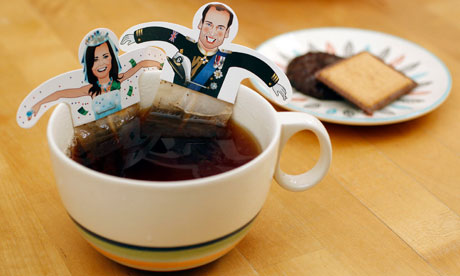
Here is the full story, with numerous other examples: “…”the British Cheese Board has put together a William and Kate themed cheese board”. No, really; it says that. They then go on to enumerate five British cheeses and their agonisingly tenuous connection to the principal players; “Wensleydale with cranberry is a fruity blended cheese hailing from Yorkshire, just like Miss Middleton’s father””
Assorted links
1. Atlas Shrugged movie fails the market test.
2. Higher education fact of the day: by 2014, more administrators than instructors.
4. Demand pricing for movie tickets.
5. The near-extinction of the buffalo; they could have mentioned property rights, no?
*Compassion, by the Pound*
That is the new book by F. Bailey Norwood and Jayson L. Lusk, and the subtitle is The Economics of Farm Animal Welfare. A few facts:
1. From survey evidence, “Food prices” get an “importance score” of %5.06, while “Well-being of farm animals” gets an importance score of %4.15 (p.192). That’s almost on a par.
2. Fifty-five percent of Americans believe that housing chickens in cages is not humane (p.344).
3. The market share of cage-free eggs has never exceeded two percent (p.261).
I am delighted to see this book out. This is one of the most shamefully neglected topics in all of economics. Let’s hope it receives the attention it deserves.
Banerjee and Duflo on poverty and food
It is an excellent piece, excerpt:
The poor often resist the wonderful plans we think up for them because they do not share our faith that those plans work, or work as well as we claim. We shouldn’t forget, too, that other things may be more important in their lives than food. Poor people in the developing world spend large amounts on weddings, dowries, and christenings. Part of the reason is probably that they don’t want to lose face, when the social custom is to spend a lot on those occasions. In South Africa, poor families often spend so lavishly on funerals that they skimp on food for months afterward.
And don’t underestimate the power of factors like boredom. Life can be quite dull in a village…
We often see the world of the poor as a land of missed opportunities and wonder why they don’t invest in what would really make their lives better. But the poor may well be more skeptical about supposed opportunities and the possibility of any radical change in their lives. They often behave as if they think that any change that is significant enough to be worth sacrificing for will simply take too long. This could explain why they focus on the here and now, on living their lives as pleasantly as possible and celebrating when occasion demands it.
Hat tip goes to half of the people I follow on Twitter.
Is Bitcoin a bubble?
Last post on this topic! Jerry Brito reports:
The arrow notes the date my column on the virtual currency was published in TIME.com. The day after that piece was published, the Bitcoin exchange rate reached an all time high at $1.19. Yesterday, just over a week later, it was pushing $2.
Via Chris F. Masse, Reuben Grinberg (in a useful paper) reports:
In late April, 2011, one bitcoin is approximately at parity with the US Dollar — a 2000% percent appreciation against the Dollar in less than a year.
Of course, that’s the appreciation you might expect from a highly successful private asset! Or you can take that as a sign of the dependence of the Bitcoin upon expectations, and a sign of its bubbly nature. Just think how hard it is for a major country to establish crediblity for its currency, and then ask how much of the Bitcoin value is expectations-dependent and multiple-equilibria dependent. What will be the rate of Bitcoin appreciation five years from now? I guess it will be falling.
If you are thinking about holding Bitcoin, here is a Fischer Black paper worth reading.
“Consumer-driven” health care
…the US isn’t even close to being the leader in consumer-driven medicine, if by that you mean cost-sharing and purchasing decisions; in the rich world, that would almost certainly be Switzerland, where consumers patients not only pay heavily out of pocket, but purchase their own insurance, as both Kaiser and Cato will tell you.
That’s from Megan McArdle, with a good chart at the link. Krugman decries the “patient as consumer” model, but oddly he once wrote a whole column praising the Swiss health care system:
…a Swiss-style system of universal coverage would be a vast improvement on what we have now [pre-ACA, at the time]. And we already know that such systems work.
Niklas Blanchard had an excellent post, “Sometimes Patients are Consumers…” And Will Wilkinson comments.
Even in a system such as the French, actual health care decisions are very often driven by choosing individuals, even if government ends up paying the bill.
Bryan Caplan defends pacifism
In the real-world, however, pacifism is a sound guide to action.
And that includes an unwillingness to kill innocent civilians as collateral damage while acting in defense of one’s country. The original post is here, the defense against critics is here.
There is not enough consideration of specific times and place. Had England been pacifist in 1914, that might have yielded a better outcome. Had England been pacifist in 1939, likely not. Switzerland has done better for itself, and likely for the world, by being ready to fight back. Pacifism today could quite possibly doom Taiwan, Israel, large parts of India (from both Pakistan and internal dissent), any government threatened by civil war (who would end up ruling Saudi Arabia and how quickly?), and I predict we would see a larger-scale African tyrant arise, gobbling up non-resisting pacifist neighbors. Would China request the vassalage of any countries, besides Taiwan that is? Would Russia “request” Georgia and the Baltics? Would West Germany have survived?
And this is the best we can do? It’s much worse than the status quo, which is hardly delightful enlightenment. I don’t see these examples mentioned in Bryan’s post. There is also a Lucas critique issue of how the bad guys start behaving once they figure out that the good guys are pacifist, and I don’t see him discussing that either.
It would be a mistake to add up all the wars and say pacifism is still better overall, because we do not face an all-or-nothing choice. Many selective instances of non-pacifism are still a good idea, with benefits substantially in excess of their costs. Bryan, however, has to embrace pacifism, otherwise his moral theory becomes too tangled up in the empirics of the daily newspaper…
Which is exactly where I am urging him to go.
Assorted links
1. Ten Korean dishes you should try, a conservative list.
2. Who owns a Mac?
3. Good profile of Paul Krugman, good bits on Obama meeting, Summers, other matters.
4. Paul Seabright on RCT; see also Pritchett and Toma at that link.
*A Great Leap Forward: 1930s Depression and U.S. Economic Growth*
In his masterpiece, Alexander J. Field writes:
This book is built around a novel claim: potential output grew dramatically across the Depression years (1929-1941), and this advance provided the foundation for the economic and military success of the United States during the Second World War, as well as for what Walt Rostow (1960) called “the age of high mass consumption” that followed. This view, if accepted, leads to important revisions in our understanding of the sources and trajectory of economic growth to the second quarter of the century and, more broadly, over the longer sweep of U.S. economic history since the Civil War.
…Although the Second World War provided a massive fiscal and monetary boost that eliminated the remnants of Depression-era unemployment, it was, on balance, disruptive of the forward pace of technological progress in the private sector.
During 1929-1941, the annual total factor productivity (measure of economic progress due to new ideas) increase in the trucking sector was 12.61 (!) and for airline transport it was 14.45 (!).
This is a) one of the best economics books of the last ten years, b) one of the best books on the Depression era, c) the only economic interpretation of WWII which makes sense, and is supported by the numbers, and d) one of the must-reads of the year.
Here is an interview with Field. You can buy the book here.
The Samuelson-Stolper theorem
U.S. multinational corporations, the big brand-name companies that employ a fifth of all American workers, have been hiring abroad while cutting back at home, sharpening the debate over globalization’s effect on the U.S. economy.
The companies cut their work forces in the U.S. by 2.9 million during the 2000s while increasing employment overseas by 2.4 million, new data from the U.S. Commerce Department show. That’s a big switch from the 1990s, when they added jobs everywhere: 4.4 million in the U.S. and 2.7 million abroad.
From David Wessel, there is more here. Somewhat heretically, I see at least a fifty percent chance that our next decade will be marked by a) slow technological progress, and b) the Samuelson-Stolper factor price equalization theorem. Before 2000, trade helped boost real wages in the United States, but it is much less clear that is true post-2000. If you’re not thinking about these issues seriously, I would say you are asleep at the wheel.
By the way, I have no problem giving these developments a positive cosmopolitan interpretation. And rather than leading to massive calls for left-wing redistribution (a common prediction), I sooner expect the opposite, more on that soon.
Haitian real estate update
More than half of the Haitians driven into tent cities and makeshift camps by the January 2010 earthquake have moved out of them, officially bringing down the displaced population to 680,000 from a peak of 1.5 million, according to the International Organization for Migration.
But what may seem like a clear sign of progress, officials warn, is also a cause of concern.
Very few of the people who left the camps — only 4.7 percent, by the group’s estimate — did so because their homes had been rebuilt or repaired. Instead, a vast majority appear to have been forced out through mass evictions by landowners, or to have left the camps on their own to escape the high crime and fraying conditions there.
Now, most of the former camp dwellers are doubled up in their friends’ or families’ homes, scattered at random in tents and improvised dwellings, or living in “precarious housing” that is dilapidated, damaged or partly collapsed, the organization says. In some cases, the cinder blocks that were toppled by the quake are being cobbled together to make walls again, only more unevenly and wobbly than before.
As for the camps (arguably a step better than the evolving status quo):
Where toilets are provided, each one is shared by an average of 273 people.
Assorted links
1. Photos of robots.
2. Royal wedding betting markets in everything, which color for the Queen’s hat?
3. Earl B. Hunt, Human Intelligence, a good introduction to current debates.
4. China’s investments in the Caribbean; sign of bubble or not? (e.g., “A 2011 commitment by Beijing to build a $600 million deep-sea harbor, highway and port in Suriname that will link the country to its natural resource rich southern neighbor, Brazil.”)
5. The Canadians do fiscal stimulus the right way.
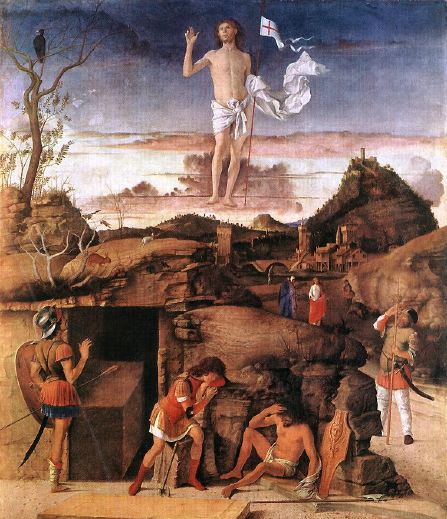
Happy Easter
Scott Sumner, from the comments
This is on “The People’s Budget“:
Matt Yglesias has a much better solution for progressives; a progressive consumption tax.
This capital gains proposal is especially silly. I’m 99% sure they won’t allow unlimited write-offs of capital losses, which means the effective cap gains rate would be even higher, and risk-taking would be discouraged. And why even have a corporate income tax system? Even from a progressive perspective it makes no sense at all.
This proposal taxes rich guys who live a hedonistic lifestyle at a much lower rates than equally rich guys who are thrifty, and leave something for others. That’s progressive?
A progressive consumption tax system composed of a mixture of modestly progressive VAT and steeply progressive payroll taxes and carbon taxes and land taxes. That’s all you need. K.I.S.S.
Assorted links
1. “…the studio audience gave the Pope a hearty round of applause.”
2. The economics of The Jetsons.
3. $23 million book on flies, it must be really good.
4. The science behind college football helmet stickers.
5. Vibrators.