Category: Political Science
The US Government is Digging in the Couch to Find Change to Buy Drugs
The richest government the world has ever known is having trouble finding the money to buy Paxlovid, a critical medical treatment for COVID.
STAT: The White House has held off on buying millions of courses of Pfizer’s highly effective antiviral drug that the White House already committed to buy due to budget constraints, according to public contract disclosures and the Department of Defense, which issues the contracts.
In January, the White House announced that it was doubling its order of Pfizer’s antiviral, named Paxlovid, committing to buy an extra 10 million courses. But according to public contracts, the White House has only actually contracted for 835,000 of those courses to date.
“Contract options will be exercised when funding becomes available,” Department of Defense spokesperson Jessica Maxwell said in a statement to STAT.
The problem isn’t lack of money per se but rules and regulations designed to create “transparency” and avoid “corruption” and the resulting bureaucracy and vote players. Another example of the Mancur Olson problems Ezra Klein and I discussed and an example of how declining trust leads to rule complexity.
Here’s another telling example. Operation Warp Speed was perhaps the most successful government program in more than a half century but it was funded only because the Trump administration and then the Biden administration finagled the rules, almost certainly breaking some laws in the process. But that is sometimes the only way to get things done today, especially at speed.
Both administrations funneled far more money than Congress allocated to Operation Warp Speed, in particular, and to its successor efforts to buy vaccines and therapeutics.
Nearly 10% of the funding Congress set aside to support hospitals and health care providers, or $17 billion, was funneled to buy vaccines and therapeutics, as STAT first reported. Other funding for Operation Warp Speed was taken from money designated for the Centers for Disease Control and Prevention and the Strategic National Stockpile, as Bloomberg reported. An additional $5 billion came from a fund for Covid-19 testing efforts, according to a document obtained by STAT.
The difficulty of finding funds in an emergency is one reason I have suggested a pandemic or emergency trust fund. Even though it would only represent nominal savings it would nevertheless matter because it could be accessed quickly.
The game theory of attacking nuclear power plants
From my latest Bloomberg column (do I really need to indent my own text?):
“Putin would like to find a way of making nuclear threats without quite incurring the liability from … making nuclear threats.
Enter nuclear power plants. When Russian forces attack the plant, there is some chance that something goes wrong, such as a radiation spill. But more likely than not, the plant will hold up, and most dangerous processes can be shut down and the very worst outcomes avoided. You can think of Putin as choosing a “nuclear radiation deployment” with only some small probability.
Why might he do this? Well, he is showing that the use of broader nuclear deployments is not out of the question. He is also showing that he is willing to take a huge risk.
Most of all, he doesn’t much have to fear retaliation. The Western powers cannot know if these nuclear attacks are deliberate strategy or simply an accident of tactics in the field, and so — if only for that reason — they will not respond with a major escalation. If Russian forces moved on Estonia, they might be courting a very serious NATO response. But not in this situation.
You don’t have to believe that Putin sat in his lair rubbing his hands as he dreamed up this diabolical strategy. It’s also possible that the attack on the nuclear power plant started by mistake, or was ordered by lower-level commanders. Putin then simply allowed it to continue, perhaps out of a general love of chaos. At the very least, he did not consider it a priority to stop the attack.
Game theory doesn’t always have to be about explicit plans and intentions. It also can help explain why “invisible hand” mechanisms lead people to a particular point in the strategy tree, as if they had those strategies as conscious intentions.
Attacking the nuclear power plant also illuminates some other parts of game theory. Ukraine and its people are taking very heavy losses and are hoping for NATO to intervene on their behalf. If the conflict seems riskier to all of Europe, and not just Ukraine, the odds of such intervention improve.
In this sense, the attack on the nuclear power plant does not have to be entirely bad for Ukrainian prospects in the war. The Ukrainian leadership is rightly horrified by this attack, due to the risks for Ukrainian citizens. But the attack could also mobilize European public opinion on behalf of military intervention for Ukraine. If the war greatly increases chances for the spread of dangerous nuclear radiation, then the likelihood that Germany, France, Turkey and other nations will intervene also greatly increases.
Notice, however, that the Russian position here may be sounder than it at first appears. European citizens care more about radiation in Ukraine than do American citizens, for reasons of simple proximity. Putin may realize he can put Europeans at greater risk so long as he doesn’t provoke an intervention from the U.S. military, which would probably be decisive. It is a risky strategy that he might just get away with.
If you are the Ukrainian government, your incentive is to make the nuclear power plant attack sound as risky and precarious as possible. Indeed, Ukrainian President Volodymyr Zelenskiy has done exactly that.”
I am sorry to say that the column does not have an especially optimistic ending.
An index for state capacity
This paper contributes to the literature on state capacity by developing a method that yields an index of state capacity with far more comprehensive data coverage across time and countries than has been possible previously. Unlike narrower measures of fiscal capacity or legal capacity, the index is more comprehensive, using data from the Varieties of Democracy dataset on fiscal capacity, a state’s control over its territory, the rule of law, and the provision of public goods used to support markets. Like the previous literature, it demonstrates that the historical prevalence of warfare predicts state capacity. Several exercises are performed to demonstrate the validity of the index in measuring state capacity.
That is from a newly published paper by Colin O’Reilly and Ryan H. Murphy, via the excellent Kevin Lewis.
How much expected surplus do we want Putin to have?
My Bloomberg column is on another topic altogether, starting with bank runs, but this part I can reframe in terms of principal-agent theory. We want to squeeze Putin so hard that he “cries Uncle”, yet without eliminating his surplus so much that he takes a lot of extra risk. Hard to achieve both of those ends at the same time! Here is one bit reflecting that dilemma:
For a point of contrast on how decentralized incentives operate on each side, consider the nuclear alert ordered by Putin on Sunday. The chance of Russian nuclear weapons being ordered into actual use is small. But Putin faces a dilemma as he attempts to manipulate the decentralized systems of the Russian military. If he gave an order for a nuclear strike on a Ukrainian city, would the Russian military obey it? Whoever did would know they could be liable for war crimes.
The outcomes here are impossible to forecast, but the uncertainty works in favor of the Ukrainians. If it became known that Putin ordered a nuclear strike and was ignored, for example, he would become the proverbial “paper tiger” rather quickly and might lose power altogether.
These decentralized mechanisms potentially shift the entire logic of the war. Russia has to win fairly quickly, or these and other forces will increasingly work against it. Ukraine thus can fight for a military stalemate, but Russia cannot. The Russian forces must take increasing levels of risk, even if those risks have what decision theorists call “negative expected value” — that is, they serve as desperate gambles and on average worsen the Russian situation.
Of course that makes the war increasingly dangerous, and not just for the Ukrainians. If Putin is afraid the forces in the field won’t always carry out his orders, for example, he may order the launch of 10 tactical nukes rather than just one.
As AK would say, “Have a nice day.”
Are nuclear weapons or Rogue AI the more dangerous risk?
I was going to write a long post on this question, as recently I had been urged to do by one of the leaders of the Effective Altruism movement, during a Sichuan lunch.
But then Putin declared a nuclear alert, and I figured a short post might be more effective. To be clear, I think the chance of nuclear weapons use right now is pretty low. But it is not zero, if only because of errors and misunderstandings. So imagine this kind of scenario repeated across a few centuries, with an increasing number of nuclear powers at that. And this time around, there is a truly existential threat to the current version of the Russian state, and a number of people are suggesting that Putin has gone a little wacko.
And this is in a world where, about one week ago, the conventional wisdom was that Russia would not really invade Ukraine at all, maybe just a limited police action in the east.
As for Rogue AI, here is a long Scott Alexander post (ungated) on the topic. For now I will just say that it makes my head hurt. It makes my head hurt because the topic is so complicated. And I don’t take any particular form of technological progress for granted, not along any time frame. That holds all the more true for “exotic” claims about what might be possible over the next few decades. Most of the history of the human race is that of zero economic growth, sometimes negative economic growth. And how good were past thinkers at predicting the future? Don’t just select on those who are famous because they got some big things right.
So I see nuclear war as the much greater large-scale risk, by far. We know nuclear weapons work and we know they can be deployed without any technological advances at all. And we know they are highly destructive by their very nature, whether we “align” them or not, whether we properly train them or not.
How many people, as public intellectuals, have made “let’s make sure all countries holding nuclear weapons can accurately distinguish between an incoming rocket and a flock of birds” their main thing? Zero?
https://twitter.com/mattyglesias/status/1498023624380403714
An ongoing political shift
In another pandemic challenge for Democrats, many of the institutions and aspects of daily life that skew culturally liberal have been undermined by the more cautious approaches to the coronavirus in left-leaning precincts: the performing arts, libraries and museums, public education, academia, mass transit, progressive religious congregations, and restaurants and small independent retailers. In pre-pandemic times, these sorts of institutions and businesses provided sustenance in Democratic-leaning communities, and their shakiness after nearly two years of off-and-on withdrawal has its own political cost.
I would remove restaurants from that list, but otherwise I agree. That is from Alec MacGillis.
Putin as a man of ideas
Commentators are drawing lessons from the conflict in Ukraine, but they are missing one key point. Above all, the Russian attack and possible dismemberment of Ukraine reflects the power of ideas.
Read the English translation of the Putin speech to justify Russian’s actions in Ukraine. It is striking how much Putin cites history, going as far back as the 17th century, to justify the Russian incursion.
One of Putin’s core views is that Ukraine is not a legitimate country in its own right. He is clear about this claim and its import: “So, I will start with the fact that modern Ukraine was entirely created by Russia or, to be more precise, by Bolshevik, Communist Russia.” Putin himself published a July 2021 essay “On the Historical Unity of Russians and Ukrainians,” which goes further back yet and discusses Ancient Rus.
Putin’s speech immerses the audience in detail, citing the history of Stalin, Khruschev, the 1917 October Revolution, the Treaty of Brest-Litovsk and what Stalin did in 1922 with respect to the People’s Commissar of Ethnic Affairs. The need for the earlier Soviet Union to offer concessions to the nationalists is portrayed as one reason why Ukraine was allowed to have some of its identity as Ukraine. Here is a typical passage: “Soviet Ukraine is the result of the Bolsheviks’ policy and can be rightfully called “Vladimir Lenin’s Ukraine.” He was its creator and architect. This is fully and comprehensively corroborated by archival documents, including Lenin’s harsh instructions regarding Donbass, which was actually shoved into Ukraine.”
By the time you get to the end of Putin’s speech he is still talking about history, and reciting how Ukraine squandered the wonderful inheritance left to them by the Soviet Union. Furthermore, that same Ukraine has become a tool of Western attempts to disrupt Russia.
Putin is full of ideas about history. You can argue how much these remarks reflect Putin’s own concern with ideas, or the Russian public’s concern or that of foreign audiences, but it is probably all of those. Furthermore, Putin has embraced a coterie of Russian intellectuals, marketing what is sometimes called Eurasianism, who parrot and develop the notion of Russia as a power-deserving Eurasian civilization.
If you think the current version of Ukraine was never a valid nation to begin with, a twisted set of mental contortions might bring you around to Russian expansionism. Russia is just taking back what is rightfully theirs, and by the end of this speech Putin is concluding that: “the possible continuation of the bloodshed will lie entirely on the conscience of Ukraine’s ruling regime.”
The obsession with ideas and also with history is a longstanding tradition from earlier leadership. For instance, Soviet dictator Josef Stalin held an extensive library, amounting to about 19,500 books, which he used as a personal, working archive. Stalin was known for his extensive marginalia and for leaving greasy fingerprints on the book pages. Marxist politics, economics and history were prominent in the library, and after Lenin, the most heavily represented authors in the library were Stalin himself, Zinoviev, Bukharin, Marx, Kamenev, Molotov, and Trotsky.
So Putin is hardly breaking from the mold. We also know, from previous documentation, that Putin considered the dismantlement of the former Soviet Union as a great tragedy. That too is an idea, and it further reflects the continuity between Putin’s efforts and those of his predecessors.
If you write books, whether good or bad ones, and wonder whether your work matters, I suggest the answer lies before you on your TV screen each evening. Russia is a nation of ideas, led by people who are obsessed with ideas. The rest of the world, most of all Europe, will need better ideas in turn.
Addendum: Here is Ryan Avent on the power of ideas.
Ronald Reagan is underrated
That is the theme of my latest Bloomberg column, here is one excerpt:
As I interpret the career of Reagan, he understood another point very well — and that concerns the scarcity of moral capital. Reagan knew there were real “bad guys,” and that it was up to leaders and elites to identify them and stand up to them, both rhetorically and diplomatically. Most of all, it was important to encourage the American public to internalize these same moral judgments. This may all sound corny and dated, but the pending conflict in Ukraine shows it to be an enduring truth.
The complementary Reagan vision was positive, optimistic and focused on what Americans can accomplish when working together. Americans are going to disagree on a lot of issues, he acknowledged, but they should maintain a relatively united front and save their real opprobrium for the truly destructive forces on the global scene.
Fast forward 40 years, and it seems that America has almost completely ignored these strictures. Many on the right seem most upset about the worst aspects of the left, and vice versa. Even when bad forces emerge in the international arena, Americans seem far more preoccupied by their fights with each other.
On Russia specifically, as recently as several months ago the current military escalation was hardly a topic of discussion among U.S. elites. When Mitt Romney tried to raise the danger of Russia in his 2012 presidential campaign, the point largely fell flat. Former President Barack Obama actually mocked him.
One of my biggest beefs about the status quo is that both the Trumpist Right and the Progressive Left are so willing to run down America’s moral capital in service of their pet partisan projects.
Who has the power?
The WSJ has several good piece on electric power in the United States, many of which are relevant to my recent podcast with Ezra Klein. Starting with the increased unreliability of America’s electric grid.
The U.S. power system is faltering just as millions of Americans are becoming more dependent on it—not just to light their homes, but increasingly to work remotely, charge their phones and cars, and cook their food—as more modern conveniences become electrified.
… Much of the transmission system, which carries high-voltage electricity over long distances, was constructed just after World War II, with some lines built well before that. The distribution system, the network of smaller wires that takes electricity to homes and businesses, is also decades old, and accounts for the majority of outages.
We need more power but are relying on transmission lines we put into places decades ago when we could still build things. The second WSJ article is on the 17-year travail to get a new power cable from hydropower rich Quebec to Boston.
Blackstone made other discoveries that altered the project. Its environmental consultants spent the summer of 2010 watching patches of blue lupine for endangered Karner blue butterflies and frosted elfins, a threatened species. They spotted two Karners and wrote a plan for avoiding damage to the wildflowers upon which the butterflies rely. Arrangements were also made to protect bald eagle nests that might be present during construction and identify shagbark hickories big enough for the endangered Indiana bat to roost.
When it became clear developers wouldn’t get state approval to dig beneath Haverstraw Bay, where endangered Atlantic sturgeon live, they redrew the route again.
These adjustments weren’t enough to stop opposition from several groups that normally aren’t aligned: the Sierra Club, energy companies, a bipartisan group of lawmakers and a labor union. Sierra Club argued that importing power threatened the development of in-state renewable-energy projects and could cause environmental damage in Canada.
That stand put the environmental advocacy club on the same side as the operator of a soon-to-close nuclear power plant called Indian Point as well as the Business Council of New York State and the Independent Power Producers of New York Inc., which fought the line on behalf of entrenched electricity providers.
Lawmakers objected for local reasons, with one saying he didn’t like that the power line’s energy would bypass dozens of upstate counties. The International Brotherhood of Electrical Workers Local 97 argued it threatened upstate renewable projects, would eliminate the need for additional gas-fired plants and “be deleterious of New York state energy jobs.”
The developers pledged $40 million to train New Yorkers for green-energy jobs and agreed to fund an environmental trust with $117 million. The trust would help pull invasive plants from Lake Champlain, restore oyster reefs around New York City and pay for implanting acoustic transmitters in adult sturgeon so scientists could study the fish.
Blackstone still faces one last step: That supply contract needs the approval of the New York Public Service Commission. One group that still opposes it is Riverkeeper, a nonprofit dedicated to protecting the Hudson. Riverkeeper initially supported the project before turning against it in 2019, saying the transmission line could lead to additional dams in Quebec that would possibly expose indigenous groups to methylmercury—a neurotoxin created by microbes in freshly flooded soils that can pass up the food chain to people who live off the land.
Hydro-Québec, the supplier of power to Champlain Hudson, has no plans for new hydropower facilities, its CEO said. There have also been no reported cases of mercury poisoning resulting from consuming fish caught in Hydro-Québec’s reservoirs during more than 40 years of monitoring, according to a spokeswoman.
…“The last thing we want is more dams because of new markets,” said John Lipscomb, a patrol-boat captain and vice president for advocacy for Riverkeeper. “We are investigating and will continue to look at opportunities to stop the project.”
So there you have it, a power line that could benefit millions is threatened by a brew of “Baptists” defending a few flowers and fish, bootleggers protecting their rents, shakedown artists trying to get a share of the proceeds and hysterics longing for a return to the state of nature.
Addendum: Oh yes, the third relevant piece is about how Americans are turning to their own generators and batteries (expensive and not exactly environmentally friendly) to try to deal with the unreliable grid. I will be getting one of these systems for my own home, which also came up in the podcast with Klein.
Model this Afghanistan policy
But in both the sanctions and the seizures, you can see an almost Kafka-esque madness in the American position. They are expending all this effort to ameliorate the consequences of a sanctions regime they are implementing. They are desperately brokering deals to preserve foreign reserves that they are freezing. When I ask why they continue to impose these policies at all, the administration says that the Taliban has American prisoners, that it is a brutal regime that murders opponents and represses women, that it has links to terrorists, and that our sanctions grant us much-needed leverage.
Here is more from Ezra Klein (NYT) on the debacle of starvation unfolding in Afghanistan.
Woke, feminized CIA sentences to ponder
From River Page:
The CIA, likewise, has been most successful in its own kind of culture war, whether it be through the CCF, anti-Soviet propaganda, or the lead-up to the Iraq War. Regardless of their failures, both the CIA and the professional class use their adeptness at culture war as a means of self-justification. The CIA utilizes the new dialect of power because it grants the agency legitimacy within the ruling elite; the Left and its professional-class vanguards cry foul because they do not want to admit their own involvement in the credentialing and reproduction of this elite.
Right-wing critics acknowledge the power of wokeness but, like leftists, mistakenly believe that it is a bona fide political project capable of changing institutions rather than merely reifying them. The conservative commentator Sohrab Ahmari’s dystopian fantasy about a future Kamala Harris presidency, in which America is in danger because, among other things, “the vast majority of our spooks spend their days analyzing their identities along intersectional lines of race, gender and sexuality,” presupposes a level of competence in the pre-woke CIA that is far beyond what it deserves given the historical record—the pre-woke spooks hardly kept America safe from danger. There is, however, an illuminating portion of Ahmari’s hypothetical that reveals an essential truth about “wokeness.” In the future imagined by Ahmari, the American military is ill-prepared to execute its mission, having been busy naming and renaming bases. When discussing Guantanamo Bay—now appropriately called Naval Base Mumia Abu Jamal—a staffer passively notes that the mission of the base hasn’t changed. This suggests that even the most aggressive right-wing critics of “wokeness” question its ability to change anything beneath the surface of American politics; it can change appearances, not purposes.
And this:
As the public face and self-understanding of the CIA has changed, sympathetic popular culture depictions of the organization have relied on similar themes of feminism, wokeness, and self-actualization to portray the agency’s work as morally complicated but necessary.
Here is the full piece, and for the pointer I thank a loyal MR reader.
Wokeism has peaked
Virginia has gone Republican (temporarily, because of school-related issues), San Francisco recalled its school board by a decisive margin, Joe Rogan wasn’t cancelled, and there may be a significant war in Ukraine. That is the theme of my latest Bloomberg column. Excerpt:
The turning point for the fortunes of the woke may be this week’s school board election in San Francisco, where three members were recalled by a margin of more than 70%. Voters were upset that the school board spent time trying to rename some schools in a more politically correct manner, rather than focusing on reopening all the schools. There was also considerable opposition to the board’s introduction of a lottery admissions system for a prestigious high school, in lieu of the previous use of grades and exam scores.
And:
Another trend is how relatively few immigrants are woke. Latinos in particular seem more open to the Republican Party, or at least don’t seem to have strong partisan attachments. More generally, immigrant political views are more diverse than many people think, even within the Democratic Party.
And:
Wokeism is likely to evolve into a subculture that is highly educated, highly White and fairly feminine. That is still a large mass of people, but not enough to run the country or all its major institutions. In the San Francisco school board recall, for instance, the role of Asian Americans was especially prominent.
In addition:
The woke also are likely to achieve an even greater hold over American universities. Due to the tenure system, personnel turnover is low, and currently newer and younger faculty are more left-wing than are older faculty, including in my field of economics. The simple march of retirements is going to make universities even more left-wing — and even more out of touch with mainstream America.
I hereby inscribe this prediction in The Book of Tetlock.
A simple model of Putin and the Ukraine crisis
I think the correct model here is “Putin has put down so many chips, he can’t walk away with nothing. He wants to wreck Ukraine (more than taking territory per se). He will do the minimum amount he can that leaves him with a strong probability of having wrecked Ukraine, and no more.”
That still leaves a broad range of possible outcomes, but at the moment that is my mental model for updating with new information.
Bram Stoker, Dracula, and Progress Studies
The Dracula novel is of course very famous, but it is less well known that it was, among other things, a salvo in the direction of what we now call Progress Studies. Here are a few points of relevance for understanding Bram Stoker and his writings and views:
1. Stoker was Anglo-Irish and favored the late 19th century industrialization of Belfast as a model for Ireland more generally. He also was enamored with the course of progress in the United States, and he wrote a pamphlet about his visit.
2. From Wikipedia:
He was a strong supporter of the Liberal Party and took a keen interest in Irish affairs. As a “philosophical home ruler”, he supported Home Rule for Ireland brought about by peaceful means. He remained an ardent monarchist who believed that Ireland should remain within the British Empire, an entity that he saw as a force for good. He was an admirer of Prime Minister William Ewart Gladstone, whom he knew personally, and supported his plans for Ireland.Stoker believed in progress and took a keen interest in science and science-based medicine.
3. The novel Dracula contrasts the backward world of Transylvania with the advanced world of London, and it shows the vampire cannot survive in the latter. The Count is beaten back by Dr. Van Helsing, who uses science to defeat him and who serves as a stand-in for Stoker and is the de facto hero of the story.
4. One core message of the novel is “Ireland had better develop economically, otherwise we will end up like a bunch of feudal peasants, holding up crosses to fend off evil, rapacious landowners.” At the time, the prominent uses of crosses was associated with Irish Catholicism. And is there a more Irish villain than the absentee landlord, namely Dracula? Dracula is also the kind of warrior nobleman who, coming from England, took over Ireland.
5. In the novel, science and commerce have the potential to defeat underdevelopment. Stoker’s portrait of Transylvania, most prominent in the opening sections of the novel, also suggests that “underdevelopment is a state of mind.” And it is correlated with feuding sects and clans, again a reference to the Ireland of his time, at least as he understood Catholic Ireland. Here is more on Stoker’s views on economic development and modernization for both Ireland and the Balkans.
6. Stoker was obsessed with “rationalizing” (in the Weberian sense) the employment relation and also the bureaucracy His first non-fiction work was “The Duties of Clerks of Petty Sessions.” Progress was more generally a recurring theme in his non-fiction writings, for instance “The Necessity of Political Honesty.” He called for an Ireland of commerce, education, and without “warring feuds.”
7. For Stoker, sexual repression is needed to further societal progress and economic development, and in this regard Stoker anticipates Freud. Dracula abides by most laws and norms, except the sexual/cannibalistic ones. Dracula and Lucy, who give in to their individual desires, end up as the big losers. For the others, societal order is restored, and the lurid sexuality that pervades the book is dampened by the restoration of order.
8. Christ and Dracula are mirror opposites (the stake, the cross, resurrection at dawn rather than sunset, the role of blood drinking reversed, the preaching of immortality in opposite ways, the inversion of who sacrifices for whom, and more). A proper societal outcome is obtained when these two opposites end up neutralizing each other. Stoker’s vision of progress is fundamentally secular. (See Clyde Leatherdale on all this.)
9. From Hollis Robbins: “Britain’s economic prosperity in the nineteenth century was largely dependent on the adoption of international standards such as Greenwich Mean Time and the universal day, which ensured smooth coordination for trade, legal transactions, railroad travel, and mail delivery. Dracula, whose powers are governed by the sun and the moon rather than clocks and calendars, works to destabilize social coordination. His objective is not only literally to “fatten on the blood of the living,”6 but also more broadly to suck the lifeblood of a thriving commercial economy at the dawn of a global age. Under Dracula’s spell, humans forget the time, becoming listless, unproductive, and indifferent to social convention. At heart, the fundamental battle in Stoker’s Dracula is a death struggle between standard time as an institutional basis for world markets and planetary time governing a primitive, superstitious existence.”
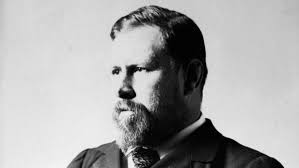
10. In an interview Stoker once said: “I suppose that every book of the kind must contain some lesson, but I prefer that readers should find it out for themselves.” There are numerous ways to take that remark, not just what I am suggesting.
Short Terms Cause Short-Term Thinking
The excellent Garett Jones argues that looming elections are bad news for good economics. See the playlists for more in this series.