Category: Sports
NBA predictions time
It’s that time of year. Against the conventional wisdom, I’m going to opt for the Brooklyn Nets. They have an excellent front line, a very good starting five, and a deep bench. Garnett and Pierce still have something to prove, although my hypothesis does require an attitude upgrade from Deron Williams. They are more like some of the old Pistons teams than a “single best player team.” A healthy Miami Heat is a stronger contender but Wade is already being rested for back-to-back games, which does not augur well for a long playoff run. Chicago needs a more creative offense and Indiana doesn’t seem quite ready to win a title, though they may knock off Miami in a playoff series.
The most overrated team is the Los Angeles Clippers (Griffin is more a spectacular player than a great player and Chris Paul is bad for team morale). So who will win the West? When in doubt, and when it seems no one deserves to win, ask these two questions: a) does the team have world-class defense? b) which is the team with the single best player? That leaves you with San Antonio and Oklahoma as the two units with the best chances. Each seems too weakened to take home an entire title.
By the way, here is a new study of where NBA players come from, note this: “Growing up in a wealthier neighborhood is a major, positive predictor of reaching the N.B.A. for both black and white men.”
Will the sports sector ever be disrupted?
Here is a question from a recent symposium:
People spend 4 hours per week watching sports and 40 listening to music. But the music industry is one sixth the size of the sports industry. Why?
No time-shifting for live contests, much less piracy, less substitutability (there is only one Super Bowl), and greater indivisibility of product would be the beginnings of an answer. The source is here, hat tip goes to Ted Gioia.
The growing move to measure everything, including basketball
This time it is from the NBA:
The league on Thursday announced plans to install sophisticated tracking cameras, known as the SportVu system, in every arena for the coming season, creating an unprecedented treasure trove of data about virtually every wrinkle of the game. SportVu, developed by Stats LLC, records data points for all 10 players, the three referees and the ball, every 30th of a second, measuring speed, distance, player separation and ball possession. Every step, every dribble, every pass, every shot, every rebound — really, every movement — will be recorded, coded and categorized. … The N.B.A. is the first major professional sports league in the United States to fully adopt the SportVu system. It will have other implications for the league, far beyond the playbook and the box score. Not everyone might welcome the change. General managers will surely exploit the more sophisticated statistics when negotiating contracts with player agents. Not all assists, points and rebounds are created equal — and teams will soon be able to demonstrate that vividly. Referees are also tracked by SportVu, which means the league will have yet another tool to analyze every call, non-call and missed call as it ranks its officials. Those rankings help determine which referees are chosen for playoff assignments and the finals.
There is yet further information here. One prediction is simply that players will pass the ball more, even when it does not result in an assist. Team defense will improve too. Furthermore some injuries may be partially forecastable and thus preventable. If applied at the college level, the efficiency of the draft will improve and this will help restore competitive parity. Truly injured or otherwise disadvantaged players may lose some insurance value, since it may be clear earlier on they are not going to recover or improve.
Singaporean hawkers are some of the best food creators in the world
From a recent cook-off challenge:
Singapore’s humble but beloved hawkers have triumphed 2-1 in a cook-off with the legendary Gordon Ramsay who runs restaurants that have earned not just one but three Michelin stars. Are our hawkers then worthy of Michelin star attention? Well, they may not be decorated, but it looks like they still win the hearts of locals.
Nearly 5,000 people thronged the Singtel Hawker Heroes Challenge to see the Ramsay, the Hell’s Kitchen star, pit his skills against three hawkers who were chosen in a national poll drawing 2.5 million votes. The chef only had two days to learn and prepare the same hawker food that these local masters have been doing for decades.
There is more detail here, additional coverage here, and it is no surprise Ramsey fell flat on the laksa.
There is, by the way, plenty of talk that the hawkers are an endangered species. With rising rents, various bureaucracies are asking whether the hawker centers really deserve so much dedicated land in the city plans. There’s also a question whether the younger generation wants to take on jobs which are so stressful and demanding, when so many other good jobs are available in Singapore. Other hawker centers are suffering in quality just a wee bit from the gentrification of their neighborhoods. Let’s hope for the best but I fear for the worst.
My Singapore food recommendation, by the way, is the Ghim Moh Market and Food Centre, which has numerous gems and is one of those “pre-upgrade” hawker centers, with a design dating from 1977. (Unfortunately they will close it for renovation next year, which will probably mean the loss of some hawkers.) My favorite dish was the dosa at Heaven’s Indian Curry, arguably the best I have had, including in South India. They open at six a.m. each morning, every single day, see my remarks above. Their dishes cost either one dollar or two dollars (roughly, actually less).
The future of higher education in Alabama?
The video that was posted online appeared to be a tour of the spa area at some swanky new hotel.
There were cascading waterfalls into hot and cold pools. There was an arcade section. A smoothie bar. Flat-screen TVs adorned every open space. There were lockers the members at Augusta National would find acceptable.
This was luxury, no doubt. But it was not at a hotel.
Instead, this shaky video tour was of the inside of a college football team’s training and lounge area. Specifically, it is the training, weight room and lounge area within the Mal Moore Athletic Complex on the campus of the University of Alabama.
Pricetag: $9 million. (And that’s just for the upgrades. The original facility, which opened in 2005, cost about $50 million.)
The host school, the University of Alabama, raised tuition seven percent last year.
There is now a for-profit university entering NCAA Division I ranks
…Mueller’s company, Grand Canyon University, in Phoenix, is in the process of becoming the first-ever for-profit university to join the NCAA’s Division I ranks. The Antelopes (hence, the ticker symbol) accepted an invitation to the WAC last December when the oft-raided league was on life support. On July 1 they became official members, beginning a four-year transition period from Division II to Division I
The presidents of the Pac-12 — including one in particular — are none too pleased about it.
The conference’s 12 presidents signed and delivered a letter dated July 10 urging the NCAA’s Executive Committee to “engage in further, careful consideration” about allowing for-profit universities to become Division I members at the committee’s August meeting. In the meantime, Pac-12 presidents decided at a league meeting last month not to schedule future contests against Grand Canyon while the issue is under consideration.
“A university using intercollegiate athletics to drive up its stock value — that’s not what we’re about,” Arizona State president Michael Crow said in a phone interview over the weekend. “… If someone asked me, should we play the Pepsi-Cola Company in basketball? The answer is no. We shouldn’t be playing for-profit corporations.”
There is more information here, and the hat tip goes to Tim Johnson on Twitter.
*The Great Tamasha*
The author is James Astill and the subtitle is Cricket, Corruption, and the Spectacular Rise of Modern India. This is an excellent book on India even if you, like I, have no real understanding of cricket. Here are a few bits:
According to an analysis by Richard Cashman of the 143 Indians who played Test cricket up to 1979, half had a college degree, compared to 1 or 2 per cent of Indians as a whole.
And:
Cricket is now ubiquitous on Indian television. It is shown constantly on 16 sports channels and relentlessly discussed on over 100 news channels.
And quoting Ashis Nandy:
“Cricket is an Indian game accidentally discovered by the English.”
Recommended.
John Rawls was a Platonist on baseball
On most Saturdays, the shy, private Rawls would spend hours typing letters recalling past events in astounding detail. One such letter, republished by Boston Review, recalled a conversation he had some twenty years earlier—you probably had conversations with sentient beings today who have lived shorter than that—about why baseball is the best sport. In the letter, Rawls credits his interlocutor, Harry Kalven, for coming up with six reasons why baseball is “the best of all games.”
That is from Aaron Gordon (via BookForum), who also dissects the fallacies of Rawls on baseball.
Who are the three highest paid officials on the Pentagon budget?
The football coaches at Army, Navy and Air Force.
Here is more (mostly on other topics), hat tip to @jtlevy. Here are some comparable answers for state government employees.
Where does the right to publicity lie? (hard to discern)
The Screen Actors Guild and several players’ unions have filed briefs supporting Mr. Hart, saying that athletes, actors and other celebrities must have the right to control the use of their identities and to harvest the financial fruits of their fame. The movie industry, book publishers and news organizations, including The New York Times, have lined up on the other side, saying that allowing celebrities to control speech about them runs afoul of the First Amendment.
The dueling briefs cited a grab bag of cases that are hard to wrestle into a coherent legal framework.
The courts have, on the one hand, rejected right-of-publicity suits arising from a painting of Tiger Woods, a comic book evoking the musicians Johnny and Edgar Winter, parody baseball trading cards and a fantasy baseball game that used the names, statistics and biographies of Major League players. But courts have allowed suits over the broadcast of a human cannonball’s entire act, a comic book using a hockey player’s nickname, an ad evoking Vanna White’s skill at turning letters on “The Wheel of Fortune” and a reference to Rosa Parks in a song.
If there is a legal principle that unites these rulings, it is hard to discern. What is clear, though, according to an expansive 2011 Supreme Court decision, is that video games deserve full First Amendment protection.
Here is more, by Adam Liptak. Here is a Gloria Franke paper (pdf) on some of the underlying legal (and economic) issues.
Restrictions on student athlete transfer
When an athlete chooses to transfer, three sets of rules can be involved: those of the NCAA.; those of the conference in which the university competes; and those that accompany the national letter of intent, a contract that athletes sign while still in high school to announce their intention to attend a university.
“It’s entirely slanted to the coach’s side,” said Don Jackson, a lawyer who runs the Sports Group in Montgomery, Ala., and who has represented dozens of athletes attempting to transfer to a university of their choice. “Once the student-athlete signs that national letter of intent, it’s essentially a contract of adhesion. They have limited rights.”
Universities have long sought to block student-athletes from transferring to a rival program. Alabama’s football team, for example, would not be expected to let a star player go to Auburn. But the impulse to limit the student-athlete’s options has been heightened to the point that coaches are now blacklisting dozens of universities.
From the NYT, here is more, none of it pretty, but of course lower-tier universities will claim they are making big investments in improving the quality of diamonds in the rough. The funny thing is — if I may sound Caplanian for a moment — no one at these schools seems to demand similar restrictions on transfers of the students.
Burned by the FDA
 If you lived in Great Britain or Germany and your physician prescribed a pharmaceutical, would you ask them, “has this pharmaceutical been approved by the U.S. FDA?” Probably not. At FDAReview.org Dan Klein and I argue that international reciprocity is a no-brainer:
If the United States and, say, Great Britain had drug-approval reciprocity, then drugs approved in Britain would gain immediate approval in the United States, and drugs approved in the United States would gain immediate approval in Great Britain. Some countries such as Australia and New Zealand already take into account U.S. approvals when making their own approval decisions. The U.S. government should establish reciprocity with countries that have a proven record of approving safe drugs—including most west European countries, Canada, Japan, and Australia. Such an arrangement would reduce delay and eliminate duplication and wasted resources. By relieving itself of having to review drugs already approved in partner countries, the FDA could review and investigate NDAs more quickly and thoroughly.
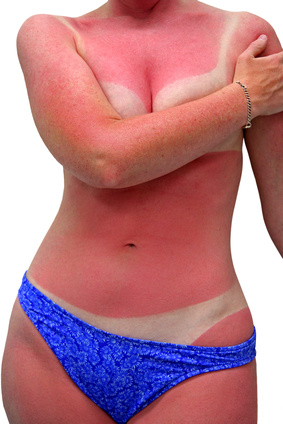
Unfortunately, even when they can, the US FDA does not take advantage of international knowledge as the WSJ notes in European Sunscreen Roadblock on U.S. Beaches:
Eight sunscreen ingredient applications have been pending before the U.S. Food and Drug Administration for years—some for up to a decade—for products available in many overseas countries. The applications were filed through the federal TEA process (time and extent application), which allows the FDA to approve the ingredients if they have been used for at least five years abroad and have proved effective and safe.
…Henry Lim, chairman of dermatology at Henry Ford Hospital in Detroit and a member of the American Academy of Dermatology, says multiple UVA filters still awaiting clearance in the U.S. have been used effectively outside the country for years.
“The U.S. is an island by itself on this one,” he said. “They’re available in Canada, available in Europe, available in Asia, available in Mexico, and available in South America.”
The sunscreens available in the U.S. are not without risk and in some ways, as the WSJ discusses, the European standards are stricter than the US standards so there really is no reason why sunscreens available in Europe and Canada should not also be available in the United States.
Hat tip: Kurt Busboom.
Addendum: 27 states have driver’s license reciprocity with Germany. Why not pharmaceutical reciprocity? With hat tip to whatsthat in the comments.
Rising academic salaries for coaches
Even during the recession, salaries for athletic coaches at colleges and universities continued to increase. For instance in the SEC, between 2006 and 2011, “football coaching salaries increased 128.9 percent, from $3,147,149 to $6,928,989.” This is an extreme example but it reflects a more general pattern:
That big-time coaches earn more than professors may not be a surprise, but a new study documents the striking extent and longevity of the gap: Coaches’ salaries increase year after year at much higher rates — even as many colleges say they are engaged in belt-tightening across they board — and that pattern is driven by the institutions with the largest athletic programs.
…Athletics is tied much more closely to the commercial marketplace than all other parts of a university, Hirko said, which is why salaries and other expenses continue to rise at rates seemingly independent of the rest of the institution.
The full story is here. Here is a must-view map on the highest-paid public employee in each state; what have Montana, Alaska, and Delaware done wrong? (No wonder those states have so few people!) And New Hampshire is beyond the pale.

Bundling
John McCain has introduced a bill to “encourage the wholesale and retail unbundling of programming by distributors and programmers.” Would a la carte pricing result in lower prices and greater consumer welfare or would it raise prices and result in less investment in television media? Time to take a look at the economics of bundling. In this video from our MRUniversity course on media economics I review the theory of bundling and then apply it to cable TV.
http://youtu.be/8mw5RLzWNnE
Which athletes and entertainers choose to come out of the closet?
Here is one not inaccurate description of the professional status of Jason Collins:
Collins’s announcement in a thoughtful, first-person Sports Illustrated story has created a conundrum for the NBA, which does not want to appear intolerant but whose teams could wind up passing on Collins this offseason. While he would represent a relatively inexpensive option for a team in need of a physical defender at the veteran minimum salary of roughly $1.35 million, Collins will turn 35 in December and is at a stage in his career when declining, low-impact players are generally pushed aside.
I would put it this way. It is good news that he “came out” and he is to be applauded for his courage. Still, I am discomforted by the fact that only a male athlete on the down side of his career would be the one doing this.
Female athletes are more likely to identify as lesbian or bisexual than male athletes will identify as gay or bisexual. I suspect this does not involve a comparable fear of loss of endorsement income or mass appeal.
Could it also be that women are more open in this regard? Martina Navratilova came out in 1981 at the age of 24 and at or near the peak or her career.
Hollywood is ostensibly a more “gay tolerant” culture than is professional athletics, yet how many leading movie actors have come out as gay or bisexual? I can’t think of many. Here is one list of openly gay actors and I have not heard of most of them. The number one guy on that list is identified as “Actor, Starship Troopers.” As for the others on the list, Ricky Martin is famous but mostly a singer and Rupert Everett very often plays gay or possibly-gay characters, so his coming out presumably involved much less career risk.
Presumably if an up-and-coming actor comes out, it is hardly for that actor to get roles as a romantic lead and perhaps as an action lead in a “buddy movie” as well. If you look at this list, it seems well-known female celebrities find it easier to mix coming out with continued career success. Ellen, Rachel Maddow, Rosie O’Donnell, and Jodie Foster do not seem to have obvious male counterparts, again outside of music and figures such as Ricky Martin, Elton John, and David Bowie, and even Bowie has sent some mixed signals over the years.
For all the talk about the macho culture of professional sports, I wonder how much the problem is in fact the viewing public and the “least common denominator” imperatives of some forms of commercialized entertainment, especially when funded by advertisements. The commercial upside for male coming out is usually smaller than the downside, at least for sports and movies with built-in mass audiences, again with connections to image-conscious mainstream advertisers. If male “coming out” is easier in the world of music, it is perhaps because the product is directly financed by consumers, which implies more of a niche audience and a willingness to forgo some classes of consumers altogether. Alex and I discuss related mechanisms in our paper on avant-garde vs. popular culture (pdf).
I am happy to read about Collins. But we will be seeing much more progress when up-and-coming handsome actors, shooting for big Hollywood roles, also come out as gay. That to me still seems far away.