Category: Uncategorized
Sunday assorted links
1. On gender segregation in chess and sports.
2. What if Marx and Freud had never lived?
3. Bainbridge critique of the Rubio war against Woke Capitalism, good piece.
4. Very good Vox coverage of Jason Crawford, progress, and progress studies.
5. In talent search, are we too biased toward “naturals”?
6. Fresh Vitalik: “As I wrote above, “any system which claims to be non-finance, but does not actually make an effort to prevent collusion, will eventually acquire the characteristics of finance”.”
7. A complicated story about Jeff Sachs investigating the origins of Covid (WSJ). In my view he remains underrated.
What I’ve been reading
1. Anne Enright, The Green Road. Could Enright be the least heralded, English-language novelist in the United States today? I also was a big fan of her last book Actress. Her short pieces are wonderful as well. Having won a Booker, she is hardly obscure, and yet I have never had anyone tell me that I absolutely must read Anne Enright? Even after the very recent burst of interest in Irish writers…I will read more of her!
2. Patrick Leigh Fermor, The Traveller’s Tree: A Journey Through the Caribbean Islands. My favorite Fermor book, the best sections were on Trinidad and Haiti, but you might have known I would think that.
3. Nadia Durbach, Bodily Matters: The Anti-Vaccination Movement in England, 1853-1907. Back then vaccines were quite often dangerous: “Victorian public vaccinators used a lancet (a surgical instrument) to cut lines into the flesh in a scored pattern. This was usually done in at least four different places on the arm. Vaccine matter, also called lymph, would then be smeared into the cuts…[often] vaccinators required infants to return eight days after the procedure to allow lymph to be harvested from their blisters, or “vesicles.” This matter was then inserted directly into the arms of waiting infants…After 1871, a fine of up to 20 shillings could be imposed on parents who refused to allow lymph to be taken from their children for use in public vaccination.” Oddly, or perhaps not, the arguments against vaccines haven’t changed much since that time.
4. Andrew G. Farrand, The Algerian Dream: Youth and the Quest for Dignity. There should be more books like this! Imagine a whole book directed at…not getting someone tenure, but rather helping you understand what it is actually like to be in Algeria. Sadly I have never been, but this is the next best thing. As I say repeatedly, there should be more country-specific books, simply flat out “about that country” in an explanatory sense. As for Algeria, talk about a nation in decline…
Eswar S. Prasad, The Future of Money: How the Digital Revolution is Transforming Currencies and Finance is a useful overview of its source material.
Anna Della Subin, Accidental Gods: On Men Unwittingly Turned Divine, starts with the question of how Emperor Haile Selassie became a god to Rastafarians in Jamaica, and then broadens the question accordingly, moving on to General Douglas MacArthur, Annie Besant, and much more. I expect we will be hearing more from this author. At the very least she knows stuff that other people do not.
You can learn the policy views of Thomas Piketty if you read his Time for Socialism: Dispatches from a World on Fire, 2016-2021. Oddly, or perhaps not, his socialism doesn’t seem to involve government spending any more than fifty percent of gdp, which would be a comedown for many European nations.
Kathleen Harward and Gabriella Sulbarán, The Shared Dog, for young children, teaching the economics of property rights through the tale of a dog. From BrandyPie Books.
A simple, reductive account of my visit to the National Gallery, London
From the 15th through the 17th centuries, the most skilled physical producers in the West were also the best applied chemists and they had ample financial support and they were working out all visual permutations of expressing the best idea the West ever has taken up.
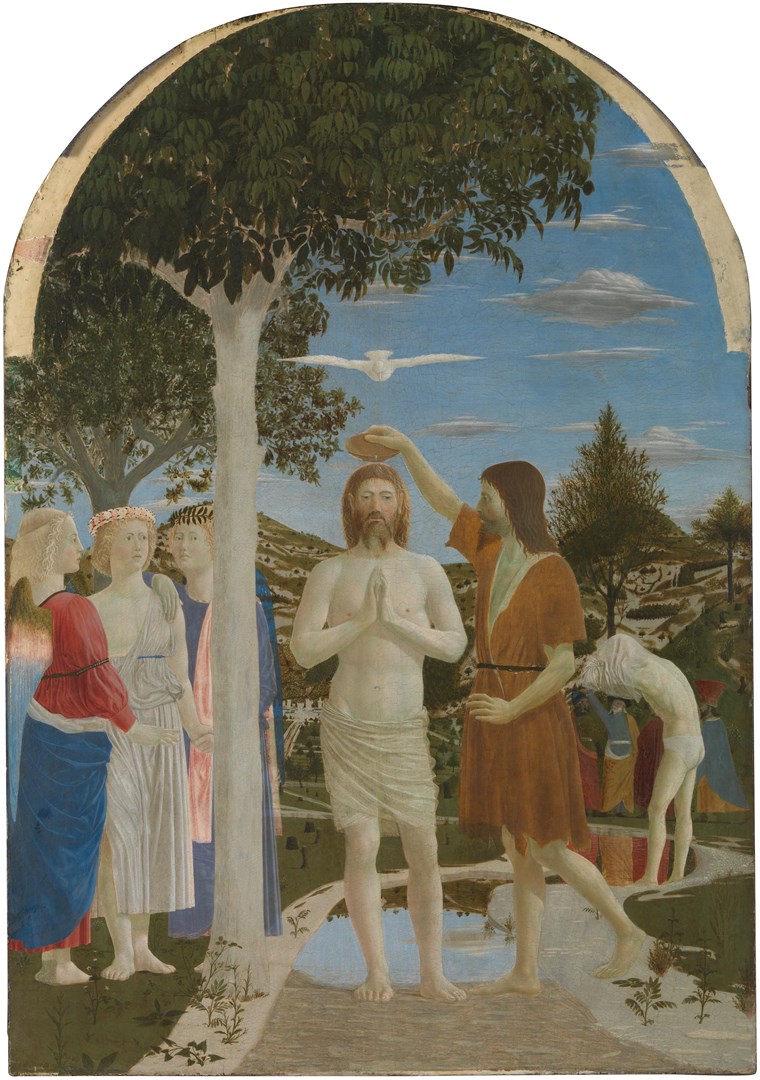 Pretty amazing when you think of it in those terms.
Saturday assorted links
1. Malcolm Gladwell on Norm MacDonald.
2. Knausgaard cultural recommendations.
3. Rawls on caste and eugenics.
4. Very good interview with Amia Srinivasan.
5. Callard on the Bergman remake and the nature of marital loneliness (New Yorker).
6. Good Steven van Zandt piece on management, his life, and The Sopranos (FT). “As Dante became Tony Soprano’s consigliere, “I was able to use my real-life dynamics with Bruce Springsteen as the basis of that relationship. I knew what those dynamics were — the one guy who didn’t want to be the boss, the one guy who he could trust, the one guy who wasn’t afraid of him.””
Guardianship, in practice, is often worse than you might think: the surveillance of Britney Spears
Britney Spears’s father and the security firm he hired to protect her ran an intense surveillance apparatus that monitored her communications and secretly captured audio recordings from her bedroom, including her interactions and conversations with her boyfriend and children, according to a former employee of the security firm.
Alex Vlasov, the employee, supported his claims with emails, text messages and audio recordings he was privy to in his nine years as an executive assistant and operations and cybersecurity manager for Black Box, the security firm. He came forward for a new documentary by The New York Times, “Controlling Britney Spears,” which was released on Friday.
Recording conversations in a private place and mirroring text messages without the consent of both parties can be a violation of the law. It is unclear if the court overseeing Ms. Spears’s conservatorship was aware of or had approved the surveillance.
Mr. Vlasov’s account, and his trove of materials, create the most detailed portrait yet of what Ms. Spears’s life has been like under the conservatorship for the past 13 years. Mr. Vlasov said the relentless surveillance operation had helped several people linked to the conservatorship — primarily her father, James P. Spears — control nearly every aspect of her life…
Mr. Vlasov said that Ms. Spears’s phone had been monitored using a clever tech setup: The iCloud account on her phone was mirrored on an iPad and later on an iPod. Mr. Yemini would have Mr. Vlasov encrypt Ms. Spears’s digital communications captured on the iPad and the iPod to send to Mr. Spears and Robin Greenhill, an employee of Tri Star Sports & Entertainment Group, the former business manager for the singer’s estate.
This arrangement allowed them to monitor all text messages, FaceTime calls, notes, browser history and photographs.
Here is the full NYT story by Liz Day. And by the way, there also was extensive surveillance of people in the “Free Britney!” movement, paid for ultimately by Britney herself. Hi guys!
Friday assorted links
1. Cowen’s 17th Law Ho Hum!: “Ancient Footprints Push Back Date of Human Arrival in the Americas.”
2. Hilarious Star Wars commentary and critique.
3. Good review of the new Sally Rooney.
4. Claims about where crypto regulation is headed, probably not about to happen but it remains on tap.
A few observations on my latest podcast with Amia Srinivasan
I am reluctant to do this, as I have never offered ex post commentary on a Conversations with Tyler before. It seems unfair to the guest (who may or may not have comparable platforms), and perhaps it is the guest who deserves the last word? Still, I think I can at least try to clear up a few misunderstandings about the episode, as I see a number of important points at stake here. So here goes, with some trepidation:
1. The number, frequency, and extremity of reactions to the episode, both on Twitter and in the MR comments section, I think shows that women simply have a much, much tougher time in the public sphere. There is a much smaller intellectual and emotional space they are allowed to inhabit comfortably and without condemnation or excess judgment. Had the episode been with a man, and had been comprised of the exact same words, it would not have received nearly the same attention or criticism. But people don’t like women who argue back. I realize that is a kind of cliche, but it is largely true.
In this regard, even if you largely disagree with Amia Srinivasan, you should take the strength of the reaction to the episode as a sign she might have a valid point after all.
And to put it bluntly, if said female guest plausibly can be perceived as attractive, the reaction will be all the more disproportionate.
2. Some listeners are teed off about “disabled individuals” vs. “disabled men.” I’ve committed numerous tongue and memory slips in my time, and they are hardly ever pointed out. Now you might be upset that she insisted I said “men” (when I didn’t), but in fact my interior monologue at the time was something like this: “We all know this is mostly about men. But if I just say “men,” she will react to that word and drive the conversation in a different direction. So I will say “individuals.”” Maybe she gets points for insight?
3. If I challenge a guest directly, it is typically a sign of intellectual respect for said guest or person (just ask Bryan Caplan, though perhaps by this point he has suffered too much?). And if the guest comes back at me forcefully, I usually (and consistently) take that as a sign of respect. If I don’t seem frustrated, it is because I am not.
4. If a guest challenges my questions (or indeed anyone’s questions) for having sexist premises, I don’t consider this an illegitimate response. I may or may not agree, but I don’t think it should upset me (or you). I think a lot of people’s questions have for instance highly statist or collectivist premises (and should not). I may or may not be right, but surely that too is a response deserving of consideration, should I decide to raise it.
5. To be fully forthright, if you wish to hear my “negative take” on her responses, I don’t think she was very good at handling empirical evidence in the context of a discussion, and furthermore this is a major shortcoming. I find this to be common amongst philosophers, if I may be allowed to continue my moment of condescension. I also had the feeling she is not challenged sufficiently often with said evidence, and that may partly be the fault of Oxford. This is exactly the point where I feel bad/uncertain offering ex post commentary on the episode, but still leaving off this opinion would not be offering my honest assessment of what happened.
6. I have studied her work carefully, including reading her doctoral dissertation and some undergraduate work, and I then and still now fully believe she will be one of the more important philosophers over the next few decades. As I mentioned before, super-impressive in terms of combining intellect, depth, breadth, determination, and relevance, plus has the all-important “willing to put oneself out there.” And if you don’t trust me as talent-spotter, dare I point out that Oxford University has a not too shabby history choosing and developing philosophical talent? But to return a bit to boasting, I think my relatively strong ability to differentiate emotional response from the talent judgment is in fact one reason to trust my talent judgments.
7. You have to learn to learn from people who bother, annoy, or frustrate you. If you do, they will not in fact bother, annoy, or frustrate you. One central point under consideration is her view that even today in the Western or also Nordic countries, the treatment of women (among other groups) could plausibly be much, much better, and with general emancipatory effects for many other groups as well. You may or may not agree, but is that such a crazy question to ponder and think through? No.
So I thought it was a good episode. I would gladly do another one with her someday, and I hope the feeling is mutual.
What is *the best* time zone for global work and Zoom?
That is the topic of my latest Bloomberg column, and my answer is Ireland and the UK (Portugal too). Excerpt:
West Coast meetings are trickier. But if you don’t take any past 2 p.m., they’re still manageable. Keep in mind that a lot of technology types start their day at 7 a.m. or earlier, precisely because they are trying to more closely match East Coast hours. So the nominal time difference might be eight hours, but due to work norms you get about an hour and a half of that back, leading to what is in effect a six-and-a-half-hour time difference between your Cotswolds chateau and that conference room in Seattle.
And:
I, for one, prefer to be working in the British time zone, even though most of my commitments are on U.S. East Coast time. For one thing, I have mornings largely to myself. Emails have accumulated while I slept, but there is little pressure to answer most of them right away. Americans on the East Coast are sleeping; if they’re on the West Coast, they will soon be preparing for bed.
Call it an illusion if you wish. But sitting in Dublin with my computer, it feels like I am several hours ahead of everybody else. By the time the email and meeting onslaughts arrive, I’ve already gotten a lot done.
And if you believe in “money illusion,” you might not like that half hour trick they pull in India. As a side note, you might wish to consider the times global chess tournaments are held (often starting 10 or 11 a.m. EST), or for that matter when pre-written MR posts pop up in the morning, namely between midnight and three a.m. EST. You will again see a lot of catering to what I view as “the dominant time zone,” that of London.
Thursday assorted links
1. Douglas Irwin on South Korean economic growth and its origins.
2. Interview with a Michelin restaurant inspector.
4. Birds took advantage of the lockdown.
5. Sensible take on China and Evergrande.
6. A skeptical take on lab-grown meat. I have myself long been a skeptic on this one.
How the game of *Life* evolved
The game underwent numerous updates over the years. The early emphasis on money to determine the winner had been “indicative of what sold in that era,” George Burtch, the former vice president of marketing for Hasbro, which acquired Milton Bradley in 1984, said in a phone interview.
As times changed, so did the game, with players encountering midlife crises and being rewarded for good deeds, like recycling the trash and helping homeless people.
“Reuben was very receptive to the changes — in fact he was often the impetus for them — because he was a businessman,” Mr. Burtch said.
“He understood that the Game of Life was not just the game that he invented; it was a brand,” he added. “And for a brand to remain viable, it has to evolve. It has to reflect the market conditions of the time.”
But as Jill Lepore wrote in The New Yorker in 2007, the redesign teams always had a hard time addressing the fundamental criticism of the game — that the only way to reward a player for virtuous acts was with money: “Save an Endangered Species: Collect $200,000. Solution to Pollution: $250,000. Open Health-Food Chain: $100,000.”
And so the company’s 2007 overhaul, the Game of Life: Twists & Turns, was almost existential. Instead of putting players on a fixed path, it provided multiple ways to start out in life — but nowhere to finish. “This is actually the game’s selling point; it has no goal,” Ms. Lepore wrote. “Life is … aimless.”
That is from an excellent NYT obituary of Reuben Klamer, who invented the game of Life, in addition to numerous other achievements.
Wednesday assorted links
1. Vitalik Buterin fellowships in existential safety.
2. I wanted to send this article to someone, yet no one is really an appropriate recipient, so I am putting it here (NYT).
3. Chess problem of attacking Queens is solved.
4. Memorial to a Swedish life. Very good (and sad).
5. The rise of the biohacker (FT, the framing is excessively negative, but an interesting piece nonetheless).
6. Yes taxes really do matter (Mankiw).
7. New (free Kindle) book: The Essential UCLA School of Economics.
My Conversation with Amia Srinivasan
I am pleased to have had the chance to do this, as in my view she is one of the thinkers today who has a) super smarts, b) breadth and depth of reading, and c) breadth and depth of thinking. That combination is rare! That said, I don’t quite agree with her on everything, so this exchange had more disagreements than perhaps what you are used to sampling from CWT.
Here is the transcript and audio. Here is part of the CWT summary:
Amia joined Tyler to discuss the importance of context in her vision of feminism, what social conservatives are right about, why she’s skeptical about extrapolating from the experience of women in Nordic countries, the feminist critique of the role of consent in sex, whether disabled individuals should be given sex vouchers, how to address falling fertility rates, what women learned about egalitarianism during the pandemic, why progress requires regress, her thoughts on Susan Sontag, the stroke of fate that stopped her from pursuing a law degree, the “profound dialectic” in Walt Whitman’s poetry, how Hinduism has shaped her metaphysics, how Bernard Williams and Derek Parfit influenced her, the anarchic strain in her philosophy, why she calls herself a socialist, her next book on genealogy, and more.
Here is one excerpt:
SRINIVASAN: No, it really wouldn’t. Part of why I find this whole discourse problematic is because I think we should be suspicious when we find ourselves attracted to data — very, very thin and weak data — that seem to justify beliefs that have held great currency in lots of societies throughout history, in a way that is conducive to the oppression of large segments of the population, in this particular case women.
I also think one error that is consistently made in this discourse, in this kind of conversation about what’s innate or what’s natural, is to think about what’s natural in terms of what’s necessary. This is a point that Shulamith Firestone made a very long time ago, but that very few people register, which is that — and it was actually made again to me recently by a philosopher of biology, which is, “Look what’s natural isn’t what’s necessary.”
It’s extraordinary. It’s not even like what’s natural offers a good equilibrium point. Think about how much time you and I spend sitting around. Completely unnatural for humans to sit around, yet we’re in this equilibrium point where vast majority of humans just sit around all day.
So, I think there’s a separate question about what humans — as essentially social, cultured, acculturating creatures — what our world should look like. And that’s distinct from the question of what natural predispositions we might have. It’s not unrelated, but I don’t think any of us think we should just be forming societies that simply allow us to express our most “natural orientations.”
COWEN: Should women’s chess, as a segregated activity, continue to exist? We don’t segregate chess tournaments by race or by anything — sometimes by age — but anything other than gender. Yet women’s chess is a whole separate thing. Should that be offensive to us? Or is that great?
Recommended, engaging throughout. And again, here is Amia Srinivasan’s new and (in the UK, just published yesterday in the U.S.) bestselling book The Right to Sex: Feminism in the 21st Century.
Tuesday assorted links
1. Comprehensive look at why the labor share of income is declining.
2. “Our results indicate that higher education liberalizes moral concerns for most students, but it also departs from the standard liberal profile by promoting moral absolutism rather than relativism. These effects are strongest for individuals majoring in the humanities, arts, or social sciences, and for students pursuing graduate studies.” Link here.
3. New evidence of continuing vaccine effectiveness. And the very good sense of Ross Douthat on Covid (NYT).
5. Valerio Olgiati, architect (and Kanye West).
The Kids Are Also Polarized
Adolescents used to identify with a party but polarization was muted by a general warmth towards authority figures. Today, however, the warmth is gone and adolescents are as polarized as adults which has implications for future polarization and generalized distrust. New paper by Iyengar and Tyler (note the data is pre-pandemic):
We have shown that the onset of partisan polarization occurs early in the life cycle with very little change thereafter. Today, high levels of in-group favoritism and out-group distrust are in place well before early adulthood. In fact, our 2019 results suggest that the learning curve for polarization plateaus by the age of 11. This is very unlike the developmental pattern that held in the 1970s and 1980s, when early childhood was characterized by blanket positivity toward authority figures and partisanship gradually intruded into the political attitudes of adolescents before peaking in adulthood.
When we considered the antecedents of children’s trust in the parties, our findings confirm the earlier literature documenting the primacy of the family as an agent of socialization (Jennings and Niemi 1968; Jennings, Stoker, and Bowers 2009; Tedin 1974). Polarized parents seem to transmit not only their partisanship, but also their animus toward opponents. It is striking that the least polarized youth respondents in 2019 are those who have not adopted their parental partisan loyalty.
In closing, our findings have important implications for the study of political socialization. Fifty years ago, political socialization was thought to play a stabilizing role important to the perpetuation of democratic norms and institutions. In particular, children’s adoption of uncritical attitudes toward authority figures helped to legitimize the entire democratic regime. Indeed, researchers cited this functional” role of socialization in justifying the study of political attitudes in childhood (Kinder and Sears 1985; van Deth, Abendschön, and Vollmar 2011).
In the current era, it seems questionable whether the early acquisition of out-party animus fosters democratic norms and civic attitudes. Extreme polarization is now associated with rampant misinformation (Peterson and Iyengar 2021), and, as indicated by the events that occurred in the aftermath of the 2020 election, with willingness to reject the outcome of free and fair electoral procedures. The question for future research is how to transmit party attachments, as occurred in the pre-polarization era, without the accompanying distrust and disdain for political opponents.
Hat tip: John Hobein
More on Ireland during World War II
A few more points:
1. Since both Germany and Britain maintained embassies in Dublin, Ireland became renowned during the war as “one of the whispering-galleries of Europe and a natural centre of for intrigue and spying of every kind.”
2. Fuel was so scarce that private motoring virtually ceased by 1943, and even public transport was problematic.
3. The War threw Ireland back into a state of almost complete cultural isolation.
4. In some odd ways the existence of Northern Ireland as ruled by Britain increased the autonomy of the rest of Ireland, which otherwise might have been commandeered for naval bases and the like, and might have been drawn into the conflict as well.
5. Ireland did receive Marshall Plan aid after the War, and this began what turned into a long-running process of integrating the Irish economy with the other economies of Western Europe.
That is all from E.S.L. Lyons, Ireland Since the Famine. This book is difficult to read for two reasons. First, the print is too small. Second, the author wastes no time regurgitating “the usual” from all the others book on Irish history. On a given page, most of what is on that page one learns, and thus the book is slow to read. Which is a sign of a very good book, though do note it is quite the time commitment. One of the more essential books on Irish history.
Here is my earlier post on Ireland and WWII.