Anéantir, by Michel Houellebecq
As it happens, Balzac is Houellebecq’s hero. Anéantir not only demonstrates comparable ambition to Balzac; it is also proof of Houellebecq’s tireless work. In his various books he has accumulated notes on: the stages of terminal tongue cancer; the precise topography of the Ministry of Finance; the exact operation of a guillotine (with schematics); the names, composition and texture of processed sandwiches on sale in Parisian train stations; the vernacular of Paris’s best political spin doctor; the triage of dying residents in provincial care homes, and more. When, some time around the 2100s Anéantir is re-published by Penguin Classics, the notes section will take up half the space of the novel proper. The translator will battle to properly convey the Tom Wolfe-like bleak hopelessness encompassed in ‘un sandwich Daunat maxi-moelleux au blanc de poulet-emmental dans son emballage et une Tourtel’.
Like Balzac, many of Houellebecq’s characters are drawn from real life. The book is set in the year 2026. The sitting president is transparently Emmanuel Macron, who’s been re-elected in 2022. Term limits mean he can’t run again: his cunning plan is to push a popular television talk show host to win in 2027, coached by, among others, the minister of finance, thereby keeping the seat warm for a return of ‘Macron’ himself at the 2032 election — a kind of Putin-Medvedev switcheroo.
The book just came out in France, here is more information. Is Houllebecq best at 736 pp.? I guess we’ll find out. In French, on Kindle. And in German. When in English? I have ordered it in German, though I am not sure when I will get to start much less finish it.
The prisoner’s dilemma for prisoners and Mafia men
We develop experimental evidence on cooperation and response to sanctions by running prisoner’s dilemma and third party punishment games on three different pools of subjects; students, ordinary criminals and Camorristi (Neapolitan ‘Mafiosi’). The latter two groups were recruited from within prisons. Camorra prisoners show a high degree of cooperativeness and a strong tendency to punish defectors, as well as a clear rejection of the imposition of external rules even at significant cost to themselves. The subsequent econometric analysis further enriches our understanding demonstrating inter alia that individuals’ locus of control and reciprocity are associated with quite different and opposing behaviours amongst different participant types; a strong sense of self-determination and reciprocity both imply a higher propensity to punish for Camorra inmates, but quite the opposite for ordinary criminals, further reinforcing the contrast between the behaviour of ordinary criminals and the strong internal mores of Camorra clans.
Here is the paper by Annamarie Nese, et.al., via Ethan Mollick and Ilya Novak.
What should I ask R.F. (Roy) Foster?
I will be doing a Conversation with him. He is Ireland’s greatest historian, here is part of his Wikipedia entry:
He has written early biographies of Charles Stewart Parnell and Lord Randolph Churchill, edited The Oxford History of Ireland (1989), and written Modern Ireland: 1600–1972 (1988) and several books of essays. He collaborated with Fintan Cullen on a National Portrait Gallery exhibition, Conquering England: the Irish in Victorian London.[1] Foster produced a much-acclaimed two-part biography of W. B. Yeats,[2][3] which was awarded the James Tait Black Memorial Prize. Seamus Deane wrote a review of the biography in which he quoted the last line of Yeats’ poem The Municipal Gallery Revisited: “My glory was that I had such friends”, and stated that Yeats was also lucky to have Foster as his biographer.
Modern Ireland 1600-1972 would be the place to start, and it is a book you can read more than once. Here is an excellent Guardian profile of Foster, worth reading in its own right. So what should I ask him?
Saturday assorted links
Buy Things Not Experiences!

A nice, well-reasoned piece from Harold Lee pushing back on the idea that we should buy experiences not goods:
While I appreciate the Stoic-style appraisal of what really brings happiness, economically, this analysis seems precisely backward. It amounts to saying that in an age of industrialization and globalism, when material goods are cheaper than ever, we should avoid partaking of this abundance. Instead, we should consume services afflicted by Baumol’s cost disease, taking long vacations and getting expensive haircuts which are just as hard to produce as ever.
Put that way, the focus on minimalism sounds like a new form of conspicuous consumption. Now that even the poor can afford material goods, let’s denigrate goods while highlighting the remaining luxuries that only the affluent can enjoy and show off to their friends.
[The distinction is too tightly drawn]…tools and possessions enable new experiences. A well-appointed kitchen allows you to cook healthy meals for yourself rather than ordering delivery night after night. A toolbox lets you fix things around the house and in the process learn to appreciate how our modern world was made. A spacious living room makes it easy for your friends to come over and catch up on one another’s lives. A hunting rifle can produce not only meat, but also camaraderie and a sense of connection with the natural world of our forefathers. In truth, there is no real boundary between things and experiences. There are experience-like things; like a basement carpentry workshop or a fine collection of loose-leaf tea. And there are thing-like experiences, like an Instagrammable vacation that collects a bunch of likes but soon fades from memory.
Indeed, much of what is wrong with our modern lifestyles is, in a sense, a matter of overconsuming experiences. The sectors of the economy that are becoming more expensive every year – which are preventing people from building durable wealth – include real estate and education, both items that are sold by the promise of irreplaceable “experiences.” Healthcare, too, is a modern experience that is best avoided. As a percent of GDP, these are the growing expenditures that are eating up people’s wallets, not durable goods. If we really want to live a minimalist life, then forget about throwing away boxes of stuff, and focus on downsizing education, real estate, and healthcare.
Hat tip: The Browser.
Photo Credit: MaxPixel.
What is actually a heretical view?
I was two days ago at Hereticon, and wondering which views actually should be considered heretical. It seems there are some distinct categories, for instance here are a few categories of the “partially heretical”:
1. Used to be heretical, or on the verge of switching.
Favoring gay marriage, or more on the border thinking that UFOs are of alien origin. The latter view is now presented with a straight face by former presidents and CIA heads, so it is not heretical any more. In polls, it is not even so unusual amongst the American public, though some elites will mock it and it remains outside of the mainstream.
2. It’s heretical to say but the actual idea is not heretical.
Presenting “eugenics” ideas is heretical, but talking about “dating” and “matchmaking” is not. Embryo selection is on the verge of not being heretical, if it ever was. Or talking about “the feminization of society” is modestly heretical, but believing women have a much greater cultural influence is not heretical at all. You just have to talk about it the right way.
3. The idea is not heretical globally.
But it might be heretical domestically, such as saying “the CCP is great.” Or “women should have their kids really young.” Those are a special category of heretical ideas, extremely common around the world, for better or worse, but still a no-no in some locales.
4. Popular views, but heretical with many elites.
Try “Darwin is wrong,” or “Facebook is fine.” How about “autocracy is good”? NB: In all of these discussions, I am not considering whether the belief is right or wrong.
Which would be a truly heretical belief that does not fall into these “partially heretical” categories? But it can’t be absurd either, for instance it is not “heretical” for me to believe I can jump one hundred feet in the air, rather it is simply stupid. I am also not looking for beliefs that offend or insult groups per se, as that is too easy. “Group X is crummy” is not interesting for my purposes.
Maybe here are a few outright heretical views, again noting that I am not endorsing them:
5. ESP works.
6. Whales are smarter than people and deeper thinkers too.
7. In fact you can trust Congress to do the right thing.
8. Ten percent inflation a year is just fine.
9. Fortunately America has so many guns that we couldn’t do very strict lockdowns for Covid.
10. It would be better if humans never had existed, as they have destroyed more welfare than they created. Most of all because of their effects on non-human animals.
11. Non-human animals suffer more than they enjoy, and it would be better if they did not exist.
12. American TV was much better in the 1960s and 1970s.
What else?
Duke 2022 Summer Institute on the History of Economic Thought
The Center for the History of Political Economy at Duke University will be hosting another Summer Institute on the History of Economics this summer from June 20-29, 2022. The program is designed for students in graduate programs in economics, though students in graduate school in other fields as well as newly minted PhDs will also be considered.
Students will be competitively selected and successful applicants will receive free (double occupancy) housing, a booklet of readings, and stipends for travel and food. The deadline for applying is March 1.
We are very excited about this year’s program, which will focus on giving participants the tools to set up and teach their own undergraduate course in the history of economic thought. There will also be sessions devoted to showing how concepts and ideas from the history of economics might be introduced into other classes. The sessions will be run by Duke faculty members Bruce Caldwell, Steve Medema, and Jason Brent. More information on the Summer Institute is available at our website, http://hope.econ.duke.edu/
Recommended.
TikTok returns
TikTok stars are dancing their way to the bank. Some are making more than America’s top chief executives.
Charli D’Amelio, who started posting videos of herself dancing on TikTok in 2019, brought in $17.5 million last year, according to Forbes, which recently ranked the highest-earning TikTok stars of 2021. With 133 million followers on TikTok, she makes her money from a clothing line and promoting products in TikTok videos and other ads.
By comparison, median pay for chief executives of S&P 500 companies was $13.4 million in 2020, according to a Wall Street Journal analysis of data from MyLogIQ. CEO compensation figures include stock and option awards, which typically make up most of executive pay, as well as annual salary and bonus, perks and some kinds of retirement-benefit gains. Only some 2021 CEO compensation figures have been released so far.
Here is the full WSJ article, via the excellent Kevin Lewis.
Friday assorted links
1. David Brooks on America falling apart (NYT).
2. Jonah Goldberg is right. And Megan McArdle is right.
3. Shawn Bradley’s life is tough.
4. “Likewise, authors from the same PhD program or who previously worked with the reviewer are significantly more likely to receive a positive evaluation. We also find that sharing “signals” of ability, such as publishing in “top five”, attending a high ranked PhD program, or being employed by a similarly ranked economics department significantly influences editor decisions and/or reviewer recommendations.” Link here.
5. So a virus triggers multiple sclerosis? And more here (NYT). And, not unrelated, the nature of Long Covid.
6. Links from Chris Blattman, who is blogging again.
7. Good Bridgewater/Dalio piece (FT).
Who has been loneliest during the pandemic?
That question is the topic of my latest Bloomberg column. The wealthy can fly to the sun, meet outdoors, test regularly, and find many other workarounds. Poorer individuals tend to be working together in public-facing service jobs. That has a Covid downside, but it does make them less lonely. So who are the biggest loneliness losers?
…it’s pointless to debate which group is loneliest. Still, I might argue for some sympathy for Northerners in midlevel jobs who work alone or remotely. Think of academics, accountants, middle managers.
Recommended.
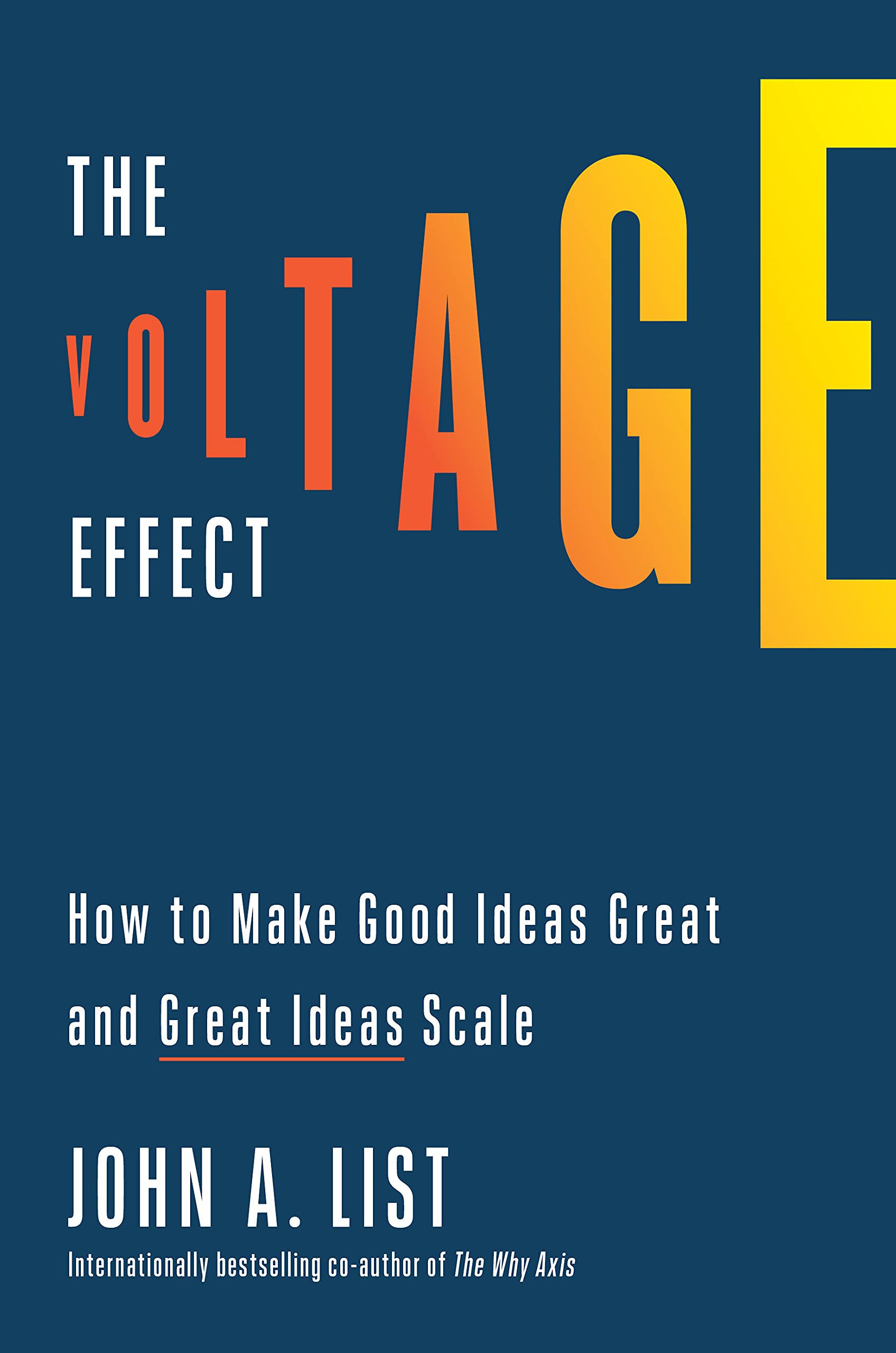
*The Voltage Effect*
From the excellent John List, the subtitle is How to Make Good Ideas Great and Great Ideas Scale.
The reader requests of Celestus
I’ll break this into parts, and put my answer after each query:
1) I’m a remote worker. Why should I live in a city? Heck, why should I live in a suburb, or anywhere that has a state income tax? Even if I want “city amenities” why bother with NYC or SF or anywhere else that is built around the local job market? Why don’t I live in Puerto Rico and skirt income tax entirely?
You live in a city for culture, for sex, and to marry well. If those don’t apply to you, don’t live in a city. And your state income tax probably does not lower your level of happiness, so for most people it should not be a major factor in their location decisions. Puerto Rico has seen population outflow for a long time, what is that telling you? Or do you love mofongos? I would have a hard time making friends there, though I love the place and have visited twice, and hope to go again. (Did you see the museum in Ponce is closed right now? It has excellent pre-Raphaelite works.)
2) Why is it so hard for non-US countries to develop a tech industry?
The best entrepreneurs so often want to come to the U.S., and can. Venture capital as a financial center also tends to be relatively centralized, as are many other financial centers, and that pushes some centralization onto tech itself, though less and less in this age of work from a distance. That said, I challenge the premise of this question. There are plenty of start-up scenes around the world, and most of them are growing. I don’t see an obvious end to that process in sight.
3) If, tomorrow, we get a breaking news alert that an epidemic of a previously unknown disease is spreading in, say, Gabon, how should the federal government- before it gets any other information about spread, severity, etc- react?
The federal government needs to ban travel from Gabon. I am far from sure this will prove effective, but it is the kind of security theater you need for the rest of the public health response not to get too caught up with recriminations over this issue. There are some (possible) stupidities you simply need to tolerate.
4) Seriously, why a University of Austin and not “Socrates Institutes” or whatever at established universities?
Established universities already are dominated by a particular set of interest groups and incentives. Let’s try something new! That said, I am all in favor of innovating within established universities too, and have made various efforts in that direction myself. New universities were common in the American past, why should we be running away from them now?
5) Content creator economy discussion. For example in the long run who will have higher mean/median earnings on Twitch, men or women? Will people with college degrees have higher earnings (and if so will it be causal, or just because people with degrees happen to be more conscientious or whatever)?
The very highest earners will be men with college degrees, but with a very long second-tier tail of women earning lots.
6) Seems like a lot of people are claiming that immigration is a solution for low fertility rates. So why doesn’t the US go all the way and set a target of 75% of immigrants being young unmarried women and buy them a match.com account?
“A good start,” but since single-parent families usually are suboptimal, we should import the men to marry them as well.
Basta!
Thursday assorted links
1. In Austin, Caplan and Razib Khan will comment on Hanania. I am telling them to put it on YouTube.
2. Pushing Zambia to become a start-up hub?
3. Can software identify your chess-playing style?
4. Support for the child tax credit is waning (NYT).
5. Western Arkansas is offering 10k in Bitcoin and bike to relocate there.
6. Why are so many defectors from North Korea to South Korea women?
The gender equality paradox seems to hold for chess
The gender-equality paradox refers to the puzzling finding that societies with more gender equality demonstrate larger gender differences across a range of phenomena, most notably in the proportion of women who pursue degrees in science, technology, engineering, and math. The present investigation demonstrates across two different measures of gender equality that this paradox extends to chess participation (N = 803,485 across 160 countries; age range: 3–100 years), specifically that women participate more often in countries with less gender equality. Previous explanations for the paradox fail to account for this finding. Instead, consistent with the notion that gender equality reflects a generational shift, mediation analyses suggest that the gender-equality paradox in chess is driven by the greater participation of younger players in countries with less gender equality. A curvilinear effect of gender equality on the participation of female players was also found, demonstrating that gender differences in chess participation are largest at the highest and lowest ends of the gender-equality spectrum.
Here is the paper by Allon Vishkin, via @autismcrisis.
The Abundance Agenda
Excellent piece by Derek Thompson:
America has too much venting and not enough inventing. We say that we want to save the planet from climate change—but in practice, many Americans are basically dead set against the clean-energy revolution, with even liberal states shutting down zero-carbon nuclear plants and protesting solar-power projects. We say that housing is a human right—but our richest cities have made it excruciatingly difficult to build new houses, infrastructure, or megaprojects. Politicians say that they want better health care—but they tolerate a catastrophically slow-footed FDA that withholds promising tools, and a federal policy that deliberately limits the supply of physicians.
The way I put it in Launching the Innovation Renaissance is that we can be an Innovation Nation or what we are now which is a Welfare-Warfare State.
To give one example, the debate over the Patient Protection and Affordable Care Act was long and vociferous. One of the reasons the debate was vociferous is that the PPACA is part of the vision of the welfare state, a redistributive vision.
How would the innovative state approach the issue of health care? From an innovation perspective two facts about health care are of great importance. First, a huge amount of health care spending is wasted. A strong consensus exists on this point from health care researchers all along the political spectrum. More money will get you a much bigger house, but once you have basic health insurance more money won’t get you much better health care. Should Bill Gates get prostate cancer, his billions will get him a private room and a personal physician, but they won’t do much to extend his lifespan beyond that of a middle-class man with the same disease.
…The second fact is that although spending more on health care now doesn’t get you much, spending more on health care research gets you a lot. It has been estimated, for example, that increases in life expectancy from reductions in mortality due to cardiovascular disease over the 1970-1990 period were worth over $30 trillion–yes, 30 trillion dollars. In other words, the gains from better health over the period 1970-1990 were comparable to all the gains in material wealth over the same period.
Looking at the future, if medical research could reduce cancer mortality by just 10 percent, it would be worth $5 trillion to U.S. citizens (and even more taking into account the rest of the world). The net gain would be especially large if we could reduce cancer mortality with new drugs, which are typically cheap to make once discovered. A reduction in cancer mortality of this size does not seem beyond reach, and the value of such a reduction in mortality far exceeds that of spending more on medical care today. Yet because the innovation vision is not central to our thinking, we overlook potentially huge improvements in human welfare.
The numbers would be higher now due to inflation, population and income growth but you get the idea.