Category: History
Is there a Russia-America-China “grand bargain” on the way?
Imagine a deal where America and Russia agree on combating ISIS in Syria, admittedly through the sad means of supporting or at least tolerating Assad. After all, we were all able to agree on Iran, right?
Russia also will agree to keep Snowden away from the embarrassment of a trial and conviction in the United States. Easier for Obama to let sleeping dogs lie.
America and China could agree on how close American planes and ships could come to the artificial islands. The Philippines could be part of that deal.
We know which two nations need to lead a climate change agreement.
Toss in a U.S.-China bilateral investment treaty.
Then there’s the arms control agreement for cyberspace, for all three nations, maybe someday Iran too.
Up to forty different U.S.-Chinese agreements have been predicted — after all, Uncle Xi has to come home with something.
It all seems so easy, and logical too. But, unfortunately, international politics is rarely so straightforwardly Coasian. Maybe the bilateral investment treaty will come to pass!
For a useful conversation I thank J.
*Who is Charlie?*. by Emmanuel Todd
I found this a fascinating book, in spite of some over-generalizations. We all know that something is wrong with Europe, and with France in particular, but what? The argument starts with this:
We need to take religion seriously, especially when it starts to disappear.
It continues:
…we gave the name ‘zombie Catholicism’ to the anthropological and social force that emerged from the final disintegration of the Church in its traditional bastions…This cultural survival is probably the most important social phenomenon of the years from 1965 to 2015. It eventually led France into a multifaceted ideological venture, including the rise of a new kind of socialism, decentralization, a surge of pro-European feeling, a masochistic monetary policy, a deformation of the nature of the Republic, and, as we shall later see, a particularly shifty form of Islamophobia and, probably, of anti-Semitism.
It’s hard to unpack this following sentence in a blog post, but it gives you an indication of where the book is heading:
The demonization of Islam is a response to the intrinsic need of a completely de-Christianized society.
Todd notes that the vote share of the National Front is higher in “egalitarian territory” than in inegalitarian territory (pp.125-126). And yet there is more:
We have been obliged to admit that there is a zombie Catholicism, and a zombie Protestantism too. We should not shy away from postulating that there is a zombie Islam.
Ross Douthat, telephone!
I ordered my copy from Amazon.uk. Here is a useful article on the French controversies surrounding this book. It’s making my list for one of the most interesting of the year.
Is an independent Catalonia an issue again?
Here is Bloomberg on next week’s election:
If separatist parties secure a majority and Madrid refuses to negotiate, Mas says he’ll declare independence unilaterally within 18 months.
I read this earlier in the week:
The gap between Spanish 10-year bond yields and Italian yields has widened to a two-year high as political uncertainty escalates ahead of an election in Catalonia this month and a general election in December.
Spanish 10-year bonds now yield 0.27 percentage points more than Italian bonds. In October 2014 they yielded 0.4 percentage points less. The spread has widened by 0.15 percentage points in the last week alone, indicating a rising risk premium, with the timing of the sell-off coinciding with a major demonstration by Catalonian separatists on Friday.
The EU warns that independence would mean automatic expulsion from the EU. Various leading banks have warned they would leave an independent Catalonia. The odds are still against this actually happening, but it’s climbed on the radar screen again.
My position remains that this would be a big mistake. It would bring significant economic harms. Furthermore the current notion of “what it means to be Catalan” seems to be as much defined by the union with Spain as it would be realized without such a union. Voting to leave is like voting to become a very new people, although it is rarely framed that way and more commonly framed as a kind of self-preservation or cultural preservation. There’s nothing wrong with deciding to become a new people, but that can be done within larger political units as well.
What about the evidence on the economics?:
First, no historical evidence supports this claim [that an independent Catalonia would grow more rapidly]. Andres Rodriguez-Pose from the London School of Economics has studied the economic record of independence, mostly in Eastern Europe and the former Yugoslavia, and finds that countries at best maintain their previous growth paths.
Second, no evidence suggests that institutions in Catalonia perform better than the Spanish average. Anecdotal evidence suggests that corruption is as pervasive in Catalonia as in the rest of Spain. On a more scientific basis, the 2012 European Commission report [pdf] measuring the quality of government in European countries and regions shows Spain ranked 13 out of 27 EU countries, while Catalonia ranked 130 out of 199 EU regions, thus in the bottom third of EU regions. Catalonia also ranked last among Spanish regions.
Third, Catalonia’s potential growth benefited massively from the 1992 Olympic Games, which were financed mostly by the Spanish State and the City of Barcelona, with a minor contribution by the Catalan government, and which opened up new parts of the city with civil infrastructure investments. Research conducted by the University of Barcelona and the City of Barcelona shows that this spending not only boosted the economy before the games but also provided long-lasting benefits. For example, Barcelona moved higher in the “best city to conduct business” ranking.
That all said, Spain and the eurozone are now outside their immediate and dire fiscal and financial crisis, at least compared to say 2011. So I now think that if a clear majority in Catalonia wants to leave Spain, Spain should let them go. I wrote a few years ago that would be my stance once the most pressing parts of the financial crisis are past, and it seems to me that is now the case. Catalonian separatism, while I still think it is imprudent, is no longer morally irresponsible from a broader European point of view.
Good luck, I’ll be watching either way.
My conversation with Luigi Zingales
The transcript is here, with a podcast version, and there is also a YouTube version at the link, with cleaned-up audio compared to any earlier link you may have come across. Luigi was wonderful, and also fantastically witty. The topics included Italy, Donald Trump, Antonio Gramsci, Google and conglomeration, Luchino Visconti, Starbucks, and the surprisingly high productivity of Italian cafés.
Here is one excerpt:
I don’t understand why in the United States the only thing that is really noncompetitive is sports. In Europe, the only thing that is really competitive is sports.
And another:
COWEN: …Angela Merkel, overrated or underrated?
ZINGALES: I think she’s probably underrated. I’m impressed by her ability to, number one, run Europe for the interest of Germans in a very effective way.
The longest bit from me is where I compare and contrast Luigi with Gramsci, another theorist of hegemony, and try to sum up Luigi’s work; you can find that on the video or in the transcript.
And again from Luigi there is this:
…when I arrived in this country 27 years ago, you were not really drinking coffee. You were drinking a dark thing that tastes like I don’t say what because we’re online. The culture of coffee did not exist here.
The culture of coffee and a café where you seat and drink, et cetera, what Starbucks is, is an Italian or at most French culture. Why were you unable to export this? This is my little explanation. By the way, the only country in the world where Starbucks has not arrived is Italy.
Luigi then considers when Italian coffee is better tasting and better run at the artisan level, yet without the same possibilities for corporate expansion. I liked this sentence from Luigi:
The extreme agency problems of Italy make it difficult to scale firms.
And finally:
One thing I can predict fairly confidently is that we are not going to pay the debt.
This is also a worthwhile observation:
When you’re down to one or two kids, the chance that one is an idiot is pretty large.
His favorite film is Visconti’s The Leopard, a good pick. And he was the public choice scholar who forecast the rise of Donald Trump, as we discuss in the chat. Self-recommending.
What Was Gary Becker’s Biggest Mistake?
The econometrician Henri Theil once said “models are to be used but not to be believed.” I use the rational actor model for thinking about marginal changes but Gary Becker really believed the model. Once, at a dinner with Becker, I remarked that extreme punishment could lead to so much poverty and hatred that it could create blowback. Becker was having none of it. For every example that I raised of blowback, he responded with a demand for yet more punishment. We got into a heated argument. Jim Buchanan and Bryan Caplan approached from the other end of the table and joined in. 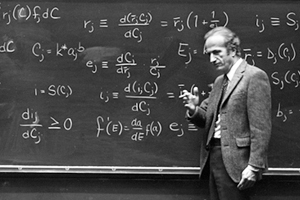 It was a memorable evening.
Becker isn’t here to defend himself on the particulars of that evening but you can see the idea in his great paper, Crime and Punishment: An Economic Approach. In a famous section he argues that an optimal punishment system would combine a low probability of being punished with a high level of punishment if caught:
If the supply of offenses depended only on pf—offenders were risk neutral — a reduction in p “compensated” by an equal percentage increase in f would leave unchanged pf…
..an increased probability of conviction obviously absorbs public and private resources in the form of more policemen, judges, juries, and so forth. Consequently, a “compensated” reduction in this probability obviously reduces expenditures on combating crime, and, since the expected punishment is unchanged, there is no “obvious” offsetting increase in either the amount of damages or the cost of punishments. The result can easily be continuous political pressure to keep police and other expenditures relatively low and to compensate by meting out strong punishments to those convicted.
We have now tried that experiment and it didn’t work. Beginning in the 1980s we dramatically increased the punishment for crime in the United States but we did so more by increasing sentence length than by increasing the probability of being punished. In theory, this should have reduced crime, reduced the costs of crime control and led to fewer people in prison. In practice, crime rose and then fell mostly for reasons other than imprisonment. Most spectacularly, the experiment with greater punishment led to more spending on crime control and many more people in prison.
Why did the experiment fail? Longer sentences didn’t reduce crime as much as expected because criminals aren’t good at thinking about the future; criminal types have problems forecasting and they have difficulty regulating their emotions and controlling their impulses. In the heat of the moment, the threat of future punishment vanishes from the calculus of decision. Thus, rather than deterring (much) crime, longer sentences simply filled the prisons. As if that weren’t bad enough, by exposing more people to criminal peers and by making it increasingly difficult for felons to reintegrate into civil society, longer sentences increased recidivism.
Instead of thinking about criminals as rational actors, we should think about criminals as children. In this light, consider the “Becker approach” to parenting. Punishing children is costly so to reduce that cost, ignore a child’s bad behavior most of the time but when it’s most convenient give the kid a really good spanking or put them in time out for a very long time. Of course, this approach leads to disaster–indeed, it’s precisely this approach that leads to criminality in later life.
So what is the recommended parenting approach? I don’t want to get into a debate over spanking, timeouts, and reasoning but one thing all recommendations have in common is that the consequences for inappropriate behavior should be be quick, clear, and consistent. Quick responses help not just because children have “high discount rates” (better thought of as difficulty integrating their future selves into a consistent whole but “high discount rates” will do as short hand) but even more importantly because a quick response helps children to understand the relationship between behavior and consequence. Prior to Becker there was Becaaria and in Beccarian theory, people must learn to associate crime with punishment. When responses aren’t quick, children, just like scientists, have difficulty learning cause and effect. Quick is thus one way of lowering cognitive demands and making consequences clear.
Animals can learn via conditioning but people can do much better. If you punish the child who steals cookies you get less cookie stealing but what about donuts or cake? The child who understands the why of punishment can forecast consequences in novel circumstances. Thus, consequences can also be made clear with explanation and reasoning. Finally, consistent punishment, like quick punishment, improves learning and understanding by reducing cognitive load.
Quick, clear and consistent also works in controlling crime. It’s not a coincidence that the same approach works for parenting and crime control because the problems are largely the same. Moreover, in both domains quick, clear and consistent punishment need not be severe.
In the economic theory, crime is in a criminal’s interest. Both conservatives and liberals accepted this premise. Conservatives argued that we needed more punishment to raise the cost so high that crime was no longer in a criminal’s interest. Liberals argued that we needed more jobs to raise the opportunity cost so high that crime was no longer in a criminal’s interest. But is crime always done out of interest? The rational actor model fits burglary, pick-pocketing and insider trading but lots of crime–including vandalism, arson, bar fights and many assaults–aren’t motivated by economic gain and perhaps not by any rational interest.
Here’s a simple test for whether crime is in a person’s rational interest. In the economic theory if you give people more time to think carefully about their actions you will on average get no change in crime (sometimes careful thinking will cause people to do less crime but sometimes it will cause them to do more). In the criminal as poorly-socialized-child theory, in contrast, crime is often not in a person’s interest but instead is a spur of the moment mistake. Thus, even a small opportunity to reflect and consider will result in less crime. As one counselor at a juvenile detention center put it:
20 percent of our residents are criminals, they just need to be locked up. But the other 80 percent, I always tell them – if I could give them back just ten minutes of their lives, most of them wouldn’t be here.
 Cognitive behavioral therapy teaches people how to act in those 10 minutes–CBT is not quite as simple as teaching people to count to ten before lashing out but it’s similar in spirit, basically teaching people to think before acting and to revise some of their assumptions to be more appropriate to the situation. Randomized controlled trials and meta-studies demonstrate that CBT can dramatically reduce crime.
Cognitive behavioral therapy runs the risk of being labeled a soft, liberal approach but it can also be thought of as remedial parenting which should improve understanding and appreciation among conservatives. More generally, it’s important that crime policy not be forced into a single dimension running from liberal to conservative, soft to tough. Policing and prisons, for example, are often lumped together and placed on this single, soft to tough dimension when in fact the two policies are different. I favor more police on the street to make punishment more quick, clear, and consistent. I would be much happier with more police on the street, however, if that policy was combined with an end to the “war on drugs”, shorter sentences, and an end to brutal post-prison policies that exclude millions of citizens from voting, housing, and jobs.
Let’s give Becker and the rational choice theory its due. When Becker first wrote many criminologists were flat out denying that punishment deterred. As late as 1994, for example, the noted criminologist David Bayley could write:
The police do not prevent crime. This is one of the best kept secrets of modern life. Experts know it, the police know it, but the public does not know it. Yet the police pretend that they are society’s best defense against crime. This is a myth
Inspired by Becker, a large, credible, empirical literature–including my own work on police (and prisons)–has demonstrated that this is no myth, the police deter. Score one for rational choice theory. It’s a far cry, however, from police deter to twenty years in prison deters twice as much as ten years in prison. The rational choice theory was pushed beyond its limits and in so doing not only was punishment pushed too far we also lost sight of alternative policies that could reduce crime without the social disruption and injustice caused by mass incarceration.
A short history of Chinese corruption
By William H. Overholt, here is one wee bit:
Hu Jintao and Wen Jiabao reversed much of this. With the population weary of market-oriented reforms, having seen over 50 million SOE jobs evaporate, market reforms ceased or receded. To cope with the global financial crisis, they poured money into the only institutions that could create rapid increases of production: big SOEs. The government and party bureaucracies nearly doubled. SOEs revived their pre-eminence. The 1990s campaign to increase competition dissipated. Senior military officers reverted to managing lucrative side businesses. Some top leaders and their families began making huge fortunes. The scale of graft became astronomic.
That is one way of thinking about why one should be worried about the economy of China. That is via Bill Bishop. The longer version of the piece, starting on p.22 here is interesting throughout.
Max Beauvoir, RIP
The man who was arguably Haiti’s religious leader has passed away. His story is fascinating:
Max Beauvoir was a middle-aged businessman with little interest in the occult. The son of a doctor and a scientist himself, he boasted degrees from schools in New York and Paris and a burgeoning career as a biochemist in the U.S. He was not the kind of man who went about seeking spiritual encounters.
So no one was more shocked than he was when his nonagenarian grandfather, lying on his deathbed in Haiti surrounded by more than a dozen descendants, lifted a single, unsteady finger and pointed it at Beauvoir.
”Grandfather turned to me and said, ‘You will carry on the tradition,’” Beauvoir recalled in 1983, 10 years after the moment that changed his life. “It was not the sort of thing you could refuse.”
“The tradition” was voodoo…
By the way, when people refer to “voodoo economics” it is a sign of how selective a lot of our political correctness still is. Would anyone dream of criticizing a political candidate for his or her “[fill in the blank with some other historically persecuted religion] economics”?
And on the substance of the matter, voodoo is arguably less prone to “free lunch thinking” than say, many Protestant forms of Christianity. It’s just an easier target because most people don’t know much about it and they see like-minded others taking a poke at it. The believers and practitioners of the religion seem remarkably distant, but they are not. They are real people, and they take their beliefs seriously. Why should we turn the name of their religion into an insulting epithet?
It’s worth reflecting on this usage any time you wonder how some of the “other people out there” still can say racist things.
Is Schengen dead? Or just pining for the fjords?
They are solving for the equilibrium, so to speak:
Germany is reinstating controls at its borders with Austria as Europe’s top economy struggles to cope with a record influx of refugees, according to media reports.
Passport checks had been abolished for countries within Europe’s Schengen zone, but the decision to bring back controls is expected to be announced by Interior Minister Thomas de Maiziere at a press conference on Sunday evening.
Bild newspaper cited security sources as saying that the state government in Bavaria had asked the federal police to help deal with the task. The newspaper said the federal police would send 2,100 officers to Bavaria to help it secure its borders.
Here is the technological shock. Here is my earlier post on Germany and the backlash. Here is my earlier post on the moral regression of Syria. Put those all together and mix…
Chilean copper and Chinese SOEs
One reason the Chilean reforms went well was that the state had nationalized the copper mines. That provided a steady flow of money, thus minimizing the need for revenue-raising distorting policies elsewhere. More generally the revenues helped build a stable state backed by a secure coalition, which in turn liberalized much of the rest of the economy. For all the talk about laissez-faire and the Chicago boys, the Chilean privatizers never gave up their hold on those mines. And the mines proved easy enough to run and convert into revenue…and they are still a lucrative source of foreign exchange.
One reason the Chinese reforms went well was that the state had nationalized the SOEs. That provided a steady flow of money, thus minimizing the need for revenue-raising distorting policies elsewhere. More generally that ownership helped build a stable state backed by a secure coalition, which in turn liberalized much of the rest of the economy. For all the talk about dismantling communism, the Chinese reformers never gave up their hold on those SOEs. And the companies proved easy enough to run and convert into revenue, at least until the low-hanging fruit was plucked…and they are still…?
The problem of course is that privatizing the SOEs is the economic reform China needs over the medium term, yet it may not be consistent with their political economy in support of broader market forces.
*Good Profit* by Charles G.Koch
I am pleased to have received an advance review copy. The subtitle is How Creating Value for Others Built One of the World’s Most Successful Companies, and here are three excerpts:
One of the many schools I attended was a Catholic school, to which I was sent at age five for a couple of years. But I was a skeptic even at that young age. I rejected the nuns’ claim — which I took literally — that Jesus was behind the altar. They offered graham crackers and milk as reward for good behavior, but the incentive wasn’t strong enough for me.
And:
…Barbara Walters included David [Koch] on her television special The 10 Most Fascinating People of 2014.
His selection highlights the difference in our lifestyles. His is interesting; mine is not. When I am not in the office, I’m either studying praxeology, working out in our basement gym, analyzing the twenty-four components of the golf swing, enjoying one of Liz’s “heart-healthy” meals in our kitchen, or trying to understand what my toddler grandsons are saying when we FaceTime.
And:
…Koch [Industries] has enjoyed better results hiring from Wichita State or Kansas State than from Harvard. (The four employees who have succeeded me as president of Koch Industries hailed from the Murray State University School of Agriculture, Texas A&M, the University of Tulsa, and Emporia State University.)
This is no dull, ghost-written tome, rather it is interesting throughout. You can pre-order the book here.
*Black Earth*
The author is Timothy Snyder and the subtitle is The Holocaust as History and Warning. Here is one bit:
The Germans had come to understand that pogroms were not an effective way to eliminate Jews, but that the production of lawlessness was an appropriate way to find murderers who could be recruited for organized actions. Within weeks they grasped that people liberated from Soviet rule could be drawn into violence for psychological, material, and political reasons.
In per capita terms more Jews from Estonia died than from any other country at the time. As of 1944 there were still three-quarters of a million Jews in Hungary and ultimately more than half of Hungary’s Jews survived the Second World War, even though Hungary was both a German ally and it was later invaded by Germany. More generally:
Jews who were citizens of Germany’s allies lived or died according to certain general rules. Jews who maintained their prewar citizenship usually lived, and those who did not usually died…Jews from territories that changed hands were usually murdered. Jews almost never survived if they remained on territories where the Soviet Union had been exercising power when German or Romanian forces arrived…In all, about seven hundred thousand Jews who were citizens of Germany’s allies were killed. Yet a higher number survived. This is a dramatic contrast to the lands where the state was destroyed, where almost all Jews were killed.
Recommended, interesting throughout, and gripping throughout, including the discussions of agricultural productivity and of Hitler as a non-nationalist who saw race as the primary category of human existence. It’s not easy to write an original and readable book on the Holocaust these days, but Snyder seems to have done it. You can read some reviews here.
Does China hitting the wall reflect a deeper reality about emerging economy growth?
It’s easy enough to say the Chinese economy is slowing down and that is creating problems for some other countries around the world. Never settle for such a comfortable understanding! Might there be deeper ways to think about the problem?
I am not endorsing any of the following speculative hypotheses, rather they are attempts to imbed the Chinese slowdown into what is possibly a broader framework. Here are a few possibilities:
1. We’ve been realizing that autocratic government isn’t as effective as we had thought.
2. We’ve been realizing that virtually all of the world’s emerging economies will be hit by “premature deindustrialization,” China included. China will produce more manufactured goods, but because of automation this will never build a fully-sized middle class in China. And historically service sector jobs have never had the same kind of oomph at lifting a nation over various development hurdles. The same limitations may apply to a variety of other countries.
3. Perhaps developing nations have reached “peak stuff”? That may mean the Chinese manufacturing model, along with the manufacturing models of other nations, will prove less potent than we had thought.
4. Maybe we’ve been learning that a demographic slowdown is harder to reverse, and is more costly for long-run growth, than we had thought.
5. The geopolitical stability of the South China Sea is not as robust as it seemed three or four years ago.
What else?
In each case the relevant realization may be popping China, and some other emerging economies, out of better multiple equilibria and into inferior multiple equilibria (“is Greece a Balkans nation or a European nation?”).
Again, I am not dismissing the highly relevant China-specific factors of excess capacity, high municipal debt, real estate bubble, and so on. I am simply wondering what other broader trends may be operating here beneath the surface.
Damned if they do, damned if they don’t
The Syrian-Lebanese have a long history in Haiti, and in fact they account for most of Haiti’s very wealthiest families. They are also sometimes resented by the other Haitians for their extreme commercial success. Here is one illustrative but not fully objective account from Wikipedia:
Since the early twentieth century there was a Syrian community in Haiti. This consisted of roughly 500 people, mainly engaged in trade and many of them were Syrian Americans. The entire business community of Syrians, however, tended to sell their products to the United States. Over time, the importance of these merchant foreigners grew, reaching positions in the political order of the country. It is of enormous importance to the country, that surpassing most of the Haitians in government (one that was formed by the social elite of Haiti, against a poor majority), caused major uprisings against the Syrians and the idea widespread among Haitians was that they should be deported. Therefore, the Syrian American club sent a letter to the U.S. State Department of Washington D.C., explaining the reasons why the island was purchased for trade with the U.S. and asked for help and advice from the U.S. Federal Government. At that time the Syrians had also addressed the majority of imports of goods to Haiti, both in the field of provisions as in beverages. Syrian traders also were, at present, the only foreign traders willing to work under native conditions than other groups of traders that were rejected. So, they sold wholesale. However, these traders were occupied all trades with the country, which made them gain rejection of a significant part of the population. Thus, the Haitian government launched a new political program that limited the Syrian trade in the country.
Of course Haiti could take in more “Syrian-Lebanese” too, but this would be unpopular in some circles because…the previously Syrian-Lebanese have been…too successful.
China and the Great Depression of the 1930s
I learned a good deal reading Ramon H. Myers’s essay “The World Depression and the Chinese Economy 1930-6” in Ian Brown’s The Economies of Africa and Asia in the Inter-war Depression. Here are a few of his points:
1. In the 1920s, per capita growth in China was probably around 0.33 percent a year, one percent a year in absolute terms. I would add the notion that the country already was on an explosive growth path does not seem borne out by these estimates.
2. The Chinese financial system at the time was quite free-wheeling and money flowed into China to facilitate the country’s 1915-1930 growth.
3. By the late 1920s, China’s exports were only about 2 to 3 percent of gdp.
4. The Japanese seized Manchuria 1931-32, and the region had been accounting for a significant portion of China’s industrial growth.
5. The loss of Manchuria excepted, Chinese internal growth rose about 11.6 percent a year across 1930-36. It seems the country just wasn’t hit that hard by the global Great Depression.
6. There was sustained deflation during 1931-1935; some of this ties in to complex developments in the silver market, as China was on a silver standard. Yet economic activity still expanded. Silver flowed out of the country, but there was a big boost in credit and “inside money.”
7. As an aside, had I mentioned that the Nanjing government only firmly controlled two provinces of the country as of 1935, with “minimal control” in eight others?
8. Shanghai grew throughout most of the 1930s, with exceptions for the Japanese attack and the Yangtse flood of 1931.
Myers’s conclusion that the Great Depression did not hit China so hard has been challenged (pdf), but so far his account is the most convincing I have found. China during the Great Depression remains an understudied topic.
Kathy and Carol Fata
From ages four to seven we lived in Fall River, Massachusetts. A few houses up the block lived Kathy and Carol Fata, who were a year or two older than I was. They were nonetheless friends with my sister and me. In fact they were probably the first real friends I ever had. They were consistently nice to me, and they liked to play with our dog.
They also were Syrian, or so I heard at the time. No one thought this was objectionable and all of us were very fond of them, their parents too.
Here is a short history of the Syrian-Lebanese in Fall River (pdf).
Some sources indicate the term “Syrian-Lebanese” was crafted by the Middle Easterners themselves, most of all in Brazil. When a lot of the Syrian-Lebanese migration to the New World occurred, the modern states of Syria and Lebanon, as we know them (knew them?), did not exist.
The first Syrian immigrants arrived in the United States from Ottoman Syria. Most of them came from Christian villages around Mount Lebanon (before the creation of Republic of Lebanon), while around 5-10% were Muslims of different sects. A small number were also Palestinians.
So it once was called Syria. In the 1920s, these immigrants switched from calling themselves “Syrians” to “Lebanese,” and given the location of Mount Lebanon today they would be Lebanese by nationality.
According to the 2000 Census, there are 142,897 Americans of Syrian ancestry living in the United States. These individuals include or have included Steve Jobs, Paula Abdul, Paul Anka, Mitch Daniels, and Yasser Seirawan. Jerry Seinfeld’s mother is of Syrian Jewish descent. Overall Arab-Americans have a higher than average per capita income in the United States and I suspect lower than average crime rates.
It seems downright bizarre to me to think we cannot take in 20,000 Syrian refugees or, heaven forbid, a greater number yet. There are right now children in Syria who could have lives comparable to those of Kathy and Carol Fata. Or not.