Category: History
Is Chinese economic growth Solow catch-up growth?
Forget about the current troubles, or for that matter the current innovations, I’m talking about the earlier golden years. It seems obvious to many people that Chinese growth is Solow-like catch-up growth, as the country was applying already-introduced technologies to its development.
But how many other economies have grown at about ten percent for so long? Was there not a secret ingredient added to the mix?
Increasing returns to scale? Understanding the importance of having networks which allow an employer to assemble so many engineers so quickly for a new project? Something about Communist Party governance which enabled the corruption to be channeled productively into building more infrastructure rather than holding up progress? Tiger Mom parenting combined with a relatively meritocratic exam system?
I do not find it unreasonable to postulate that two to three percentage points of that yearly growth were in fact due to innovation and increasing returns to scale in some manner. Note that most of these innovations are useful only at China’s (previous) ppf and they are less valuable to the West, or perhaps simply not transferable.
More radically, is there some “natural,” culture-neutral rate at which innovations trickle down from the world leaders to the poorer countries? The diversity of growth rates would seem to indicate not. Is each country then not innovating — with varying degrees of success — by building its culture-specific net for catching and transmitting global innovations throughout the nation?
In which case we are back to catch-up growth not being entirely well-defined.
*How the Internet Became Commercial*
The title says it all. That is the new book by Shane Greenstein of Harvard Business School, the subtitle is Innovation, Privatization, and the Birth of a New Network. This extensive history is the best counter I know to the view that the internet as we know it was most of all a government project. Definitely recommended.
The rise and fall of the Chinese economy
In this new video, The Rise and Fall of the Chinese Economy, I discuss problems and prospects for the Chinese economy, given the latest developments. This is the most recent addition to the Everyday Economics series from MRUniversity, and it also will be part of our forthcoming macroeconomics course. It is done in a slightly new style, I hope you enjoy it.
The Learn More page features additional resources about this topic.
By the way, here is your China (Africa) fact of the day:
China’s investment into Africa appears to be another casualty of the slowdown in the world’s second-largest economy. Chinese cross-border investment in greenfield projects and in expansion of existing projects in Africa fell by 84 per cent in the first half of this year compared with a year earlier, from $3.54bn to $568m.
The FT article is here.
Solve for the equilibrium Israel and Palestine
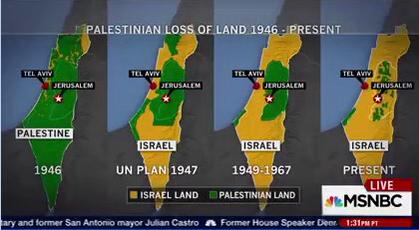
The image is from Ian Bremmer. Here is a new and interesting Vox article, Max Fisher channeling Danny Seidemann, arguing that the Israel and Palestinians situation is in worse shape than it appears. Hard for me to judge, but I found it stimulating reading.
The culture that is Taiwan
They are starting to talk about pulling down Chiang Kai-Shek statues:
Fears over increased Chinese influence have grown since 2008 under President Ma Ying-jeou’s (馬英九) KMT government, which has forged a rapprochement with Beijing.
Chiang’s authoritarianism has outweighed his Nationalist credentials and his image is wrapped up in that concern, with young people in particular feeling strongly that his memory should not be celebrated.
“Chiang was a dictator. For a long time, freedom of speech in Taiwan was suppressed,” said Peter Chu, 23, a graduate student at National Taiwan University of Science and Technology. “Why should his statues be allowed to remain on any campus?”
“There have been calls for removing the statue [at my school], but the school authorities have done nothing about it,” said student and former Anti-Curriculum Changes Alliance convener Chu Chen (朱震), 18, who attends the prestigious Taipei Municipal Jianguo High School. “Every year, graduates decorate the statue mocking it.”
The full article is here, and for the pointer I thank Mark Thorson. Here is Richard Bernstein about how Chiang’s reputation is falling in Taiwan and rising on the Mainland.
The economics of the Bronx
One reason the projects planned for the edge of the South Bronx aren’t likely to spread inland, gentrifying as they go, is that the area has the highest density of public housing in the nation. The Bronx has 44,000 such units, while Brooklyn, with nearly twice the population, has 58,000. “It’s harder for high-end gentrification to happen anyplace where the density of public housing is high,” says Gecan, who headed a project that built some of the first affordable housing in the post-1970s Bronx. “They just don’t go together.”
There is this too:
“Public housing is in a state of catastrophic decline,” Torres says, “due to a perfect storm of disinvestment. In 1998, the state cut off all operating subsidies; the city did the same in 2003. If a private landlord cut off funding for the operation and maintenance of his building, there would be legal consequences.” Federal funding has been greatly reduced as well. “The New York City Housing Authority [the city’s public housing agency] has capital needs of $17 billion to bring all its housing stock into good repair over the developments’ life expectancy. It gets $300 million a year from Washington.”
Those are from Harold Meyerson’s very good piece on the Bronx.
Thomas Merrill on David Hume’s coalition
American University professor Thomas Merrill writes:
Hume’s message to the “honest gentlemen” is therefore something like this: “you may not understand this curious character the philosopher; you may think him flaky and unhinged; but if you care about establishing a regime dedicated to individual liberty, you need him around. You need not model your life on his; in fact it is better if you do not. But you need to tolerate him and even be open to being guided by him. Especially do you need to heed his negative message of calling into question the political claims advanced by the various forms of superstition on the basis of alleged insights into the ‘original and ultimate principle.’ Think of the philosopher as you might a garbage man: you might not want to do the job yourself, but it is very useful to society that someone does it.”
That is from Merrill’s Hume and the Politics of Enlightenment, and the passage was sent to me by Daniel Klein, who describes the book as “new and highly recommended.”
*The Gunpowder Age*
The author is Tonio Andrade, and the subtitle is China, Military Innovation, and the Rise of the West in World History. This is an excellent book, full of history, science, and political economy, think of it as a parallel history of the evolution of guns across China and Europe, with an eye toward explaining larger state structures. Some of the things I learned or learned in a new way were:
1. The “competing states” argument for the rise of Europe is in some ways overvalued, as it neglects some critical time periods of competition across states in Chinese history.
2. Walls and guns co-evolved, in both China and Europe. And in earlier times, China had much bigger and stronger walls. That may have lowered the rate of return on investing in guns.
3. By 1510 or 1520, European guns already were better than Chinese guns. But through the following centuries, the Chinese were more aware of the need to catch up than is often realized.
4. Guns and gunpowder co-evolved, and when it comes to gunpowder some historians argue Europe had a second-mover advantage. Yet the exact source of European superiority in this regard is murky.
5. Korea developed one of the most effective musket-based armies of the seventeenth century.
6. The British development of “cylinder powder” in the late eighteenth century was a major advance over Chinese techniques at the time, and represented a final and decisive relative advance for the West.
Recommended, due out in January.
*The Invention of Science*
That is the new, magisterial and explicitly Whiggish book by David Wootton, with the subtitle A New History of Scientific Revolution.
I wish there were a single word for the designator “deep, clear, and quite well written, though it will not snag the attention of the casual reader of popular science books because it requires knowledge of the extant literature on the history of science.” Here is one excerpt, less specific than most of the book:
My argument so far is that the seventeenth-century mathematization of the world was long in preparation. Perspective painting, ballistics and fortification, cartography and navigation prepared the ground for Galileo, Descartes and Newton. The new metaphysics of the seventeenth century, which treated space as abstract and infinite, and location and movement as relative, was grounded in the new mathematical sciences of the fifteenth and sixteenth centuries, and if we want to trace the beginnings of the Scientific Revolution we will need to go back to the fourteenth and fifteenth centuries, to double-entry bookkeeping, to Alberti and Regiomontanus. The Scientific Revolution was, first and foremost, a revolt by the mathematicians against the authority of the philosophers.
769 pp., recommended — for some of you.
I had to order my copy from UK, in the US it comes out in December and can be pre-ordered.
Americas fact of the day
…the flow of Europeans to the New World before 1800 did not stand out, at least numerically. Somewhere between 1 million and 2 million Europeans came to the New World between 1500 and 1800; by contrast, over 8 million Africans came via the slave trade. (The predominantly European population of North America resulted from very high birth rates…while wretched conditions and an absence of females kept the African population down.)
That is from Kenneth Pomeranz and Steven Topik, The World That Trade Created, second edition, p.56. And here is Alex’s earlier post on textbooks and slavery.
Leo Strauss’s greatness, according to Dan Klein
1. A sense of virtue/justice/right that is large and challenging.
2. An appreciation of wisdom as something different than progressive research programs/specialized academic fields and disciplines.
3. An understanding of the sociology of judgment, in particular the role of great humans.
4. An epic narrative, from Thucydides to today.
5. Rediscovery, analysis, elaboration, and instruction of esotericism.
6. Close readings and interpretations of great works.
7. Inspiring, cultivating serious students and followers.
I should add that Dan also is developing a counterpart list, of weaknesses in Strauss’s outlook and approach.
Economics and the Modern Economic Historian
That is a new NBER paper by Ran Abramitzky, the abstract is here:
I reflect on the role of modern economic history in economics. I document a substantial increase in the percentage of papers devoted to economic history in the top-5 economic journals over the last few decades. I discuss how the study of the past has contributed to economics by providing ground to test economic theory, improve economic policy, understand economic mechanisms, and answer big economic questions. Recent graduates in economic history appear to have roughly similar prospects to those of other economists in the economics job market. I speculate how the increase in availability of high quality micro level historical data, the decline in costs of digitizing data, and the use of computationally intensive methods to convert large-scale qualitative information into quantitative data might transform economic history in the future.
I have for a while been pleased that GMU has one of the largest collections of economic historians (I would say four,) of any department around, UC Davis being another major presence in that area.
The Economics Nobel Prize winner is Angus Deaton
A brilliant selection. Deaton works closely with numbers, and his preferred topics are consumption, poverty, and welfare. “Understanding what economic progress really means” I would describe as his core contribution, and analyzing development from the starting point of consumption rather than income is part of his vision. That includes looking at calories, life expectancy, health, and education as part of living standards in a fundamental way. I think of this as a prize about empirics, the importance of economic development, and indirectly a prize about economic history.
Think of Deaton as an economist who looks more closely at what poor households consume to get a better sense of their living standards and possible paths for economic development. He truly, deeply understands the implications of economic growth, the benefits of modernity, and political economy. Here is a very good non-technical account of his work on measuring poverty (pdf), one of the best introductions to his thought.
He brought a good deal of methodological individualism to the field of consumption studies, most of all by using household surveys more than macroeconomic data.
I think of this as a prize for “a whole body of work” rather than for one or two key papers. David Leonhardt has a good NYT summary of some his work and its deep underlying optimism about the situation of the poor in the global economy.
Here is the popular version of the Committee statement, here is the more detailed version (pdf), an excellent overview.
Deaton was born in Scotland but has taught at Princeton for some time. Here is Deaton on Wikipedia. Here is Deaton’s home page. Here are some recent working papers, he even has published in Review of Austrian Economics, an interesting review of Bill Easterly on experts. Here are previous MR mentions of Deaton, there are many of them. Here is Deaton on Google Scholar. Here is a Russ Roberts EconTalk with Angus Deaton. I think of Deaton as someone who is relatively willing to share himself with the world, let’s hope the Prize doesn’t ruin that openness. Here is 21 minutes of Angus on YouTube, on his core ideas.
He is married to Princeton economist Anne Case, a notable scholar in her own right and sometimes a co-author with Deaton. Here are their co-authored papers, many dealing with South Africa.
Deaton has long had a special working relationship with India and South Africa. Here are his key pieces on measuring poverty and poverty reduction in India. Here is his work on the Indian health survey. Here is his 2010 AER piece on how to measure poverty globally in a consistent manner, by the way he suggests that asking people should be part of the answer.
He also has written on gender discrimination within the family in developing nations. Some of his work has helped direct our attention to the viability of cash transfers as a way of fighting poverty.
At first, say circa 1980, he was known for his work in developing Almost Ideal Demand Systems for analyzing consumer expenditures; much of this early work was with Muellbauer. That made a big splash, but it was more of a theoretical and technical advance than what was to follow. One message was that studies based on the idea of a “representative consumer” were likely to prove misleading.
It is interesting to note the trajectory of his career, as Alex noted on Twitter. He first did theory, then filled in the numbers and did empirics, applying the theory. Eventually he took theory + empirics and used it to tackle some of the big issues of poverty and development.
Here is his long survey piece on foreign aid and growth. He favors the move away from project evaluation, is skeptical of instrumental variable methods, and believes that RCTs need to be supplemented with a better theoretical understanding of mechanisms. He knows a lot about many, many topics.
I do not know him, but he is described by many as a colorful character. Dani Rodrik has strong praise for Deaton as a teacher.
Here are short, popular essays by Angus Deaton; you can call that the “what he really thinks page.” He is critical of the Republican war against ACA and connects that topic to Downton Abbey. He argues for regional price indices for the United States. He discusses American inequality and why it is often ignored as an issue. He warns against the creeping regulation of science. And he considers why the Stern report had a greater impact in the UK than in America.
I very much liked Deaton’s recent book The Great Escape, which focuses on how modernity revolutionized standards for consumption.
This award is no surprise at all and he has been on the short list for a while. Is it a slight surprise that Deaton won this prize on his own? Many thought he would be paired with Anthony Atkinson, but I see Deaton as worthy of a stand-alone prize and Atkinson’s chance has not passed him by. In any case, Tirole was a stand-alone prize too, so maybe in that regard there has been a shift in the Swedish regime.
Last but not least here is Alex’s post on Deaton.
Lawrence Dennis on what is wrong with economics
The trouble with most of our social thinking is that, being done in terms of eighteenth century rationalism, it takes dynamism for granted and assumes that the chief social problems are those of knowing what you want and how to get it. The chief social problem is that of generating and unifying the social will that creates activity, change and what we have been wont to call progress.
That is from his 1940 book The Dynamics of War and Revolution, p.53. It’s an ever so slightly fascistic version of a common critique of neoclassical economics. Is it entirely wrong?
Who will win the economics Nobel Prize this year?
Diane Coyle mentions some possible picks:
Environmental economics: Partha Dasgupta, William Nordhaus
Update: Twitter folks strongly recommend adding Martin Weitzman in this category.
Growth: Paul Romer, Robert Barro
Inequality: Anthony Atkinson, Angus Deaton
Innovation (and much else): Will Baumol (now 93!)
Econometrics: David Hendry
All good guesses. I’ll add Diamond and Dybvig for banking, and possibly an early grant to Banerjee, Duflo, and Kremer for development and RCTs. That would make economics look scientific, for a year at least. I expect Bernanke, Woodford, and Svensson to get a prize as well for monetary economics, although probably not right now. It is too close to Bernanke’s memoir and Svensson’s tenure at the Swedish central bank.
Here is a WSJ list. What do you think? Since I’ve never once been right about a particular year, trying to pick someone would only curse them. The award will come this Monday of course.