Category: Medicine
America is now pulling away from Western Europe
That is the topic of my latest Bloomberg column, the energy discussion is obvious so here is the segment on health care systems:
The pandemic revealed years of capital underinvestment in many of European health-care systems. Many Americans used to admire the UK’s National Health Service, but right now the whole system is ailing. There has been a labor and capital shortage, and a collapse of emergency health care services, which may be costing up to 500 excess (non-Covid) deaths a week. Similar problems exist throughout Europe, though they seem to be worst in the UK.
The American hospital and health care system long has been good — too good — at making expensive, long-term investments in care and technology. Often this meant excess prices and not much of an improvement in basic care. But in the pandemic and post-pandemic environment, that feature of the system has kept US health care up and running. All that capital investment turns out to have been pretty useful in a major crisis.
The longstanding charge that the US does not have universal health care now is less relevant. Obamacare is highly imperfect along a variety of dimensions, but US health care coverage has never been higher — the percentage of the uninsured population is now 8%. Keep in mind that many of those uninsured may have decided not to purchase health insurance, instead preferring to spend their money in other ways. That might be a personal mistake, but that is not the same thing as a systemic failure of the entire US health care regime.
America actually has something pretty close to universal coverage, at least as an option. And remember that some of the European systems, most notably in Switzerland, also require significant out-of-pocket expenditures. Other parts of those systems are paid through relatively regressive systems of a value-added tax, so they are not as “free” as they might seem.
Recommended.
Caleb Watney and Heidi Williams on drug pricing reforms
Because patents are filed before the start of clinical trials, rather than when a drug actually hits the market, drugs that require long clinical trials effectively receive shorter patent terms. This reduces incentives to develop drugs that require long clinical trials, including many preventive medicines.
A simple way to correct this is for the Food and Drug Administration to guarantee a minimum baseline of 12 years of market exclusivity for branded drugs. Importantly, this would not change or lengthen protection for drugs that would be developed anyway; most already receive 12 to 16 years of market protection, and the United States already provides this for particular categories, such as biologic drugs. For drugs with short periods of market exclusivity, this policy could make the difference between the drug being developed or not.
Here is the full Op-Ed, likely correct throughout.
Post-Covid excess deaths in Britain
For 14 of the past 15 weeks, England and Wales have averaged around 1,000 extra deaths each week, none of which are due to Covid.
If the current trajectory continues, the number of non-Covid excess deaths will soon outstrip deaths from the virus this year – and be even more deadly than the omicron wave.
So what is going on? Experts believe decisions taken by the Government in the earliest stages of the pandemic may now be coming back to bite.
Policies that kept people indoors, scared them away from hospitals and deprived them of treatment and primary care are finally taking their toll.
Here is the full story, via B.
From my email, on the new health care provisions
I saw your post on the new bill, and I actually think the healthcare components of it might be worse than the rest of it.The bill has a provision that allows the government to “negotiate” prices for drugs that are among the top 10-20 by spend in Medicare Part B (physician administered, usually IV infusions) and Part D. Since drugs that are selected in one year are not eligible for inclusion in subsequent years, this will capture more and more drugs over time. The negotiation of course happens with a gun to the head—the bill sets statutory minimum discounts of anywhere between 25-60%, depending how long the drug in question has been on market.The biggest issue with the bill is that it makes small molecule drugs eligible 9 years after approval, while biologic drugs are eligible after 13 years. This is based on some silly misconception that small molecule drugs are quicker and cheaper to develop and therefore have shorter payback periods. That may have been true when we were tackling relatively low-hanging fruit like high cholesterol, but small molecule drugs that tackle unmet needs today are nothing less than miracles. An oral pill that treats cystic fibrosis, like Vertex’s Trikafta, or sickle-cell disease, like Global Blood Therapeutics’ Oxbryta, is incredibly challenging to develop.This is going to hurt returns for small molecule drugs and skew R&D efforts away from them to biologics. Biologics like monoclonal antibodies are great, but many of them carry substantial administration costs or suffer from worse compliance/adherence because they are IV infusions that require patients to go into a care setting periodically to receive their next dose. But the real issue is they do not go generic the way small-molecule drugs do. Generics for small-molecule drugs are relatively cheap to develop, benefit from a streamlined approval process, and can be substituted for the branded drug at the pharmacy counter even if the doctor prescribes the brand, and as a result, drive 90% discounts to the brand price. Biologics, as the name suggests, are derived from living cells and thus cannot be easily proven to be equivalent to the brand—clinical trials are required and the overall expense of developing a biosimilar is 10x that of a small-molecule generic ($20M vs $200M). Between the higher development cost, lack of automatic substitution, and doctor and patient reluctance to believe these biosimilars are identical to the brand, biosimilars discount the brand price less and take a smaller share of the market, resulting in smaller savings to the system.It gets worse—many drugs these days are a “pipeline in a product,” targeting a biological mechanism that is implicated in many diseases. The most famous example might be Humira, which began as a rheumatoid arthritis drug and added psoriasis, psoriatic arthritis, ulcerative colitis, Crohn’s disease, ankylosing spondylitis, and hidradenitis suppurative over time, running trials to prove efficacy in each. Humira is a complex example—patent evergreening extended its lifetime and justified the investment in expanding its approved indications, and on a societal basis, it’s hard to know whether that’s good or bad, but hopefully we can agree that the solution to an IP issue is not to create an artificial time of expiry that discourages investment in science.The bill also includes an exemption through 2028 for orphan drugs that are approved in only one indication—these are drugs that target very rare diseases and generally charge extremely high prices to be financially viable. Some of these drugs are eventually tested in and expand to other smaller indications—but this exemption would discourage that and create an incentive to only try the drug in the largest indication and not expand the label to maintain the exemption and maximize its lifespan.Moreover, small companies that derive at least 80% of their revenue from one drug get a partial exemption from this, rendering them unacquirable by a larger drug company, since the drug is worth more as a standalone asset. This is again a failure of incentive design—it forces replication of corporate and commercial infrastructure that would otherwise have been a source of cost synergies for an acquirer.An example of the orphan disease issue is a drug called mavacamten, that Bristol-Myers acquired for $13.1B (it was the main asset of a company called Myokardia). The development plan was to first test the drug in an orphan indication, obstructive hypertrophic cardiomyopathy (oHCM), then expand to non-obstructive HCM, and eventually to a broader non-orphan heart failure market. This is a small-molecule drug, so negotiation eligibility is 9 years after launch in oHCM, or 2031–this would leave only 5-6 years for commercial launch in the heart failure market. While it probably makes sense for BMS to go ahead and test this molecule in heart failure at this point, the NPV of the molecule would be materially lower assuming a 25% discount to Medicare prices at year 9. The investment bank Jefferies estimates it at a 19% haircut—$10.6B from $13.1B. If the discount is deeper and/or spills over to commercial reimbursement, the haircut gets steeper and steeper—this overhang will reduce the number of drugs developed and/or force ever-higher launch prices since more of the value of the molecule has to be generated from the first indication.Lastly, this encourages even more gaming of the system. In theory, authorizing a generic competitor at a small discount at 9 or 13 years would protect the branded drug, as drugs with generic/biosimilar competition are exempt from negotiation. Handing the rights to produce a 10% cheaper version of your drug to Teva or Sandoz could therefore be less costly than the government’s proposed price cuts.This is sadly the story of our entire HC system—poor incentive structures layered on top of each other in an increasingly wobbly manner rendering the whole system unfit for purpose and on the verge of collapse. I should note here that this also targets one of the few industries where the US is still the undisputed global leader—can we really afford to do that? Especially when pharmaceuticals are less than a fifth of US HC spend, and the real drivers of out-of-control healthcare spending are guilds like the AMA and local monopolies (hospital systems that have consolidated heavily and are the largest employers in many congressional districts and even states, giving them both outsize negotiating power against insurers and lobbying clout in Congress).
That is from Anonymous!
Pharmaceutical drugs redux
In 2019 I presented this excerpt:
Humans are living longer, better lives thanks to innovations in prescription drugs over the past three decades, according to several new studies by Frank Lichtenberg, the Courtney C. Brown Professor of Business.
Every year, according to Lichtenberg’s research, drugs launched since 1982 are adding 150 million life-years to the lifespans of people in 22 countries that he analyzed. He calculated the average pharmaceutical expenditure per life-year saved at $2,837 — a bargain, he says.
“According to most health economists and policymakers, if you could extend someone’s life by a year for less than $3,000, that is highly cost effective,” says Lichtenberg, who gathered new data for these studies to cast a never-before seen view of the econometrics of prescription drugs. “People might be surprised by how cost-effective drugs appear to be in general.”
…To tease out the answer, the professor gathered data on drug launches and the age-standardized premature mortality rate by country, disease, and year. Drawing on data from the World Health Organization, the United Nations, consulting company IQVIA, and French database Theriaque, Lichtenberg was able to identify the role that pharmaceutical innovation played in reducing the number of years of life lost due to 66 diseases in 27 countries. (“Years of life lost” is an estimate of the average years a person would have lived if he or she had not died prematurely.)
OK, now a simple economics question: given such numbers, should we be spending more on pharmaceutical drugs, or less? I might add that biomedicine has made some spectacular advances as of late, so the notion that these are average costs, and the marginal cost slants sharply upward, probably is not true.
Here are further MR posts on this line of research. Here are Lichtenberg’s NBER working papers.
How many of you got the simple economics question right?
Covid in Cuba
Covid in Cuba
"The country’s once-famed health system is in tatters"https://t.co/BPPnY3ARPA @TheEconomist pic.twitter.com/hJHKSsD3rf— Eric Topol (@EricTopol) August 4, 2022
Dose Stretching for the Monkeypox Vaccine
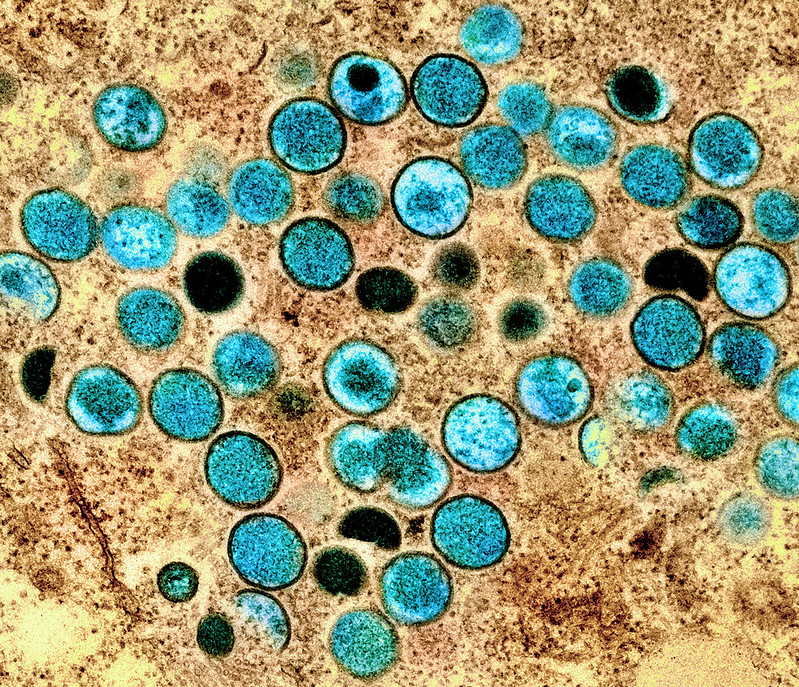
We are making all the same errors with monkeypox policy that we made with Covid but we are correcting the errors more rapidly. (It remains to be seen whether we are correcting rapidly enough.) I’ve already mentioned the rapid movement of some organizations to first doses first for the monkeypox vaccine. Another example is dose stretching. I argued on the basis of immunological evidence that A Half Dose of Moderna is More Effective Than a Full Dose of AstraZeneca and with Witold Wiecek, Michael Kremer, Chris Snyder and others wrote a paper simulating the effect of dose stretching for COVID in an SIER model. We even worked with a number of groups to accelerate clinical trials on dose stretching. Yet, the idea was slow to take off. On the other hand, the NIH has already announced a dose stretching trial for monkeypox.
Scientists at the National Institutes of Health are getting ready to explore a possible work-around. They are putting the finishing touches on the design of a clinical trial to assess two methods of stretching available doses of Jynneos, the only vaccine in the United States approved for vaccination against monkeypox.
They plan to test whether fractional dosing — using one-fifth of the regular amount of vaccine per person — would provide as much protection as the current regimen of two full doses of the vaccine given 28 days apart. They will also test whether using a single dose might be enough to protect against infection.
The first approach would allow roughly five times as many people to be vaccinated as the current licensed approach, and the latter would mean twice as many people could be vaccinated with existing vaccine supplies.
…The answers the study will generate, hopefully by late November or early December, could significantly aid efforts to bring this unprecedented monkeypox outbreak under control.
Another interesting aspect of the dose stretching protocol is that the vaccine will be applied to the skin, i.e. intradermally, which is known to often create a stronger immune response. Again, the idea isn’t new, I mentioned it in passing a couple of times on MR. But we just weren’t prepared to take these step for COVID. Nevertheless, COVID got these ideas into the public square and now that the pump has been primed we appear to be moving more rapidly on monkeypox.
Addendum: Jonathan Nankivell asked on the prediction market, Manifold Markets, ‘whether a 1/5 dose of the monkey pox vaccine would provide at least 50% the protection of the full dose?’ which is now running at a 67% chance. Well worth doing the clinical trial! Especially if we think that the supply of the vaccine will not expand soon.
How many times are we going to make this kind of mistake?
The shortage of vaccines to combat a fast-growing monkeypox outbreak was caused in part because the Department of Health and Human Services failed early on to ask that bulk stocks of the vaccine it already owned be bottled for distribution, according to multiple administration officials familiar with the matter.
By the time the federal government placed its orders, the vaccine’s Denmark-based manufacturer, Bavarian Nordic, had booked other clients and was unable to do the work for months, officials said — even though the federal government had invested well over $1 billion in the vaccine’s development.
The government is now distributing about 1.1 million doses, less than a third of the 3.5 million that health officials now estimate are needed to fight the outbreak. It does not expect the next delivery, of half a million doses, until October. Most of the other 5.5 million doses the United States has ordered are not scheduled to be delivered until next year, according to the federal health agency.
Here is more from the NYT.
Get the Lead Out of Turmeric!
Exposure to lead especially in childhood can have a lifetime of negative consequences:
According to the WHO, there is no known safe level of lead exposure. Relatively low levels of lead exposure that were previously considered ‘safe’ have been shown to damage children’s health and impair their cognitive development. Lead is a potent neurotoxin that, with even low-level exposure, is associated with a reduction in IQ scores, shortened attention spans and potentially violent and even criminal behaviour later in life. Children under the age of 5 years are at the greatest risk of suffering lifelong neurological, cognitive and physical damage and even death from lead poisoning.
In recent decades, some countries have begun to address the problem by removing lead from gasoline, paint, and pipes. Lead poisoning, however, remains a serious problem in South Asian countries such as Bangladesh. But where is the lead coming from?

Incredibly, one small study that examined the blood of pregnant women in Bangladesh for lead isotopes concluded that a major source of lead exposure is from turmeric consumption. Turmeric is a spice used in India and Bangladesh and other South East Asian both in cooking and for health. Lead from the soil could enter turmeric but the major cause seems to be lead pigments that are illegally added to turmeric to give it a pleasing looking yellow color. Lead in spices can exceed national limits by hundreds of times.
Our results indicate that turmeric Pb concentrations were as high as 1151 μg/g (Table 2). Eight of 28 market turmeric samples contained Pb above the 2.5 μg/g Government of Bangladesh limit for Pb in turmeric (Table S6). Using the simplified bioaccessibility extraction test, prior studies reported that the bioaccessible fraction of Pb in turmeric varied from 42.9 to 70% of total Pb. (12,39) Given that turmeric is used in dishes containing tamarind and other acidic ingredients, cooking could further increase the bioaccessibility of the Pb. (40) Other researchers hypothesized that PbCrO4 is added to turmeric to enhance its color or weight, but they did not test any turmeric processing powders to assess molar Pb/Cr ratios or Pb speciation. (12) We found that the yellow pigment powders used in turmeric processing contained 6–10% Pb by weight (61 870–101 300 μg/g Pb). Both pigment and turmeric samples also contained elevated chromium (Cr) concentrations, with average Pb/Cr molar ratios of 1.3 ± 0.06 (2 SD) and 1.1 ± 0.8 (2 SD), respectively. X-ray diffraction analyses indicated that all three pigment samples contained lead chromate (PbCrO4, 10–15%), that two of the pigments also contained lead carbonate (PbCO3, 2–3%), and that one also contained lead sulfate (PbSO4, 3%). Because PbCO3 and PbSO4 have a greater bioaccessibility than PbCrO4, our results support the parallel findings of high turmeric bioaccessibility reported in other studies. (12,39,41)
Respondents described turmeric, primarily purchased as a loose powder, as one of three essential spices consumed daily, alongside chili powder and cumin. Women reported adding turmeric in heaping spoonfuls to curries and other dishes for at least one meal per day.
I’d also worry about lead adulteration of safron, another yellow spice. The problem is not limited to Bangladesh, significant amounts of lead have been found in spices sold in in New York.
Addendum: Givewell has a good rundown on Pure Earth a charity working to address this problem.
Hat tip: Alexander Berger.
Photo Credit: MaxPixel.
Scott Gottlieb on Monkeypox response failure
Our country’s response to monkeypox has been plagued by the same shortcomings we had with Covid-19. Now if monkeypox gains a permanent foothold in the United States and becomes an endemic virus that joins our circulating repertoire of pathogens, it will be one of the worst public health failures in modern times not only because of the pain and peril of the disease but also because it was so avoidable. Our lapses extend beyond political decision making to the agencies tasked with protecting us from these threats. We don’t have a federal infrastructure capable of dealing with these emergencies.
The failures that got us here fit a now familiar pattern.
Early on, similar to the early days of Covid, testing access for monkeypox was limited, despite ample evidence that monkeypox was spreading in the United States. The Strategic National Stockpile was meant as a hedge against viral contingencies, but when the coronavirus struck, it lacked adequate supplies of testing equipment, ventilators and masks. With monkeypox, the government hadn’t stockpiled enough of the only vaccine, Jynneos, that was indicated for prevention of the disease and considered safe for use. The United States had on hand fewer than 2,400 doses in mid-May, mostly as a hedge against the risk of smallpox, which was the vaccine’s other indication.
How can this be? Here is more from the NYT, including concrete suggestions for reform, such as taking various extraneous activities out of the CFDC.
The Covidization of science?
The COVID-19 pandemic saw a massive mobilization of the scientific workforce. We evaluated the citation impact of COVID-19 publications relative to all scientific work published in 2020 to 2021, finding that 20% of citations received to papers published in 2020 to 2021 were to COVID-19–related papers. Across science, 98 of the 100 most-cited papers published in 2020 to 2021 were related to COVID-19. A large number of scientists received large numbers of citations to their COVID-19 work, often exceeding the citations they had received to all their work during their entire career. We document a strong covidization of research citations across science.
Here is the full article, by John P.A. Ionnidis, et.al., via Michelle Dawson.
From the comments, on Covid
We are just now evaluating vaccines based on the initial Omicron variant, which emerged seven months ago. They are only a moderate improvement on the status quo, in part because we have gone through several iterations of the variant since then. Because they are probably better but might not be that much better, Offit’s advice is even more delay while we study even more.
We have basically enshrined a process that guarantees vaccine development will be far behind the progress of the virus, the bad process itself being its own self fulfilling prophecy because the lag ensures the results will be worse.
The capability of mRNA vaccines to be quickly adapted to the disease is not being leveraged.
That is from Dan1111. And this is from Naveen K:
The Left in the last two weeks has said they’re for imposing mask mandates (coming soon in LA county) and Fauci restated his support for masks last week. All this while Biden WH saying Biden getting COVID isn’t a big deal.
Is being bombed bad for your mental health?
We find that cohorts younger than age five at the onset of WWII or those born during the war are in significantly worse mental health later in life when they are between ages late 50s and 70s. Specifically, an increase of one-standard deviation in the bombing intensity experienced during WWII is associated with about a 10 percent decline in an individual’s long–term standardized mental health score. This effect is equivalent to a 16.8 percent increase in the likelihood of being diagnosed with clinical depression. Our analysis also reveals that this impact is most pronounced among the youngest children including those who might have been in-utero at some point during the war.
Here is more from Mevlude Akbulut-Yuksel, Erdal Tekin, and Belgi Turan.
First Doses First for Monkeypox
The rollout of the Monkeypox vaccine hasn’t been without problems but we are making fewer mistakes. I feel pretty good that my work on first doses first for COVID (as well as that of Tyler, Michael Mina, Robert Wachter and others) pushed the Overton window. This is good to see. 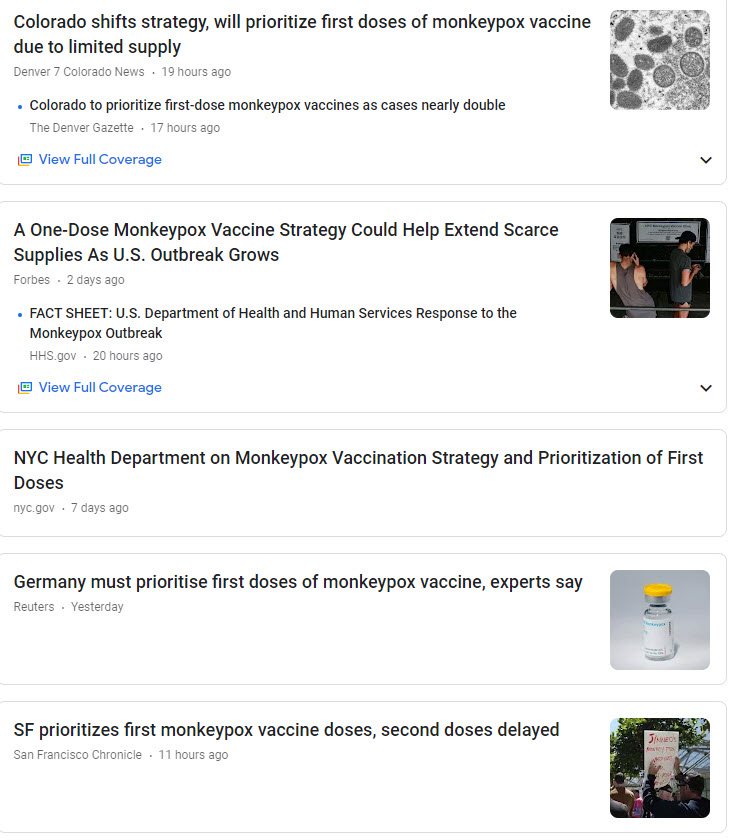
Our regulatory state is failing us, NIH edition
…the lawmakers pressed NIH leadership for answers about the mysterious disappearance of the Scientific Management Review Board, a committee that Congress empaneled in 2006 to ensure the agency was operating efficiently…
“There wasn’t any notification that we weren’t going to meet again — it was just that the meetings stopped getting called,” Nancy Andrews, a onetime board member and the former dean of the Duke University School of Medicine, told STAT in May.
She added: “I had the sense that we were asking questions in areas that they didn’t really want to get into, and I suppose Francis [Collins] in particular didn’t really want us working on.”
Here is the full StatNews piece.