Sentences to ponder
…you could completely wipe out the poorest 81 nations in the world, with a total population of 2.8 billion, and the blow to global GDP would "only" be about 5 percent…
That's from Rortybomb. Here is more, mostly on climate change.
Assorted links
1. Approved hairstyles for Iran (more here).
2. Orgies, and varying linguistic defaults among the Francophones.
3. Economic progress in Brazil.
4. Betting markets in everything, including in "Betting markets in everything."
5. How well do horses understand us?
6. What does the Dunning-Kruger effect really mean? (excellent post)
Waterless Urinals
I found this sign over the waterless urinal at the Woods Hole Oceanographic Institute (where I am hanging out this summer) difficult to parse (or follow).
Ordinarily I wouldn't devote a blog post to this kind of thing but believe it or not, this month's Wired has an excellent article on the science, economics and considerable politics of waterless urinals. Here's one bit:
Plumbing codes never contemplated a urinal without water. As a result, Falcon’s fixtures couldn’t be installed legally in most parts of the country. Krug assumed it would be a routine matter to amend the model codes on which most state and city codes are based, but Massey and other plumbers began to argue vehemently against it. The reason the urinal hadn’t changed in decades was because it worked, they argued. Urine could be dangerous, Massey said, and the urinal was not something to trifle with. As a result, in 2003 the organizations that administer the two dominant model codes in the US rejected Falcon’s request to permit installation of waterless urinals. “The plumbers blindsided us,” Krug says. “We didn’t understand what we were up against.”
One thing that does annoy me is the claim that these urinals "save" 40,000 thousand gallons of water a year. Water is not an endangered species. With local exceptions, water is a renewable resource and in plentiful supply. At the average U.S. price, you can buy 40,000 gallons of water for about $80.
Robin Hanson receives ein Wunsch
German scientists are planning the country’s biggest biomedical study. The National Cohort will be an intensive investigation of the health, lifestyle and genetics of 200,000 people, at an estimated cost of €210m over 10 years.
…They intend to use the National Cohort “to investigate how chronic diseases are conditioned by lifestyle and environmental issues, as well as by genetic predisposition”.
“Technology has now advanced to the point at which we can use a population study to find and evaluate biomarkers and other tools for early detection of disease,” said Prof Kaaks.
These people will receive extensive medical examinations at the beginning and along the way. Here is one example of what will be done:
The German scientists are keen, for example, to discover how exercise protects against disease. “Better quantitative estimates are required of how much protection there is to be had and how much physical activity is required to obtain it,” said Prof Kaaks. That means studying a very large number of participants whose activity can be assessed regularly over many years or even decades.
Germany has less variation in health care access than does the U.S., but still this is another variable which could be studied, given this data.
Laundering money, literally
Low-denomination U.S bank notes change hands until they fall apart here in Africa, and the bills are routinely carried in underwear and shoes through crime-ridden slums.
Some have become almost too smelly to handle, so Zimbabweans have taken to putting their $1 bills through the spin cycle and hanging them up to dry with clothes pins alongside sheets and items of clothing.
It's the best solution – apart from rubber gloves or disinfectant wipes – in a continent where the U.S. dollar has long been the currency of choice and where the lifespan of a dollar far exceeds what the U.S. Federal Reserve intends.
Zimbabwe's coalition government officially declared the U.S. dollar legal tender last year to eradicate world record inflation of billions of percent in the local Zimbabwe dollar as the economy collapsed.
The U.S. Federal Reserve destroys about 7,000 tons of worn-out money every year. It says the average $1 bill circulates in the United States for about 20 months – nowhere near its African life span of many years.
That's one way to conduct a countercyclical monetary policy, namely put old bills in the wash. Yet it is tricky because velocity should decline as well. (Do they get the proper degree of monetary endogeneity? Is this actually a free banking model?) Rather than unloading your money quickly, you have other options:
Zimbabweans say the U.S. notes do best with gentle hand-washing in warm water. But at a laundry and dry cleaner in eastern Harare, a machine cycle does little harm either to the cotton-weave type of paper. Locals say chemical "dry cleaning" is not recommended – it fades the color of the famed greenback.
The full article is here. For the pointer I thank Jeremy Davis.
Haiti update, again
Late afternoon torrential rains soak belongings and leave lake-size puddles in which mosquitoes breed, then spread malaria. Deep, raspy coughs can be heard everywhere. Scabies and other infections transform children's soft skin into irritating red bumpy rashes. Bellies are swelling and hair turning orange from malnutrition. Vomiting and diarrhea are as common as flies.
That is only one piece of the bad news presented in the article, which also documents a rise in violence.
Assorted links
Le Club Pigou?
French tourists who run into trouble after taking unnecessary risks overseas could have to pay for their rescue and repatriation under legislation debated today by MPs in Paris.
The proposed law, put forward by a government tired of having to foot the bill, would enable the state to demand reimbursement for "all or part of the costs … of foreign rescue operations" if it deems that travellers had ventured knowingly and without "legitimate motive" into risky territory.
According to the foreign ministry, the bill is an attempt to encourage a "culture of responsibility" among French travellers at a time of frequent kidnappings, hijackings and civil instability across the world.
Germany already does this to some extent; for instance a German backpacker rescued in Colombia had to pay twelve thousand euros to cover the cost of her helicopter trip. The full story is here.
The Peltzman Effect
The NHTSA had volunteers drive a test track in cars with automatic lane departure correction, and then interviewed the drivers for their impressions. Although the report does not describe the undoubted look of horror on the examiner’s face while interviewing one female, 20-something subject, it does relay the gist of her comments.
After she praised the ability of the car to self-correct when she drifted from her lane, she noted that she would love to have this feature in her own car. Then, after a night of drinking in the city, she would not have to sleep at a friend’s house before returning to her rural home.
From CSV. The Peltzman effect doesn’t mean that improvements in safety are always negated but it does remind us that we can never ignore the human response.
Hamburg notes, Hafen-City
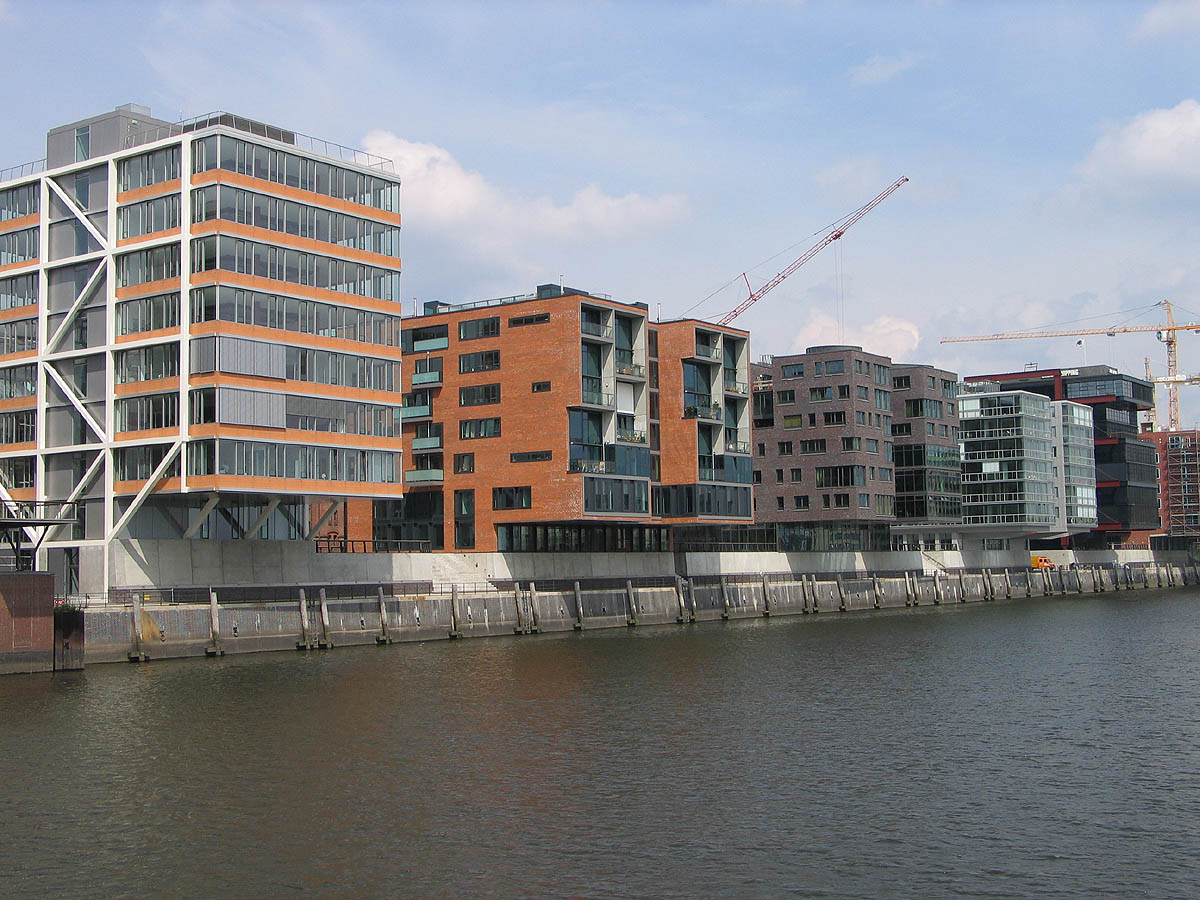
Compared to my previous visit twenty-five years ago, the run-down parts of the city are much worse; it is hard to believe you are in northern Europe. The nice parts of the city are more splendid. They are building a new city section altogether — Hafen-City – at a hard-to-discern rate of occupancy, can you say Austro-Hamburg business cycle theory? It's all mixed with in 18th century warehouses. Here are some apartments for sale. Here is one good introduction to the project.
In Hamburg they serve smoked eel with moist scrambled eggs, on delicious black bread.
A good chunk of the people in Hamburg could pass for Scandinavian; that's not the case in Berlin.
For contemporary work, Hamburg's Hafen-City is the architectural marvel of the Western world. It is Europe's single largest development project, not counting whole countries of course. Who said we no longer build coherent, splendid-looking neighborhoods? It is sadly under-discussed (addendum: but not here). For my unusual taste, the views from Hafen-City, through the harbor, all the way down to Hamburg-Altona, are among the very best in Europe. The bridges, the elevations and overpasses, the rows of brick, steel, and glass, the transport links, the integration with the water, and the "imaginary harbor," cosmopolitan in nature of course, remind me of what I would expect to find in the lost notebooks of a brilliant "Outsider" artist, except it's all for real.
One lengthy description, in German (but good visuals), is here.
Where should LeBron James go?
According to what moral theory?
Still, to me the answer is obvious, though no one seems to even discuss my idea. He should go to the Los Angeles Lakers. For a one-year contract, zero pay, if he can't convince the Lakers to pay the luxury tax. Better yet, make zero pay part of the PR in an age where viewers are sick of huge corporate bonuses for non-winning CEOs. This way he would learn the ways of a winning organization, which he needs to do, and very likely win a title immediately. He would convince Phil Jackson to return for another year. Most of his income comes from endorsements anyway, so he doesn't need the salary, plus the title and Los Angeles exposure would make his name more valuable. He would get "credit" for the title (does anyone these days complain that Magic Johnson never won a title without Kareem Abdul-Jabbar? No.) He could play fewer minutes and extend his career and keep his stamina intact for the playoffs. The next year he could move on or he might even decide to stay, pairing with Gasol and Bynum for years, while Kobe slides into a sixth man role. Since he has had good health, he could buy an insurance policy to protect against career-ending injury.
The idea of pairing James with Wade and Bosh seems to me extremely misguided: LeBron, please read Ludwig Lachmann's Capital and its Structure!
Turkey sentence to ponder
Turkey is closer to fulfilling the criteria for adopting the euro than most of the troubled economies already in the euro zone.
There is much more here.
How to learn Faroese
Wikipedia reports:
So most students are forced to learn it autodidactically by books, listening to Faroese on the radio (there is an internet live stream) and trying to correspond with Faroese people. A good opportunity for learning Faroese is also visiting the websites of Postverk Føroya and reading their stories about the stamp editions both in Faroese and English (or German, French and Danish) as well as an online dictionary on Sprotin [1], which requires a small subscription fee.
You can learn some simple phrases here. Overall I conclude that the prospects for learning Faroese are not extremely favorable.
Assorted links
German fiscal policy and the German economic recovery
Germany’s cabinet is poised this week to approve a 2011 budget as part of a four-year programme of public spending cuts meant to serve as an example to other European governments without jeopardising the country’s increasingly robust economic recovery.
The economy is continuing to grow, unemployment has been falling for twelve months, and the long-term fiscal picture is improving. Plenty of vacations are being postponed. You don't have to think that real shocks caused the downturn to believe that real factors provide the way out. The full story is here.
Beggar thy neighbor? Don't blame the productive. Besides, a lot of what the Germans are producing and selling is inputs for other people's production:
Ulrich Reifenhäuser, managing director and owner of plastics machinery maker Reifenhäuser, said his company was struggling to cope with an order increase of more than 100 per cent in some months this year.
You may recall that Alex — a prophet of the MarginalRevolution — has long predicted Germany as an economically undervalued country. Now that events have caught up with him, he needs a new pick…