The culture that is Italy
The new (old) labor market idea — you can call it fifth best perhaps — is hereditary jobs:
It is a problem many a company faces in these tough times: how to
replace older – and costlier – workers with younger, cheaper ones.A
Rome bank has what it thinks is the solution: to make the jobs
hereditary. Under a deal signed with unions this week, 76 employees of
Banca di Credito Cooperativo di Roma (BCC di Roma) must take early
retirement but they will get a choice: either take a payoff or leave
your job to your son or daughter (or indeed any relative "up to the
third degree", which would allow the post to be left even to
great-nieces and nephews).
The full story is here and I thank The Browser for the pointer.
The corn genome
I have many favorite topics which I don't blog much or at all. One of these, taken from my time in Mexico, is the history of corn. I very much enjoyed this recent article on the topic. There is this good bit:
The sequencing revealed that an astonishing 85 percent of the corn
genome is made up of "transposable elements" — short stretches of DNA,
some perhaps descended from viral invaders — that show evidence of
having moved around in corn's 10 chromosomes at some point in
evolution. Their peregrinations provided the basis for new genes, or
the on-and-off regulation of existing ones…
And this:
Corn's diversity of traits has been largely maintained, despite a
century of intensive breeding. Modern corn produces cobs that range
from the familiar farm-stand variety to lopsided baseballs and fat
pencils and have a rainbow of kernel colors. Varieties of corn can have
a greater genetic difference between them than what exists between
human beings and chimpanzees.
And this:
Walbot, the Stanford geneticist, speculates that this unusual diversity
survived because corn cultivation spread along a north-south axis. That
exposed the species to a much greater variety of environmental
conditions — temperature, day length, rainfall, altitude — than if it
had spread along an east-west axis, as did wheat.
There is extraordinary genetic information and power in corn. I am always willing to read another book on the history of corn and its breeding.
Is the Senate bill fiscally responsible?
Matt Yglesias writes:
The bill contains provisions that have front-loaded positive impacts on the deficit and also have provisions that have back-loaded positive impacts on the deficit. The bill, rather intelligently, seems to balance this out well leading to net deficit reductions in the short-, medium-, and long-terms. The bill by no means solves the considerable long-term fiscal challenges to the United States, but it does improve the situation. If people want to say that on balance they think the bill is a bad idea, that’s fine, but to do so is to oppose what’s far-and-away the most politically realistic way to enact non-trivial long- and medium-term deficit reduction in the 111th Congress.
I should coin a new MR term: the retreat into the relative. As I understand it, the apparently fiscally responsible portions of the bill come from a) eventual cuts in Medicare spending, and b) rising taxes on some health insurance plans and they come later of course. Few Congressional representatives are willing to do these things today, so should we predict they will be done in the future? (The same problem plagues Waxman-Markey, by the way, so these back and forth rhetorical debates are becoming quite common.) In my view, policies structured in this manner are simply another way of doing deficit spending.
To quote Matt, he writes of: "the most politically realistic way…to enact…deficit reduction." That sounds powerful. and in fact I agree with his claim as it is worded. But if all the politically realistic options make our fiscal position worse rather than better (Congress likes to spend money more than it likes to inflict pain on voters)…well, this bill still makes the deficit problem worse. Even it is the best of the realistic worsening options. We should be wary of the retreat into the relative because all the options may be bad. Nor should the phrase "building a framework" be translated into anything but "we are unwilling to do this now or anytime soon and thus we are engaging in more de facto deficit spending."
The fact that Republicans can (correctly) be blamed for making the bill worse does not constitute an argument that the current bill will make things, in fiscal terms, better.
Citing inconsistencies of bill opponents ("but he didn't scream loud enough about [fill in the blank] way back when") does not help on this score either.
Another argument I have seen in MR comments is: if we can't solve this health care costs problem it won't matter, therefore we can spend more without making the problem in net terms worse. That's a fallacy and you would never apply such reasoning while driving over the speed limit ("I'll accelerate right now, after all at some point I've got to slow down anyway.") Think of it as a kind of Zen-like, reverse Sorites ploy: "It is adding stones which takes a pile away." Or "Let us add stones. The pile must disappear in any case."
Here is a numerical style guide (SG) for identifying future arguments in these veins, because they will recur when you have an activist government which wants to be very popular, combined with an under-educated, short-term oriented citizenry:
SG1. The retreat into the relative: "All the other options are even worse."
SG2. Blame the Republicans: "They made the bill bad, not us."
SG3. The critic is evil or inconsistent: "Your views are inconsistent, or you are morally questionable, so I can dismiss your worries."
From now on in the MR comments section you can just cite the appropriate number and spare yourself carpal tunnel syndrome.
Addendum: Megan McArdle adds relevant comments and also here.
Badges? We don’t need no stinkin badges.
In pursuit of an Eagle Scout badge, Kevin Anderson, 17, has toiled for more than 200 hours hours over several weeks to clear a walking path in an east Allentown park.
Little did the do-gooder know that his altruistic act would put him in the cross hairs of the city's largest municipal union.
Nick Balzano, president of the local Service Employees International Union, told Allentown City Council Tuesday that the union is considering filing a grievance against the city for allowing Anderson to clear a 1,000-foot walking and biking path at Kimmets Lock Park.
"We'll be looking into the Cub Scout or Boy Scout who did the trails," Balzano told the council.
Story here. Hat tip to Modeled Behavior.
Assorted links, second dose
1. Air Genius Gary Leff is hailed by CNN.
2. Good post on interest rates (though I am not sure I agree with it). Brad DeLong comments. Critically important stuff and two of the best recent economics blog posts, in some time.
3. The world's first native Klingon speaker?
5. Via Yana, France's hamster hotel, and here.
Markets in everything?
A gang in the remote Peruvian jungle has been killing people for their
fat, the police said Thursday, accusing the gang’s members of draining
fat from bodies and selling it on the black market for use in
cosmetics…Three suspects have confessed to killing five people for their fat,
said Col. Jorge MejÃa, chief of Peru’s anti-kidnapping police. He said
the suspects, two of whom were arrested carrying bottles of liquid fat,
told the police it was worth $60,000 a gallon.Colonel MejÃa said
the suspects had told the police that the fat had been sold to
intermediaries in Lima, the capital. While police officials suspect
that the fat was sold to cosmetic companies in Europe, he said he could
not confirm any sales.
That's from The New York Times, not The Weekly World News. Medical "experts" express varying degrees of skepticism about the depth and liquidity of this market, but if you read the whole article you will encounter some truly graphic descriptions of the production process. Caveat emptor.
Assorted links
1. How much will U.S. taxes ever go up?
2. Useful lateral thinking and how it is described by the lateral thinker.
3. The biological bases of business and entrepreneurship.
4. One hour show with me in Second Life; they even did up a Tyler Cowen avatar. Other shows are here, including economist Robert Frank and libertarian Adam Thierer.
5. Matt Kahn on "cash for caulkers".
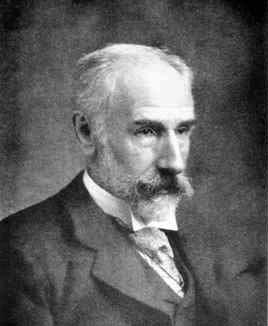
6. The new AEA calendar of economists. To whet your appetite, here is a photo of Francis Ysidro Edgeworth.
*The Unincorporated Man* and slavery
As long as we are on the topic of slavery, why not consider fiction? This science fiction novel has an intriguing economic premise: you're born a slave and you're not free until you can buy yourself back from your owner (which may be a corporation).
It may sound funny to think that a slave can save money but arguably an optimal slavery contract in a high-productivity society will give the slave some residual claimancy and some property rights, in order to spur work effort.
At some point you wonder whether a slave in this futuristic society is better off buying the rights to himself or herself. (Then he has to find individual health insurance!) If the system of slavery is truly secure, it's like living under Laffer Curve-maximizing taxation. That's oppressive, but many people have lived under worse. There would be lots of "Nudge" as well and with advanced technology very effective monitoring and control.
Is it possible that in such a world you would trust only a person who was a slave?
In many historical instances, slaves cannot precommit to "no revolt." So slaves aren't allowed to earn at the Laffer maximum point, for fear they will rebel or otherwise receive or lobby for greater rights. Real world slavery is much much worse than this hypothetical portrait might make it seem.
I won't have time to read through the novel (the new Alice Munro is out, for one thing) but I thought the premise was an intriguing one. The Amazon reader reviews are favorable.
In praise of Robin Hanson
My fondest memory of Robin Hanson is when we interviewed him for a job and, during his on-campus visit, I gave him some papers I had been working on. Later he emailed me back, before getting the offer I might add, and told me the papers weren't very good and what was wrong with them.
Ten years later, as his colleague, I disagree with Robin on many topics, including futarchy, whether we will become computer uploads, and meta-ethics (oh, if Robin would only advocate the ethical theory he so consistently lives by!..instead of his contorted contractarian version of preference utilitarianism, which he sometimes calls "dealism."). Despite our disagreements, Robin and I are oddly in frequent common agreement on practical "life topics." Most of all, I view Robin as a reductionist thinker to a greater degree than I am comfortable with for myself; relative to Robin, I'm more attached to the mumbo-jumbo of the mess and the piling on of multiple perspectives to the point of squishiness.
Those of us who speak regularly with Robin know how brightly his star blazes. He's a truly original and important thinker in a way that few are, plus on analytic back and forth he is blindingly fast and accurate. But you can't expect him to be a "I'm going to agree with him all around" kind of guy; he isn't. If you are one of his detractors, or even just a common sense skeptic, you can always find many of his beliefs to be outright absurd, The real question, however, is how much you can learn from him and on that he is an A+.
Addendum: Robin responds.
Assorted links
1. Scott Sumner's most absurd belief: India as #1 in gdp by 2109.
2. Click "play" and watch unemployment grow.
3. Who is Hollywood's most overpaid star, relative to box office returns? Will Farrell is #1 it seems.
4. Markets in everything: NYC McDonald's with sleek Danish furniture.
5. Saddam's strategic thinking.
6. Via Caroline Flyn, China ethnicity of the week, good for a whole year (photos, recommended).
7. The Political Economy of Trust, by Henry Farrell.
MR vocabulary guide
1. “Self-recommending”: the very nature of the authors and project suggest it will be good or very good. This also often (but not always) means I haven’t read it yet. I am reluctant to recommend *anything* I haven’t read, but I am signaling it is very likely recommendation-worthy and I wish to let you know about it sooner rather than later.
2. An “Assorted link” that ends with a question mark: Worth thinking about, but I wish to distance myself from the conclusion and the methods of the study, without being contrary per se.
3. Hansonian: of, or relating to Robin Hanson.
4. The Jacksonian mode of discourse. I am opposed to this. Political and economic pamphlets in the Jacksonian era were excessively polemical and sometimes the Jacksonian mode is still used today, in 2009, believe it or not.
5. Wunderkind: Take the average age of that person’s relevant peers. If said person is either under twenty or less than half that average, that person may qualify for “Wunderkind” status.
6. Markets in everything: Some of these are celebratory but many of these are sad or tragic. Usually I am trying to get you to think about — as a philosophical question — why the market exists at all and not whether it should be legal.
7. Tyrone is my brother and alter-ego who believes the opposite of what Tyler believes. Trudie offers personal advice. Neither has good time management skills and thus they don’t write very much these days.
8. “Shout it from the rooftops”: What to do with wordy, obscure truths which the world badly needs to learn.
What have I left out?
Is this why the Senate bill has an ok CBO rating?
Because the program would begin taking in premiums immediately
but would not start paying benefits until 2016, congressional budget
analysts have forecast that it would generate a nearly $60 billion
surplus over the next 10 years, cash that would help the larger
measure's balance on paper.
Not long ago I filed this under "Department of Uh-Oh." In the longer run it is very bad for the budget and it is simply an accounting trick. It's a sign that fiscal responsibility will never come to U.S. health care. And yes there is a long-term care provision in the Senate bill. Although I have not read through its current incarnation of 2000-some pages, I am willing to bet we are getting the cost back-loaded version of the idea.
*From Poverty to Prosperity* watch
That's the title of the new and self-recommending book by Arnold Kling and Nick Schulz. This work has text by the authors, interspersed with interviews with famous economists, including Robert Fogel, Robert Solow, Joel Mokyr, Doug North, Bill Easterly, Edmund Phelps, Amar Bhide, William Lewis, and Bill Baumol. Here is Paul Romer:
It's the kind of culture that can tolerate rap music and extreme sports that can also create space for guys like Page and Brin and Google. That's one of our hidden strengths.
You can buy the book here. The subtitle is Intangible Assets, Hidden Liabilities and the Lasting Triumph over Scarcity.
Giovanni Peri’s latest on immigration and productivity
Here is the abstract and it has to do with a Smithian theme, namely division of labor:
Using the large variation in the inflow of immigrants across US states we analyze the impact of immigration on state employment, average hours worked, physical capital accumulation and, most importantly, total factor productivity and its skill bias. We use the location of a state relative to the Mexican border and to the main ports of entry, as well as the existence of communities of immigrants before 1960, as instruments. We find no evidence that immigrants crowded-out employment and hours worked by natives. At the same time we find robust evidence that they increased total factor productivity, on the one hand, while they decreased capital intensity and the skill-bias of production technologies, on the other. These results are robust to controlling for several other determinants of productivity that may vary with geography such as R&D spending, computer adoption, international competition in the form of exports and sector composition. Our results suggest that immigrants promoted efficient task specialization, thus increasing TFP and, at the same time, promoted the adoption of unskilled-biased technology as the theory of directed technological change would predict. Combining these effects, an increase in employment in a US state of 1% due to immigrants produced an increase in income per worker of 0.5% in that state.
The paper is here.
What did Obama eat in China?
I've been trying to find out what Obama ate in China and this is the closest I can come:
"We're also hosting a 'Stars and Stripes' week featuring iconic
American cuisine," said a hotel spokesperson, who declined to give her
name due to company policy."The White House guests may want to enjoy New Orleans flavors, American steak BBQs and Jack Daniel's cocktails," she added.
That was the Marriott but I suspect the Chinese government had a say in things or at the very least it was negotiated. It's an interesting question which side is signaling the dominance with that choice; I say the Chinese. Fortunately in Beijing it seems he had:
Obama-Hu 90 min
meal feat. prawns, soups and lamb chops, plus a presentation of Chinese
noodle making, which the Americans enjoyed.