What should I ask Brian Koppelman?
I will be doing a Conversation with him, here is Wikipedia:
Brian William Koppelman (born April 27, 1966) is an American showrunner. Koppelman is the co-writer of Ocean’s Thirteen and Rounders, the producer for films including The Illusionist and The Lucky Ones, the director for films including Solitary Man and the documentary This Is What They Want for ESPN as part of their 30 for 30 series, and the co-creator, showrunner, and executive producer of Showtime‘s Billions and Super Pumped: The Battle for Uber…
So what should I ask him?
Tuesday assorted links
1. Why are Celtic governments more progressive than Celtic voters?
2. Why are so many Tamils so good with numbers?
3. Is it time for a new atomic altruism?
4. “Analysis of 50 major Europe- and North America-based global non-profit organizations…showed that environmental and climate groups were the most likely to include Taiwan as part of China, or exclude it altogether, in maps and reports.” Link here.
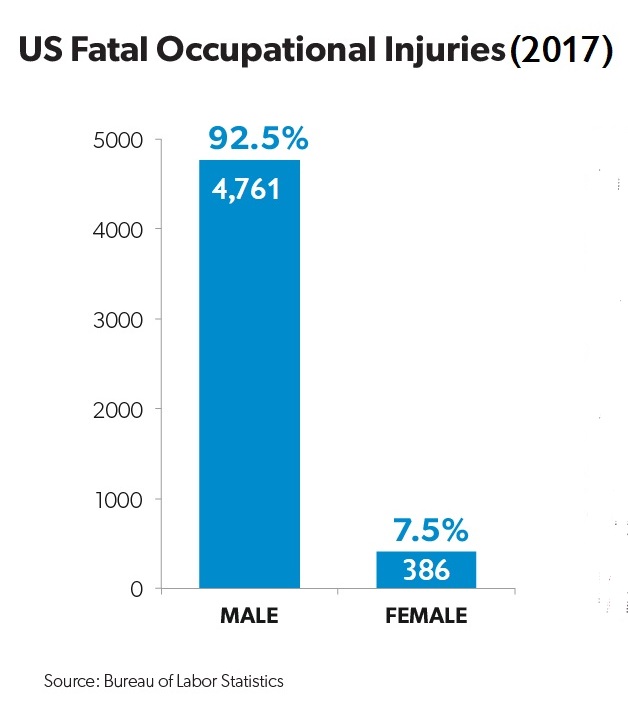
The Gender Death Gap
 Hat tip: i/o.
The Impact of Vaccines and Behavior on U.S. Cumulative Deaths from COVID-19
It is hard to think of a topic area where the Republican Party, the right-wing, and (many by no means all) MR commentators are so far off base. Here are some new results from Andrew Atkeson:
…I find that vaccines saved 748,600 lives through June 2023. That is, without vaccines, cumulative mortality from COVID-19 would have been closer to 1.91 million over this time period. In answering the second question, I find that behavioral efforts to slow the transmission of the virus before vaccines became widely administered were critical to this positive impact of vaccines on cumulative mortality. For example, with a complete relaxation of these mitigation efforts, vaccines would have come too late to have saved a significant number of lives. Earlier deployment of vaccines would have saved many lives. I find that marginal changes in the strength of the behavioral response to COVID-19 deaths within the range of those responses estimated with the model have a significantly impact on cumulative COVID-19 mortality over this time period.
Here is the full paper. By the way, in case you are wondering I did write some columns arguing we should reopen the schools (and I strongly encouraged my own institution, GMU, to reopen in the fall of 2020, when asked for advice. Mercatus reopened once our landlord allowed us to.). But I am glad that for instance normal NBA games with full crowds were not up and running in the usual manner in November of 2020.
The Disparate Impacts of College Admissions Policies on Asian American Applicants
Dept. of Yikes, but at this point who is surprised?:
…we estimate the odds that Asian American applicants were admitted to at least one of the schools we consider were 28% lower than the odds for white students with similar test scores, grade-point averages, and extracurricular activities. The gap was particularly pronounced for students of South Asian descent (49% lower odds). We trace this pattern in part to two factors. First, many selective colleges openly give preference to the children of alumni, and we find that white applicants were substantially more likely to have such legacy status than Asian applicants, especially South Asian applicants. Second, after adjusting for observed student characteristics, the institutions we consider appear less likely to admit students from geographic regions with relatively high shares of applicants who are Asian.
That is from a new NBER working paper by Joshua Grossman, Sabina Tomkins, Lindsay C. Page, and Sharad Goel.
Doha bleg
What should I do in Doha? I will have a very limited amount of time there. What should I see and where should I eat?
Monday assorted links
1. Oddly distributed asymmetric worries. And U.S. scientists repeat fusion power breakthrough.
2. “Vidya Mahambare has a fun assignment for her students, and I fully intend to copy it this upcoming semester.” Link to the idea here.
4. Square watermelons in Japan.
5. More on the Collie transhumanist [transcollieist?].
6. MIE: “A funeral home in El Salvador has taken Barbie mania to an extreme, offering pink coffins with Barbie linings.”
Markets in everything, hockey romance edition
Posters gravitate to players who remind them of their favorite book boyfriends, and one popular choice is Seattle Kraken center Alex Wennberg. His team initially courted BookTok with posts and hashtags in the same style, and flew out a popular creator for a playoff game…
Within the subcategory of sports romance, hockey dominates. Right now, all 10 of the top sports romances on Amazon involve hockey.
Here is the full story.
USA poll fact of the day
Just as Woke has peaked, has “anti-Woke” peaked as well?:
When presented with the choice between two hypothetical Republican candidates, only 24 percent of national Republican voters opted for a “a candidate who focuses on defeating radical ‘woke’ ideology in our schools, media and culture” over “a candidate who focuses on restoring law and order in our streets and at the border.”
Among those 65 and older, often the most likely age bracket to vote, only 17 percent signed on to the “anti-woke” crusade. Those numbers were nearly identical in Iowa, where the first ballots for the Republican nominee will be cast on Jan. 15.
Around 65 percent said they would choose the law and order candidate…
About 38 percent of Republican voters said they would back a candidate who promised to fight corporations that promote “woke” left ideology, versus the 52 percent who preferred “a candidate who says that the government should stay out of deciding what corporations should support.”
As for Vivek:
The stickers that read “Stop Wokeism. Vote Vivek” are gone from his campaign stops, he said, replaced by hats that read “Truth.”
“At the time I came to be focused on this issue, no one knew what the word was,” he said. “Now that they have caught up, the puck has moved. It’s in my rearview mirror as well.”
The NYT piece offers this exaggeration:
Instead, Republican voters are showing a “hand’s off” libertarian streak in economics, and a clear preference for messages about “law and order” in the nation’s cities and at its borders.
Developing, we will see how this one goes…
Murugan Idli
E. 149, Murugan Idli Shop, 1, 6th Avenue, opp. Velankanni Church, GOCHS Colony, Besant Nagar, Chennai, Tamil Nadu 600090, India

Most of all, get the Onion Rava Masala Dosa. The key dishes there cost not much more than one dollar, sometimes less.

Is there any general model as to why, so often in the world of food, price and quality are negatively correlated?
Sunday assorted links
1. Pakistan facts of the day, gift watch edition.
2. How much do different kinds of doctors earn?
3. Jason Furman reviews *Big Business*.
4. Why do the top dart throwers keep getting better and better? (NYT, good piece on talent issues, covers other sports too).
5. How much is NoVa residential real estate suffering from work from home?
6. Floridan Ederer is the new EU candidate for what had been the Fiona Scott Morton post.
Unintended Geoengineering
In my post SuperFreakonomics on Geoengineering, Revisited I noted that regulations requiring ships to reduce sulfur have increased global warming. Science has a new piece on the phenomena and the implications for intended geoengineering:
Regulations imposed in 2020 by the United Nations’s International Maritime Organization (IMO) have cut ships’ sulfur pollution by more than 80% and improved air quality worldwide. The reduction has also lessened the effect of sulfate particles in seeding and brightening the distinctive low-lying, reflective clouds that follow in the wake of ships and help cool the planet. The 2020 IMO rule “is a big natural experiment,” says Duncan Watson-Parris, an atmospheric physicist at the Scripps Institution of Oceanography. “We’re changing the clouds.”
By dramatically reducing the number of ship tracks, the planet has warmed up faster, several new studies have found. That trend is magnified in the Atlantic, where maritime traffic is particularly dense. In the shipping corridors, the increased light represents a 50% boost to the warming effect of human carbon emissions. It’s as if the world suddenly lost the cooling effect from a fairly large volcanic eruption each year, says Michael Diamond, an atmospheric scientist at Florida State University.
The natural experiment created by the IMO rules is providing a rare opportunity for climate scientists to study a geoengineering scheme in action—although it is one that is working in the wrong direction. Indeed, one such strategy to slow global warming, called marine cloud brightening, would see ships inject salt particles back into the air, to make clouds more reflective. In Diamond’s view, the dramatic decline in ship tracks is clear evidence that humanity could cool off the planet significantly by brightening the clouds. “It suggests pretty strongly that if you wanted to do it on purpose, you could,” he says.
Growth models and new goods
Growth models typically assume an inaccurate equivalence between the consumption of greater quantities of existing products (as an individual achieves by growing richer, all else equal) and the consumption of new products. As a result, they typically arbitrarily understate the welfare benefits of growth. They also arbitrarily overstate the extent which future growth will motivate a substitution from consumption to other goods. Finally, a more realistic model of new product introduction can be shown to alleviate the equity premium puzzle: steeply diminishing marginal utility in within-period consumption is compatible with a high saving rate because the marginal utility of consumption will be higher when new products are available.
That is a new paper from Philip Trammell, via Kris Gulati.
This also has implications for who should be subject to congestion pricing. I am currently in Chennai, which can be quite congested, most of all on the roads. Some kind of congestion fee (if it were possible to enforce) would be appropriate. But such a fee probably should not be levied on those who come to Chennai to consume new goods, or in other words visitors and outsiders. Those are also the people most likely to learn things from being in Chennai, and then to apply those learnings elsewhere. Beware of those who apply only a single microeconomic idea!
Shadow Effects of Tennis Superstars
In multi-stage tournaments, anticipated competition in future stages might affect the outcome of competition in the current stage. In particular, the presence of super- stars might demotivate the next-best competitors from seeking to advance to later rounds, where they ultimately are likely to face a superstar. Data from men’s professional tennis tournaments held between 2004 and 2019 affirm that the participation of superstars (Djokovic, Nadal, Federer, and Murray) reduces the probability that the remaining Top 20 players win their matches. Such shadow effects arise even in very early tournament stages, in which favoured players lose more often than expected, given their ability. The effects are more pronounced when multiple superstars com- pete in the tournament and disappear once all superstars have been eliminated from competition. Furthermore, shadow effects increase the probability of retirement of strong but non-superstar competitors and disappear once superstar performance is not dominant.
That is from a new paper by Christian Deutscher, Lena Neuberg, and Stefan Thiem, via the excellent Kevin Lewis.
Dominican Republic fact of the day
The Dominican Republic 🇩🇴 is experiencing a remarkable convergence in per capita income with the US, outpacing all other Latin American countries. With the right policies, it has the potential to become an advanced economy within the next four decades. ➡️ https://t.co/s8ofH9u1B9 pic.twitter.com/wJ7MSy48k7
— IMF (@IMFNews) August 4, 2023