Year: 2016
When does Robert Cottrell just stop reading? (from the comments)
I considered the question of when one should just stop reading, and here is Robert’s take:
I read full-time to edit The Browser, and I abandon a hundred articles for every one that I finish. I generally stop if I hit “eponymous”, or “toxic”, or “trigger warning”, or “make no mistake”. Summary labelling of anything in an article as “complex” means that the writer does not understand or cannot explain the material. I don’t often read beyond headlines that use the words “surprising”, “secret”, “really”, “not” or “… and why it matters”. Any headline ending in a question mark is a bad sign. I know writers don’t usually write their own headlines, but the headline represents a best effort to say what is useful in the article by a sympathetic person who has been paid to read it.
Robert is one of the best readers I know.
China fact of the day
In 2015, total nominal credit expansion was nearly 4 times greater than total nominal GDP expansion.
That is from Christopher Balding, more of interest at the link.
Thursday assorted links
Patents, Prizes and Subsidies
Thinking about the Solow model and the limits of capital accumulation as a force for growth leads naturally to thinking about ideas and the institutions that create incentives to produce and use new ideas. Here is Patents, Prizes and Subsidies, the latest video from our Principles of Macroeconomics course at MRU–based, of course, on our textbook, Modern Principles.
My favorite part of this video is Tyler doing a cameo as an armchair economist.
Is an imploding EU an argument for Brexit?
It’s not clear the EU is imploding, but let’s just say it were, or that it will. That still makes “remain” better than “leave.” As the implosion proceeds, the United Kingdom would end up with a rather gracious out, and one which does not drive Scotland away, once other nations would start leaving or radically paring back the terms of their participation. Along the way, “ever closer union” would not be a threat to sovereignty. Conversely, if the country votes for “leave” in June, it will be perceived as yet another domino in the cascade of anti-globalist nationalism and would bring a rather sudden shock to London as a financial center and relations across the Irelands.
Look at it this way: there is no general case for being the first rat to leave a sinking ship, if that ship has stores of food. And the United Kingdom, with its own currency and set of distinct historical traditions, can leave whenever it wants and resort to its perpetual life raft.
Option value! It’s not enough that leaving be better than staying. Since “wait and see” is an option, leaving has to be much better than staying, given the mathematics of the expected value of irreversible decisions. I just don’t see that case has been made.
Here is my earlier post on Brexit.
How does China use the QWERTY keyboard?
Chinese “input” uses the QWERTY keyboard in an entirely different manner. In China, the QWERTY keyboard is “smart,” in the sense that it makes full use of modern-day computer power to augment and accelerate the input process. First of all, the letters of the Latin alphabet are not used in the same limited way that we use them in the alphabetic world. In China, “Q” (the button) doesn’t necessarily equal “Q” (the letter). Instead, to press the buttons marked Q, W, E, R, T, Y (or otherwise) is, strictly speaking, a way to give instructions to a piece of software known as an “Input Method Editor” (IME), which runs quietly in the background on your computer, intercepts all your keystrokes, and uses them as guidelines to try and figure out which Chinese characters the user wants. Using the most popular IME around today — Sougou Pinyin — the moment I strike the letter Q, the system is off and running, trying to figure out what I want. With the first clue, the IME immediately starts showing me options or “candidates” in a pop-up menu that follows me along on screen — in this case, Chinese characters, names, or phrases whose phonetic value begins with Q, such as Qingdao or Qigong.
The moment I hit the second button — let’s say U — the IME immediately changes up its recommendations, now giving me only characters that have pronunciations starting with “Qu.” There is no set, standard way to manage this process, moreover. There are many IMEs on the market, and each IME has many customizable settings. Some IMEs don’t use phonetics at all, in fact, but instead use Latin letters to indicate certain shapes or structural properties of the Chinese characters you want. And on top of all of this, there are countless abbreviations and shortcuts you can use to speed up the process (e.g., typing “Beijing” will get you the capital of China, but so will “bjing,” “beij,” or simply “bj”). And then, of course, there is “predictive text,” which as I have shown elsewhere, was developed and popularized in China decades before it was in the West.
In other words, for the computer age the Chinese system of characters has worked out quite well, and in some ways may be superior to the Roman alphabet. The piece is Jeffrey Wasserstrom interviewing Tom Mullaney, and is of interest more generally.
What are the most cited books in the social sciences?
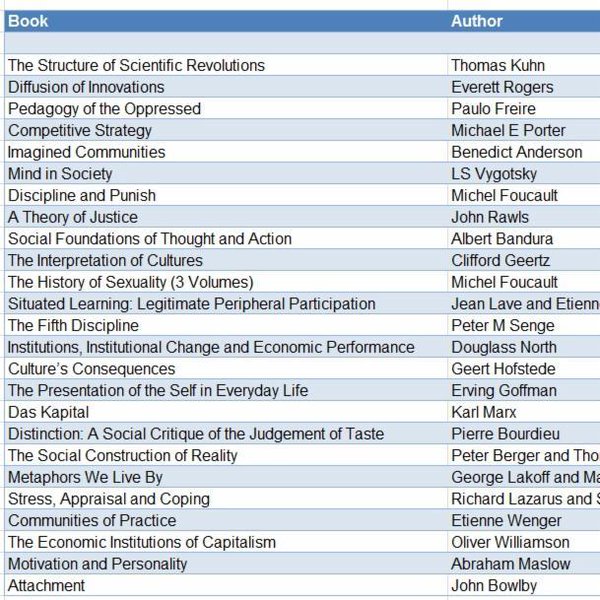
There is also this:
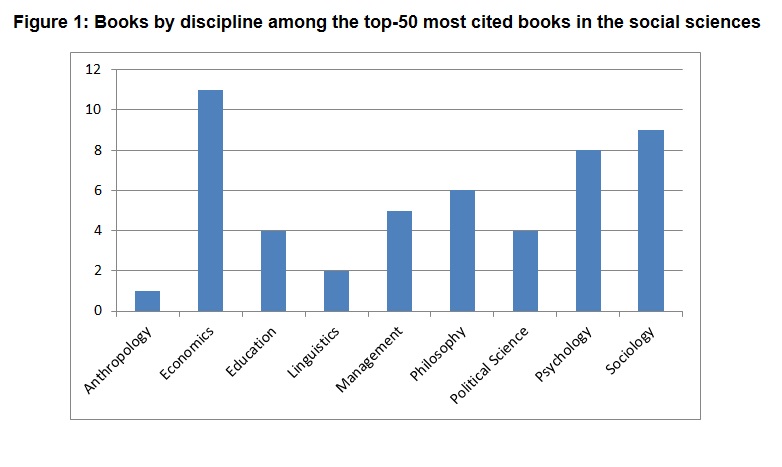
Here is the source, full text and explanation here. There is much more of interest at that final link.
Wednesday assorted links
1. Employers cannot force workers to be happy.
2. Earpiece translates foreign languages.
4. After twelve years, Japan is making a new Godzilla movie. And markets not in everything if you’re Pakistani.
5. Will Wilkinson on social justice. A very good piece.
6. The economics of Elsevier. And more here. The upside is this: such services become obsolete over time, and if SSRN received lots of money from Elsevier, that is an incentive for someone else to do better, with an eye toward an eventual buy out. We will see how big the lock-in effect is, but I am not convinced it is enormous, if a better system were to come along. See Joshua Gans.
The Rent Seekers Never Sleep
In The Rise and Decline of Nations Mancur Olson argued that collusive arrangements accumulate slowly, reducing efficiency and economic growth. It’s difficult to defeat collusions, however, because the organized-winners fight harder than the unorganized-losers. But there is a way. Ironically, collusions get weaker in groups.
The base-closing principle tells us that the way to defeat collusions is to bundle them and force their existence on a single up or down vote. That’s one reason why general agreements on tariffs and trade, GATT agreements, are important. Trade agreements increase efficiency not simply because of comparative advantage, increasing returns to scale, and increased diversity but because general agreements are necessary to defeat the rent seekers.
Unfortunately, as Gary Hufbauer and Euijin Jung point out, we haven’t had a successful GATT since 1986 and the time between GATT rounds has been getting longer and longer. Moreover, just as Olson would have expected, collusions–what Hufbauer and Jung call “micro-protections”–have grown.
In the wake of the Great Recession of 2008–09, micro-protectionism has run rampant, often skirting the letter of WTO rules. This phenomenon is driven by political promises to create more jobs and to protect domestic firms and industries, notably evident in Buy America statutes and copy-cat local content legislation across the globe. As an illustration, table 2 reports that the imposition of 117 local content requirement measures identified since 2008 is estimated to affect $928 billion of global trade in goods and services in 2010, perhaps reducing global exports by $93 billion.
Local content requirements are just one form of trade restrictive measures introduced since the Great Recession…Macroeconomists are wrong to dismiss the quantitative importance of these poison pills, perhaps individually small but collectively deadly. The fact that highly visible tariff barriers have not been erected on a large scale does nothing to diminish the cumulative impact of thousands of opaque measures designed to keep out imports.
Micro-protections are especially important where trade most needs to increase, in services. There is vast scope for the expansion of world trade but we need a general agreement on trade, especially one focused on breaking down local markets for services.
The rent-seekers never sleep so simple measures of trade protectionism understate the prevalence of micro-protections but simple measures of the gains from trade understate the benefits of defeating strangling collusions.
Economic development in an “Average is Over” world
Here is my new paper on that topic (pdf, new link here), commissioned by the Asian Development Bank (but not yet approved or refereed by them). The key question is what kind of development path will follow, given the realities of premature deindustrialization in emerging economies today. Here is one bit from the paper:
…trickle-down growth from price discrimination and the erosion of intellectual property rents becomes more important as a source of economic improvement. I call this mechanism “cell phones instead of automobile factories.” Many economic ideas are subject to non-rivalrous use, as they can be deployed by many people once they exist. That phenomenon may sound separate from the substitution of capital for labor outlined above, but that is part of the same broader process. If the wealthier nations use smart software to displace imports from the developing world, poorer nations will benefit from the software in other ways, including a trickle-down of goods and services.
The cell phone (and by extension the smart phone) is a paradigmatic example of trickle-down consumption. The technologies behind the cell phone were invented across a variety of nations, none of them poor (although China contributed to the finishing process), and yet cell phones are extremely prominent in poor and lesser developed nations. Internationally, cell phones and smart phones have brought significant benefits and often at relatively low cost. In the poorer parts of Asia, cell and smart phones are available for much lower prices than in the West. Part of that is the result of price discrimination, such as when Samsung sets deliberately lower prices for most of Africa and the poorer parts of Asia. In other cases the poorer countries buy a somewhat lower quality product, but one still effective for many of their needs. The Blackberry was not long ago state of the art in the United States, but now it sells primarily in poorer countries, including Indonesia, Vietnam, and South Asia, in addition to parts of Africa, and of course it sells to these regions at lower prices.
And this:
Or in other words, rather than Indonesia or Cambodia exporting manufactures to buy imported goods, an alternative development path is that some of those imports trickle down and enter poorer countries at especially low prices. Poorer economies can’t get constant cost goods and services for any cheaper than they are available in wealthier countries and in fact they may have to pay more because of shipping costs, poor institutions, and less efficient retail systems. If the wealthy nations produce more cement, the trickle down benefits from that activity may be slight. But for declining cost commodities, it is a different story entirely.
The more the economies of the wealthy countries are focused on increasing returns to scale sectors, the more important this version of trickle-down growth will become. And for the last few decades, many of the most important innovations in the wealthy countries have been shifting into increasing returns to scale sectors, most notably in the tech world. The tech world is geographically clustered, and centered in Silicon Valley, which are both classic signs of an increasing returns to scale sector. Some of the outputs are given away for free (Google, Facebook), and others show high degrees of market concentration, with a single dominant supplier providing a network good (eBay, Facebook, Instagram, Twitter). When it comes to the hardware behind the tech sector, there is an emphasis on new models, upgrades, and differential pricing plans, again all signs of increasing returns to scale.
In the limiting case, if everything in the economy looks and acts like the tech sector, this source of growth could be quite significant indeed. In other words, a world where “software eats the world,” to borrow Marc Andreessen’s phrase, is a world where the developing nations end up doing pretty well, even if the traditional export-oriented path to convergence has gone away.
Most forms of economic growth are fundamentally imbalanced (Hirschman 1958), but in this “cell phones scenario” we see a new form of imbalance. The new imbalance would be based on increasing returns to scale goods, which would trickle down to poorer countries, vs. constant and increasing cost goods, which would not trickle down. Developing nations thus would be very well supplied with (cheaper versions of) increasing returns to scale goods, but have relatively stagnant supplies of constant and decreasing returns to scale goods.
Comments of course are welcome. The paper also includes some brief discussions of how the main arguments might apply to China, India, the Philippines, and Central Asia, in line with its ADB origins.
Used book perfume markets in everything
“Book smell” is now a thing in the perfume world, like vanilla or sandalwood. In the last few years, dozens of products have appeared on the market to give your home or person the earthy scent of a rare book collection.
Sweet Tea Apothecaries sells Dead Writers Perfume, which promises to evoke the aroma of books old enough for their authors to have passed to the great writers’ retreat in the sky. Perfumer Christopher Brosius’s “In the Library” product line makes your home and body smell just like that. The high-end fragrance Paper Passion claims to capture the “unique olfactory pleasures of the freshly printed book,” though for roughly $200 per bottle it’s a lot cheaper to just buy a freshly printed book.
The appeal of old books’ smell has been studied in depth. Wood-based paper contains lignin, a chemical closely related to vanillin, the compound that gives vanilla its fragrance. As the pages age and the compounds break down, they release that signature scent. An experienced rare book handler can date a volume by scent alone, according to the International League of Antiquarian Booksellers.
Here is the full story by Corinne Purtill.
Tuesday assorted links
1. Venezuela is falling apart.
2. The Amish PAC.
3. Many restaurants are returning to using tipping.
4. Why America cannot be Denmark, among other reasons.
Austin City Limits Lemonade Stands
Uber and Lyft may have left Austin but don’t make the mistake of thinking that’s because the voters or the Austin City Council promote overly burdensome regulations. Not at all. Recently, for example, the council lifted some of its regulations so that young entrepreneurs could get a start in business by selling lemonade. Nick Sibilla at the Institute for Justice has the rest of the story.
On Lemonade Day—and only on Lemonade Day—registered participants do not have to spend $35 to obtain a “temporary food permit,” and are also exempt from spending a staggering $425 on “a license agreement and fees” to use public property.
Unfortunately, the city’s friendliness to budding entrepreneurs ends there. Lemonade stands run by kids must comply with Austin’s “temporary food service guidelines.” Some of the rules include:

- “NO HOME PREPARED FOODS ALLOWED. ALL FOODS MUST BE OBTAINED FROM AN APPROVED SOURCE.”
- “Provide potable water for cleaning and sanitizing utensils. Use three (3) containers for WASHING, RINSING & SANITIZING. Sanitizing solution must be kept between 50-100ppm chlorine. Test papers can be found at restaurant supply stores.”
- “Hand washing – Use a gravity-type water dispenser for hand washing. Example: drink dispenser with a spout or spigot. Do not forget hand washing soap, paper towels and catch basin. Wash hands for at least 20 seconds. Use of liquid alcohol sanitizer or single-use gloves is required for all food handling.”
- “Provide a ceiling or canopy above beverage preparation and service areas. Example: wood, canvas or other material that protects the interior of the establishment from the weather and other agents.”
- “All food, equipment, single service items shall be stored at least 6 inches above the floor.”
- “No eating, drinking, smoking is allowed in the food booth.”
Parents or legal guardians who want their kids to participate in Lemonade Day must also sign a waiver, and “agree to release, indemnify, defend and hold harmless the organizers of Lemonade Day and anyone associated with it or Lemonade Day from any and all claims for personal injuries or property damage resulting from my child/ren’s participation in Lemonade Day, even if such injury is caused by the negligence of them.”
I’m sure the kids were disappointed by all these costly regulations but I don’t think these budding entrepreneurs will let regulations stop them. After all, as every entrepreneur knows, “when life gives you lemons, make…”…oh never mind.
Google data on when people search for jokes
It seems we search more for jokes in better, cheerier times:
…Monday is actually the day we are least likely to search for jokes. Searches for jokes climb through the week and are highest on Friday through Sunday. This isn’t because people are too busy with work or school on Mondays. Searches for “depression,” “anxiety” and “doctor” are all highest on Mondays.
Second, I compared searches for jokes to the weather. I did this for all searches in the New York City area over the past five years. Rain was a wash, but there were 6 percent fewer searches for jokes when it was below freezing. There were also 3 percent fewer searches for jokes on foggy days.
Finally, I looked at searches for jokes during traumatic events. Consider, for example, the Boston Marathon bombing. Shortly after the bombing, searches for “jokes” dropped nearly 20 percent. They remained almost as low in the days after the attack, including the Friday when Boston was in lockdown while the authorities searched for the bomber who was still on the loose. They didn’t return to normal until two weeks later.
Sure, some other entertainment searches, like “music” and “shopping,” also dropped after the bombing. Declines in these searches, however, were smaller than declines in searches for jokes, and some entertainment searches, like “games,” actually rose during the manhunt.
That is from Seth Stephens-Davidowitz (NYT). I am mostly convinced, in part because of the Boston data, still I wonder how much searching for jokes is in fact correlated with better moods. I would think of myself as being in a rather sad state if I had to find humor from impersonal sources on-line, rather than from people I know.
Cherokee Gothic channels Tyrone on Brexit
Discombobulated by my anti-Brexit post, apparently Kevin has been receiving secret messages for some time now, he writes:
People, I just received the following Linkedin message from Tyrone which I reproduce here verbatim (apparently Tyler’s been really cracking down on poor Tyrone):
It’s a good thing Tyler wasn’t an influential blogger back in the 1770s. We’d all still be British subjects.
In 2016 he’s blogging Brexit and unsurprisingly, he’s again come out against change.
The end result he concedes would be good but the path rocky and “the path is everything”.
This from a man who believes the social rate of discount should be zero!
(and, just to hammer on this, if the discount rate is zero, the path is the opposite of everything)
Tyler’s against Scottish Independence, Catalan Independence, Brexit. I somehow feel like he’s even against Grexit (the path! the path!).
Apparently, change is bad.
People, I’m here to tell you Brexit is a no-brainer. The EU is a utility killing machine exponentially ratcheting up dumb regulations while ignoring or actively worsening the real problems that the group suffers. When I solve for the equilibrium I see a place where everything is either mandatory or banned.
Consider refugees as an example of idiotic EU policy. Now that Kenya and Niger have seen that the EU is paying for poor countries to house refugees, they have quite rationally closed their existing camps and put out a call for bids. Niger has opened by asking for a cool billion or so to keep refugees off Europe’s beaches.
The UK’s per capita income is currently about 2/3 that of the US. They and most EU countries have been falling further and further behind the wealth frontier in the last decades. The EU hasn’t exactly been a huge success story for them. In the long run, they will do much better on their own (better policies, closer relation to their former settler colonies, less regulatory crushing) and since the social discount rate really should be zero, the path, while perhaps rocky, is temporary while the new equilibrium is rosy and permanent.
Tyrone out.
This is Tyler again…Tyrone sent me his own message on LinkedIn, and he reminded me of this old Tyler post from 2006, “Would I have supported the American Revolution?“:
These modal questions are tricky. Which “Tyler” is doing the choosing? (If I were an elephant, would pink be my favorite color? Living in 1773, have I at least still read Jonathan Swift? Would a modern teenage Thomas Jefferson have a crush on Veronica Mars?)
But think about it, wasn’t it more than a wee bit whacky? “Let’s cut free of the British Empire, the most successful society the world had seen to date, and go it alone against the French, the Spanish, and the Indians.” [TC: they all seemed more formidable at the time than subsequently]
Taxes weren’t that high, especially by modern standards. The British got rid of slavery before we did. Might I have concluded the revolution was a bunch of rent-seekers trying to capture the governmental surplus for themselves?
Tyrone, of course, wishes we had sold off the entire North American British empire to the Spanish crown…