Category: History
Claims about polygyny
The title of this piece is “High rates of polygyny do not lock large proportions of men out of the marriage market.” I believe further investigation is warranted before drawing such conclusions, but here is the abstract:
Social scientists often assume that when men can marry multiple wives (polygyny), many other men will be unable to marry. Versions of this assumption feature prominently in theories of civil war, the evolution of monogamy, and the incel movement. Using census data from 30 countries across Africa, Asia, and Oceania, as well as data from the historical United States, we find no clear evidence that polygyny is associated with higher proportions of unmarried men in society. Instead, high-polygyny populations often have marriage markets skewed in favor of men, and actually, men in high-polygyny populations usually marry more than men in low-polygyny ones. These findings challenge entrenched assumptions and inform debates on marriage systems, societal stability, and human rights.
That is from a recent paper by Hampton Gaddy, Rebecca Sear, and Laura Fortunato. At the very least, you hear the contrary story so often, and without firm documentation, that it is worth shaking the debate here a little bit.
Where has beauty gone in the modern world?
From David Perell and Cultural Tutor, a preview of a longer film to come:
Black Veterans and Civil Rights After World War I
Nearly 400,000 Black men were drafted into the National Army during World War I, where they toiled primarily as menial laborers in segregated units. Leveraging novel variation from the WWI draft lottery and millions of digitized military and NAACP records, we document the pioneering role these men played in the early civil rights movement. Relative to observably similar individuals from the same draft board, Black men randomly inducted into the Army were significantly more likely to join the nascent NAACP and to become prominent community leaders in the New Negro era. We find little evidence that these effects are explained by migration or improved socioeconomic status. Rather, corroborating historical accounts about the catalyzing influence of institutional racism in the military, we show that increased civic activism was driven by soldiers who experienced the most discriminatory treatment while serving their country.
That is from Desmond Ang and Sahil Chinoy, newly accepted into the QJE. Are we so sure the postulated mechanism is the correct interpretation for the results here? Being in the military can have other intellectual influences too. Via Alexander Berger.
Helen Andrews on the feminization of culture
Thiel and Wolfe on the Antichrist in literature
Jonathan Swift tried to exorcise Baconian Antichrist-worship from England. Gulliver’s Travels agreed with New Atlantis on one point: The ancient hunger for knowledge of God had competition from the modern thirst for knowledge of science. In this quarrel between ancients and moderns, Swift sided with the former.
Gulliver’s Travels takes us on four voyages to fictional countries bearing scandalous similarities to eighteenth-century England. In his depictions of the Lilliputians, Brobdingnagians, Laputans, and Houyhnhnms, Swift lampoons the Whig party, the Tory party, English law, the city of London, Cartesian dualism, doctors, dancers, and many other people, movements, and institutions besides. Swift’s misanthropy borders on nihilism. But as is the case with all satirists, we learn as much from whom Swift spares as from whom he scorns—and Gulliver’s Travels never criticizes Christianity. Though in 2025 we think of Gulliver’s Travels as a comedy, for Swift’s friend Alexander Pope it was the work of an “Avenging Angel of wrath.” The Anglican clergyman Swift was a comedian in one breath and a fire-and-brimstone preacher in the next.
Gulliver claims he is a good Christian. We doubt him, as we doubt Bacon’s chaplain. Gulliver’s first name, Lemuel, translates from Hebrew as “devoted to God.” But “Gulliver” sounds like “gullible.” Swift quotes Lucretius on the title page of the 1735 edition: “vulgus abhorret ab his.” In its original context, Lucretius’s quote describes the horrors of a godless cosmos, horrors to which Swift will expose us. The words “splendide mendax” appear below Gulliver’s frontispiece portrait—“nobly untruthful.” In the novel’s final chapter, Gulliver reflects on an earlier promise to “strictly adhere to Truth” and quotes Sinon from Virgil’s Aeneid. Sinon was the Greek who convinced the Trojans to open their gates to the Trojan horse: one of literature’s great liars.
Here is the full article, interesting and varied throughout.
*Two Paths to Prosperity: Culture and Institutions in Europe and China, 1000–2000*
By Avner Greif, Joel Mokyr, and Guido Tabellini. Due out in November, likely to be excellent.
*Being Thomas Jefferson: An Intimate History*
That is the forthcoming book by Andrew Burstein, who is also author of the excellent Madison and Jefferson (with Nancy Isenberg). I am sent many books on the founding and Founding Fathers, and while I find their average quality to be high, usually they do not grab my attention. I have already read plenty in that area. I also have consumed many books on Jefferson in particular,s Dumas Malone boring or magisterial? But this one I read straight through, as it is simply…compelling. Excerpt:
Three thousand copies of Esquisse were issued in 1795, nine years before the publication of Condorcet’s Collected Writings in twenty-one volumes [TC: when is the AI-assisted translation coming?]. As a systematic compendium of the philosophe’s outlook on all matters of human intervention and the “perfectability” of the species, the book advances through the stages of social development from early times in order to address the need for liberation of the progressive spirit through all available means of encouragement. He applaus every perceptible advance toward closing the economic gap between the wealthy and everyone else, as well as equality under the law, rights of conscience, decolonization, and universal suffrage. It is difficult to find another Enlightenment figure who went as far as Condorcet in envisioning a just society.
And:
President Thomas Jefferson, self-styled champion of republican methods, was putting his finger on the scale here. It is hard to pretend otherwise. With an unwarranted exercise of power aimed at weakening the Supreme Court, he was acting from a private need to humiliate a man who treated a nonelective position as a partisan platform. While the emotion is quite understandable, Jefferson’s justice was purely retributive.
Recommended, you can pre-order here.
Innovation and the Great Divergence
Abstract: Recent developments in historical national accounting suggest that the timing of the Great Divergence hinges on the different trends in northwest Europe and the Yangzi Delta region of China. The positive trend of GDP per capita in northwest Europe after 1700 was a continuation of a process that began in the fourteenth century, while the negative trend in the Yangzi Delta continued a pattern of alternating periods of growing and shrinking, but reaching a new lower level. These GDP per capita trends were driven by different paths of innovation. TFP growth was strongly positive in Britain after the Black Death, in the Netherlands during the sixteenth century and again in Britain from the mid-seventeenth century. Although TFP growth was positive in China during the Northern Song dynasty, it was predominantly negative during the Ming and Qing dynasties, in the Yangzi Delta as well as in China as a whole.
By Stephen Broadberry and Runzhuo Zhai, via the excellent Samir Varma.
Reading Orwell in Moscow
In this paper, I measure the effect of conflict on the demand for frames of reference, or heuristics that help individuals explain their social and political environment by means of analogy. To do so, I examine how Russia’s full-scale invasion of Ukraine in February 2022 reshaped readership of history and social science books in Russia. Combining roughly 4,000 book abstracts retrieved from the online catalogue of Russia’s largest bookstore chain with data on monthly reading patterns of more than 100,000 users of the most popular Russian-language social reading platform, I find that the invasion prompted an abrupt and substantial increase in readership of books that engage with the experience of life under dictatorship and acquiescence to dictatorial crimes, with a predominant focus on Nazi Germany. I interpret my results as evidence that history books, by offering regime-critical frames of reference, may serve as an outlet for expressing dissent in a repressive authoritarian regime.
That is from a job market paper by Natalia Vasilenok, political science at Stanford. Via.
What of American culture from the 1940s and 1950s deserves to survive?
In the comments, Elijah asks:
Would love to read a post about which movies and novels from this era do and do not deserve to survive and why.
I do not love 20th century American fiction, so maybe I am the wrong person to ask. I started with GPT-5, which gave this list of novels from those two decades. I’ve read a significant percentage of those, and would prefer:
Raymond Chandler, J.D. Salinger, Nabokov, Patricia Highsmith, Shirley Jackson, and lots of science fiction. The I, Robot stories are from the 1940s, and the book published in 1950. A lot of the “more serious” entries on that list I feel have diminished somewhat with age.
Great Hollywood movies from that era are too numerous to name. In music there is plenty of jazz, plus Elvis, Chuck Berry, James Brown, Buddy Holly, doo wop, “the roots of rock” (includes some one hit wonders), Muddy Waters, Howlin’ Wolf, the Everlies, the Louvin Brothers, Johnny Cash, lots of country and bluegrass and blues, and many other very well known names from the 1950s. It is one of the most seminal decades for music ever. The 1940s are worse, perhaps because of the war, but still there is Rodgers and Hammerstein, lots of big band, and Woody Guthrie.
Contra Ted Gioia, much of that remains well-known to this day, though I would admit Howard Hanson and Walter Piston have fallen by the wayside. Overall, I think we are processing the American past pretty well.
The Industrial Revolution in the United States: 1790-1870
This chapter explores the distinctive trajectory of American industrialization up to 1870, emphasizing how the United States adapted and transformed British technologies to suit its unique economic and resource conditions. Rather than a straightforward transfer of innovations, the chapter argues that American industrial development was shaped by path-dependent processes and historical contingencies—such as the Embargo Act of 1807 and government sponsorship of firearms production—that enabled the emergence of a domestic innovation ecosystem. The chapter offers fresh insights into how high-pressure steam engines, vertically integrated textile mills, and precision manufacturing techniques evolved in response to labor scarcity, capital constraints, and abundant natural resources. A particularly novel contribution is the detailed analysis of how American manufacturers substituted mechanization and organizational innovation for skilled labor, leading to the development of technologies that were not only distinct from their British counterparts but also foundational for the Second Industrial Revolution. The chapter also highlights the democratization of invention, showing how economic incentives and institutional support fostered widespread innovation among ordinary citizens. By integrating technological, economic, and institutional perspectives, this chapter provides a compelling explanation for why the United States developed a robust manufacturing sector despite seemingly unfavorable initial conditions.
That is from a recent NBER working paper by Joshua L. Rosenbloom.
Academic Human Capital in European Countries and Regions, 1200-1793
We present new annual time-series data on academic human capital across Europe from 1200 to 1793, constructed by aggregating individual-level measures at three geographic scales: cities, present-day countries (as of 2025), and historically informed macro-regions. Individual human capital is derived from a composite index of publication outcomes, based on data from the Repertorium Eruditorum Totius Europae (RETE) database. The macro-regional classifications are designed to re ect historically coherent entities, offering a more relevant perspective than modern national boundaries. This framework allows us to document key patterns, including the Little Divergence in academic human capital between Northern and Southern Europe, the effect of the Black Death and the Thirty Years’ War on academic human capital, the respective contributions of academies and universities, regional inequality within the Holy Roman Empire, and the distinctiveness of the Scottish Enlightenment.
Here is the full paper by Matthew Curtisa, David de la Croix, Filippo Manfredinib, and Mara Vitale. Via the excellent Samir Varma.
My excellent Conversation with David Commins
Saudi Arabia and the Gulf are the topics, here is the audio, video, and transcript. Here is the episode summary:
David Commins, author of the new book Saudi Arabia: A Modern History, brings decades of scholarship and firsthand experience to explain the kingdom’s unlikely rise. Tyler and David discuss why Wahhabism was essential for Saudi state-building, the treatment of Shiites in the Eastern Province and whether discrimination has truly ended, why the Saudi state emerged from its poorer and least cosmopolitan regions, the lasting significance of the 1979 Grand Mosque seizure by millenarian extremists, what’s kept Gulf states stable, the differing motivations behind Saudi sports investments, the disappointing performance of King Abdullah University of Science and Technology despite its $10 billion endowment, the main barrier to improving its k-12 education, how Yemen became the region’s outlier of instability and whether Saudi Arabia learned from its mistakes there, the Houthis’ unclear strategic goals, the prospects for the kingdom’s post-oil future, the topic of David’s next book, and more.
And an excerpt:
COWEN: Now, as you know, the senior religious establishment is largely Nejd, right? Why does that matter? What’s the historical significance of that?
COMMINS: Right. Nejd is the region of central Arabia. Riyadh is currently the capital. The first Saudi empire had a capital nearby, called Diriyah. Nejd is really the territory that gave birth to the Wahhabi movement, it’s the homeland of the Saud dynasty, and it is the region of Arabia that was most thoroughly purged of the older Sunni tradition that had persisted in Nejd for centuries.
Consequently, by the time that the Saudi government developed bureaucratic agencies in the 1950s and ’60s, the religious institution was going to recruit from that region of Arabia primarily. Now, it certainly attracted loyalists from other parts of Arabia, but the Wahhabi mission, as I call it — their calling to what they considered true belief — began in Nejd and was very strongly identified with the towns of Nejd ever since the late 1700s.
COWEN: Would I be correct in inferring that some of the least cosmopolitan parts of Saudi Arabia built the Saudi state?
COMMINS: Yes, that is correct. That is correct. If you think of the 1700s and 1800s, the Red Sea and Persian Gulf coast of Arabia were the most cosmopolitan parts of Arabia.
COWEN: They’re richer, too, right? Jeddah is a much more advanced city than Riyadh at the time.
COMMINS: Somewhat more advanced. Yes, it is more advanced, it is more cosmopolitan than Nejd. There is the regional identity in Hejaz, that is the Red Sea coast where the holy cities and Jeddah are located. The townspeople there tended to look upon Nejd as a less advanced part of Arabia. But again, that’s a very recent historical development.
COWEN: How is it that the coastal regions just dropped the ball? You could imagine some alternate history where they become the center of Saudi power and religious thought, but they’re not.
COMMINS: Right. If you take Jeddah, Mecca, and Medina — that region of Arabia, known as Hejaz, had always been under the rule of other Muslim empires. They were under the rule of other Muslim powers because of the religious value of possessing, if you will, the holy cities, Mecca and Medina. From the time of the first Muslim dynasty that was based in Damascus in the seventh and early eighth centuries, all the way until the Ottoman Empire, Muslim dynasties outside Arabia coveted control of that region. They were just more powerful than local resources could generate.
Hejaz was always, if you were, to dependency on outside Muslim powers. If you look at the east coast of Arabia — what’s now the Eastern Province of Saudi Arabia and the Persian Gulf — it was richer than central Arabia. It’s the largest oasis in Arabia. It is in proximity to pearling banks, which were an important source for income for residents there. It was part of the Indian Ocean trade between Iraq and India. The population there was always — well, always — for the last thousand years has been dominated by Bedouin tribesmen.
There was a brief Ismaili Shia republic, you might say, in that part of Arabia in medieval times. It just didn’t have, it seems, the cohesion to conquer other parts of Arabia. That’s what makes the Saudi story really remarkable, is that they were able to muster and sustain the cohesion to carry out a conquest like that over the course of 50 years.
COWEN: Physically, how did they manage that? Water is a problem, a lot of transport is by camel, there’s no real rail system, right?
Recommended, full of historical information about a generally neglected region, neglected from the point of view of history at least rather than current affairs.
The British War on Slavery
In August of 1833 the British passed legislation abolishing slavery within the British Empire and putting more than 800,000 enslaved Africans on the path to freedom. To make this possible, the British government paid a huge sum, £20 million or about 5% of GDP at the time, to compensate/bribe the slaveowners into accepting the deal. In inflation adjusted terms this is about £2.5 billion today (2025) but relative to GDP the British spent an equivalent of about $170 billion to free the slaves, a very large expenditure.
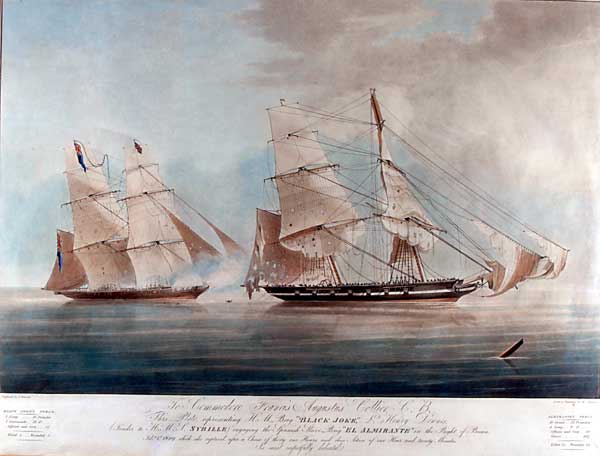
Indeed, the expenditure was so large that the money was borrowed and the final payments on the debt were not made until 2015. When in 2015 a tweet from the British Treasury revealed this surprising fact, there was a paroxysm of outrage as if slaveholders were still being paid off. I see the compensation in much more positive terms.
Of course, in an ideal world, compensation would have been paid to the slaves, not the slaveowners. Every man has a property in his own person and it was the slaves who had had their property stolen. In an ideal world, however, slavery would never have happened. Thus, the question the British abolitionists faced is not what happens in an ideal world but how do we get from where we are to a better world? Compensating the slaveowners was the only practical and peaceful way to get to a better world. As the great abolitionist William Wilberforce said on his deathbed “Thank God that I should have lived to witness a day in which England is willing to give twenty millions sterling for the abolition of slavery!”
The 1833 Slavery Abolition Act was preceded by the 1807 Slave Trade Act which had banned trade in slaves. In an excellent new paper, The long campaign: Britain’s fight to end the slave trade, economist historians Yi Jie Gwee and Hui Ren Tan assemble new archival data to assess how the Royal Navy’s anti slave-trade patrols expanded over time, how effective they were at curtailing the trade, the influence of supply-side enforcement versus demand-side changes on ending the trade, and why Britain persisted with this costly campaign.
Britain’s naval suppression campaign began on a modest scale but the campaign grew in strength throughout the 19th century, peaking in the late 1840s to early 1850s when over 14% of the entire Royal Navy fleet was deployed to anti-slavery patrols. The British patrols captured some 1,600 ships and freed some 150,000 people destined for slavery but they were at best only modestly successful at reducing the slave trade. The big impact came when Brazil, the largest remaining market for enslaved labor (by the mid-19th century, nearly 80% of trans-Atlantic slave voyages sailed under Brazilian or Portuguese flags), enacted its anti slave-trade law in 1850. Britain’s campaign was not without influence on the demand side however as passage of the Aberdeen Act in 1845 allowed the Royal Navy to seize Brazilian slave ships and that put pressure on Brazil and helped spur the 1850 law.
The suppression patrols were expensive (consuming ships, men, and funds), and Britain derived no direct economic benefit from them. Yet, even during the Napoleonic Wars, the Opium Wars, and the Crimean War, the Royal Navy continued to station ships, even high-tech steam ships, off West Africa to catch slavers. Due to the expense, the patrols were controversial and there were attempts to end them. Gwee and Tan look at the votes on ending the patrols and find that ideology was the dominant factor explaining support for the patrols, that is a principled opposition to the slave trade and a belief in the moral cause of abolition kept Britain in the war against slavery even at considerable expense.
Ordinarily, I teach politics without romance and look for interest as an explanation of political action and while I don’t doubt that doing good and doing well were correlated, even during abolition, I also agree with Gwee and Tan that the British war on slavery was primarily driven by ideology and moral principle as both the compensation plan and the support of the anti-slavery patrols attest.
British taxpayers shouldered an enormous military and financial burden to eliminate slavery, reflecting a generosity of spirit and a sincere attempt to address a moral wrong—an act of atonement that stands as one of the most unusual and significant in history.
Patrick Collison on the Irish Enlightenment
Most of all, the Irish Enlightenment seems to me an instance of small group theory. I’m fond of the thought that between great man and structuralist theories of history there lies an intermediate position: the small group, a colocated cauldron for iconoclastic thinking, can as a collective pioneer a novel direction. The romantics in Jena, the founders of Silicon Valley, the musicians behind punk. Unsurprisingly, the early Irish thinkers are closely connected. Swift and Berkeley attended the same school and were good friends. Hutcheson and Berkeley debated publicly, while Burke’s work is clearly downstream of Hutcheson’s.
And this:
How should we view the movement as a whole? Well, the timing is important: Cantillon published his Essai in 1755, Swift Drapier’s Letters in 1724, and Berkeley The Querist in 1735. It seems to me that, before 1750, the Irish thinkers have a strong claim to leading the world in the field of economics and to having collectively sketched out much of the core of the field in broadly correct terms. In Petty you have economic statistics; in Cantillon you have risk, market pricing, and much else; in Berkeley, you have a theory of national banking plus development economics; in Swift you have proto-monetarism. The claim is not that they figured everything out or were right on all points, but which other school or group could you rank ahead of them? Smith published Wealth of Nations in 1776 and The French physiocrats, who were very important, came later: Quesnay’s first piece wasn’t published until 1756.
Do read the whole short essay.