Category: History
The pooling equilibrium
During the Nazi occupation of Paris:
Germans spent a good deal of their free time in the bathhouses and swimming pools of Paris for the same reason: “In a swimsuit, no one could tell the difference between a German and a Frenchman.”
That is from the new and excellent When Paris Went Dark: The City of Light Under German Occupation, 1940-1944, by Ronald C. Rosbottom.
More women are among the top earners
Claudia Sahm has given us the link (pdf) for Guvenen, Kaplan, and Song, David Wessel the summary. The paper abstract is this:
We analyze changes in the gender structure at the top of the earnings distribution in the United States over the last 30 years using a 10% sample of individual earnings histories from the Social Security Administration. Despite making large inroads, females still constitute a small proportion of the top percentiles: the glass ceiling, albeit a thinner one, remains. We measure the contribution of changes in labor force participation, changes in the persistence of top earnings, and changes in industry and age composition to the change in the gender composition of top earners. A large proportion of the increased share of females among top earners is accounted for by the mending of, what we refer to as, the paper floor — the phenomenon whereby female top earners were much more likely than male top earners to drop out of the top percentiles. We also provide new evidence at the top of the earnings distribution for both genders: the rising share of top earnings accruing to workers in the Finance and Insurance industry, the relative transitory status of top earners, the emergence of top earnings gender gaps over the life cycle, and gender di erences among lifetime top.
David pulls this out:
A trio of economists, wielding big data from Social Security’s records, says that in 1981-85, women constituted just 1.9% of the top 0.1% of earners (based on average earnings for those years) and 5.2% of the top 1%.
But a quarter-century later, in 2008-12, women were 10.5% of the top 0.1% and 27.5% of the top 1%.
How prominent are European renewables?
Deconstruction of the EU’s actual greenness must start by separating old renewables from new renewables — an essential task because in most countries the old renewables still provide the largest combined contribution in the green category. Readers of European news might be forgiven if they thought that wind turbines and PV panels, both heavily promoted and subsidized by many governments, lead the charge toward the continent’s renewable future. Actually, “solid biofuels” continue to be by far the largest category. In plain English, solid biofuels are wood, the oldest of fuels, be it trunks directly harvested for heat and electricity generation and burned as chips, or large amounts of wood-processing waste — a category particularly abundant in the EU’s two Nordic members with large forestry sectors. In 2012, 80 percent of Finland’s and 52 percent of Sweden’s renewable energy came from wood, and the average for EU-28 was 47 percent; even for Germany, the most aggressive developer of wind and solar, it was about 36 percent.
Burning logging and wood-processing wastes make sense; importing wood chips from overseas in order to meet green quotas does not. In 2013, the EU was burning more than 6 million tons of imported wood pellets. According to Forests and the European Union Resource Network, if all the EU states were to meet their 2020 green quotas, some of them would have to burn 50-100 percent more wood than they did in 2010. Imports now come mostly from North American and Russian forests, but Brazil is considered as the best source for future imports.
The irrationality of wood-based electricity generation is perhaps best illustrated by the conversion of Britain’s largest, originally coal-fired station to burning wood chips: initially they were to come from Brazil, but eventually more than 6 million tons a year will come from the swamp forests of North Carolina and tree plantations in Georgia. And wood-burning electricity generation would not be carbon-neutral even if all the trees cut down for chips were promptly replanted and if all of them regrew quickly and completely: more trees would have to be planted in order to offset carbon released by fossil fuels used in harvesting, processing, and intercontinental transportation of imported wood.
That is from Vaclav Smil, there is more here.
Why so few Venice-like cities?
So asks Sam Wilson on Twitter. You can parse this question a few different ways, but I take it to be about location theory and, indirectly, topology. That is, why are there so few cities with multiple water connections between different independent nodes?
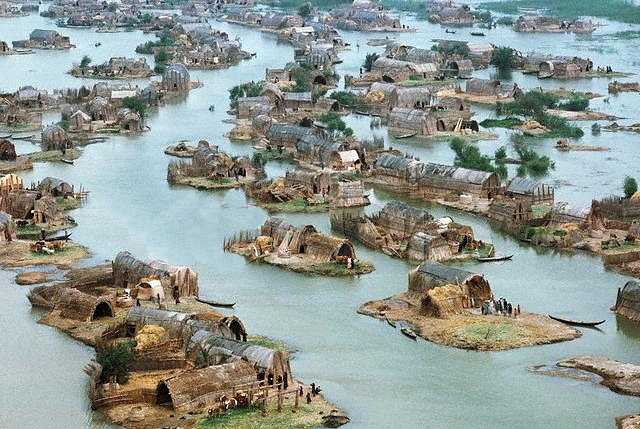
First we might check the historical premise. Stockholm used to be called “Venice of the North,” a variety of Dutch cities are based on canals, check out the (now largely defunct) Marsh Arabs from southern Iraq, plus a variety of arrangements in southeast Asia over the centuries, such as kelong, or the Pang uk of Hong Kong. There is a long history of stilt houses on water, including but not restricted to Chiloe, Chile and Nipa huts in the Philippines, some of which are designed for wet areas.
But I digress.
In any case, many cities seem to have a much smaller number of nodes connecting to the water. Check out Duluth, Minnesota. There is a dominant port, with most local connections to that port running overland rather than by water. And if a goods shipment is headed into Duluth, you pretty much know where it will arrive. The same is true for Rotterdam, as no one is angling to reach those inner, smaller canals of Dordrecht with their bananas.
The greater the anonymity of exchange, and the greater the distance involved, the stronger is the role of a formal port as a centralized supplier of trust and also buyer-seller coordination. That will imply a small number of water nodes, all the more so as globalization and specialization proceed.
But if you are a Marsh Arab wishing to trade some rice for some coriander with your neighbor, and the next day lend a sowing needle in return for some gossip, to a different neighbor, such idiosyncratic bilateral yet multiple exchange nodes and networks may work pretty well. You can think of multiple node cities as doing a great deal to enable non-regular, non-standardized barter, but that becomes less valuable with economic growth.
A related approach is to ask when it is more efficient to settle nearly contiguous islands, as opposed to dry land next to water. In earlier times non-monopolized access to fish, trade, and water transport were main reasons, plus Malthusian conditions elsewhere, such as in the resource-sparse, low-yield Veneto. Venice was settled long before a mix of accident and leadership skill led to it becoming a primary conduit between East and West and thus a wealthy and powerful commercial republic.
For a variety of propositions about monetary economics, there are corresponding propositions about topology and location theory, the trick is to see them.
*Trillion Dollar Economists*
That is the new book by Robert E. Litan and it is the single best attempt to answer the question of what good economists have done the world (I am also a big fan of Alex’s earlier edited volume, Entrepreneurial Economics on this topic, the Litan is more current). The subtitle is How Economists and their Ideas have Transformed Business.
Every chapter is clear and convincing, and the topics include optimization, regression, Moneyball, experimental economics, auctions, consulting, matchmaking (romantic and otherwise), finance, deregulation, the telecommunications revolution, Hal Varian at Google, prediction markets, and much more.
Definitely recommended.
*Philosophy Between the Lines*
This is the new and fantastic book by Arthur M. Melzer and the subtitle is The Lost History of Esoteric Writing. It is the best book I know on esoteric writing and its history and furthermore it is clear and to the point! (I think)
Melzer starts his chapter eight with this quotation from John Toland’s eighteenth century Pantheisticon:
[Esotericism is] practiced not by the Ancients alone; for to declare the Truth, it is more in Use among the Moderns.
Here is another bit from the book:
To begin with, we need an author who, in his interpretations, is willing to follow the very un-Straussian injunction — often found on mathematics exams — “show all work.” We need to see, once or twice, how the sausage is made. The best writing for this purpose that I am familiar with comes from an appropriately un-Straussian source: Stanley Fish. His “Georgics of the Mind: The Experience of Bacon’s Essays” is a brilliant and nuanced exercise in textual analysis that openly displays, at every stage of Fish’s encounter with the text, what he thinks and why he thinks it.
…Another excellent and highly communicative reader…is Robert Connor. His Thucydides is a very sensitive reading of Thucydides’s great history, a reading openly arrived at and clearly conveyed. In conjunction with this, one should also read Clifford Orwin’s superb The Humanity of Thucydides.
Recommended.
Might world population actually just keep on growing?
The excellent Kevin Lewis points us to a new paper in Science by Patrick Gerland, et.al.:
The United Nations recently released population projections based on data until 2012 and a Bayesian probabilistic methodology. Analysis of these data reveals that, contrary to previous literature, world population is unlikely to stop growing this century. There is an 80% probability that world population, now 7.2 billion, will increase to between 9.6 and 12.3 billion in 2100. This uncertainty is much smaller than the range from the traditional UN high and low variants. Much of the increase is expected to happen in Africa, in part due to higher fertility and a recent slowdown in the pace of fertility decline. Also, the ratio of working age people to older people is likely to decline substantially in all countries, even those that currently have young populations.
The paper is here, gated for some of you. A variety of summaries and forms of coverage can be found here. That is good news for those who buy into Julian Simon, bad news for those worried about environmental sustainability.
The agricultural productivity gap
That is the recently published (QJE) paper by Douglas Gollin, David Lagakos, and Michael E. Waugh, the abstract is here:
According to national accounts data, value added per worker is much higher in the nonagricultural sector than in agriculture in the typical country, particularly in developing countries. Taken at face value, this “agricultural productivity gap” suggests that labor is greatly misallocated across sectors. In this article, we draw on new micro evidence to ask to what extent the gap is still present when better measures of sector labor inputs and value added are taken into consideration. We find that even after considering sector differences in hours worked and human capital per worker, as well as alternative measures of sector output constructed from household survey data, a puzzlingly large gap remains.
There are ungated copies here.
I believe there is something “funny” about agriculture. Productivity convergence is also slowest in that sector, especially compared to manufactures. I see a few possible factors at work:
1. Status quo bias keeps a lot of workers living in rural areas and employed in agriculture, lowering productivity in that sector and also hindering the transfer of new ideas and technologies. Wages stay low and approaches remain hidebound and old-fashioned.
2. The influence of “non-rational” culture — in the Weberian sense — is usually stronger in rural and agricultural areas.
4. Liquidity constraints limit movement into urban areas.
5. Fear of loss of status and local friendships also limit the movement into urban areas and prevent an equalization of returns as defined in terms of pecuniary variables only.
Or put agriculture aside, and let’s pose the same question about wage equalization in Puerto Rico and the mainland United States, given that free migration is allowed and wages in the U.S. are considerably higher. In a lot of different settings, factor price equalization isn’t as strong as you might think. Maybe this is just showing that agriculture is in fact a remarkably human activity.
Creative ambiguity, Scottish independence, and sudden death
Many political unions subsist on creative ambiguity. That is, if the right question were posed, and the citizenry forced to answer it definitely, political order might spin out of control.
Canada, Belgium, and indeed the entire European Union seem to be organized on this basis. It’s not quite that everyone thinks they are getting their way, but rather explicit concessions are not demanded for each loss of control embodied in the broader system. Certain rights are held in reserve, with the expectation that they probably will not be exercised, but they can nonetheless influence the final bargaining equilibrium.
Most international treaties rely on some degree of creative ambiguity, as do most central banks, with their semi-promises of bailouts but “not too much not too certain you know” as the default. You might like the mandated outcome (or not), but I doubt if it would improve political discourse in the United States to have an explicit thumbs up vs. thumbs down referendum on abortion.
Many partnerships and marriages rely on creative ambiguity too. Should the Beatles have forced Lennon and McCartney to specify who had the final say over each cut? That probably would have led to a split in 1968 and there would be no Abbey Road. Must parties to a marriage specify the entire division of chores and responsibilities in advance?
We find the same in many academic departments. Things can be going along just fine, but once the department has to write out an explicit plan for future growth and the allocation of slots across different fields or methods, all hell breaks loose.
Question posers and agenda setters have great power.
All praises of democracy must be embedded in a broader understanding that a) formal questions can be destructive, and b) we cannot be allowed to pose questions without limit, at least not questions which require explicit, publicly verifiable, and commonly observed answers.
Once a question is posed very explicitly, and in a manner which requires a clear answer, it is hard to take it off the table. There is thus an option value to holding these questions in reserve, which means that the expected return from the question has to be pretty high to justify changing the agenda in a hard-to-revoke manner.
I am thus not impressed by claims that a “yes” vote for Scottish independence would represent “the democratic will of the people.” It might just be a question which should not be asked in such a blatant form.
This article, by the way, argues quite well that the current independence referendum is not really democratic at all. Who gets to vote, and who not, is quite arbitrary. Maybe they first should have held a referendum on that?
Chitmahals
I had not known of these:
The Indo-Bangladesh enclaves, also known as the chitmahals (Bengali: ছিটমহল chitmôhol), sometimes called pasha enclaves, are the enclaves along the Bangladesh–India border, in Bangladesh and the Indian state of West Bengal.
There are 106 Indian enclaves and 92 Bangladeshi enclaves. Inside the main part of Bangladesh, 102 of these are first-order Indian enclaves, while inside the main part of India, 71 of these are Bangladeshi first-order enclaves. Further inside these enclaves are an additional 24 second order- or counter-enclaves (21 Bangladeshi, 3 Indian) and one Indian counter-counter-enclave, called Dahala Khagrabari #51. They have an estimated combined population between 50,000 and 100,000.
In September 2011, the Prime Ministers of the two countries (Manmohan Singh of India and Sheikh Hasina of Bangladesh) signed an accord on border demarcation and exchange of adversely held enclaves; however, the Indian parliament has yet to ratify it. Under this intended agreement, the enclave residents could continue to reside at their present location or move to the country of their choice.
Here is the Wikipedia entry. It now seems the ruling BJP party seems to want to take that 2011 agreement back.
Alastair Bonnett, in his new and excellent Unruly Places: Lost Spaces, Secret Cities, and other Inscrutable Geographies, notes that these enclaves are usually not supplied with public goods. Furthermore:
In order to leave these tiny enclaves, the inhabitants have to obtain a visa to travel through the foreign territory that surrounds them. But in order to obtain a visa they have to leave their enclave, since visas can only be obtained in cities many miles away.
And:
The Indian Enclave Refugees’ Association has been formed to lobby for the right to “return” to India.
Many of them are denied the right to settle in what is ostensibly their home country, namely India.
The Fed on 9/11
Daily Kos has an excellent, long-read from Arliss Bunny on the FED’s actions around 9/11 to keep the financial system afloat:
[Roger] Ferguson, considered a deliberative and thoughtful man by his staff, settled into his office and turned on his television to keep track of the markets. When the second plane hit the World Trade Center no one had to tell Ferguson, he knew the country was under attack and he already knew that the attack was aimed at the financial backbone of the world, lower Manhattan. Ferguson declared an emergency and all over the Fed stunned staff found assurance in going through emergency procedures for which they had prepared. The Joint Y2K Committee Ferguson had so recently headed proved to be a windfall of emergency planning and the entire Fed system referred back to those decisions and the associated training throughout the 9-11 crisis. By the time employees could all hear the muffled thump coming from the direction of the Pentagon and smoke could be seen out the windows the staff had secured themselves and the premises and they had started to organize their war room. The President, George W. Bush, was still reading a children’s book.
At 9:25AM ET the Federal Aviation Administration ordered all planes grounded.
Even as all of Washington dithered between evacuating or sheltering-in-place fearing the rumored fourth plane, Ferguson was already worrying about the next disaster, the crash of the entire US financial system. Within forty-one minutes of the second plane hitting the World Trade Center Ferguson issued as simple clear statement, via Fedwire, to all member banks and institutions assuring them that the federal fund transfer system was “fully operational” and that Federal Reserve Banks would “stay open until an orderly closing could be achieved.” In other words, we are here and we are fully functional. And that was just the first 41 minutes. Alan Greenspan was still on a plane with no knowledge of events and the President was just getting to Air Force One.
Later she discusses how in the days following the crash the Fed came up with extraordinary ways of dealing with transportation issues. In Chicago, for example, armored truck carriers refused to deliver cash to downtown banks because of fears that the Sears Tower was a target so Fed employees, she implies (naturally they don’t want to talk about this very much) delivered millions of dollars in cash in their own cars.
Read the whole thing.
Does economics imply a narrowing gender gap?
In my latest New York Times column for The Upshot, I look at some evidence on the gender gap. Here is the bad news:
In one set of these experiments, called the dictator game, women were found to be more generous than men. Players were given $10 and allowed but not required to hand out some of it to a hidden and anonymous partner. Women, on average, gave away $1.61 of the $10, whereas men gave away only 82 cents.
In another test, called the ultimatum game, one player received $10 and then decided how much of it to offer to a partner. (Let’s say the first player suggests, “$8 for me, $2 for you.” If the respondent accepts the offer, that’s what each gets. If the respondent is offended by the unequal division or dislikes it for any other reason, he or she may refuse, and then no one gets anything.)
The depressing news was this: Both men and women made lower offers, on average, when the responder was female. Male proposers offered an average of $4.73 to male respondents, but only $4.43 to women. More painful yet was the behavior of female proposers, who, on average, offered $5.13 to men but only $4.31 to women. It seems that women were seen as softies who were willing to settle for less — and the discrimination was worse coming from the women themselves.
I am nonetheless optimistic about longer-term trends, and here is one specific example I give:
As a former chess player, I am struck by the growing achievements of women in this great game — one in which men were once said to have an overwhelming intrinsic advantage. (Among the unproven contentions was that men were better at pattern recognition.) Although women were never barred from touching the chess pieces, strong female players were few in number.
These days, many more women play very well, and the gap between the top men and women in the game is narrowing. The main driver of the change appears to be that more and more women are playing chess, creating a cycle of positive reinforcement that encourages ever more women to excel. We’ve seen a similar dynamic in the workplace, as more women have made great strides in the areas of law, medicine and academia. And this process may spread to other sectors of the economy as well, such as technology industries.
Do read the whole thing.
*The Shifts and the Shocks*
That is by Martin Wolf and the subtitle is What We’ve Learned — And Still Have to Learn — From the Financial Crisis. You can buy it here.
File under Arrived in my pile.
Does natural resource wealth imply technological stagnation?
Peter Thiel tells us:
Look at the Forbes list of the 92 people who are worth ten billion dollars or more in 2012. Where do they make money? 11 of them made it in technology, and all 11 were in computers. You’ve heard of all of them: It’s Bill Gates, it’s Larry Ellison, Jeff Bezos, Mark Zuckerberg, on and on. There are 25 people who made it in mining natural resources. You probably haven’t heard their names. And these are basically cases of technological failure, because commodities are inelastic goods, and farmers make a fortune when there’s a famine. People will pay way more for food if there’s not enough. 25 people in the last 40 years made their fortunes because of the lack of innovation; 11 people made them because of innovation.
I also liked this bit:
One of the smartest investors in the world is considered to be Warren Buffett. His single biggest investment is in the railroad industry, which I think is a bet against technological progress, both in transportation and energy. Most of what gets transported on railroads is coal, and Buffett is essentially betting that after the 21st century, we’ll look more like the 19th rather than the 20th century. We’ll go back to rail, and back to coal; we’re going to run out of oil, and clean-tech is going to fail.
This very useful post collates and presents all of Peter’s evidence for his view that modern technology has been stagnating. It is both “interesting throughout” and “self-recommending.” It is from this blog by Dan Wang.
I very much liked Peter’s new book, Zero to One: Notes on Start-Ups, or How to Build the Future.
dyfalu
In Welsh poetry, dyfalu is the piling on of comparisons, definition through conceit. The word also means “to guess” in Welsh, and many poems of dyfalu have an element of guesswork, a fanciful and riddling dimension. “The art of dyfalu, meaning “to describe” or “to deride,” rests in the intricate development of a series of images and extended metaphors which either celebrate or castigate a person, animal, or object,” the encyclopedia of Celtic Culture explains. Dafydd ap Gwilym’s poems to the mist and the wind are classic fourteenth-century examples.
That is from Edward Hirsch, A Poet’s Glossary, which I am quite enjoying. There is interesting material on every page and it is written with passion. A hendiatris is a “figure of speech in which three words are employed to express an idea, as in Thomas Jefferson’s tripartite motto for the Declaration of Independence: “Life, liberty, and the pursuit of happiness.”” When there are only two words so employed, it is of course a hendiadys.