Category: Philosophy
Economics and mental health care
Jacob, a loyal MR reader, writes to me:
I am a research assistant involved in an evaluation of the quality of mental health care. It turns out that much of “quality” from a clinician's perspective involves coercing/convincing/luring patients into treatment – patients should show up quickly (“initiation”) and repeatedly (“engagement”) and for a really long time (“continuation-phase treatment”). For example, health plans are graded on the proportion of depressed patients that they can keep on antidepressants for 6 months (link – pg 23).
So, how do you think about markets and individual-level-decision making among the severely mentally ill. On one hand, it feels inadequate to throw up ones hands and say everyone is the best ruler of themselves. But it also feels inadequate to defer fully to the experts. I’m sure this topic has been tackled elsewhere but a thoughtful analysis has evaded me so far.
A few points:
1. Here are some recent reported results about conceptualizing mental illness; I cannot vouch for them.
2. Here is an article about the fracturing of the concept of mental illness. Here is The Economist on the same topic.
3. The mentally ill have it tough in China.
4. Here is one story of rational economic man.
5. I disagree with Bryan Caplan's argument that mental illness is a false category; he is making an odd turn toward behaviorism. That the behavior can be reduced to preferences and constraints does not mean that is the best or only way of understanding the phenomenon (which is not just about behavior).
6. Here is the major paper on economics and mental health. Here is a collection on the same topic, by the same authors.
7. You won't find the answers to your questions in any of those places, or here. I do, in the meantime, hold two views. First, historically the concept has been used — indeed abused — to incorrectly rationalize a lot of forcible institutionalization. Second, it is not a meaningless concept, though fractured it may be.
Women and alcohol
Is there a better blog post title? Here is the abstract of a new paper, "Women or Wine, Monogamy and Alcohol":
Intriguingly, across the world the main social groups which practice polygyny do not consume alcohol. We investigate whether there is a correlation between alcohol consumption and polygynous/monogamous arrangements, both over time and across cultures. Historically, we find a correlation between the shift from polygyny to monogamy and the growth of alcohol consumption. Cross-culturally we also find that monogamous societies consume more alcohol than polygynous societies in the preindustrial world. We provide a series of possible explanations to explain the positive correlation between monogamy and alcohol consumption over time and across societies.
That's by Mara Squicciarini and Jo Swinnen.
China sentence of the day
When my turn to talk about American politics came, and I tried to explain the Tea Party movement’s goal of “getting government off our backs,” I was met with blank stares and ironic smiles.
The full article is here, possibly gated (TNR), by Mark Lilla. It concerns the high and rising popularity of Leo Strauss and Carl Schmitt in China. Another excerpt:
Schmitt was by far the most intellectually challenging anti-liberal statist of the twentieth century. His deepest objections to liberalism were anthropological. Classical liberalism assumes the autonomy of self-sufficient individuals and treats conflict as a function of faulty social and institutional arrangements; rearrange those arrangements, and peace, prosperity, learning, and refinement will follow. Schmitt assumed the priority of conflict: Man is a political creature, in the sense that his most defining characteristic is the ability to distinguish friend and adversary. Classical liberalism sees society as having multiple, semi-autonomous spheres; Schmitt asserted the priority of the social whole (his ideal was the medieval Catholic Church) and considered the autonomy of the economy, say, or culture or religion, as a dangerous fiction…Schmitt saw sovereignty as the result of an arbitrary self-founding act by a leader, a party, a class, or a nation that simply declares “thus it shall be.” Classical liberalism had little to say about war and international affairs, leaving the impression that, if only human rights were respected and markets kept free, a morally universal and pacified world order would result. For Schmitt, this was liberalism’s greatest and most revealing intellectual abdication: If you have nothing to say about war, you have nothing to say about politics. There is, he wrote, “absolutely no liberal politics, only a liberal critique of politics.”
Seth Roberts offers a Chinese economics joke.
Google ngram: the word “liberty”
For the pointer I thank Kevin Edwards. The link here allows you to see the full graph. In contrast, here is "freedom."
Are bees more Bayesian?
It appears, therefore, that a swarm's scout bees do something sharply different from what humans do to reach a full agreement in a debate. Both bees and humans need a group's members to avoid stubbornly supporting their first view, but whereas we humans will usually (and sensibly) ive up on a position only after we have learned of a better one, the bees will stop supporting a position automatically. As is shown…after a shorter or longer time, each scout bee becomes silent and leaves the rest of the debate to a new set of bees. Figure 6.7 shows how this regular turnover in which scouts are dancing can help a swarm's scouts quickly reach an agreement…
In other words, the bee algorithms allow attrition (a time-honored process of improving the scientific community) to operate at an especially rapid pace.
That is from the fascinating book Honeybee Democracy, by Thomas D. Seeley. Here is the book's home page. Here is a good review of the book:
In the final chapter, Seeley suggests five lessons we could learn from bees.
†¢ Compose a decision-making group of individuals with shared interests. Here bees have a higher stake than us: all members of a colony are related (sisters) and nobody can survive without the group.
†¢ Minimise the leader's influence on the group. Here we humans have much to learn.
†¢ Seek diverse solutions to the problem. Humans realised only recently that diversity is good for a group.
†¢ Update the group's knowledge through debate. Here again, bees are superior to us, as each scout's "dances" become less effective with time, no matter how good a new site is, while stubbornness can lead humans to argue forever.
†¢ Use quorums to gain cohesion, accuracy and speed. Impressively, bees came up with this concept long before the Greeks.
As a departmental chair at Cornell University, Seeley says, he applies these principles at faculty meetings with great success.
Definitely recommended.
*The Bed of Procrustes*
The subtitle is Philosophical and Practical Aphorisms and the author is Nassim Taleb. Here are three of his aphorisms:
Your reputation is harmed the most by what you say to defend it.
Quite revealing of human preferences that more suicides come from shame or loss of financial and social status than medical diagnoses.
They will envy you for your success, for your wealth, for your intelligence, for your looks, for your status — but rarely for your wisdom.
Ideas Behind Their Time
We are all familiar with ideas said to be ahead of their time, Babbage’s analytical engine and da Vinci’s helicopter are classic examples. We are also familiar with ideas “of their time,” ideas that were “in the air” and thus were often simultaneously discovered such as the telephone, calculus, evolution, and color photography. What is less commented on is the third possibility, ideas that could have been discovered much earlier but which were not, ideas behind their time.
Experimental economics was an idea behind its time. Experimental economics could have been invented by Adam Smith, it could have been invented by Ricardo or Marshall or Samuelson but it wasn’t. Experimental economics didn’t takeoff until the 1960s when Vernon Smith picked it up and ran with it (Vernon was not the first experimental economist but he was early).
(Economics, and perhaps social science in general, seems behind its time compared say with political science.)
A lot of the papers in say experimental social psychology published today could have been written a thousand years ago so psychology is behind its time. More generally, random clinical trials are way behind their time. An alternative history in which Aristotle or one of his students extolled the virtue of randomization and testing does not seem impossible and yet it would have changed the world.
Technology can also be behind its time. View morphing (“bullet time”) could have been used much more frequently well before The Matrix in 1999 (you simply need multiple cameras from different angles triggered at the same time and then inserted into a film) but despite some historical precedents the innovation didn’t happen.
Ideas behind their time may be harder to discover than other ideas–“if this is so great why hasn’t it been done before”? is an attack on ideas behind their time that other innovations do not have to meet. Is this why social innovations are often behind their time?
What other ideas were behind their time? Are some types of ideas more likely to be behind their time than others? Why?
Addendum: See Jason Crawford on Why did it take so long to invent X?
An Irish-American disclaimer
In a footnote to his paper on Irish famines, Edward J. O'Boyle writes:
It is commonplace in economic research to assume that the investigator has removed all traces of personal values from his/her work. As Becker (1961, p.10) implies, that could be a serious error. For that reason, let me state at the outset that I am a first-generation Irish-American, holding dual citizenship in the United States and the Republic of Ireland. My mother and father both were born and raised in County Mayo — the poorest county in western Ireland where the toll in human lives lost during the Great Famine was staggering. I do not know how many of my own Irish ancestors suffered and died during the Great Famine. What I do know and acknowledge is that my selection of this topic clearly is related to that family background which also very likely influenced the way I have interpreted the evidence presented herein. I concede that someone else sifting through the evidence might come to different conclusions, but I know of no other way to proceed. Supportive comments by Hans Jensen and Peter Danner on earlier drafts are gratefully acknowledged, as are the suggestions made by the editor and an anonymous referee. Any remaining errors are entirely mine.
China subsidy of the day
China’s property bubble has a new casualty: the corpses of Shanghai. In spite of stacking bodies seven or eight deep in graves, the squeeze on space in the city of 20m people has prompted the government to support burials at sea, part of a “green funeral” movement that is challenging deep traditions of filial piety.
Sea burials are rising 10 per cent a year after an increase in municipal subsidies to Rmb400 ($60) per funeral, according to an official with Feisi Sea Burial Company in Shanghai’s “funeral street”, Xibaoxing Road.
Here is more.
Arnold Kling on the political spectrum
Here in the United States, one thing that strikes me about my most liberal friends is how conservative their thinking is at a personal level. For their own children, and in talking about specific other people [TC: especially in the blogosphere!], they passionately stress individual responsibility. It is only when discussing public policy that they favor collectivism. The tension between their personal views and their political opinions is fascinating to observe. I would not be surprised to find that my friends' attachment to liberal politics is tenuous, and that some major event could cause a rapid, widespread shift toward a more conservative position.
Here is more. I would make the related point that, in the economics profession, academic liberals are especially likely to believe in statistical discrimination: "Does he have a Ph.d. from Harvard or MIT?" On the right, Chicago's previous reputation as an outsider school blunts this tendency, plus there have been Arizona, VPI, and other off-beat centers of market-oriented thought.
Sentences to ponder
Well, “Mom”, if flying is a “privilege, not a right,” it’s because over the last century we have gradually accepted the proposition that anything the government tells us it can regulate, it can regulate.
Here is much more, courtesy of The Browser. And this:
Throughout my career – both as a prosecutor and as a defense attorney – I’ve observed a consistent inverse relationship: the more petty a government officer’s authority, the more that officer will feel a need to swagger and demand that you RESPECT HIS AUTHORITAH. Your average FBI agent might search your house based on a crappy perjured warrant, invade your attorney-client emails, and flush your life down the toilet by lying on the stand at your mail fraud trial. But he doesn’t feel a need to vogue and posture to prove anything in the process. He’s the FBI. But God above help you when you run into the guy with a badge from some obscure and puny government agency with a narrow fiefdom. He and his Napoleon syndrome have got something to prove. And he’s terrified that you’ll not take him very, very seriously. When I call FBI agents on behalf of my clients, they’re cool but professional and nonchalant. When I call a small agency – say, state Fish & Game, or one of the minor agency Inspector Generals – they’re hostile, belligerent, and so comically suspicious that you’d think I was asking for their permission to let my client smuggle heroin into the country in the anuses of handicapped Christian missionary orphans. They are infuriated, OUTRAGED, when a client asserts rights, when a client fails to genuflect and display unquestioning obedience. They are, in short, the TSA.
Megan says she is (partially) boycotting flying, but I am surprised by this decision. In relative terms it is the driving experience which has deteriorated, largely because of traffic congestion. Imagine what flying would be like if they were not allowed to charge you a proper price for the experience.
When it comes to airports, some high MU of money users will be better off as a result of TSA abuse; it will lower the price of flights. Personally, I'm happy to put up with the practices if it means less congestion in the airport security line.
I guess they really are for sanity
For the pointer I thank Thomas Acox and also Joshua Hall.
From the comments
I never really bought the "conservatives are fearful" argument; after all, the left is the one arguing for more economic protection.
I think a more useful distinction is that people want free-market competition in areas where they are strong, and protection and regulation in areas where they are weak. Conservatives want free competition in the economic sphere but moral protections in social interactions; liberals want protection from market forces but are happy to take their licks in status-seeking competitions.
In a state of nature, the highest-status people get away with much more bad behavior than low status folks. Therefore, strict social rules are essentially a progressive tax on status!
More on Arrow’s theorem
Dirk writes:
I vote that this post deserves a follow up post with more clarification. If anyone is against this please express your vote with inaction. Us laymen would like to understand this a little better. For the record, the reason I got on a tangent about the law of large numbers was that I watched Boudreaux's lecture and understood it in terms of 3 parties but kept thinking if there were 3000 parties it was unlikely that exactly 1000 would have preference A, 1000 preference B, and 1000 preference C. I guess I'm used to thinking in terms of run-off elections and not the sort in the example. That is why I couldn't grasp why things should "collapse" back to an island situation where n = 2 or 3.
Arnold Kling comments as well and not everyone is happy.
Return to the oft-neglected difference between intra-profile and inter-profile versions of the theorem. Most commentators and expositors have in mind an intra-profile version of the theorem. They set up an example of people and preferences and show how cycling or some other paradox of choice or voting is possible. Observers then wonder whether this cycling is likely as the number of people increases, or as preferences change, and indeed sometimes it is not, as Gordon Tullock pointed out long ago and as Dirk above wonders.
That's interesting stuff, but those fun and practical-sounding expositions are not Arrow's theorem as Arrow wrote it up. Think of Arrow's theorem as modal in nature: "Maybe there is no paradox with current preferences, but there exist possible preferences where everything goes screwy, under any decision rule satisfying a few criteria." Arrow showed that claim is related to something like: "if we apply a specified decision-making procedure across all possible preference configurations, consistent application means the same person gets her way each time."
That's called Arrovian dicatorship, but it does not have to be either harmful or unjust or not even necessarily undemocratic. It just means that one person — the same person — is always getting her first choice, across these modal worlds with differing preference configurations.
This more metaphysical and more originally Arrovian version of the theorem is perhaps why Arnold Kling finds it difficult to apply the theorem to practical problems. It is not about the likelihood or relevance of cycling (though it is a jumping-off point for those analyses). It is instead a deep result about the implications of consistency, combined with limited information about the value of ordinally ranked outcomes.
The intra-profile versions are still important. For intra-profile versions of Arrow, start with Kemp and Ng (1976). Here is a good summary article on that literature. Samuelson, by the way, remained somewhat recalcitrant when it came to the theorem.
Allowing in even limited amounts of interpersonal comparability defuses the paradox, as shown by Kevin Roberts (ReStud, 1980) and Amartya Sen (see the essays in Choice, Measurement, and Welfare). That said, interpersonability can lead to other paradoxes, as shown by Derek Parfit and his Repugnant Conclusion. Paradoxes everywhere, and you must choose which ones to live with.
I take the practical upshot of Arrow's interprofile theorem to be this: when you make a judgment, it is our assessment of the interpersonal comparisons (or intersport importance comparisons, for scoring a decathlon) which is doing all the work. Be very careful with those.
Neither Tullock nor Samuelson was happy with Arrow's theorem, especially when it came to practical implications, so it is fine if you wish to add your name to that list. But I also think they each missed Arrow's point a bit and that of the major economists of his time he was probably the deepest thinker, albeit not the best practical thinker.
Popularizing Arrow’s Theorem II
Arnold Kling is not satisfied with Tyler’s popularization of Arrow’s impossibility theorem asking (in the comments) “what exactly did Arrow show was impossible?” Here is my attempt.
- Andy walks into an ice-cream shop and seeing that they have chocolate, strawberry and vanilla, orders chocolate. Before the vendor has a chance to scoop the ice cream she says, “Sorry, we are out of strawberry.” “In that case,” Andy says, “I’ll have vanilla.” Strange right? Yet however strange we might think this behavior is for Andy it is routine when groups make choices (just substitute Bush, Nader, and Gore for chocolate, strawberry and vanilla.) (Failure of IIA.)
- Andy likes sprinkles on his ice cream. Andy walks into the ice-cream shop and seeing that they have chocolate, strawberry and vanilla chooses chocolate. Before the vendor has a chance to scoop the ice cream she says “Today, chocolate comes with free sprinkles.” “In that case,” Andy says, “I’ll have vanilla.” Strange right? Yet once again it is easy to show that improving an option can result in a group rejecting that option (n.b. no psychology is involved in this result). (Failure of positive association.)
- Andy walks into a supermarket and is offered apples or bananas and chooses apples. Andy is then offered bananas or coconuts and chooses bananas. Andy is then offered apples or coconuts and Andy chooses coconuts. (A>B, B>C but C>A). Strange right? Not only is this strange, if Andy has preferences like this the supermarket can take all his money with a money pump. Once again, however, it is quite possible for groups to cycle in just this way even if every individual in the group has perfectly normal (transitive) preferences. (Failure of transitivity).
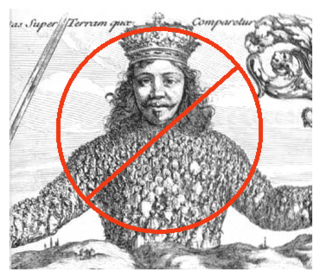 Paradoxes such as the above have been known for centuries. What Arrow showed is that no decision mechanism can eliminate all of these types of paradoxes. (n.b. Arrow’s theorem actually applies to any mechanism for aggregating any rankings not just voting and not just preferences.) We can tamp down some paradoxes but only at the expense of creating others (or eliminating democracy altogether.)
More generally, what Arrow showed is that group choice (aggregation) is not like individual choice.
Suppose that a person is rational and that we observe their choices. After some time we will come to understand their choices in terms of their underlying preferences (assume stability–this is a thought experiment). We will be able to say, “Ah, I see what this person wants. I understand now why they are choosing in the way that they do. If I were them, I would choose in the same way.”
Arrow showed that when a group chooses, there are no underlying preferences to uncover–not even in theory. In one sense, the theorem is trivial. We know or should always have known that a group doesn’t have preferences anymore than a group smiles. What Arrow showed, however, is that without invoking special cases we can’t even rationalize group choices as if leviathan had preferences. Put differently, the only leviathan that rationalizes group choice has the preferences of a madman.