Category: Uncategorized
Wednesday assorted links
A Burning
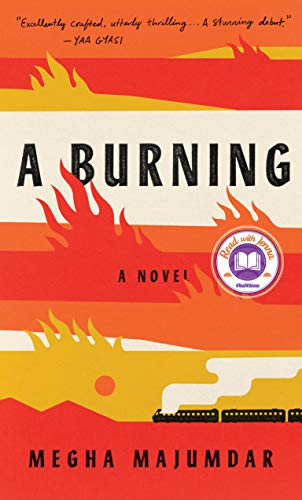 A Burning, the debut novel by Megha Majumdar, received a very unusual stellar review by James Wood in the New Yorker:
Majumdar marshals a much smaller cast of speakers than Faulkner did, and her spare plot moves with arrowlike determination. It begins with a crime, continues with a false charge and imprisonment, and ends with a trial. The book has some of the elements of a thriller or a police procedural, but one shouldn’t mistake its extraordinary directness and openness to life with the formulaic accelerations of genre: Majumdar’s novel is compelling, yet its compulsions have to do with an immersive present rather than with a skidding sequence. Her characters start telling us about their lives, and those lives are suddenly palpable, vital, voiced. I can’t remember when I last read a novel that so quickly dismantled the ordinary skepticism that attends the reading of made-up stories. Early Naipaul comes to mind as a precursor, and perhaps Akhil Sharma’s stupendously vivid novel “Family Life.” Sharma has spoken of how he avoided using “sticky” words—words involving touch and taste and smell—so as to enable a natural velocity; Majumdar finds her own way of achieving the effect.
“A Burning” is about the fateful interactions of three principal characters, who take turns sharing their narratives. At its center is a young Muslim woman named Jivan, who lives in the slums of Kolkata, and who witnesses a terrorist incident that tips her life into turmoil. A halted train at a nearby station is firebombed, and the ensuing inferno kills more than a hundred people. At home, Jivan makes the mistake of posting a politically risky question on Facebook—“If the police didn’t help ordinary people like you and me, if the police watched them die, doesn’t that mean that the government is also a terrorist?”—which attracts official attention. The police come for her in the middle of the night.
…There are two people whose testimony could save Jivan, and much of the novel turns on their capacity and their willingness to offer it. One is an aspiring actress named Lovely, who also lives in the slum. Lovely—the name she took at eighteen—is a so-called hijra, a designation that affords intersex and transgender people a recognized status, but a perilously ambiguous and marginal one.
…The third protagonist, a physical-education teacher called PT Sir, knew Jivan when she was one of the “charity students” at S. D. Gosh Girls’ School.
I agree, A Burning is very good. I will add only two points. I wrote about the hijra of India when I was living in Mumbai and that post is well worth reading for background. Second, most of the reviews, especially the annoying NYTimes review by Parul Sehgal (compare Wood and Sehgal on Lovely’s voice, Wood is right and obviously so if you are not blinded by political correctness) focus on the Indian setting and contemporary Indian politics. That’s a natural, if superficial, vantage point. What impressed me more was the less obvious commentary on social media which is very relevant to the US. How does the pressure and potential of being seen by many others alter our choices? There are multiple mobs in A Burning; two of the mobs, one virtual, the other not, result in the brutal murders of innocent people, a third mob launches a star.
Cheer up
I know that quite a few of you are distressed about recent events, although perhaps you do not agree entirely which are the good and bad developments.
From my vantage point, both American politics and economics look much better than they did a month ago. To be sure that is relative but nonetheless this should be cheering you up. China and India have sought to deescalate their conflict. Most of Europe continues to reopen without a surge in cases, and American death rates still are falling. The advantages of police reform are much overstated, but still I think we will get something modestly better than the status quo.
The worst news, as far as I can tell, is how poorly Pakistan is doing against Covid-19, relative to some initial expectations. If that is what has got you down, by all means continue. But how many of you can say that?
Otherwise, probably your feelings are irrational, and thus you should not be so down.
Except about that of course.
What’s the smart way to use spare Covid testing capacity?
I have a question for you and/or your MR readers: what’s the smart way to use spare Covid testing capacity?
With the virus (currently) receding in many places fewer and fewer people are getting symptoms and seeking tests.
Even without a second wave in the next few months, we’ll need testing capacity again for the next flu season, when we’ll need to distinguish between flu patients and Covid patients.
How should we use spare testing capacity in the meantime? Increase random testing? Weekly tests for everyone in a single city? Weekly tests for everyone in particular economic sectors?
I would be grateful for your thoughts on this.
That is from O.L. My intuition (and I stress this is not a scientific answer in any way) is to test people who take elevators every day, to get a better sense of how risky elevators are. And then test systematically in other situations and professions to learn more about transmission mechanisms, for instance the subway when relevant, supermarket clerks, and so on. Test to generate better risk data. What do you all think?
Tuesday assorted links
1. Good photo of London Daunt Books (NYT). And article about bookshop reopenings in London.
2. Harald Uhlig restored as JPE editor.
3. Roland Fryer on the data (WSJ).
4. Scott Alexander deletes his blog.
Lots to talk about today.
*Porcelain: A History from the Heart of Europe*
By Suzanne Marchand, this a tale of commerce, creativity, mercantilism, nation-building, globalization, industrial organization, and much more. And this book actually delivers on all of those fronts. Short excerpt:
In accordance with mercantile practices, porcelain makers first sought to pay their bills by increasing sales abroad. The two markets most hotly pursued at midcentury were the Ottomans and the Russians, both big consumers of hot beverages but lacking functional tableware factories.
Yes it’s that kind of book. And this:
This focus on porcelain and material goods generally is not an approach familiar to most historians of Germany, who, for understandable reasons, typically feel obliged to treat more serious, often political, subjects.
Recommended, you can pre-order it here.
Correlates with Covid-19 death rates
We correlate county-level COVID-19 death rates with key variables using both linear regression and negative binomial mixed models, although we focus on linear regression models. We include four sets of variables: socio-economic variables, county-level health variables, modes of commuting, and climate and pollution patterns. Our analysis studies daily death rates from April 4, 2020 to May 27, 2020. We estimate correlation patterns both across states, as well as within states. For both models, we find higher shares of African American residents in the county are correlated with higher death rates. However, when we restrict ourselves to correlation patterns within a given state, the statistical significance of the correlation of death rates with the share of African Americans, while remaining positive, wanes. We find similar results for the share of elderly in the county. We find that higher amounts of commuting via public transportation, relative to telecommuting, is correlated with higher death rates. The correlation between driving into work, relative to telecommuting, and death rates is also positive across both models, but statistically significant only when we look across states and counties. We also find that a higher share of people not working, and thus not commuting either because they are elderly, children or unemployed, is correlated with higher death rates. Counties with higher home values, higher summer temperatures, and lower winter temperatures have higher death rates. Contrary to past work, we do not find a correlation between pollution and death rates. Also importantly, we do not find that death rates are correlated with obesity rates, ICU beds per capita, or poverty rates. Finally, our model that looks within states yields estimates of how a given state’s death rate compares to other states after controlling for the variables included in our model; this may be interpreted as a measure of how states are doing relative to others. We find that death rates in the Northeast are substantially higher compared to other states, even when we control for the four sets of variables above. Death rates are also statistically significantly higher in Michigan, Louisiana, Iowa, Indiana, and Colorado. California’s death rate is the lowest across all states.
That is from a new NBER working paper by Christopher R. Knittel and Bora Ozaltun.
Monday assorted links
1. “Autistic women are often the most socially intelligent of anyone, because we have to be.” (Times of London)
2. Let’s remove the Confederate memorials in Fairfax.
3. Can crows distinguish different human languages?
4. The Greece bailout was 43% of Greek gdp in 2011.
5. Out of sample alphas for market returns.
6. Markets in everything: Grateful Dead deodorant. And $280 an hour to see Las Vegas police cam footage.
The Tabarrok-Carvalho Discussion
The excellent Carlos Carvalho, Bayesian statistician at The University of Texas at Austin, and I discuss COVID including why government failure can provide an argument against free trade, why I thought COVID was going to be a problem early on, how more sex can be safer sex and more. Self-recommending.
What I’ve been reading
1. Jon Elster, France Before 1789: The Unraveling of an Absolutist Regime. A useful historical introduction to the period, but most notable for taking canons of good social science explanation seriously throughout each step of the analysis. For one thing, it helps you realize how few people do that, but at the same time you wonder how much restating events in terms of social science mechanisms actually helps historical explanation. A smart book and very well-informed book in any case.
2. Paul Preston, A People Betrayed: A History of Corruption, Political Incompetence and Social Division in Modern Spain. A highly detailed but also analytical account of how Spanish political economy became so screwed up. Runs from the 1830s up through the financial crisis, and focuses why Spain was backward in nation-building. Maybe too detailed for some but I believe there is no other book like it.
3. Henry M. Cowles, The Scientific Method: An Evolution of Thinking from Darwin to Dewey. Argue that the true scientific method did not develop until the mid-to late 19th century. A good book, although perhaps more for historians of ideas than students of science per se.
John Anthony McGuckin, The Eastern Orthodox Church: A New History is both a good introduction and deep enough for those well-read in this area.
There is also Paul Matzko, The Radio Right: How a Band of Broadcasters Took on the Federal Government and Built and Modern Conservative Movement. I don’t listen to (non-satellite) radio, but some of you should find this interesting.
Sunday assorted links
1. Unpacking current Covid trends.
2. Which foreigners has New Zealand let in and not let in?
4. Why contact tracing is not going well in New York City (NYT).
5. “Bill Pagel, 78, owns both of Bob Dylan’s childhood homes as well as his highchair. He explains it like this: “End-stage collecting is when you start collecting houses right before you’re committed.”” Tweet link here.
*Big Business*, paperback edition
To buy the book, here is the Amazon link. Here is the Barnes and Noble link.
Here is my podcast on the book with Daniel Peris. Here F.E. Guerra-Pujol has written a new review of the book.
It’s a Good Summer to Explore America at Random
That is the topic of my latest Bloomberg column, here is the premise:
With my summer trips abroad canceled, I decided to be resourceful about travel. Having lived in Northern Virginia for 30 years, I asked myself a simple question: Which local trip have I still not done?
Earlier in the summer I thought I might spend time in scenic Maine, but too many of my friends from the Northeast and mid-Atlantic seemed to be planning the same. I decided a more adventurous course of action would be to get in the car with my daughter Yana and spend a three-day weekend on the road.
The column is not easily excerpted, but here is one bit:
Lunch was in Morgantown, West Virginia, but rather than visit the university, we stopped for excellent Jamaican food with jerk chicken, oxtail and plantains — better than the equivalent in the D.C. area. A tip: If you’re ever looking for great food in obscure locales, don’t just google “best restaurants Morgantown WV,” as that will yield too many mainstream options. Pick a cuisine you don’t expect them to have, and Google something like “best Haitian restaurant Morgantown WV.” Whether a Haitian restaurant comes up (it didn’t), you’ll get a more interesting selection of “best” picks. In this case we learned that a town of 30,000 people has several Caribbean restaurants, highly rated ones at that.
Five states in one day (VA, WV, MD, PA, OH) was great fun. In my view, every excellent trip has one stop or locale at its emotional and narrative heart, and for this trip is was the Native American Earthworks in Marietta, southern Ohio.
Saturday assorted links
1. The zero dollar budget movie that topped the box office.
2. Fanta Traore at Fortune covers black economists. Good to see the recognition, but how about Virgil Storr (my colleague, recently promoted, thousands of citations)?
4. George Akerlof essay on the biases in economics.
5. Geoguessr, a new game, an automated version of the old Andrew Sullivan, “view out your window” where is this photo. And what the queen bees really are saying.
6. The success story of Nigerian-Americans.
7. “Median age of COVID-19 patients in Florida was 37 last week, compared to the 60s months ago.”
8. Are the ambidextrous less authoritarian? (speculative)
Get BARDA More Money!
The NYTimes headline is Coronavirus Attacks the Lungs. A Federal Agency Just Halted Funding for New Lung Treatments and they do try their best to make this a scandal:
When the coronavirus kills, it attacks the lungs, filling them with fluid and robbing the body of oxygen. In chest X-rays, clear lungs turn white, a sign of how dangerously sick patients are.
But earlier this month, the Biomedical Advanced Research and Development Authority, or BARDA, a federal health agency, abruptly notified companies and researchers that it was halting funding for treatments for this severe form of Covid-19, the disease caused by the virus.
The new policy highlights how staunchly the Trump administration has placed its bet on vaccines as the way to return American society and the economy to normal in a presidential election year. BARDA has pledged more than $2.2 billion in deals with five vaccine manufacturers for the coronavirus, compared with about $359 million toward potential Covid-19 treatments.
I think diverting funding from lung treatments to vaccines is the right thing to do. Note that we are not talking about reducing spending on patients. BARDA, as the name suggests, funds advanced research and development. Thus, the administration is diverting funding from advanced research and development for lung treatments to vaccines. What’s better a vaccine that prevents a lung treatment from ever being needed or a lung treatment? A billion dollars spent on vaccines looks a lot more productive right now than a billion dollars spent on investigating new lung treatments.
The real scandal is how little we are spending on advanced research for vaccines–$2.2 billion is a pittance, less than a day’s worth of economic loss caused by COVID. Given their limited budget, BARDA is making good investments. Congress, however, has not allocated enough money to BARDA, one of the few agencies that had the foresight to do the right things, such as investing in emergency vaccine capacity, even before the pandemic hit. Congress’s failure to fund BARDA is why the administration is scraping the bottom of the barrel to get them all the funding they can.
We should go big, really big, on vaccines. But when I talk with people in Congress, I tell them that a big plan is ideal but if we can’t do that then at least GET BARDA MORE MONEY!
Addendum: The fact that BARDA can’t get enough funding from Congress in a pandemic is a good example of why we need a Pandemic Trust Fund.