Assorted links
1. De Gustibus (disgusting).
2. Jeff Sommer on Thomas Sargent, and Stephen Williamson on same.
3. Are memoirs about your child always narcissistic and problematic?
4. Why Siri is a bigger deal than you think.
5. Arnold Kling has a very good blog post explaining the importance of the new book The Race Against the Machine.
Animal inventory cycle problems
Michael Lynch writes to me:
The prices tell the story. A baby chimpanzee can go for as much as $50,000 (£31,195) or $60,000 (£37434). An adult chimpanzee has no market value. Abandoned adult animals end up in sanctuaries. But in one of the paradoxes of the exotics world, some of the sanctuaries that rescue animals also breed animals to defray their expenses – thereby, arguably, making the problem of surplus adults even worse.
*Engineering the Financial Crisis*
This is an excellent conceptual book on the financial crisis, full of deep research and intellectual honesty. The authors, Jeffrey Friedman and Wladimir Kraus, are not in the usual loops of the economist elite, so I hope it is not ignored. They place central importance on the Basel capital regulations and mark-to-market accounting, complemented by a credit channel, in their narrative. Arnold Kling has much more on the book. You can buy the book here; anyone interested in the financial crisis should read it. The authors have some of the best arguments against the “moral hazard” interpretations of the crisis, preferring instead knowledge and calculation arguments. My main worry is about how much the Basel regulations mattered, given that many banks held more mortgage-backed securities than Basel regulations required.
Here is a blog post on their most controversial claim in the book.
Factor endowment theories of trade and investment
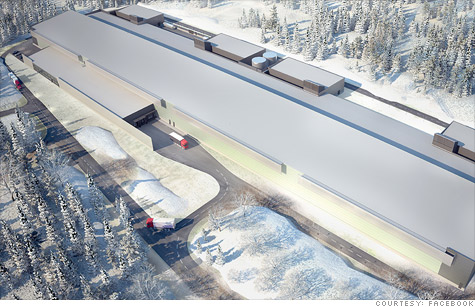
The northern Scandinavian landscape is dotted with fjords, lingonberries and, if you believe some locals, elves. But another sight is increasingly common on the Arctic horizon: data centers.
Drawn by the promise of lower electricity costs, a growing number of tech companies are harnessing the region’s abundant cold air to cool their servers, cutting expensive air-conditioning out of the equation.
Facebook, the latest tech company to take the polar plunge, announced this week that it will build a data center just south of the Arctic Circle in Lulea, Sweden, where the average low in January is 3 degrees Fahrenheit.
…There are “overwhelming financial advantages” to building in the far north, according to Rakesh Kumar, an analyst with Gartner. Utilizing free outside air can result in “tens of millions, if not hundreds of millions [of dollars], of savings per year” for each site, Kumar said.
The full story is here. For the pointer I thank Steve Silberman.
The update from Pompeii
Almost every word of this report reflects some of Italy’s broader problems:
A labour union on Thursday reported that a chunk of the wall from Domus of Diomede building on Via Consolare collapsed a day after European Commissioner Johannes Hahn announced that the European Union would give up to 105 million euros to protect and restore the fragile site UNESCO World Heritage site that was buried by volcanic ash around two thousand years ago.
The funds are part of one billion euros earmarked for cultural heritage projects, with particular emphasis on southern Italy, according to Italian minister for regional affairs Raffaele Fitto.
An similar collapse last week prompted Italian culture minister Giancarlo Galan to promise that he would make Pompeii his “the utmost priorty.”
He made almost identical remarks in March shortly after the state of Pompeii led to his predecessor’s resignation.
Only thirty percent of the buildings at the site are considered to be in good condition.
Addendum: Here is a report which doubts whether in fact another wall has collapsed.
Assorted links
1. Resolution of Fairfax legal case, hat tip Yana.
2. Resolution of New Hampshire legal case, or how to keep tenure.
3. Penelope Trunk Home School blog.
5. Can expectations be frustrated?, Interfluidity on NGDP targeting, and Scott Sumner’s response.
Paths out of The Great Stagnation
Thankfully, Thingiverse user Tom Lombardi invented a solution for this age old problem. Enter the Lucky Charms Sifter.
According to Lombardi, the humble-looking 3D printed cup removes over 90 percent of all the cereal, leaving only the marshmallowy goodness. All the user has to do is pour Lucky Charms into the cup and give it a good shake. The precision-printed holes are just large enough for the whole-grain hamster food to fall through, while still retaining the slightly larger marshmallows.
Here is more, hat tip goes to ModeledBehavior. And via Rob Nelson, here is 3-D printing for pet hermit crab shells.
That all said, 3-D printing is unlikely to end up being a transformative technology; transportation costs for what it can produce are already fairly low. The printers may in some longer run be cheaper than UPS, truck, and commercial rail, but that’s a moderate savings only, albeit a nice one.
The most likely paths out of TGS — by far — are artificial intelligence and natural gas supply (with some chance of E-Cat). Smart machines will be most successful in their least romantic, furthest from hard AI, most mundane forms, starting with Siri and Watson. Natural gas and other energy source developments will likely make North America the cheap energy power for much of the next fifty years; this may improve the quality of our foreign policy as a collateral benefit.
The revolution which Roger Kerr hath wrought
Robots are being used to milk a herd of cows in Canterbury and the farmer who owns them says they are much healthier.
Farmer and businessman Ryan Carr of Mayfield has four robots on his farm near Ashburton which allow the cows to decide when they want to be milked.
Mr Carr told Country Life that the robotic system also means cows can eat and move at their own pace.
He says that’s doing wonders for their health and they have a longer life expectancy.
Farm production has also improved and is 4% ahead of this time last year.
Mr Carr said each unit costs about $250,000.
Here is more, hat tip goes to Chris F. Masse. You may recall that New Zealand’s market-oriented economic revolution led to a deregulation of agriculture and the elimination of most farm subsidies, and as a result the sector became more innovative.
Chris also sends along this E-Cat update, it is not something which I am able to evaluate but in expected value terms worthy of more than zero reporting, via David Price here is more from Wired.
Alleged Moscow markets in everything
Yet even they have nothing on the Moscow chef who killed his father-in-law and then allegedly served him to customers at his restaurant. According to police, the 54-year-old chef at the unnamed restaurant, well-known for its chebureki, or big meat-filled pastries, killed his 82-year-old father-in-law during a drunken brawl. Police refused to confirm or deny a report by tabloid Life News that the chef then ran his father-in-law’s body through a meat grinder in order to fill his chebureki – and serve them to customers for three days before being caught and sent to a psychiatric institution.
Here is more, oddly the article is on a different topic altogether, namely dealing with the snow in Moscow. For the pointer I thank Chug Roberts.
Roger Kerr passes away
Here is the obituary, and here, this is very sad news for me. Roger had a huge influence on my life. I spent a good deal of time working for him and with him at the New Zealand Business Roundtable in Wellington and he was always up for a discussion and an argument. He seemed to have boundless energy, and he played a key role in making New Zealand a sounder and better country. A lot of my interest in economic policy comes from my time spent with Roger, most of all my interest in the institutional design of central banks but not just. Roger expected you to be ready to discuss anything, at the drop of a hat, and I consider my time with Roger a major influence on my blogging. He exposed me to the New Zealand classical liberal tradition and from that I saw a lot of deficiencies (and some strengths) of the North American traditions. Roger will be missed but we all know that his influence extended far.
Assorted links
1. How to give a speech, and arrange the giving of a speech, and much more.
This is one of the best “essays” I have read on any topic and it builds very nicely from apparently humble beginnings. For the pointer I thank someone on Twitter, my apologies for having lost track of whom.
Assorted links
1. Dolphins have non-instrumental curiosity and orangutans have cultural transmission.
2. Phone storage trucks, markets in everything, also endangered species kakapo vomit remains.
3. Peter Chang update, including a feature film? Domestic mobility is way down, but still not for him.
4. They made me buy the new John Fahey box.
5. Peter Thiel’s latest project: independent entrepreneurial scientists.
Were non-bank banks actually a good idea all along?
I’ve been wondering that for the last few days. These entities were capped and banned in the late 1980s but once upon a time Sears Roebuck and American Express offered full banking services and their financial arms grew at a rapid clip. They took deposits but did not make commercial loans, thereby skirting banking legislation at the time and, I believe, avoiding FDIC premiums.
The big debate today is how to get more capitalization for the banks, and we have such absurdities as Basel III, not bad in spirit but somehow wishing that a bunch of essentially insolvent institutions magically had another $700 billion or so. I say the way to recapitalize banks is to keep them well capitalized to begin with. Indeed, we just bought a new microwave at Sears the other night. These institutions have a lot of commercial capital on the line.
At the time non-bank banks were banned because many people feared — and I can see why –that the non-bank banks would take big risks, backed ultimately by taxpayer money. (The banks also didn’t like the “unfair competition” and indeed it was unfair but of course it would have been fair had the model been allowed to spread more widely, allow more of them or by allowing commercial affiliation more generally, even mixed with commercial lending.) Prescient, no? Well, sort of. In reality, it turned out that the non-non-bank banks (i.e., the banks) did that anyway. With all the financial instruments and risky loans around, it is so much an extra problem that Sears Roebuck might initiate an overly aggressive lawnmower marketing strategy? I don’t know.
I do see the potential downside to the non-bank bank model, namely that systemic risk can become bigger yet through the traditional commercial sector. Not every company is as safe as Sears and even Sears has not always been safe. Still, at a time when the radicals amongst us wish that banks could be capitalized at say forty percent, is this not a model worth looking at once again?
Here is a 1987 Cato Institute defense of non-bank banks. Here is further background. And you can trace Adam’s posts on the idea here.
Andrew D. Smith has a question
There are a lot of companies out there trying to help consumers reduce energy consumption, theoretically to save money AND the environment. The NYT had a long story on a smart thermostat company today: http://www.nytimes.com/2011/10/25/technology/at-nest-labs-ex-apple-leaders-remake-the-thermostat.html
Can you discuss whether this can possibly work? As I understand the power industry, such a high percentage of the costs are upfront (with nuclear plants in particular, but with carbon burning plants as well) and the marginal price of producing energy (up to plant capacity) is so low, that falling demand would mostly cause plants to cut prices until they were again operating at capacity.
So “saving” energy at the consumer level won’t really reduce total energy consumption or gas emission.
Is that right?
The 99% 98%
The Occupy Wall Street volunteer kitchen staff launched a “counter” revolution yesterday — because they’re angry about working 18-hour days to provide food for “professional homeless” people and ex-cons masquerading as protesters.
For three days beginning tomorrow, the cooks will serve only brown rice and other spartan grub instead of the usual menu of organic chicken and vegetables, spaghetti bolognese, and roasted beet and sheep’s-milk-cheese salad.
They will also provide directions to local soup kitchens for the vagrants, criminals and other freeloaders who have been descending on Zuccotti Park in increasing numbers every day.
This is from the NYPost so take it with a grain of salt but still there is a lesson to be learned beyond the chortle.