A simple model of Putin and the Ukraine crisis
I think the correct model here is “Putin has put down so many chips, he can’t walk away with nothing. He wants to wreck Ukraine (more than taking territory per se). He will do the minimum amount he can that leaves him with a strong probability of having wrecked Ukraine, and no more.”
That still leaves a broad range of possible outcomes, but at the moment that is my mental model for updating with new information.
Fishy Results on Ocean Acidification
The replication crisis isn’t just about social psychology. A meta-analysis of the effect of ocean acidification on fish behavior shows a big decline in effect size as the studies get larger and better.
Using a systematic review and meta-analysis of 91 studies empirically testing effects of ocean acidification on fish behavior, we provide quantitative evidence that the research to date on this topic is characterized by a decline effect, where large effects in initial studies have all but disappeared in subsequent studies over a decade. The decline effect in this field cannot be explained by 3 likely biological explanations, including increasing proportions of studies examining (1) cold-water species; (2) nonolfactory-associated behaviors; and (3) nonlarval life stages. Furthermore, the vast majority of studies with large effect sizes in this field tend to be characterized by low sample sizes, yet are published in high-impact journals and have a disproportionate influence on the field in terms of citations. We contend that ocean acidification has a negligible direct impact on fish behavior, and we advocate for improved approaches to minimize the potential for a decline effect in future avenues of research. [emphasis added, AT]
An underdiscussed biomedical problem?
Including for longevity research, and perhaps most of all for longevity devices:
Neural implants—devices that interact with the human nervous system, either on its periphery or in the brain—are part of a rapidly growing category of medicine that’s sometimes called electroceuticals. Some technologies are well established, like deep-brain stimulators that reduce tremors in people with Parkinson’s disease. But recent advances in neuroscience and digital technology have sparked a gold rush in brain tech, with the outsized investments epitomized by Elon Musk’s buzzy brain-implant company, Neuralink. Some companies talk of reversing depression, treating Alzheimer’s disease, restoring mobility, or even dangle the promise of superhuman cognition.
Not all these companies will succeed, and Los Angeles–based Second Sight provides a cautionary tale for bold entrepreneurs interested in brain tech. What happens when cutting-edge implants fail, or simply fade away like yesterday’s flip phones and Betamax? Even worse, what if the companies behind them go bust?
Here is the full story, via Anecdotal. Was Colonel Steve Austin built out of parts from start-ups? How many of those companies still would be around?
Was Fischer Black right about monetary policy?
That is the topic of my latest Bloomberg column:
Paul Krugman has argued that there was not high inflation after 2008 because the U.S. economy was in a liquidity trap. Black’s rejoinder to the Keynesians was a subtle one: We are always in a liquidity trap. Since banks can bid for reserves, and reserves can pass in and out of banks freely, the net value of additional bank reserves must be equal to other uses of the funds. The monetary expansion of the U.S. Federal Reserve, which operates through banks, is thus like swapping two nickels for a dime. Whether or not nominal interest rates are zero, after the swap banks can still move back to whichever portfolio they wished to hold. Thus any Fed actions will prove neutral if that is what the banks, and the economy as a whole, desire.
And the accompanying footnote?
- Both market monetarists and Keynesians admit that in a traditional liquidity trap, monetary policy still can be effective if the Fed can make credible promises to inflate. I regard this as a substantive concession to the Fischer Black view, even if it is not usually presented as such.
And:
I can’t quite bring myself around to the Fischer Black view on inflation. I was brought up believing in a well-defined quantity of money that causally determines the price level, and I still see central banks commanding a lot of attention from the markets. Nonetheless, as central banks rely more on market expectations to orchestrate macroeconomic outcomes, I no longer see the Fischer Black views as so far from the current mainstream.
Black formulated his basic arguments to cover open market operations, as in his time such fine practices as tri-party repo did not have their current import. What exactly does the Black argument look like for current times? What are the exact mechanisms for “the market undoes the actions of the central bank” and how plausible are they?
Against alcohol, part #6437
Utah’s shift to lower the legal limit for a driver’s blood-alcohol concentration successfully reduced car-crash deaths in its first year of adoption, according to a new report from the National Highway Traffic Safety Administration.
The law, which took effect on Dec. 30, 2018, made Utah the only state in the country in which a driver can be arrested for having a blood-alcohol concentration between .05% and .079%.
NHTSA’s report found that fatal car crashes in Utah were down 5.1% in 2019 from the year before the law went into effect. Nationally, fatal car crashes fell 2% in the same period. Fatal crashes in which alcohol was detected dropped to 38 from 56 in 2019, the first time such crashes declined in three years, Utah Highway Safety Office data shows.
Here is more from the WSJ, via Tim Gillespie.
Wednesday assorted links
1. Which are the billionaires that Democrats like?
2. “Thousands Pledge To Egg Jeff Bezos’s Mega-Yacht As It Passes Through Rotterdam Bridge.”
3. Award winners from new Mercatus project on pluralism and civil society, with an EV-like application structure (but not selected by me).
5. My podcast excerpt with Joe Lonsdale. And for the full output YouTube: https://www.youtube.com/watch?v=rnLPwI9taYA
6. Chatham University reinstitutes tenure after having abolished it.
Progresa after 20 Years
Remember the Mexican cash transfer program, sometimes used to support education? Some new results are in, and the program is looking pretty good:
In 1997, the Mexican government designed the conditional cash transfer program Progresa, which became the
worldwide model of a new approach to social programs, simultaneously targeting human capital accumulation
and poverty reduction. A large literature has documented the short and medium-term impacts of the Mexican
program and its successors in other countries. Using Progresa’s experimental evaluation design originally rolled out in 1997-2000, and a tracking survey conducted 20 years later, this paper studies the differential long-termimpacts of exposure to Progresa. We focus on two cohorts of children: i) those that during the period of differential exposure were in-utero or in the first years of life, and ii) those who during the period of differential exposure were transitioning from primary to secondary school. Results for the early childhood cohort, 18–20-year-old at endline, shows that differential exposure to Progresa during the early years led to positive impacts on educational attainment and labor income expectations. This constitutes unique long-term evidence on the returns of an at-scale intervention on investments in human capital during the first 1000 days of life. Results for the school cohort – in their early 30s at endline – show that the short-term impacts of differential exposure to Progresa on schooling were sustained in the long-run and manifested themselves in larger labor incomes, more geographical mobility including through international migration, and later family formation.
Here is the full paper by M. Caridad Araujo and Karen Macours from Poverty Action Lab.
No one cared about Bryan’s spreadsheets
From Bryan:
The most painful part of writing The Case Against Education was calculating the return to education. I spent fifteen months working on the spreadsheets. I came up with the baseline case, did scores of “variations on a theme,” noticed a small mistake or blind alley, then started over. Several programmer friends advised me to learn a new programming language like Python to do everything automatically, but I’m 98% sure that would have taken even longer – and introduced numerous additional errors into the results. I did plenty of programming in my youth, and I know my limitations.
I took quality control very seriously. About half a dozen friends gave up whole days of their lives to sit next to me while I gave them a guided tour of the reasoning behind my number-crunching. Four years before the book’s publication, I publicly released the spreadsheets, and asked the world to “embarrass me now” by finding errors in my work. If memory serves, one EconLog reader did find a minor mistake. When the book finally came out, I published final versions of all the spreadsheets underlying the book’s return to education calculations. A one-to-one correspondence between what’s in the book and what I shared with the world. Full transparency.
Now guess what? Since the 2018 publication of The Case Against Education, precisely zero people have emailed me about those spreadsheets. The book enjoyed massive media attention. My results were ultra-contrarian: my preferred estimate of the Social Return to Education is negative for almost every demographic. I loudly used these results to call for massive cuts in education spending. Yet since the book’s publication, no one has bothered to challenge my math. Not publicly. Not privately. No one cared about my spreadsheets.
Here is more from Bryan Caplan. I would make a few points:
1. Work is hardly ever checked, unless a particular paper becomes politically focal in some kind of partisan dispute. You can take this as a sign that Bryan has not dented the political consensus so much, a point I think he would agree with.
2. Researchers discuss and consider your work in a particular area far, far more if you are an insider in that area, making the seminar circuit at top schools. To be clear, Bryan’s work is discussed far more by intelligent humans who are not education researchers, compared to what virtually all of the education researchers have produced. Bryan writes in internet space, where the barriers to entry are much lower. Good for him, I say (duh), but of course not everyone wishes to lower the entry barriers in this manner. And internet writing does have entry barriers of its own. For instance, Bryan has been blogging steadily for many years, which many researchers simply do not wish to do or maybe cannot do well at all.
3. Overall I think we are entering a world where “research” and “idea production” are increasingly separate endeavors. And the latter is moving to the internet, even when it is supplemented by non-internet crystallizations such as books. Bryan’s ideas, of course, have been germinating on EconLog for some time before his education book came out. Do you like this new world? What are its promises and dangers?
Running economies hot lowers real wages
It doesn’t raise them, as you might have been taught on Twitter over the last 10-15 years. Here is the report from the UK:
British households are facing the biggest fall in real incomes in 30 years as inflation gallops ahead of wage growth, a stark illustration of the challenge facing central banks as they try to tame prices without snuffing out recoveries from the pandemic.
The Bank of England forecasts that average incomes in Britain after accounting for wage growth, inflation, tax increases and benefit changes will fall by 2% this year—the steepest decline since comparable records began in 1990. The pinch is expected to hold back the broader economy just when it needs all engines firing to propel itself clear of the slump caused by the pandemic.
Here is more from the WSJ.
What should I ask Thomas Piketty?
I will be doing a Conversation with him. So what should I ask?
Do note he has a new book coming out A Brief History of Equality.
Tuesday assorted links
1. Bob Solow making fun of Kydland and Prescott, via Dr. Ruth.
3. Craig Palsson, economics, and going viral on YouTube and TikTok.
4. AI and machine learning in economics.
5. Was the “Russian flu” in the late 19th century a rogue coronavirus? (NYT)
6. Twitter AMA with Marc Andreessen.
7. New Cecil Taylor jazz (NYT).
Heavy Wears the Crown and the Kohinoor
Shah Jahan is best known as the Mughal ruler who built the Taj Mahal. He spent much more of India’s wealth, however, building the Peacock throne (completed 1635), meant to rival the throne of Solomon. The value of the throne, perhaps the most bejeweled object ever created, can perhaps be understood by knowing that crowning one of the peacocks was the Kohinoor, one of the world’s largest diamonds. At the time, however, the Kohinoor wasn’t even considered the most impressive or valuable jewel in the throne!
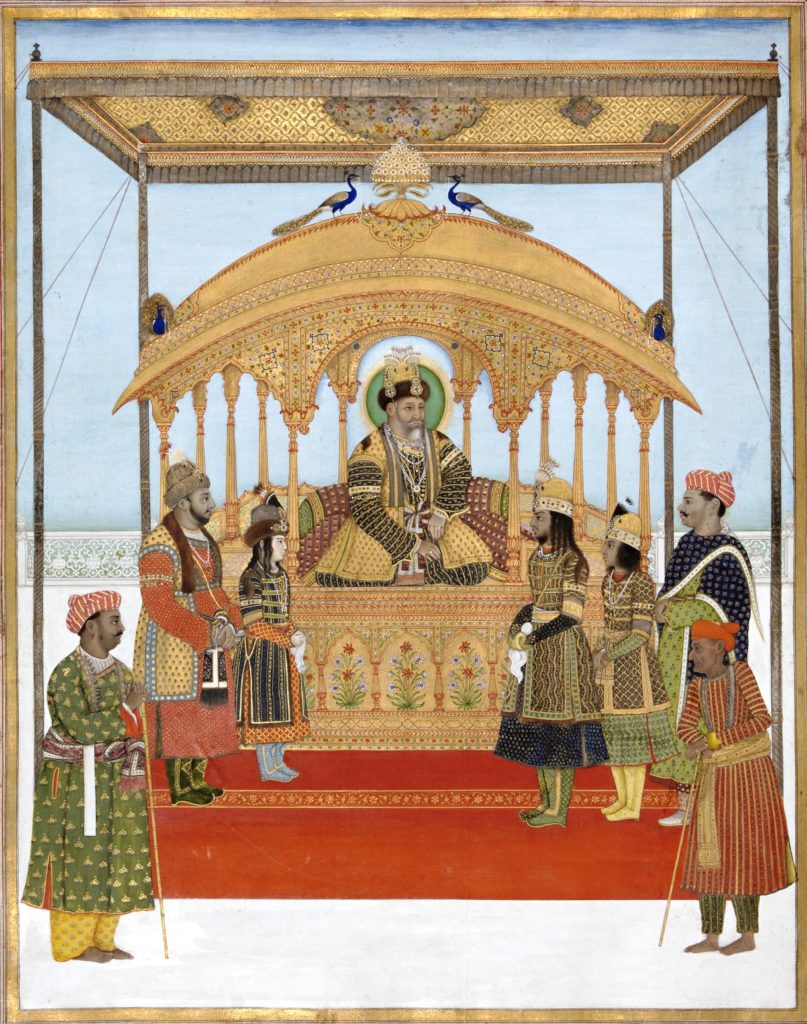
Delhi was sacked by the Persian brigand Nader Shah in 1739. With ‘700 elephants, 4,000 camel and 12,000 horses’ Shah carted off hundreds of years of accumulated gold, silver and previous stones including the Peacock throne.
Nader brought the throne back to Persia but he soon went mad becoming ever more paranoid and vicious. He ordered his own son blinded and the eyes brought to him on a platter. Fearing a similar fate, some of his Afghan bodyguards turned on him and beheaded him. But one of his generals, Ahmad Khan Abdali, remained loyal, and amidst the violence and looting stood guard over the royal harem. He was rewarded by the first lady of the harem with the Kohinoor diamond and escaped to Afghanistan.
The rest of the Peacock throne was disbanded and disbursed to the winds although two of the other celebrated stones from the throne can be tracked through history. The Darya-i-Noor stayed in Persia were it eventually became part of the crown jewels of Mohammad Reza Shah, which as a child accompanied by my father I saw in Iran shortly before the revolution. The “Great Mughal” diamond eventually showed up in Amsterdam where it was bought by Count Orlov, the once-lover of Catherine the Great. Hoping to get back into her bed, he gifted her with the diamond but ended up only in debt and confined to a mental asylum. The Great Mughal is now on show in the Kremlin.
On his way back to Afghanistan, Ahmad Khan Abdali, who had escaped from the chaos of Nader Shah’s beheading, ran across a treasure caravan intended for Nader Shah. Commandeering the caravan he used its wealth to become the founder of the Durrani empire and the modern state of Afghanistan. Alas Ahmad Khan lost his nose to leprosy but kept the diamond until it fell to his heir, Timur Shah and then to his eventual heir (after much internecine warfare) Shah Zaman. Zaman was himself blinded with a hot needle “The point quickly spilled the wine of his sight from the cup of his eyes.” as Afghan historian Mirza ‘Ata put it poetically.
As the Durrani empire fell, the Sikh empire rose and the Kohinoor moved to Lahore under Ranjit Singh. The Sikhs, however, lost the Punjab to the East India Company who signed a peace deal with the boy king, Duleep Singh, which included the Kohinoor as tribute. Duleep would later be exiled to England where he would personally hand the Kohinoor over to his patron Queen Victoria.
After Queen Victoria’s death the Kohinoor was incorporated into various of the British crown jewels, excepting one period during World War II when it was hidden in a pond. As of last week, Queen Elizabeth announced that when Charles becomes King the Kohinoor will become part of the crown jewels of Queen Consort Camilla.

Addendum: Largely cribbed from the excellent Kohinoor by William Dalrymple and Anita Anand.
What are the costs of the megadrought in the Southwest?
Here are the basics:
Previous work by some of the same authors of the new study had identified the period of 2000 through 2018 as the second-worst megadrought since the year 800 — exceeded only by an especially severe and prolonged drought in the 1500s. But with the past three scorching years added to the picture, the Southwest’s megadrought stands out in the record as the “worst” or driest in more than a millennium.
Here is the WaPo story. I now have three questions, none meant sarcastically, I really want to know:
1. How much has gdp in these regions been damaged over this time period?
2. How much have real estate prices been danaged?
3. How much has migration into these states declined, relative to what would have been the baseline?
Now this is by no means the only set of costs from global warming and climate change. But if we are just trying to calculate the costs of climate change on the Southwest, and other dry but rich areas, which inferences should we draw? You might think “the real problems haven’t come yet,” and maybe so, but shouldn’t that show up in the asset prices and migration patterns?
A blow to Canadian rule of law
Canada’s prime minister Justin Trudeau has invoked emergency powers in an attempt to quell protests against mandatory Covid-19 vaccinations that continue to grip the nation’s capital, drawing the ire of some provincial leaders.
Trudeau pledged at a press conference on Monday that use of the powers under the Emergencies Act — which gives the federal government broad authority, including the ability to prohibit public assembly and travel — “will be time-limited, geographically targeted, as well as reasonable and proportionate to the threats they are meant to address”. He also said the military would not be called in to deal with blockades.
Chrystia Freeland, finance minister, said Canadian banks and other financial service providers will be able to immediately freeze or suspend accounts without a court order if they are being used to fund blockades. She also warned companies that authorities will freeze their corporate accounts and suspend insurance if their trucks are being used in the protests.
Here is more from the FT. Should not the Canadian police be able to solve this issue on their own?