*Talking to Strangers*, the new Malcolm Gladwell book
Definitely recommended, talking to strangers is one of the most important things you do and it can even save your life. This book is the very best entry point for thinking about this topic. Here is a summary excerpt:
We have strategies for dealing with strangers that are deeply flawed, but they are also socially necessary. We need the criminal justice system and the hiring process and the selection of babysitters to be human. But the requirement of humanity means that we have to tolerate an enormous amount of error. That is the paradox of talking to strangers. We need to talk to them. But we’re terrible at it — and, as we’ll see in the next two chapters, we’re not always honest with each other about just how terrible at it we are.
One recurring theme is just how bad we are at spotting liars. On another note, I found this interesting:
…the heavy drinkers of today drink far more than the heavy drinkers of 50 years ago. “When you talk to students [today] about four drinks or five drinks, they just sort of go, “Pft, that’s just getting started,'” the alcohol researcher Kim Fromme says. She says that the heavy binge drinking category now routinely includes people who have had twenty drinks in a sitting. Blackouts, once rare, have become common. Aaron White recently surveyed more than 700 students at Duke University. Of the drinkers in the group, over half had suffered a blackout at some point in their lives, 40 percent had had a blackout in the previous year, and almost one in ten had had a blackout in the previous two weeks.
And:
Poets die young. That is not just a cliche. The life expectancy of poets, as a group, trails playwrights, novelists, and non-fiction writers by a considerable margin. They have higher rates of “emotional disorders” than actors, musicians, composers, and novelists. And of every occupational category, they have far and away the highest suicide rates — as much as five times higher than the general population.
It also turns out that the immediate availability of particular methods of suicide significantly raises the suicide rate; it is not the case that an individual is committed to suicide regardless of the means available at hand.
Returning to the theme of talking with strangers, one approach I recommend is to apply a much higher degree of arbitrary specificity, when relating facts and details, than you would with someone you know.
In any case, self-recommending, this book shows that Malcolm Gladwell remains on an upward trajectory. You can pre-order it here.
China Bible fact of the day
The parent company of the two largest Bible publishers in the United States has warned the Trump administration that proposed tariffs on China would amount to a “Bible tax.”
Trump’s proposed tariffs on $300 billion in Chinese-made products would affect books and other printed materials, according to Bloomberg. That includes Bibles, which are overwhelmingly printed in China because of the specialized technology and skills they require to produce…
More than half of the 100 million Bibles printed every year have been printed in China since the 1980s, he said. Of those, 20 million are sold or given away in the United States.
That’s because of the specialized printing requirements for a complex book such as the Bible, which requires thin paper that cannot be fed into standard printing equipment, leather covers, stitched binding, color pages and special inserts such as maps.
Here is the full Washington Post story.
Saturday assorted links
The legal culture that is America
The battle for supremacy in the world of hand hygiene is a dirty one, and nothing demonstrates this better than the depressing sight of a paper towel dispenser with a EULA.
That’s right: even dumb plastic boxes whose only use in this world is to hold paper towels apparently need an end-user license agreement now. In this case, the EULA — spotted by Harvard Library curator and Twitter user John Overholt at a recent conference — forbids the people who have to refill this Tork dispenser from using rival, non-Tork products.
Here is the full story, via the excellent Samir Varma.
Civic honesty around the globe
I am a bit late to this party, having been traveling, but I will serve this one up anyway:
Civic honesty is essential to social capital and economic development, but is often in conflict with material self-interest. We examine the trade-off between honesty and self-interest using field experiments in 355 cities spanning 40 countries around the globe. We turned in over 17,000 lost wallets with varying amounts of money at public and private institutions, and measured whether recipients contacted the owner to return the wallets. In virtually all countries citizens were more likely to return wallets that contained more money. Both non-experts and professional economists were unable to predict this result. Additional data suggest our main findings can be explained by a combination of altruistic concerns and an aversion to viewing oneself as a thief, which increase with the material benefits of dishonesty.
That is the abstract of a new paper by Alain Cohn, Michel André Maréchal, David Tannenbaum, and Christian Lukas Zünd. It is easy to say this ex post, but I find this intuitive. Here is the famed country-by-country picture which is circulating:

Here is a picture of the actual vs. the predicted reporting rate. Experts predicted more overall cooperation than turned out to be the case, most of all for the wallets with no money in them, but basically got it right for wallets with lots of money. Non-experts got it backwards altogether.
For the pointer to this one I thank many different MR readers.
Friday assorted links
1. Country Time paying kids’ fines, lobbying for legalizing lemonade stands (link has video chatter on it).
2. 100 best drummers of all time? Listed at #98 is Karen Carpenter.
3. Let’s ask the astrologers about Libra!
4. David Henderson reviews *Big Business: A Love Letter to an American Anti-Hero*, you need to scroll down a wee bit.
5. The Brown Shoe case ugh, antitrust that makes no sense (NYT).
Labor market polarization and the fertility decline
In the years since the Great Recession, social scientists have anticipated that economic recovery in the United States, characterized by gains in employment and median household income, would augur a reversal of declining fertility trends. However, the expected post-recession rebound in fertility rates has yet to materialize. In this study, I propose an economic explanation for why fertility rates have continued to decline regardless of improvements in conventional economic indicators. I argue that ongoing structural changes in U.S. labor markets have prolonged the financial uncertainty that leads women and couples to delay or forgo childbearing. Combining statistical and survey data with restricted-use vital registration records, I examine how cyclical and structural changes in metropolitan-area labor markets were associated with changes in total fertility rates (TFRs) across racial/ethnic groups from the early 1990s to the present day, with a particular focus on the 2006–2014 period. The findings suggest that changes in industry composition—specifically, the loss of manufacturing and other goods-producing businesses—have a larger effect on TFRs than changes in the unemployment rate for all racial/ethnic groups. Because structural changes in labor markets are more likely to be sustained over time—in contrast to unemployment rates, which fluctuate with economic cycles—further reductions in unemployment are unlikely to reverse declining fertility trends.
That is from a new paper by Nathan Seltzer, via the excellent Kevin Lewis.
The politics of order in informal markets: Evidence from Lagos
That is the title of a new paper by Shelby Grossman, here is the abstract:
Property rights are important for economic exchange, but in much of the world they are not publicly guaranteed. Private market associations can fill this gap by providing an institutional structure to enforce agreements, but with this power comes the ability to extort from group members. Under what circumstances do private associations provide a stable environment for economic activity? Using survey data collected from 1,179 randomly sampled traders across 199 markets in Lagos, I find that markets maintain institutions to support trade not in the absence of government, but rather in response to active government interference. I argue that associations develop pro-trade institutions when threatened by politicians they perceive to be predatory, and when the organization can respond with threats of its own; the latter is easier when traders are not competing with each other. In order to maintain this balance of power, the association will not extort because it needs trader support to maintain the credibility of its threats to mobilize against predatory politicians.
Via Henry Farrell, that abstract reminds me of my earlier essay, and critique of libertarian anarchy, “Law as a Public Good,” shorter version of the argument here.
Glenn Loury Speaks
On a Thursday evening in April, Glenn Loury is talking about race, ethics, and affirmative action. And he’s getting emotional. “Don’t patronize my people,” he told an audience at the College of the Holy Cross, in Massachusetts. “Don’t judge us by a different standard. Don’t lower the bar! Why are you lowering the bar? What’s going on there? Is that about guilt or pity?” He let the question hang in silence for a moment. “Tell me a pathway to equality that is rooted in either one of those things.”
That’s the opening to a sharp and very candid interview of Glenn Loury by Evan Goldstein in the Chronicle of Higher Education. Loury continues on affirmative action:
Equality is the only legitimate long-term goal — racial equality, not head-counting. I’m talking about equality of dignity, respect, standing, accomplishment, achievement, honor. People have to earn these things. What do I want to do? I want to reorient the discussion around the development of African-American capacities to compete.
On his personal life:
Q: By the late 1990s, you’d broken with many former friends on the right. You’d undergone a political conversion. Where did you land?
A: There’s an arc to this thing, and it’s odd. I describe myself today as right of center.
What happened is that I went through a trauma. I was accused of assaulting a woman with whom I was having an extramarital affair. I was publicly humiliated. I had to withdraw an appointment as undersecretary of education in the last years of Reagan’s second term. I was a crack-cocaine addict; it almost killed me. My wife at the time, God bless her, stayed with me, and we subsequently had two fine sons. But at the time, I was dying.
I found Jesus. I got my life together.
Read the whole thing.
G. Warren Nutter and Chile
In 1969, Warren Nutter left the University of Virginia Department of Economics to serve as the Assistant Secretary of Defense for International Security Affairs in the Nixon administration. During his time in the Defense Department, Nutter was deeply involved in laying the groundwork for a military coup against the democratically elected president of Chile, Salvador Allende. Although Nutter left the Pentagon several months before the successful 1973 coup, his role in the ascendance of the Pinochet regime was far more direct than the better-known cases of Friedrich Hayek, Milton Friedman, James Buchanan, and Arnold Harberger. This paper describes Nutter’s role in Chile policy planning and generating a “coup climate.” It shows how Nutter’s criticisms of Henry Kissinger are grounded in his economics, and compares and contrasts Nutter with other economists who have been connected to Pinochet’s dictatorship.
That is a new paper by Daniel Peter Kuehn. You should note that Friedman and Buchanan have a truly scant connection to Pinochet and the coup (Harberger I do not know, Hayek was too skeptical of democracy in his thinking and informal remarks later in his life).
Claims about Iran (model this)
“Iran has probably arrived at the conclusion that it has less to lose from acting this way than from doing nothing,” Aniseh Tabrizi, a research fellow and Iran expert at London’s Royal United Services Institute, told CNBC via phone Tuesday.
“There is a gamble behind it that wasn’t there before, which is: ‘If other countries retaliate, we are willing to take the risk because we have really nothing to lose at this point’,” Tabrizi described. “And that is a dangerous way to feel.”
Iran’s economy is expected to shrink by 6% this year, after having contracted 3.9% last year, the International Monetary Fund says. By contrast, it clocked 3.8% growth in 2017, before the Trump administration re-imposed economic sanctions after withdrawing from the 2015 nuclear deal that offered the Islamic Republic relief from prior sanctions.
And:
“It’s all about careful calibration and plausible deniability,” Hussein Ibish, a senior resident scholar at the Arab Gulf States Institute in Washington, told CNBC.
Iran’s tactics, experts say, are designed to disrupt but not provoke a military response. So far, attacks have specifically avoided civilian deaths and environmental damage like an oil spill.
Instead, the Revolutionary Guard or its naval equivalent may be sending the message that it’s capable of undermining U.S. and Arab Gulf states’ interests in the region. And if they feel they can get away with it, it’s because they’re banking on President Donald Trump not wanting to actually start a war.
“Ultimately, Iran’s intention is to call President Trump’s bluff,” says Ibish.
I don’t have a clear view on this matter, but find it an interesting and of course important question. Here is more from Natasha Turak.
Currency manipulation doesn’t actually work so well
That is the topic of my latest Bloomberg column, here is one excerpt on the empirical side:
It is also worth keeping in mind a number of empirical points. First, the ECB has not historically been all that expansionary. Rather, it is renowned for a fairly tight monetary policy. Eurozone rates of price inflation are usually below 2%, and that does not seem about to change.
Second, up through the late 1990s, Chinese currency manipulation consisted of keeping the value of the currency “too high” rather than “too low.” Yet in those earlier times, Chinese exporters still were gaining ground. And since 2005, the Chinese currency has risen considerably — arguably, it has attained the levels one would expect in a normally adjusting market. More recently, the Chinese central bank may be propping up the currency, to limit capital flight from China. That is currency manipulation, but in a manner that will damage Chinese exports, not help them, and indeed China probably is headed toward having permanent trade deficits with the rest of the world.
Finally, countries with low household savings rates tend to run trade deficits, and of course that is the U.S., with savings rates usually below 10% and often as low as 4%. Obviously, if you spend most of your money, some of those expenditures will go abroad, and that will hurt your trade balance. Whether or not you think that is a problem, America’s savings shortfall has little to do with Chinese currency manipulation.
Of course President Trump and yes also Elizabeth Warren are the main offenders here. Read Warren’s Medium essay on these topics, it is shocking in its crude nationalism: “A Plan for Economic Patriotism.“
Thursday assorted links
1. Map of medieval trade routes.
2. Japanese TV show about working overtime, or trying not to (NYT).
3. Do the banks want Libra? (FT, gated, very good piece).
4. New pro-social media book and essay.
How to Become a Federal Criminal
Mike Chase, author of the excellent twitter feed @CrimeADay, has now written the illustrated handbook, How to Become a Federal Criminal. In truth, a handbook wasn’t necessary because it is very easy to become a federal criminal.
You may know that you are required to report if you are traveling to or from the United States with $10,000 or more in cash. Don’t hop over the Canadian border to buy a used car, for example, or the Feds may confiscate your cash (millions of dollars are confiscated every year). Di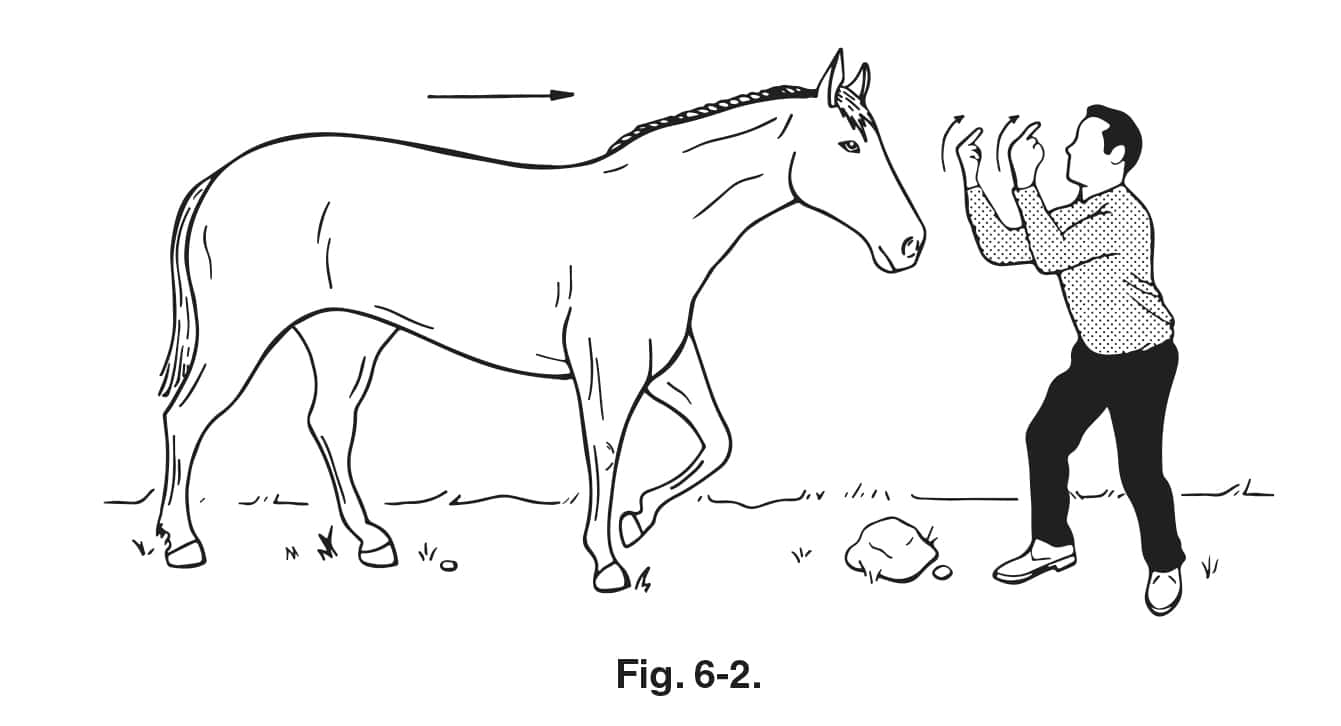 d you also know that you can’t leave the United States with more than $5 in nickels??? That’s a federal crime punishable by up to five years in prison. How about carrying a metal detector in a national park–up to six months in prison. And God forbid you should use your metal detector and find something more than 100 years old, that can put you away for up to a year. Also illegal in a national park? Making unreasonable gestures to a passing horse.
The expansion of Federal criminal law into every nook and cranny of life can be amusing but there is a darker side.
The feds also have unbelievably powerful tools at their disposal. They can subpoena your bank records, listen to your phone calls, indict you in a secret proceeding called a grand jury, an, if they think you lied to them, they can charge you for that alone. Then, if you can get a jury to find you guilty on just one charge, the judges is allowed to sentence you up to the statutory maximum based on things you were never charged with, or even things a jury acquitted you of, so long as the judge decides you probably did them. (italics added).
Moreover, when anyone can be charged with a crime, the application of criminal law becomes discretionary and that discretion may be used to suppress the free exercise of other rights. Indeed, the recent Supreme Court case, Nieves v. Bartlett, makes it easier for the police to arrest people even if the reason for the arrest is retaliation for lawful behavior.
Slate: The First Amendment makes it unconstitutional for government officials to retaliate against you because they dislike your speech. At the same time, federal law gives you the right to sue state officials for compensation if they violate constitutional rights such as your right to free speech. But on Tuesday, the Supreme Court invented a rule that will often allow police officers to arrest people in retaliation for disfavored speech without liability.
….Because local laws are full of minor infractions, like “loitering,” that are frequently violated without incident, police will often have a pretext to arrest people engaged in speech the officers don’t like. By immunizing such abuse, Nieves may have devastating effects on demonstrators, press photographers, and anyone who wants to exercise their speech rights in public, like the right to film the police or verbally challenge officer misconduct. The power to arrest is a potent tool for suppressing speech because even if charges are later dropped, arrestees must undergo the ordeal—and dangers—of being booked and jailed, and they may have to disclose the arrest on future job and housing applications, among other ramifications.
Those new service sectors jobs — lots of ’em!
…we find that total employment rises substantially in industries with rising concentration. this is true even when we look at total employment of the smaller firms in these industries. This evidence is consistent with our view that increasing concentration is driven by new ICT-enabled technologies that ultimately raise aggregate industry TFP. It is not consistent with the view that concentration is due to declining competition or entry barriers…as those forces will result in a decline in industry employment.
That is from a new paper by Chang-Tai Hsieh and Esteban Rossi-Hansberg. The paper presents a larger picture too:
…the secular changes the U.S. economy has experienced for the last four decades…amount to a new industrialization process. One that allows firms to expand geographically and deliver its goods and services to customers locally. We have argued that this evolution was the result of an underlying technological change that led to reductions in variable costs (and establishment-level fixed costs) in exchange for larger firm-level fixed costs.
Recommended.