Results for “africa” 1238 found
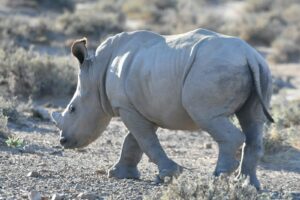
South African safari photo by Holly Cowen
One reason why South Africa is difficult to govern (South Africa fact of the day)
South Africa holds the grim distinction of being the most unequal country on Earth. South Africa leads the global ranking with a Gini index of 0.63. Statista The richest 10% of South Africans hold 71% of the wealth, while the poorest 60% hold just 7%. World Population Review This extreme inequality is largely rooted in history — economists attribute it to historical land ownership laws, the lingering socio-economic impacts of apartheid, and an economy heavily reliant on undiversified natural resource extraction. Data Pandas
The World (Global Gini) is trickier to pin down, because it measures inequality across all of humanity rather than within a single country. Different scholars estimate the global Gini index to range between 0.61 and 0.68. Wikipedia Interestingly, when measured this way — treating every person on Earth as part of one big “country” — global inequality ends up being comparable to South Africa’s, because the gap between the world’s richest and poorest nations is enormous.
That is from Claude.
The hyper-NIMBY of earlier Cape Town and South Africa
The most controversial of the forced removals occurred in the second half of the 1960s, with the expulsion of 65,000 coloureds from District Six, a vibrant inner-city ward of Cape Town, where whites, many of the slumlords, owned 56% of the property. Against their will, District Six residents were moved out to the sandy townships of the Cape Flats. In Johannesburg, the inner-city suburb of Sophiatown, where blacks could own freehold property, was another notorious site of forced removals. Often long-established community institutions such as churches and schools had to be abandoned.
That is from the very good book by Hermann Giliomee The Afrikaners: A Concise History.
Tricameralism in apartheid South Africa
Yes. South Africa really did have a tricameral Parliament under the 1983 Constitution, in force from 1984 until the democratic transition. But the phrase can mislead, because it sounds more pluralistic than it really was. The system created three racially separate parliamentary chambers: a House of Assembly for whites, a House of Representatives for Coloured South Africans, and a House of Delegates for Indian South Africans. The black African majority was excluded altogether from this Parliament.
The key to how it worked was the distinction between “own affairs” and “general affairs.” Each chamber could legislate for the “own affairs” of the racial group it represented; these included areas such as education, housing, welfare, local government, culture, and recreation. But the central levers of power—“general affairs”—remained matters such as defence, finance, foreign policy, justice, law and order, commerce, internal affairs, and agriculture. Those were handled at the center, not by the separate chambers acting independently.
Formally, then, it was a three-house legislature. In practice, it was a system of segregated representation plus retained white dominance. The constitutional text itself says Parliament consisted of the three Houses. But the white chamber was far larger and more institutionally powerful: the House of Assembly had 178 members, while the House of Representatives had 85 and the House of Delegates 45. The Constitution also vested executive authority in the State President, with different advisory structures for “own affairs” and “general affairs,” which further centralized power above the chambers themselves.
Here is the full GPT discussion, with links as well. As Harrison points out to me, in history tricameralism of any form is extremely rare.
South Africa fact of the day
Reuters reports the rand ended 2025 nearly 13% stronger against the dollar, its biggest annual gain in 16 years, helped by a broadly weaker USD, an improvement in South Africa’s fiscal position, strong precious‑metal prices, S&P’s credit‑rating upgrade, and removal from the FATF “grey list.”
Here is the Perplexity link, with further links therein.
While it is now more expensive than before, Cape Town is one of the very best tourist experiences you can have right now, anywhere. For “social science interesting” it is A+, English suffices, it has some of the best scenery, near perfect weather, it has layers and layers of history, with many distinct neighborhoods and “worlds” contained within, and it can be done safely. The food is very tasty, but not original enough to be the reason to come here. Plus there is wildlife, most notably the largest penguin colony at Boulder Bay, or safari if you wish to go a few hours out of town. Zeitz art museum is excellent, and you will not see those works in any other countries. From Dulles you can fly here direct.
So you should go.
The alternate book universe that is South Africa
One of the things I like best about South Africa is how quickly one enters another and very different intellectual world. Walk into a good used book shop, such as Clarke’s in Cape Town, and you find a slew of quality history books and biographies you otherwise would not have heard of. Buy them and read them and be transported. So many of them exist apart from the usual dialogues. For instance, I recently bought
Nowhere else is a used book store more interesting, at least from an English-language perspective.
South Africa facts of the day
With the lights back on and freight beginning to move again, in November South Africa won its first credit upgrade in two decades after S&P Global Ratings lifted the sovereign rating by one notch to double B.
Investor confidence is also up. According to Nedbank, private sector investment announcements tripled last year to more than R382bn ($23.6bn). Since the end of 2023, the South African rand has been the world’s best performing major currency on a spot basis reflecting immediate exchange rates, up nearly 15 per cent against the dollar. Over the past 12 months, the JSE all-share index is up 37 per cent in rand terms.
Growth reached 1.2 per cent in 2025, hardly transformative, but double the rate of the previous year. For the first time in a long time, economists are talking enthusiastically about “green shoots” and forecasting year-on-year expansion.
Here is more from David Pilling, Joseph Cotterill, and Monica Mark at the FT.
Oliver Kim reviews *How Africa Works*
That is the new book by Joe Studwell, my podcast with him should be coming out pretty soon. Here is Oliver’s new review. Excerpt:
Botswana is Studwell’s poster child for a successful democratic developmental coalition. (For this reason, it featured heavily in Acemoglu and Robinson’s Why Nations Fail as an example of “inclusive institutions”.)
Under the sound leadership of Seretse Khama, local chiefs were carefully co-opted at independence and the Botswana Democratic Party built up into a genuine national force. Khama also created a capable civil service, initially staffed by remaining Europeans, but gradually Africanized with sterling Batswana talent. This meant that when diamonds were discovered just around independence, the windfall was carefully managed, avoiding the worst effects of Dutch Disease. These mining revenues helped raise Botswana to upper middle-income status, making it the fourth-richest country in continental Africa.
Botswana’s chief failing, in Studwell’s view, was adhering too much to responsible policy orthodoxy—i.e., not enough industrial policy. There was no vision for large-scale industrialization, no coherent plan to create large numbers of factory jobs. Moreover, the political dominance of large cattle owners (Botswana was a society of pastoralists rather than farmers) meant that redistribution was never in the cards. The result is a relatively rich society, but one that is highly unequal.
You will be hearing my views on these issues soon enough. Oliver, of course, writes one of the very best Substacks in all of economics.
China (Africa) fact of the day
Chinese lending to Africa has plummeted, new data showed, reflecting a shift in focus to strategic investments on the continent and a lower risk appetite for financing infrastructure projects.
Beijing’s total lending in 2024 amounted to $2.1 billion, down by more than 90% from its 2016 peak, a report by Boston University’s Global Development Policy Center showed. And Chinese loans to Africa fell by nearly half in 2024 compared to the previous year.
The downward trend began when Chinese loans to Africa fell sharply by more than 60% to $6.8 billion in 2019, around the onset of the COVID-19 pandemic.
Chinese loans to Africa have averaged just above $2 billion since 2020, having reached $10 billion or more between 2012 and 2018, Boston University’s database showed. The decline stems from more restraint by Chinese lenders, and borrowing constraints in Africa tied to continued post-pandemic shocks, debt restructuring efforts, and an increasingly volatile international order, said Mengdi Yue, a researcher at Boston University’s Global Development Policy Center.
Here is the full story.
Fear of larger wars in East Africa
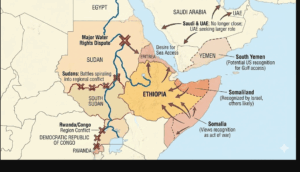
This is one of my major worries for 2026 and beyond. The ethnic and tribal conflict in Ethiopia is not finished, and it killed 700,000 people not long ago. Ethiopia still covets sea access and Eritrea, which at times in the past belong to Ethiopia anyway. Israel has recognized Somaliland, with a variety of other countries, including the United States, likely to follow. For Somalia, that is akin to an act of war because it dismembers what they perceive as their country. Somalia and Ethiopia still have troubles. Ethiopia and Egypt have a major dispute over water rights, a possible casus belli.
The United States, and thus other countries too, might recognize South Yemen, in an attempt to better control Gulf access. This is not nominally Africa but it is a very real African issue as well.
Saudi and UAE are no longer close in a manner that enable them to collectively bring order to the area. More generally, political property rights are weak in the region, many borders are contested, and there is no generally acknowledged legitimate referee. UAE is seeking to play a larger role, perhaps with a good deal of hubris. Trump is Trump.
The battles in the Sudans may be spiraling into a larger regional conflict. There is also Rwanda and the Congo region.
So I am worried.
Ken Opalo outlook on Africa 2026
(4) Keeping with the theme of growing during hard times and in difficult contexts, Nigeria is projected to grow by at least 4.3% in 2026, with consumer demand rising by over 7%.
Tinubu’s strong medicine may have nearly killed the patient, but after two painful years Nigerians seem poised to get relief from improving macro conditions. The Naira will remain stable (despite downward pressure on oil prices), with inflation projected to decline to under 14% — down from over 20% in 2025. Also, by now we can conclude that Dangote Refinery’s $20b bet on the Nigerian economy is a success. He appears to be winning the war against the entrenched interests that for decades fed at the trough of crude exports, imports of refined products, and fuel subsidies. The impact of the refinery will be felt in the further stabilization of fuel prices in 2026.
Nigeria’s reform momentum will slow down ahead of the 2027 elections. It’s not yet clear whether the reforms knocked the economy into a growth path, or if the projected growth is just recovery from the initial steep contraction after Tinubu took office.
(5) South Africa, too, will grow in 2026 despite tariff and political pressure from Washington. The GNU is holding; and Pretoria has weathered geopolitical storms (including the rift with Trump’s America) much better than I anticipated.
After years of stagnation, there is an emerging consensus that South Africa will see improvements in its growth rate over the next three years (averaging 1.7%). The reform momentum will continue, including in the power sector and entrenchment of the rule of law. Local elections later this year, including the big one in Johannesburg, will likely put further pressure on the ANC to improve service delivery and overall quality of policymaking.
The whole post is of interest, interesting throughout.
Africa possibility of the day
Call it a statistical quirk if you must. But this year, with a bit of luck, Africa will grow faster than Asia. If the 54 African economies manage to outpace their Asian counterparts, it would be the first time in modern history that this has happened.
To achieve it, African economies will need to grow marginally faster on average than they did last year. In 2025, despite war in Sudan, insurgency in the Sahel and coups in Madagascar and Guinea Bissau, sub-Saharan Africa is expected to have mustered growth of about 4.1 per cent. The IMF expects this to notch up to 4.4 per cent as economies continue to reap the benefits of a weak dollar — good for cutting debt-service payments and easing inflationary pressure — and of high commodity prices, including for gold and copper.
At the same time, the IMF is predicting that, as the Chinese motor whirrs more slowly, the combined economies of Asia will slow in 2026 to around 4.1 per cent.
Here is more from David Pilling at the FT.
Political Organization in Pre-Colonial Africa
We provide an overview of the explanations for the relative lack of state formation historically in Africa. In doing so we systematically document for the first time the extent to which Africa was politically decentralized, calculating that in 1880 there were probably 45,000 independent polities which were rarely organized on ethnic lines. At most 2% of these could be classified as states. [emphasis added by TC] We advance a new argument for this extreme political decentralization positing that African societies were deliberately organized to stop centralization emerging. In this they were successful. We point out some key aspects of African societies that helped them to manage this equilibrium. We also emphasize how the organization of the economy was subservient to these political goals.
That is from a new NBER working paper by Soeren J. Henn and James A. Robinson.
Make Africa Healthy Again
In the late 1990s, South Africa’s President Thabo Mbeki decided that mainstream science had AIDS wrong. A small circle of “truth-tellers” convinced him that AIDS came from poverty and malnutrition, not a virus. He warned that anti-retroviral therapy (ART) was toxic and that pharmaceutical companies were poisoning Africans for profit.
His government stalled the rollout of ART. Health Minister Manto Tshabalala-Msimang pushed garlic, beetroot, and lemon as medicine. “Nutrition is the basis for good health,” she said, insisting that exercise and diet, not Western drugs, were the real treatment. She warned that antiretrovirals had side effects, including cancer, that the establishment was hiding. When scientists showed data, she waved it off: “No churning of figures after figures will deter me from telling the truth to the people of the country.”
The result was a public health disaster: hundreds of thousand of preventable deaths (see also here and here).
A reminder of what happens when authority trades evidence for ideology.
Emergent Ventures Africa and the Caribbean, 7th cohort
Leila Character, Assistant Prof. at Texas A&M, for a project using hyperspectral-imaging drones for archaeological research in Belize.
Nour Bou Malhab, Lebanon, for promoting classical liberal thought throughout Lebanon and across the Maghreb.
Isaac Akintaro, Nigeria/England, computer science PhD Candidate, for travel to San Francisco
Nikita Greenidge, St. Lucia/England, PhD in Surgical Robotics, for a startup using AI to improve surgical techniques in the Caribbean.
Michael Konu, Ghana/USA, for bioengineering research on virtual cells and for career development.
Waldo Krugell, South Africa, Prof. at North West University, for a project improving economics education for South African high-school students.
Edmund Trueman, to develop a digital archive to showcase Congolese comics.
Justin Sooknanan, Trinidad & Tobago, undergrad electrical engineering, travel grant to UK and for career development.
Temitope Johnson, Nigeria/South Africa, for designing a phototherapy device for neonatal jaundice treatment.
Mmesomachi Nwachukwu, Nigeria, for running a national training program preparing students for the International Mathematical Olympiad.
Jibrin Jaafaru, Nigeria, PhD candidate, for travel to the United States to pursue a bioinformatics fellowship
Ollie Sayeed, PhD UPenn, historical linguist, for research evaluating the effectiveness of malaria interventions in Africa
Shreya Hegde, for drone-mapping and route-optimization work in Kenya.
Jan Grzymski, Assistant Professor at Lazarski University, to run a summer program introducing Caribbean scholars to Poland’s transition from communist rule to a market-driven economy.
Arun Shanmuganathan, Rwanda, to support mathematics training at the African Olympiad Academy.
Samiya Allen, Barbados, undergrad electronics, travel grant to UK for robotics training and career development.
Rose Mutiso, Kenya, PhD UPenn in materials science, to create the African Tech Futures Lab, to improve policymaking on energy technologies.
Darren Ramsook, Trinidad & Tobago, Postdoc at Trinity College Dublin, for research on AI-driven video compression.
Cheyenne Polius, St. Lucia, for work on astro-tourism and space education in the Caribbean.
I thank Rasheed Griffith for his excellent work on this, and again Nabeel has created excellent software to help organize the list of winners, using AI.
Those unfamiliar with Emergent Ventures can learn more here and here. The EV African and the Caribbean announcement is here and you can see previous cohorts here. If you are interested in supporting this tranche of Emergent Ventures, please write to me or to Rasheed.