Category: Economics
Does Pretrial Detention Reduce or Increase Crime?
Two interesting papers came across my desk. First, The Economics of Rights: Does the Right to Counsel Increase Crime? by Ater, Givati and Rigbi:
We examine the broad consequences of the right to counsel by exploiting a legal reform in Israel that extended the right to publicly provided legal counsel to suspects in arrest proceedings. Using the staggered regional rollout of the reform, we find that the reform reduced arrest duration and the likelihood of arrestees being charged. We also find that the reform reduced the number of arrests made by the police. Lastly, we find that the reform increased crime. These findings indicate that the right to counsel improves suspects’ situation, but discourages the police from making arrests, which results in higher crime.
In other words, the right to counsel makes it easier for criminals to escape justice and since the price of crime falls the quantity of crime increases. Makes sense!
The second paper The Downstream Consequences of Misdemeanor Pretrial Detention is by Heaton, Mayson and Stevenson:
This Article uses detailed data on hundreds of thousands of misdemeanor cases resolved in Harris County, Texas — the third largest county in the U.S. — to measure the effects of pretrial detention on case outcomes and future crime. We find that detained defendants are 25% more likely than similarly situated releases to plead guilty, 43% more likely to be sentenced to jail, and receive jail sentences that are more than twice as long on average. Furthermore, those detained pretrial are more likely to commit future crime, suggesting that detention may have a criminogenic effect. These differences persist even after fully controlling for the initial bail amount as well as detailed offense, demographic, and criminal history characteristics. Use of more limited sets of controls, as in prior research, overstates the adverse impacts of detention. A quasi-experimental analysis based upon case timing confirms that these differences likely reflect the casual effect of detention. These results raise important constitutional questions, and suggest that Harris County could save millions of dollars a year, increase public safety, and reduce wrongful convictions with better pretrial release policy.
In other words, when you lock people up before trial they lose their jobs and are more likely to get a record so pretrial detention severs attachments to civil life and increases attachments to criminal life with the end result being increased crime. Makes sense!
What’s frustrating is that both of these papers are good–they have a plausible theory and sound research design–yet they reach opposite conclusions! To be sure, the time periods, places, people and exact experiment are different so both papers could be true. From the policy maker’s perspective, however, the fact that both papers could be true only adds to the difficulty of using academic evidence to make policy.
The culture and polity that is Fairfax?
Richard “Scott” Silverthorne, the mayor of the City of Fairfax, has been arrested after he allegedly gave methamphetamine to an undercover detective in exchange for a sexual encounter, Fairfax County police say.
Story here. It is nonetheless a wonderful place to work and live!
For the pointer I thank Yana and Scott.
Copyright Protectionism
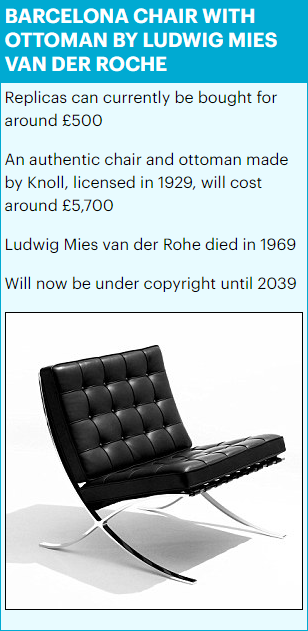 The argument that copyright encourages innovation is simply a pretense for protectionism. Some protection for intellectual property probably does encourage innovation, as the “Tabarrok Curve” illustrates, but the pretense becomes clear when we see copyright repeatedly extended for works already in existence. Walt Disney was long-dead when his copyright to Mickey Mouse was extended. Rumors to the contrary, Walt ain’t coming back no matter how much we incentivize him with a longer copyright.
The latest case in point is last week’s extension of copyright in the European Union for design:
Mid-century design classics, such as Charles Eames chairs, Eileen Gray tables and Arco lamps are set to rocket in price, following EU regulations which came into force this week that extend the copyright on furniture from 25 years to 70 years after the death of a designer.
…Companies can currently sell replica goods providing 25 years has passed from the date the designer died, but the EU ruling – speeded up by the British government – has extended that period to 70 years. Eames died in 1978, so the new protection extends the copyright of the many chairs, tables and clocks he designed until 2048. For items designed jointly with his wife, Ray, the copyright would extend for a further 10 years, as she died in 1988.
Dead people tend not to be very creative so I suspect that the retroactive extension of copyright will not spur much innovation from Eames. The point, of course, is not to spur creativity but to protect the rents of the handful of people whose past designs turned out to have lasting value.
Retroactive extensions of copyright throw the entire reasoning behind copyright into reverse. The incentive argument for copyright would have to run, We don’t have enough designs so we should increase the incentive to produce more. The actual argument for copyright runs–We have lots of popular designs and we need to keep selling them at a high price.
Moreover, if this nonsense were not enough, how is this for a kicker:
Companies which publish design books may have to get numerous licences to reproduce photos because designs have come under copyright.
Hat tip: The excellent Mark Thorson.
Why is there so little analysis of NSF economics grant-making?
As Alex and I were writing our Journal of Economic Perspectives piece on the economics activities of the National Science Foundation, I found it striking how little serious discussion there has been of the topic. You’ll find only a few scant references in the paper, and some of those are quite old now. This is part of a more general reluctance of economists to use economic tools to understand themselves.
I worry about the discourse-chilling effects of having government fund social science in this way, just as I worry about the implicit censorship effects on those who might seek to someday chair the Council of Economic Advisers.
On the NSF, let me be clear. I had a long meeting with some of the decision-makers at the economics division, and I found them to be extremely helpful and open and fair. I have little doubt that if I, now on record as somewhat of a critic of current procedures, submitted a grant request, it would be evaluated with full objectivity.
The problem is, the rest of the world doesn’t know that.
Addendum: You will note this section of the paper:
Another public good the NSF might fund is simply a study of which of its previous expenditures on economics have had the greatest marginal value-added. Based on conversations with NSF staff in economics, we are not able to identify such a study. One proposal would be to fund such a study and then follow many or all of its recommendations; after all, the NSF presumably believes it is capable of generating useful research results with practical implications.
Here John Cochrane comments on our paper. If you are wondering, this was my favorite part of the paper:
A related question is to consider the elasticity of supply for quality economic research, with respect to wages or payment. Over the last few decades, many in the economics profession have concluded that tax cuts for high earners, at current tax rates, have relatively small effects on labor supply; for example, that argument is often cited as one reason why the Bush tax cuts passed into law in 2001 yielded disappointing economic results. Yet when it comes to NSF grants, there is often the implicit presumption that the elasticity of supply for economic research with respect to additional government grants is relatively large. We are agnostic on the elasticity question, but without understanding this issue, it is difficult to evaluate NSF bang for the buck, and thus economists should not be so confident about the efficacy of this funding.
File under: “Elasticity Optimism for Me, but not for Thee.”
Shopping at the Strand with Michael Orthofer
How should one approach an overwhelming bookstore, namely the famous Strand in New York City? Where to start, which books should you discard, and how do you make those final choices? What if you could pick only three books to take home?
Michael Orthofer and I spent an hour together in the store, and our interaction was distilled into this 7:59 video. Self-recommending! And kudos to Jeff Holmes for doing the real work.
Here is my Conversations with Tyler dialogue with Michael Orthofer, the man who wants to read everything.
What do we really know about insider traders?
Here is my latest Bloomberg column, based on the research of Kenneth R. Ahern at USC. Here is to me the most interesting bit:
Some aspects come pretty close to what we see in the movies. The average insider trader is 43 years old, and nine out of 10 are male. The practice also seems correlated with some features of recklessness: Insider traders are younger than their associates, less likely to own real estate, and have fewer family members on average. More than half have criminal records, with almost all charges stemming from traffic violations.
To my eye, the most striking data involve personal connections: Insider traders appear to be pretty careful in choosing their accomplices. Of the known pairs of people who provide and act upon private information (“tipper and tippee”), 64 percent met before college, and 16 percent met in college or graduate school. Another 23 percent are family relations — more siblings and parents than aunts and uncles, despite the added capital that the latter might have provided. Tips are also commonly shared among people with ethnically similar surnames: Of 24 tips coming from people with Celtic surnames, for example, 14 went to individuals who also had Celtic surnames.
The choice of accomplices demonstrates how hard it is to trust people you haven’t known very long, especially if you’re not all that trustworthy yourself. It also implies that modern corporations are, in some ways, more honest places than one might think. Not that people are always so law-abiding; rather, many workplace relationships may be too superficial and too transient to develop the trust and cooperation typically required for villainy and law-breaking.
Do read the whole thing, there is much more at the link, including information on the size of profits earned, and how much the practice is addictive.
Laissez-Faire in Tokyo Land Use
Tokyo, Japan’s capital city, has a growing population of over 13 million people but house prices have hardly increased in twenty years. Why? Tokyo has a laissez-faire approach to land use that allows lots of building subject to only a few general regulations set nationally. Robin Harding at the FT has a very important piece on the Tokyo system:
Here is a startling fact: in 2014 there were 142,417 housing starts in the city of Tokyo (population 13.3m, no empty land), more than the 83,657 housing permits issued in the state of California (population 38.7m), or the 137,010 houses started in the entire country of England (population 54.3m).
Tokyo’s steady construction is linked to a still more startling fact. In contrast to the enormous house price booms that have distorted western cities — setting young against old, redistributing wealth to the already wealthy, and denying others the chance to move to where the good jobs are — the cost of property in Japan’s capital has hardly budged.
This is not the result of a falling population. Japan has experienced the same “return to the city” wave as other nations.
How is this possible? First Japan has a history of strong property rights in land:
Subject to the zoning rules, the rights of landowners are strong. In fact, Japan’s constitution declares that “the right to own or to hold property is inviolable”. A private developer cannot make you sell land; a local government cannot stop you using it. If you want to build a mock-Gothic castle faced in pink seashells, that is your business.
But this alone cannot explain everything because there was a huge property price-boom in Japan circa 1986 to 1991. In fact, it was in dealing with the collapse of that boom that Japan cleaned up its system, reducing regulation and speeding the permit approval process.

…in the 1990s, the government relaxed development rules, culminating in the Urban Renaissance Law of 2002, which made it easier to rezone land. Office sites were repurposed for new housing. “To help the economy recover from the bubble, the country eased regulation on urban development,” says Ichikawa. “If it hadn’t been for the bubble, Tokyo would be in the same situation as London or San Francisco.”
Hallways and public areas were excluded from the calculated size of apartment buildings, letting them grow much higher within existing zoning, while a proposal now under debate would allow owners to rebuild bigger if they knock down blocks built to old earthquake standards.
Rising housing prices are not an inevitable consequence of growth and fixed land supply–high and rising housing prices are the result of policy choices to restrict land development.
The policy choices were made–they can be unmade.
Do Democratic equity fund managers beat their Republican counterparts?
That is the topic of my latest Bloomberg column. Here is one bit:
The paper, by Marian Moszoro and Michael Bykhovsky, uses Federal Election Commission data to identify equity fund managers by their political contributions. If the managers at a fund gave to only one of the two major political parties, that fund is then classified as having an intellectual or ideological connection to that party.
…The authors find that for the years 2004 to 2014, with the exception of one period, equity fund managers of the two political affiliations did about the same. That should give pause to anyone who thinks that either political party has a monopoly on a better or more accurate view of the economy.
This is in noted contrast to Krugman’s frequent claim that the Republican fund managers are somehow unmoored from macroeconomic realities. But:
…for one critical period of time, December 2008 to September 2009, the Democratic fund managers did much better. They earned 25.25 percent on average, compared with the Republicans’ 17.17 percent — a difference that, by the authors’ back-of-the envelope calculations, amounted to about $13.7 billion.
My (unconfirmed) view is that much of this was lack of faith in President Obama, though a big market rally was to start in March 2009. Perhaps the Republican fund managers were not in the market enough. Another possibility of course was that some of the Republican managers expected high inflation, due to the Fed injecting trillions of liquid reserves into the banking system. Finally, the Democratic equity fund managers may have had better political connections and thus been better informed. The timing of the returns discrepancy, however, I think squares best with the “confidence in Obama” interpretation. And here is the Hansonian part of the column:
Another interesting finding: Most of the fund managers donated exclusively to either the Democratic or Republican Party — 44.9 percent and 46.6 percent, respectively. “Mixed” funds accounted for only 8.3 percent of the overall sample (of more than 80,000 fund-month observations). Since the choice of party doesn’t appear to provide much of a market edge, the loyalties might reflect longer-standing personal, regional, and institutional connections. Perhaps political unity within a company serves social and networking functions, even if it doesn’t provide any special economic insight.
Do read the whole thing. And if you are wondering:
Hedge-Fund Money: $48.5 Million for Hillary Clinton, $19,000 for Donald Trump
For the original pointer to the Moszoro and Bykhovsky piece I am grateful to Samir Varma.
A Skeptical View of the NSF
Tyler and I have a piece in the latest Journal of Economic Perspectives, A Skeptical View of the NSF’s Role in Economic Research. Here is one bit:
In considering the case for grant-based funding of economics research by the National Science Foundation, we find that a number of pertinent questions are rarely asked, let alone clearly answered. Instead, economists often put forward relatively weak arguments that they would likely dismiss if applied to government subsidies not reserved for economists.
For example, one common approach to defending NSF grants for economists is to list the prestigious individuals with whom the program has been associated. In his paper in this journal, Moffitt notes: “The program has supported every Nobel Prize winner in Economics since 1998 and almost every John Bates Clark medal winner since 1961.” (NSF economics funding started in 1960). Indeed, the list of grant recipients from NSF Economics is a literal “Who’s Who” of the top economists over the last half-century. But we don’t find the prestige of NSF recipients to be a good substitute for an estimate of the public benefits of research. Imagine a group of chefs who defended a hypothetical “National Food Foundation” on the grounds that it had provided grants to Alice Waters, Thomas Keller, Grant Achatz, and every winner of a James Beard Award since 1990. If these names are not familiar, rest assured that their published research output and training of students is very impressive. While we would not consider this information irrelevant (better to fund good chefs than bad ones), as economists we would be unimpressed by this case for government funding of chefs. Talk of how these grants brought about innovations in the culinary arts—such as sous vide, molecular gastronomy, and the introduction of quinoa to the American diet—would also not swing the argument. Instead, as economists, we would focus on how food markets would have operated without such grants and what else might have been done with the money.
We are not against any role for the NSF, however, but instead suggest that funds would be better spent on replication, public-use datasets and “far-out”, high-risk research. We also suggest other funding mechanisms such as prizes.
Here is one bit on replication:
Instead of pointing to the prestigious economists whose research they have funded, perhaps the NSF might point to the prestigious research that has been convincingly replicated—or not replicated.
Read the whole thing.
By the way, this entire issue of the JEP is excellent with important reviews of the research on charter schools and four papers on motivated reasoning.
Arthropod average is over is bug co-residence a normal good?
Here is a new and intriguing paper by Leong, et.al.:
In urban ecosystems, socioeconomics contribute to patterns of biodiversity. The ‘luxury effect’, in which wealthier neighbourhoods are more biologically diverse, has been observed for plants, birds, bats and lizards. Here, we used data from a survey of indoor arthropod diversity (defined throughout as family-level richness) from 50 urban houses and found that house size, surrounding vegetation, as well as mean neighbourhood income best predict the number of kinds of arthropods found indoors. Our finding, that homes in wealthier neighbourhoods host higher indoor arthropod diversity (consisting of primarily non-pest species), shows that the luxury effect can extend to the indoor environment. The effect of mean neighbourhood income on indoor arthropod diversity was particularly strong for individual houses that lacked high surrounding vegetation ground cover, suggesting that neighbourhood dynamics can compensate for local choices of homeowners. Our work suggests that the management of neighbourhoods and cities can have effects on biodiversity that can extend from trees and birds all the way to the arthropod life in bedrooms and basements.
Didn’t Paul Romer say this once? Here is a Guardian summary of one point:
The researchers said the work overturns the “general perception” that homes in poorer neighbourhoods host more indoor arthropods.
For the pointers I thank Niroscience and Michelle Dawson.
Law professors and zoning advocates may need a new example
The paper title is “Strip Clubs, ‘Secondary Effects’, and Residential Property Prices,” and the authors are Taggart J. Brooks, brad R. Humphries, and Adam Nowak, here is the abstract maybe strip clubs are more popular than I thought:
The ‘secondary effects’ legal doctrine allows municipalities to zone, or otherwise regulate, sexually oriented businesses. Negative ‘secondary effects’ (economic externalities) justify limiting First Amendment protection of speech conducted inside strip clubs. One example of a secondary effect, cited in no fewer than four United States Supreme Court rulings, is the negative effect of strip clubs on the quality of the surrounding neighborhood. Little empirical evidence that strip clubs do, in fact, have a negative effect on the surrounding neighborhood exists. To the extent that changes in neighborhood quality are reflected by changes in property prices, property prices should decrease when a strip club opens up nearby. We estimate an augmented repeat sales regression model of housing prices to estimate the effect of strip clubs on nearby residential property prices. Using real estate transactions from King County, Washington, we test the hypothesis that strip clubs have a negative effect on surrounding residential property prices. We exploit the unique and unexpected termination of a 17 year moratorium on new strip club openings in order to generate exogenous variation in the operation of strip clubs. We find no statistical evidence that strip clubs have ‘secondary effects’ on nearby residential property prices.
Is this evidence for or against “the death of distance”?
For the pointer I thank the excellent Kevin Lewis.
Demographics and Growth
Why is growth so slow? Tim Lee has a good run down of eight theories including one suggested by myself, demographics:
Americans are having fewer babies than they did in the past, and this has had two related effects: The population as a whole is growing more slowly, and the average age of the population is rising.
There’s reason to think that both trends are bad for economic growth. Younger people are more likely to pursue new ideas, take risks, and start new businesses. So an aging population is likely to lead to a less dynamic economy.
Slower population growth can also be a source of economic stagnation in its own right. A rapidly growing population means rising demand for products of all kinds — new homes, restaurants, shopping malls, and so forth. So more businesses will be started in general, which means more opportunities for experimentation. Successful stores, restaurants, and other businesses can be expanded or franchised to other metropolitan areas, allowing good ideas to spread quickly.
In contrast, in a country with a more stagnant population, starting a new business requires replacing an existing business. Even if a young person has an innovative idea for a new company, the practical difficulties of getting the business started might be too great for putting the idea into practice. And so change can only happen by convincing existing business owners to change their behavior — an inherently slower and more difficult process.
A just-released NBER working paper by Nicole Maestas, Kathleen J. Mullen and David Powell provides some new evidence for this hypothesis by looking at the US states:
Population aging is widely assumed to have detrimental effects on economic growth yet there is little empirical evidence about the magnitude of its effects. This paper starts from the observation that many U.S. states have already experienced substantial growth in the size of their older population and much of this growth was predetermined by historical trends in fertility. We use predicted variation in the rate of population aging across U.S. states over the period 1980-2010 to estimate the economic impact of aging on state output per capita. We find that a 10% increase in the fraction of the population ages 60+ decreases the growth rate of GDP per capita by 5.5%. Two-thirds of the reduction is due to slower growth in the labor productivity of workers across the age distribution, while one-third arises from slower labor force growth. Our results imply annual GDP growth will slow by 1.2 percentage points this decade and 0.6 percentage points next decade due to population aging.
Exporting vs. education
Also known as Mexico fact of the day. Here is a new result from David Atkin, published in the American Economic Review:
This paper presents empirical evidence that the growth of export manufacturing in Mexico during a period of major trade reforms (the years 1986 to 2000) altered the distribution of education. I use variation in the timing of factory openings across commuting zones to show that school drop-out increased with local expansions in export-manufacturing industries. The magnitudes I find suggest that for every 25 jobs created, one student dropped out of school at grade 9 rather than continuing through to grade 12. These effects are driven by less-skilled export-manufacturing jobs which raised the opportunity cost of schooling for students at the margin.
The title is “Endogenous Skill Acquisition and Export Manufacturing in Mexico,” here are earlier ungated copies. By the way, here is my earlier discussion of why Mexico is not a better-educated nation:
A high school diploma brings higher wages in Mexico, but in the United States the more educated migrants do not earn noticeably more than those who have less education. Education does not much raise the productivity of hard physical labor. The result is that the least educated Mexicans have the most reason to cross the border. In addition, many Mexicans, knowing they may someday go to the United States, see less reason to invest in education.
It seems both factors matter.
Some of the best news of this year Brazil estimate of the day
…the recovery, which could come as soon as the fourth quarter, will likely be plodding. Brazil’s gross domestic product is projected to expand by about 1% next year, following deep back-to-back contractions of 3.8% in 2015 and an estimated 3.3% this year, according to a recent survey of 100 economists by the nation’s central bank.
It is bad news that this is good news, but good news it is. Here is the longer WSJ piece, noting it still contains a fair amount of bad news.
Kindle pre-order for *The Complacent Class* is now possible
Here is the link, and my previous extra book offer still stands (for now!).