Category: Economics
Is Christmas efficient?
As you all probably know, the demand for retail goods and services goes up a lot after Thanksgiving, giving rise to the seasonal business cycle. Most large economies have a major gift-giving holiday in or near December. The result is that fourth quarter output and employment expand significantly, and the first quarter of the year brings an inevitable contraction. Usually we seasonally adjust the data, but seasonal business cycles are not small relative to regular business cycles, for more information see here.
But are these seasonal cycles efficient? Let’s say that the Grinch really were to steal Christmas, would that be a Kaldor-Hicks potential Pareto improvement?
I can think of a few reasons why seasonal business cycles might be inefficient:
1. Retail workers would prefer to smooth their labor supply, having more relaxed hours in mid-December and no layoffs in January.
2. A lot of Christmas gifts are bought under duress and by definition there is third party payment. The economy might be losing information about “real consumer demands,” just to “show that we all care,” etc.
3. Too many products are bunched for October-November market introduction, with the goal of rent-seeking to capture part of the big Christmas spending boost. For instance I would rather have more “must read” books come out in January and fewer in October. A similar point can be made about movies and various other forms of entertainment, including new toys.
4. Since many retail products either “catch on” in the fourth quarter or not, the seasonal clustering of demand may increase income inequality to the detriment of social risk-sharing.
These are a few reasons why such a strong seasonal component to demand might be efficient:
1. The strong cyclicality of demand might help introduce some new products to market which might otherwise be stifled by fixed costs (Shleifer’s “implementation cycles” point).
2. The strong cyclicality of demand may help pull some workers out of long-term unemployment, because Best Buy simply has to hire some retail help this time of year. Once these workers get used to having a job again, and have something new on their resume, their future labor market trajectory improves. These gains may exceed the losses from having a less efficient smoothing of labor across the quarters. (By the way, if you don’t think the seasonal business cycles is picking up many of these workers, why would most other forms of stimulus?)
3. The institution of presents helps break an economy out of status quo bias when it comes to consumer purchases and that encourages innovation, even though a lot of the money spent is wasted.
4. Clustering a lot of the buying and marketing at the same time may lead to a better matching of purchases and products, a bit like “speed dating.”
More generally, you can debate whether the existence of Christmas increases the total amount of money spent, or simply sloshes demand around across the seasons. I suspect the total amount spent goes up, and you can debate whether that is good or bad, depending on whether the savings rate should be higher or lower. Note also that the strength of a seasonal business cycle in a country will influence the ex ante technological flexibility of business firms, which in turn will shape the volatility of non-seasonal business cycles.
What do you all think? Thumbs up or down to the Grinch? Or should we, as Matt Yglesias suggests, introduce another major gift-giving holiday in June, for the purposes of stimulating aggregate demand?
What will the ECB banking union look like?
Wolfgang Münchau has the scoop:
This banking union will produce the financial sector equivalent of austerity – a secular credit crunch.
To see this, one needs to understand how banking union is going to work. The European Central Bank, in its role as supervisor, has started a comprehensive assessment of the banking sector. As part of this exercise, it assesses financial risks, takes an in-depth look at balance sheets, and subjects banks to stress tests. This exercise is going to end with a demand that some banks raise their capital.
But without a common fiscal backstop, it lacks credibility. The ECB will be in no position to demand that banks raise capital if there is no backstop. It would risk financial instability if it exposed a bank as undercapitalised that has no access to outside capital. The resolution fund will not be able to help because it will not be fully mutualised for a decade. At the start all risks will remain within the member states.
Unlike the Federal Deposit and Insurance Corporation of the US, the eurozone’s resolution fund will have no credit line.
…Economically, this is 1990s Japan all over again, probably worse given the periphery’s dire economic state. The banking system in the eurozone will not be able to supply the economy with sufficient credit, except in creditor countries. The economic consequences of what finance ministers hailed as a “historic” decision will be substantially negative.
A Few Favorite Books from 2013
Tom Jackson asked me for a couple of best books for his year end column. I don’t read as many books as Tyler so consider these some favorite social science books that I read in 2013.
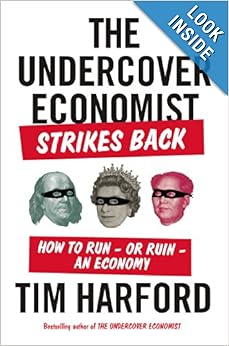 In The Undercover Economist Strikes Back, Tim Harford brings his genius for storytelling and the explanation of complex ideas to macroeconomics. Most of the popular economics books, like The Armchair Economist, Freakonomics, Predictably Irrational and Harford’s earlier book The Undercover Economist, focus on microeconomics; markets, incentives, consumer and firm choices and so forth. Strikes Back is that much rarer beast, a popular guide to understanding inflation, unemployment, growth and economic crises and it succeeds brilliantly. Mixing in wonderful stories of economists with exciting lives (yes, there have been a few!) with very clear explanations of theories and policies makes Strike Back both entertaining and enlightening.
Stuart Banner’s American Property is a book about property law, which sounds like an awfully dull topic. In the hands of Banner, however, it is a 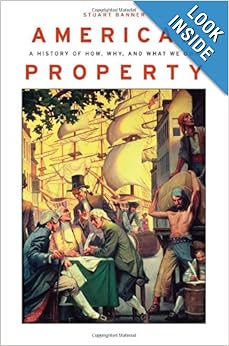 fascinating history of what we can own, how we can own it and why we can own it. Answers to these questions have changed as judges and lawmakers have grappled with new technologies and ways of life. Who owns fame? Was there a right to own one’s own image? Benjamin Franklin, whose face was used to hawk many products, would have scoffed at the idea but after the invention of photography and the onset of what would later be called the paparazzi thoughts began to change. In the early 1990s, Vanna White was awarded $403,000 because a robot pictured in a Samsung advertisement turning letters was reminiscent of her image on the Wheel of Fortune. American Property is a great read by a deep scholar who writes with flair and without jargon.
On June 3, 1980, shortly after the Soviet Union’s invasion of Afghanistan, the U.S. president’s national security adviser was woken at 2:30 am and told that Soviet submarines had launched 220 missiles at the United States. Shortly thereafter he was called again and told that 2,200 land missiles had also been  launched. Bomber crews ran to their planes and started their engines, missile crews opened their safes, the Pacific airborne command post took off to coordinate a counter-attack. Only when radar failed to reveal an imminent attack was it realized that this was a false alarm. Astoundingly, the message NORAD used to test their systems was a warning of a missile attack with only the numbers of missiles set to zero. A faulty computer chip had inserted 2’s instead of zeroes. We were nearly brought to Armageddon by a glitch. If that were the only revelation in Eric Schlosser’s frightening Command and Control it would be of vital importance but in fact that story of near disaster occupies just one page of this 632 page book. The truth is that there have been hundreds of near disasters and nuclear war glitches. Indeed, there have been so many covered-up accidents that it’s clear that the US government has come much closer to detonating a nuclear weapon and killing US civilians than the Russians ever did. Thankfully, we have reduced our stockpile of nuclear weapons in recent years but, as in so many other areas, we are also more subject to computers and their vulnerabilities as we make decisions at a faster, sometimes superhuman, pace. Command and control, Schlosser warns us, is an illusion. We are one black swan from a great disaster and if this is true about the US handling of nuclear weapons how much more fearful should we be of the nuclear weapons held by North Korea, Pakistan or India?
Is American politics ruled by gridlock?
My latest New York Times column is here, and here is one excerpt:
Consider the financial crisis of 2008 and 2009. Coordinated actions by the Federal Reserve, the Treasury and Congress geared up rapidly, were decisive by global standards and received a fair amount of bipartisan support. In contrast, the euro zone is still discussing how to manage its bailouts or whether to start a program of quantitative easing, which the Federal Reserve will begin to wind down in January. And Japan, after letting problems with bad banks fester for decades, is only now using monetary policy to fight deflationary pressures.
After that initial decisiveness in the financial crisis, America did indeed slow down in policy innovation. Bailouts and our activist central bank have become extremely contentious factors in the nation’s politics, and there has been bitter fighting over how to set into motion the Dodd-Frank financial reform law.
Lunging and lurching forward with big changes, then enduring periods of backlash, consolidation and frustration, is often a better description of our political system than is “gridlock,” which is too unidimensional a concept to capture the reality.
At other times, because political flexibility is a fundamental part of the American system, it doesn’t feel as though we are defeating gridlock as much as bypassing it. Fracking — hydraulic fracturing — is reshaping the American energy sector, in part because of previous federal support for research and development, and in part because of regulatory tolerance: Many of the relevant changes took place through agencies like the Energy Department. In contrast, much of Europe is refusing to proceed with fracking at all. The American breakthrough has generated economic headlines, but rarely is it cited as an example of political success.
Do read the whole column. Two other examples are the building of the surveillance state and the shift toward ever-tougher forms of intellectual property protection, and the spread of that philosophy to other nations through the form of treaties. Sometimes we could use more gridlock, although I recognize that many people prefer to rail against it.
If you would like to read a defense of the gridlock view, here is Ornstein and Mann, noting that they confuse polarization with gridlock and don’t consider most of the examples and comparisons I raise. Their argument is closer to “we shouldn’t feel very good about how things have been running,” which I have no problem accepting. Here is Summers, responding to their critique., though he is more optimistic about the consequences of periodic non-gridlock than I am. Here is the original Summers Op-Ed. Many other contributions to the political science literature either predate the recent wave of rather considerable policy reform, focus on Congress, or focus on whether polarization is preventing us from addressing income inequality. I don’t intend those points as criticisms, simply a note that many of those pieces and books do not bear so directly on my thesis.
Sumner on Krugman on the UK
Krugman also ignores the fact that his own graph shows fiscal policy in Britain getting more contractionary in 2013, and yet growth picked up sharply!
Read the whole thing. I also would note that the demand-side secular stagnation meme also seems to be gone or at least shelved in the cupboard, as today Krugman wrote: “Economies do tend to grow unless they keep being hit by adverse shocks.” The reallocation of labor from previous cuts in government spending is now seen unambiguously a good thing, whereas the previous argument was that in a liquidity trap such positive supply shocks could very well push economies into an even worse position. Most of all, British price inflation has continued at a robust rate and that is because of British monetary policy, again no sign of very low short rates being a “liquidity trap” in this regard. The UK labor market experience also seems to support Bryan Caplan’s repeated claims that real wage cuts really can put people back to work.
And here is a remark on timing:
I find it astonishing that Krugman and Wren-Lewis, having done post after post in 2012 describing how the UK does have real fiscal austerity in 2012, are suddenly happy to now argue that a relaxation of fiscal austerity in 2012 is the “reason” for GDP recovery in… erm, 2013.
Don’t let the emotionally laden talk of “Three Stooges” or “deeply stupid,” or continuing problems in the UK economy, distract your attention from the fact that this one really has not gone in the directions which the Old Keynesians had been predicting.
Friedrich A. Hayek class on MRUniversity
MRUniversity.com has a new class on Hayek’s Individualism and Economic Order, free on-line pdf version of the book is here. The class is based around my reread of the book — often considered the single best introduction to Hayek — and what I learned from each chapter., whether positively or negatively.
The MRUniversity videos are now available on the homepage of MRU at the end of the Great Economists section. There is also a landing page for all of the Hayek videos at once.
Overall the book held up very well upon my reread. The most interesting chapters — at least given my initial margins — were Hayek’s liberaltarian take on economic policy and Hayek on the likely evolution of European federalism. Hayek makes the very interesting argument that EU-like institutions will be classical liberal by default, as non-intervention tends to be the focal default point when conflicting nations cannot agree on very much. He thus thinks that supranational institutions, while often motivated by peace at first, over time become an instrument of economic freedom.
We invite you to check out the class, and of course there is more to come.
Kebko on North Carolina’s unemployment insurance experiment
#5: I think Evan is being a bit too broad with his interpretation of the labor market in North Carolina. There have been two distinct phases of labor force adjustments:
1) Between the passage of the law and its implementation, there was a small decrease in unemployment. But, mostly, on net, there was a decrease in employment and a corresponding decrease in labor force participation. The movement was from employment to not-in-labor-force. I don’t know if there is a straightforward way to interpret this, but I don’t believe Evan is addressing it cleanly in the article.
2) After the implementation of the law, labor force participation stabilized. Since that time, there has been a decrease in unemployment and an increase in the Employment to Population ratio. People are moving from unemployment to employment.
The first phase could have a number of interpretations. The second phase is clearly what opponents of Emergency Unemployment Insurance would have predicted. At this point, I think we still need to give it a few months to see if the rebound in the employment to population ratio continues. If it does, then this article by Evan will have been unfortunate.
Here is my post on the issue, with some graphs: http://idiosyncraticwhisk.blogspot.com/2013/12/a-natural-experiment-on-emergency.html
Shiller on Trills
In this short piece, Robert Shiller explains one of the basic ideas of his work on macro markets:
The governments of the world should issue shares in their GDPs, securities that pay to investors as dividends a specified fraction of GDP, in perpetuity (or until the government buys them back on the open market). Governments need to end their historic reliance on debt financing: governments issuing shares in GDP is analogous to corporations issuing equity. My Canadian colleague Mark Kamstra and I propose issuing trillionth shares in GDP, and so to call these “Trills.” Last year, a U.S. Trill would have paid $15.09 in dividends, a Canadian Trill C$1.72. The dividends will change every year as GDP is announced, and predicting these changes will certainly interest investors, just as in the stock market. Governments can auction off Trills when current government debt comes due and needs to be refinanced, as part of a debt reduction program.
In this piece, Shiller focuses on the benefits of Trills as opposed to debt:
Substituting Trills for conventional debt helps deleverage the government, something whose importance has become very clear with the debt crisis in Europe. The payments required of the government by the Trills is connected to the country’s ability to pay, measured by their GDP.
Trills could also be the foundation for many types of insurance products, for example, products that would pay off when GDP was down helping to alleviate business cycle issues. A market in Trills could also be used to make predictions and to judge policies (see Gurkaynak and Wolfers for an early test). Which policies will most increased the value of future trills? Similarly, by looking at how the market for trills changes as the Iowa Political Markets change we could identify which politicians are best for GDP (not just the equity and bond markets).
I featured Shiller’s work on macro markets in my book Entrepreneurial Economics: Bright Ideas from the Dismal Science. I think of this body of work as his most visionary and deserving of the Nobel.
Economic convergence between black immigrants and black natives
Alison Jane Rauh, a job candidate from the University of Chicago, has a new (job market) paper on this topic. The abstract is full of information:
The number of black immigrants living in the US has increased 13-fold from 1970 to 2010, increasing their share of the black population from 1% to 10%. Black immigrants’ labor market outcomes surpass those of native blacks. This paper determines in how far the relative success of black immigrants is passed on to the second generation. While blacks of the second generation have equal or higher education and earnings levels than the first generation, the return on their unobservable characteristics is converging to that of native blacks. Race premia are put into a broader context by comparing them to Hispanics, Asians, and whites. Blacks are the only group that experiences a decrease in residual earnings when moving from the first to the second generation. Black immigrants do not only converge to native blacks across generations but also within a generation. For Asians and Hispanics, residual earnings decrease monotonically with age of immigration. For blacks, the residual earnings-age of immigration profile is upward sloping for those immigrating before the age of 15. Convergence across generations is mostly driven by low-educated second generation blacks that drop out the labor force in greater numbers than low-educated first generation immigrants do. Similarly, convergence within a generation is mostly driven by low-educated blacks who immigrate when they are young dropping out of the labor force in greater numbers than those who immigrate when they are older. A social interactions model with an assimilation parameter that varies by age of immigration helps explain this phenomenon. When making their labor force participation decision, immigrant men of all races, but not women, generally place more weight on the characteristics of natives the earlier they immigrate.
I take this to be a “peer effects are really really important” paper, namely that many of the virtues of immigrant culture are swallowed as the second generation assimilates. I should note that the contents of this paper are interesting throughout, for instance: “Conditional and unconditional annual earnings of native black women are at 91% and 78% of white women, which points to a much more equal distribution than that of men (64% and 78%).”
Here is the abstract of another paper (pdf) by Alison, entitled “Successful Black Immigrants Narrow Black-White Achievement Gaps”:
The number of black immigrants in the US quadrupled from 1980 to 2010, increasing their share of the black population from 4% to 10%. During that time period the black-white wage and employment gap widened substantially. This paper explores the extent native blacks differ from immigrant blacks. Additionally it determines in how far increased selective immigration masks an even greater deterioration in the economic condition of native blacks. In 2011, excluding black immigrants increases the white-black wage gap by 4% for men and 9% for women. It increases the employment gap by 13% and 19% for men and women respectively.
Here is the author’s home page. I hope she gets a very good job.
Chinese translation of *Modern Principles*
There is now a Chinese translation out of Modern Principles, our Principles text.
Information (in Chinese) on the macro text is here. Information about the micro text is here. You will note that China is a key example in our discussion of catch-up Solow growth, a topic neglected by many other leading Principles textbooks.
For basic information on the English language version of the book, see here.
What predicts the differential impact of the taper?
There is a new paper by Eichengreen and Gupta (pdf):
In May 2013, Federal Reserve officials first began to talk of the possibility of tapering their security purchases. This tapering talk had a sharp negative impact on emerging markets. Different countries, however, were affected very differently. We use data for exchange rates, foreign reserves and equity prices between April and August 2013 to analyze who was hit and why. We find that emerging markets that allowed the real exchange rate to appreciate and the current account deficit to widen during the prior period of quantitative easing saw the sharpest impact. Better fundamentals (the budget deficit, the public debt, the level of reserves, the rate of economic growth) did not provide insulation. A more important determinant of the differential impact was the size of the country’s financial market: countries with larger markets experienced more pressure on the exchange rate, foreign reserves and equity prices. We interpret this as investors being able to better rebalance their portfolios when the target country has a relatively large and liquid financial market.
You can think of this as a step in building a new theory of the non-neutrality of money. The suggestion it seems is that liquidity begets further liquidity, a’ la Matthew. Here is a related and non-gated FT post about “the fragile five.”
Does a warm climate discourage economic output?
Geoffrey Heal and Jisung Park have a new paper “Feeling the Heat: Temperature, Physiology & the Wealth of Nations,” here is the abstract:
Does temperature affect economic performance? Has temperature always affected social welfare through its impact on physical and cognitive function? While many studies have explored the indirect links between climate and welfare (e.g. agricultural yield, violent conflict, or sea-level rise), few address the possibility of direct impacts operating through human physiology. This paper presents a model of labor supply under thermal stress, building on a longstanding physiological literature linking thermal stress to health and task performance. A key prediction is that effective labor supply – defined as a composite of labor hours, task performance, and effort – is decreasing in temperature deviations from the biological optimum. We use country-level panel data on population-weighted average temperature and income (1950-2005), to illustrate the potential magnitude of the effect. Using a fixed effects estimation strategy, we find that hotter-than-average years are associated with lower output per capita for already hot countries and higher output per capita for cold countries: approximately 3%-4% in both directions. We then use household data on air conditioning and heating expenditures from the US to provide further evidence in support of a physiologically based causal mechanism. This more direct causal link between climate and social welfare has important implications for both the economics of climate change and comparative development.
The NBER version is here, I do not otherwise see ungated access.
Why is liquidity “passing through” the global economy in such a segmented, non-neutral fashion?
“It is fair to say that the Fed has created a marvellous environment for virtually all assets, even if this remains one of the weakest economic recoveries on record in the US and through virtually all of the developed markets,” wrote Deutsche Bank in a note.
European high yield, or “junk”, corporate bonds have fared best, producing total returns of more than 150 per cent. Among the few losers were owners of Greek shares.
And yet the eurozone may be approaching deflation and has exhibited weak nominal gdp growth. From the FT there is more here. You should be certain about the appropriateness of the taper — or not — only if you understand this issue better than any human being I have met or heard or read. I wonder if that’s you.
Milton Friedman, some time ago, wrote that money was for the most part neutral, and that the new money rapidly mixes in with the old. That made sense to me at the time, and it nudged me away from Austrian views, yet we have seen decidedly non-neutral effects from the various QEs and the periodic taper talk.
(Where does this non-neutrality come from? Do liquidity injections swing to concentrated areas in financial markets when an underlying economy has not solved what Arnold Kling calls its “PSST problems“, and/or when rates of return are low? That is speculation.)
Note that Michael Woodford supports the taper, and Stanley Fischer has called for the same (“It would be good to start“). They are the leading experts on this question, along with Bernanke himself of course, and each also appreciates the potential benefits from monetary stimulus. Donald Kohn wants to delay the taper but refers to it as a “close call.”
Here is another opinion:
“The best argument for tapering sooner rather than later?” Peter R. Fisher, senior director at the BlackRock Investment Institute, wrote in a recent analysis. “The Fed is running out of stuff to buy.” He estimated that if it maintained the current level of asset purchases, the Fed could soon be consuming all the new issuance of Treasuries and mortgage bonds.
Is this the methadone for withdrawal from QE?
Overall, we don’t have a very good understanding of the different ways in which economies can build up imbalances. Unfortunately, we may soon learn more.
Update: There is indeed a new tapir.
From the comments, on lotteries and education
John S. wrote:
States don’t use lottery proceeds to *increase* funding to schools. They tie the lottery to education as a marketing gimmick, both to sell it to the voters initially, and then to deflect criticism (what do you mean you don’t like the lottery — are you anti-education?) See http://goo.gl/f5b55R
We’re told we need lotteries because people would gamble anyway, and yet a large fraction of lottery revenues go toward advertising, presumably so that people don’t lose interest in it.
I also liked the remarks from ant1900:
This (http://en.wikipedia.org/wiki/Racino) suggests that the appeal of racinos is being able to bring in slot machines to an existing race track. After reading only a few pages of ‘Addiction by Design’ I can see why. The smart machines are now subsidizing the humans and the horses. The horses are probably the hook that convinces voters to allow horse tracks to expand into slot machines (‘we have had the hose track for many years and that has worked out ok, and they are already regulated and already in the gambling business, so let’s let them expand into slot machines, which is not a huge leap from betting on horses’).
Software Patents
Excellent column by Gordon Crovitz in the WSJ on patents and the prospects for reform:
Today’s patent mess can be traced to a miscalculation by Jimmy Carter, who thought granting more patents would help overcome economic stagnation. In 1979, his Domestic Policy Review on Industrial Innovation proposed a new Federal Circuit Court of Appeals, which Congress created in 1982. Its first judge explained: “The court was formed for one need, to recover the value of the patent system as an incentive to industry.”
The country got more patents—at what has turned out to be a huge cost. The number of patents has quadrupled, to more than 275,000 a year. But the Federal Circuit approved patents for software, which now account for most of the patents granted in the U.S.—and for most of the litigation. Patent trolls buy up vague software patents and demand legal settlements from technology companies. Instead of encouraging innovation, patent law has become a burden on entrepreneurs, especially startups without teams of patent lawyers.
…A system of property rights is flawed if no one can know what’s protected. That’s what happens when the government grants 20-year patents for vague software ideas in exchange for making the innovation public. In a recent academic paper (pdf), George Mason researchers Eli Dourado and Alex Tabarrok argued that the system of “broad and fuzzy” software patents “reduces the potency of search and defeats one of the key arguments for patents, the dissemination of information about innovation.”
…For now, the best prospect for real reform is in the Supreme Court, which earlier this month agreed to hear CLS Bank v. Alice Corp., a case about whether a bank’s computerized process for settling transactions via an escrow can be patented. A judge on the appeals court noted this idea was “literally ancient,” developed during the Roman Empire, and should not get a patent now just because a computer is involved.
I think it is too early to call CLS Bank v. Alice Corp. an obituary for software patents as The Economist does but real patent reform is stronger than I thought it would be even 6 months ago.
Addendum: Here is my 2 minute video on some of the problems with patents.