Category: History
*The Middle Kingdoms: A New History of Central Europe*
An excellent book by Martyn Rady, here is the passage most relevant to the history of economic thought:
A Norwegian economist and his wife have published a line of bestsellers in the field of economics written before 1750. Top is Aristotle’s Economics. Composed in the fourth century BCE, it is still available in paperback. Martin Luther’s denunciation of usury (1524) is number three. But there, in the top ten, is an unfamiliar name — Veit Ludwig von Seckendorff (1626-1692), who was a government official in the duchy of Saxe-Gotha in Thuringia. Seckendorff’s German Princely State (Teutscher Fürsten-Staat, 1656) is a thousand-page blockbuster that went through thirteen editions and was in continuous print for a century. Although only ever published in German, it was influential throughout Central Europe, shaping policy from the Banat to the Baltic.
I enjoyed this sentence:
Besides his distinctive false nose (the result of a duelling accident), Tycho Brahe kept an elk in his lodgings as a drinking companion.
And yes the book does have an insightful discussion of Laibach, the Slovenian hard-to-describe musical band. You can buy it here.
New blog on science and economic growth
By economist Jack Leach, here is the blog. Here is a post on the Greek origins of modern science.
Lessons from the COVID War
In preparation for a National Covid Commission a group of scholars directed by Philip Zelikow (director of the 9/11 Commission) began interviewing people and organizing task forces (I was an interviewee). The Covid Commission didn’t happen, a fact that illustrates part of the problem:
The policy agenda of both major American political parties appear mostly undisturbed by this pandemic. There is no momentum to fix the system….The Covid war revealed a collective national incompetence in governance….One common denominator stands out to us that spans the political spectrum. Leaders have drifted into treating this pandemic as if it were an unavoidable national catastrophe.
The results of this early investigation, however, are summarized in Lessons from the COVID WAR. Overall, a good book, not as pointed or data driven as I might have liked (see my talk for a more pointed overview), but I am in large agreement with the conclusions and it does contain some clarifying tidbits such as this one on the Obama playbook.
Innumerable speeches, books, and articles have stated that the Obama administration gave the incoming Trump administration a “playbook” on how to confront a pandemic and that this playbook was ignored. The Obama administration did indeed prepare and leave behind the “Playbook for Early Response to High-Consequence Emerging Infectious Disease Threats and Biological Incidents.”
But this playbook did not actually diagram any plays. There was no “how.” It did not explain what to do…when it came to the job of how to contain a pandemic that was headed for the United States in January 2020, the playbook was a blank page.
I also appreciated that Lessons has some some unheralded success stories from the state and local level. You may recall Tyler and I blogging repeatedly in 2020 about the advantages of pooled tests. Eventually pooled testing was approved but I haven’t seen data on how widely pooling was adopted or the effective increase in testing capacity that was produced. Lessons, however, offers an anecdote:
In San Antonio, a local charitable foundation paired with a blood bank to create a central Covid PCR testing lab (antigen tests were not yet readily available) that could combine samples (pooling) for efficiency and cost reduction, but also determine which individual in a pool was positive. Importantly, results were available within about twelve hours. That meant results were available before the start of school the new day.
The program helped San Antonio get kids back into the schools.
More generally, it’s striking that US schools were closed for far longer than French, German or Italian schools. See data at right on the number of weeks that “schools were closed, or party closed, to in-person instruction because of the pandemic (from Feb. 2020-March 2022)”. (South Korea, it should be noted, had some of the most advanced online education systems in the world.)
One general point made in Lessons that I wholeheartedly agree with this is that the school closures and many of the other controversial aspects of the pandemic response such as the lockdowns and mask mandates “were really symptoms of the deep problem. Without a more surgical toolkit, only blunt instruments were left.” With better testing, biomedical surveillance of the virus and honest communication we could have done better with much less intrusive and costly policies.
Addendum: See my previous reviews of Gottlieb’s Uncontrolled Spread, Michael Lewis’s The Premonition, Slavitt’s Preventable and Abutaleb and Paletta’s Nightmare Scenario.
Addendum 2: A typo in Lessons had France closing schools for 2 weeks instead of 12 weeks. Corrected.
Sebastian Edwards on Chilean social security reform
In his forthcoming book on the Chilean reforms, Edwards is clear that the social security reforms did not succeed. He gives the following reasons (a partial and incomplete summary):
1. “At 10 percent of wages, the rate of contribution was obviously too low. The average for the OECD countries was 19 percent.” Accumulated funds ended up being too low.
2. The system assumed a static labor market, where workers stayed in the formal sector for 30 to 50 years.
3. Workers were never quite sure if they really were going to get the funds, or if they just were paying another tax.
4. Workers’ representatives were not included on the relevant program boards, and so workers felt little stake in the system.
5. The number of retirement years rose dramatically, due in part to rising life expectancy. Yet the system made no adjustment for this, requiring a certain amount of savings to be stretched out to finance a growing number of years.
6. Management fees were very high, and this became a major issue when equity returns fell.
Here is my earlier post on the book — The Chile Project: The Story of the Chicago Boys and the Downfall of Neoliberalism, one of the must-reads of the year.
Hypergamy Revisited: Marriage in England, 1837-2021
There is a new paper by Greg Clark and Neil Cummins:
It is widely believed that women value social status in marital partners more than men, leading to female marital hypergamy, and more female intergenerational social mobility. A recent paper on Norway, for example, reports significant female hypergamy, even today, as measured by parental status of men and women in partnerships. Using evidence from more than 33 million marriages and 67 million births in England and Wales 1837-2022 we show that there was never within this era any period of significant hypergamous marriage by women. The average status of women’s fathers was always close to that of their husbands’ fathers. Consistent with this there was no differential tendency in England of men and women to marry by social status. The evidence is of strong symmetry in marital behaviors between men and women throughout. There is also ancillary evidence that physical attraction cannot have been a very significant factor in marriages in any period 1837-2021, based on the correlation observed in underlying social abilities.
Here is the link, oddly they are charging six pounds for access. Now there is an ungated version.
*The Chile Project*
An excellent book, the author is Sebastian Edwards, and the subtitle is The Story of the Chicago Boys and the Downfall of Neoliberalism. This is the only book on this topic where I feel I am finally getting to the bottom of what happened. Here are a few points:
1. The Chicago School ties to Chile go as far back as 1955, when Theodore Schultz, Earl Hamilton, Arnold Harberger, and Simon Rottenberg visited to strike up an agreement with Catholic University in Santiago.
2. The same year Chilean students started arriving at U. Chicago for graduate study.
3. Edwards himself, at the age of 19, worked on price controls under the Allende regime.
4. Paul Rosenstein-Rodan, the (left-wing) Austrian economist, was critical of the Allende regime for deviating from true socialism.
5. The Allende regime was a disaster, with for instance real wages falling by almost 40 percent (this one I knew).
6. Pinochet’s much-heralded private pension reform really did not work (I may do a whole post on this).
7. Milton Friedman’s famed visit really was quite modest, contrary to what you sometimes hear. Nonetheless he was so persuasive he really did convince Pinochet to proceed with the shock therapy version of reform. He had mixed feelings about this for the rest of his life, and did not like to talk about it: “But deep inside, Friedman was bothered by the Chilean episode.”
8. You may know that pegging the exchange rate was one of the major Chilean mistakes during the reform era. Friedman, although usually a strict advocate of floating exchange rates, did not take the opportunity to criticize that decision, and in fact made some remarks that suggested a possible willingness to tolerate a moving peg regime for the Chilean exchange rate.
9. Friedman underestimated how long Chilean unemployment would last, following shock therapy.
10. Arnold Harberger “…prided himself in not being doctrinaire and not being a Milton Friedman clone.”
11. Much more recently, Chile turned to the Left, in part because Chilean market-oriented economists retreated from public debates.
Strongly recommended, one of the must-reads of the year. You can buy it here.
The first recorded scientific grant system?
“Encouragements” from the French Académie des Sciences, 1831-1850.
The earliest recorded grant system was administered by the Paris-based Académie des Sciences following a large estate gift from Baron de Montyon. finding itself constrained in its ability to finance the research of promising but not-well-established savants, the academy seized on the flexiblity afford by the Montyon gift to transform traditional grands prix into “encouragements”: smaller amounts that could broaden the set of active researchers. Even though the process was highly informal (the names of the early recipients were not published in the academy’s Compte rendus), it apparently avoided suspected or actual cases of corruption…Throughout the 19th century, however, the academy struggled to convince wealthy donors to abandon their preference for indivisible, large monetary prizes in favor of these divisible encouragements.
That is from the Pierre Azoulay and Danielle Li essay “Scientific Grant Funding,” in the new and highly useful NBER volume Innovation and Public Policy, edited by Austan Goolsbee and Benjamin F. Jones. (But according to the book’s own theories, shouldn’t the book be cheaper than that?)
Wings at the Speed of Sound — a review
Was it Ian Leslie I promised this review to? Time is slipping away!
Speed of Sound (songs at the link) was much derided upon its release in 1976, and more recently one scathing reviewer gave it a “1” score out of 10. Yet I find this an entertaining and also compelling work. At least Eoghan Lyng had the sense to call it “definitely infectious and decidedly hummable.” But it’s better than that, and I would stress the following:
1. The album very definitely has its own “sound.” Super clean production, a limpid clarity in the mix, and sparing deployment of guitar. Not all of that works all the time, but there is a coherence to a production often described as a mish-mash. The sound of the whole is best reflected by “The Note You Never Wrote,” a McCartney song sung by Denny Laine, placed wisely in the number two slot. Nothing on either the disc or the original album sounds compressed, rather it all comes to life. It’s better than the sluggish, overproduced, horn-heavy Venus and Mars.
2. The unapologetic presentation has held up fine, rejecting its own era of albums that were overloaded with ideas, overproduced, and too self-consciously parading their messages. Speed of Sound is so deliberately unhip you can hardly believe it — who else in 1976 would pay tribute to “Phil and Don” of the Everly Brothers? And Paul was thanking MLK (“Martin Luther”) when others were still flirting with the Black Panthers. Surely he was right that “Silly Love Songs” would persist, so maybe people were hating on how on the mark he was.
2. At exactly the same time Wings was evolving into one of the very best live acts of the 1970s, far better than the Beatles ever were. (Yes, I know it is hard to admit that.) Their live act sizzled, and yes I did see it back then and I have listened to it many times since. Check out the YouTube channel of jimmymccullochfan, for instance “Beware My Love” or “Soily,” or how about “Call Me Back Again“? For Macca, Wings at this time was essentially a live band, and it proved to be his greatest live band achievement of all time (with some competition from his early 1990s shows), most of all pinned down by Jimmy McCulloch on guitar and Paul on bass.
You have to think of Speed of Sound as a complementary valentine to the live shows, a sweeter and more digestible version of what went into the road. Most of all it is about Paul and Linda, about the maturation of Wings as a group, about opennness to the world and to each other (a recurring Macca theme) and about domestic life, with recurring melancholy thrown in. Maybe those ideas are not your bag, but at least you can accept this as one piece of the broader McCartney tableau.
Now Macca knew you might not know about the live shows, but he didn’t care. He figured he was giving you two monster hits (“Let Em In,” “Silly Love Songs”) in the process, and that was good enough. And yes I agree he was too much the satisficer in this period.
3. The weak songs are “Wino Junko” and “Time to Hide” — 10% less democracy as Garett Jones says! “Time to Hide” is almost good, but it relies too heavily on horns and then drags on. “San Ferry Anne” also has a weak use of horns and the melody never quite takes off. “Cook of the House” goes into a category of its own. I’ll say only Wings [sic] needed to get this out of its system to move on to other approaches. I am pleased, however, that the lyrics are fulsome in their praise of domesticity, compare it to Lennon’s effort in an analogous but not similar vein. I don’t mind “dares to be appalling” as much as many others do. Frankly, I enjoy this song.
4. Excellent are “Let ’em In,” “The Note You Never Wrote,” “She’s My Baby,” “Beware My Love,” “Silly Love Songs,” and “Warm and Beautiful.” That is six very good songs on an album, with “Must Do Something About It” as “pretty good.” The prominence of the former set on Beatles XM satellite radio should not go unremarked, as presumably listeners are not switching the dial away. These songs are still popular nearly fifty years later.
5. “She’s My Baby” is the most underrated cut of that lot. It starts before you realize it and it just gets down to business. Thumping bass, innovative vocal, it keeps on going and then it segues into “Beware My Love.” Does not wear out its welcome.
6. There is no good reason to mock “Silly Love Songs,” which is a classic, ecstatic in its peaks, and which deploys disco influences in just the right way. The vocal and bass lines work perfectly, as does Linda’s vocal counterpoint. It stays vital at almost six minutes long. Once you step out of your ingrained bias, it is easy to see this is better than many of the classic McCartney Beatle songs. I would rather hear it than say Lennon’s soppy “Imagine,” which is ideologically ill-conceived to boot. Macca in this one is sly, mocking, and sardonic too, such as when he subtly refers to the problematic nature of mutual orgasm (“love doesn’t come in a minute…sometimes it doesn’t come at all…”).
7. “I must be wrong” in “Beware My Love” (plus the preceding guitar break) and “I love you” in “Silly Love Songs” are the two highlight moments of the album.
There are definitely disappointments in this work, but it is time we were able to view its contributions with some objectivity. Wings at the Speed of Sound is an excellent album, still worth the relistens. And I really am glad that the Beatles broke up — it meant more music from the group as a whole.
A Day in the Life
…of the Bank of England, in the eighteenth century. Brought to you by Anne L. Murphy in her new book Virtuous Bankers: A Day in the Life of the Eighteenth-Century Bank of England. This book is a remarkable achievement, as it truly does recreate the rhythms of a typical day in the life of the Old Lady of Threadneedle Street:
Early afternoon was viewed by the Inspectors as one of the times during which the Bank was at its most vulnerable. This was because most of the senior men would leave for the day at around three o’clock, some to pursue second jobs and others to take advantage of the leisure ‘earned’ by their seniority. It was an action that the Inspectors regarded as ‘very extraordinary’ and certainly not what was expected from men in positions of responsibility.
How many other works have sentences like this?:
There is no record of the types of locks generally used at the Bank, but it is clear that the Inspectors were unconvinced of their quality in at least some cases.
This book is not for all readers (not everyone will care about the particular topic), but it represents a very real advance in our understanding of how things actually work.
War by Other Means
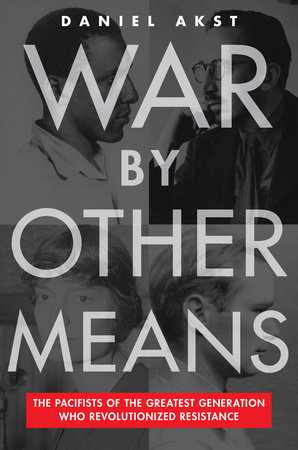 In The Trial of The Chicago Seven, the Aaron Sorkin movie about the group of anti–Vietnam War protesters charged with inciting riots at the 1968 Democratic National Convention, the focus is on the antics of Abbie Hoffman (Sacha Baron Cohen) and Jerry Rubin (Jeremy Strong). It’s a good movie but their story is not the only story. Among the Chicago Seven was an older, quieter, more bemused David Dellinger (played in the movie by John Carroll Lynch). It was not Dellinger’s first trial. In 1940 Dellinger had refused to register for the then-new draft, the first peacetime draft in America’s history, and he had been imprisoned as a conscientious objector and pro-pacifism protester. Dellinger served a year in federal prison in Danbury, CT, and upon his release, he adamantly refused to register once more. He was imprisoned for an additional two years in the maximum-security facility at Lewisburg, Pennsylvania, where he engaged in hunger strikes and endured periods of solitary confinement. Dellinger was the real deal.
In War by Other Means, Daniel Akst recaptures an older generation of anti-war, pro-pacifism protesters; people like Dellinger, the radical Catholic Dorothy Day, Bayard Rustin, Dwight MacDonald and others. This earlier group grew out of the disillusionment that many Americans felt after World War One–they resolved to never again be entangled in European death and destruction.
During the interwar period, moreover, the United States had developed perhaps the largest and best-organized pacifist movement in the world. Pacifism was part of the curriculum at some schools and firmly on the agenda of the mainline Protestant denominations that were such important institutions in the life of this churchgoing nation at the time….Pacifism was well established on campuses thanks to a massive and diverse national student anti-war movement….During the thirties pacifism, probably surpassed even the Depression as the dominant social issue in American liberal Protestantism…
It wasn’t just liberal Protestants, Pacifism also drew on the isolationist tradition:
…isolationism simply wanted to keep America out of other peoples’ bloody conflicts; it advocated strength through preparedness and put faith in the vastness of the oceans to keep us safe. “Isolationism” has become a dirty word since its heyday in the thirties, when it came into common usage. But in fact it started life as a pejorative, one used by American expansionists in the late nineteenth century to tar the righteous killjoys who objected to burgeoning US imperialism…
Regrettably, the unique blend of “left-wing” pacifism and “right-wing” isolationism, once prevalent in America, has largely vanished. Mostly vanished also is–for want of better terms–the Christian and left-wing libertarianism of people like Dellinger, Day and MacDonald, who although being on the left and hardly pro-market had a deep appreciation for individualism and civil society and a fear of the homogenizing and brutalizing role of the state.
Daniel Akst’s War by Other Means is an important and engaging look at a cast of remarkable American characters and their unique blend of ideological pacifism.
Addendum: Nick Gillespie at Reason has a very good interview with Akst.
My Conversation with Anna Keay
A very good episode, here is the audio, video, and transcript. Here is part of the episode summary:
Tyler sat down with Anna to discuss the most plausible scenario where England could’ve remained a republic in the 17th century, what Robert Boyle learned from Sir William Petty, why some monarchs build palaces and other don’t, how renting from the Landmark Trust compares to Airbnb, how her job changes her views on wealth taxes, why neighborhood architecture has declined, how she’d handle the UK’s housing shortage, why giving back the Koh-i-Noor would cause more problems than it solves, why British houses have so little storage, the hardest part about living in an 800-year-old house, her favorite John Fowles book, why we should do more to preserve the Scottish Enlightenment, and more.
And here is one excerpt:
COWEN: Which are the old buildings that we have too many of in Britain? There’s a lot of Christopher Wren churches. I think there’s over 20.
KEAY: Too many?
COWEN: What if they were 15? They’re not all fantastic.
KEAY: They’re not all fantastic? Tell me one that isn’t fantastic.
COWEN: The Victorians knocked down St. Mildred. I’ve seen pictures of it. I don’t miss it.
KEAY: Well, you don’t miss something that’s not there. I think it’d be pretty hard to convince me that any Christopher Wren church wasn’t worth hanging on to. But your point is right, which is to say that not everything that was ever built is worth retaining. There are things which are clearly of much less interest or were poorly built, which are not serving a purpose anymore in a way that they need to. To me, it’s all about assessing what matters, what we care about.
It’s incredibly important to remember how you have to try and take the long view because if you let things go, you cannot later retrieve them. We look at the decisions that were made in the past about things that we really care about that were demolished — wonderful country houses, we’ve mentioned. It’s fantastic, for example, Euston Station, one of the great stations of the world, built in the middle of the 19th century, demolished in the ’60s, regretted forever since.
So, one of the things you have to be really careful about is to make a distinction between the fashion of the moment and things which we are going to regret, or our children or our grandchildren are going to curse us for having not valued or not thought about, not considered.
Which is why, in this country, we have this thing called the listing system, where there’s a process of identifying buildings which are important, and what’s called listing them — putting them on a list — which means that if you own them, you can’t change them without getting permission, which is a way of ensuring that things which you as an owner or I as an owner might not treat with scorn, that the interest of generations to come are represented in that.
COWEN: Why were so many big mistakes made in the middle part of the 20th century? St. Pancras almost was knocked down, as I’m sure you know. That would have been a huge blunder. There was something about that time that people seem to have become more interested in ugliness. Or what’s your theory? How do you explain the insanity that took all of Britain for, what, 30 years?
KEAY: Well, I think this is such a good question because this is, to me, what the study of history is all about, which is, you have to think about what it was like for that generation. You have to think of what it was like for people in the 1950s and ’60s, who had experienced, either firsthand or very close at hand, not just one but two catastrophic world wars in which numbers had been killed, places had been destroyed. The whole human cost of that time was so colossal, and the idea for that generation that something really fundamental had to change if we were going to be a society that wasn’t going to be killing one another at all time.
This has a real sort of mirror in the 17th century, during the Civil War in the 17th century. There’s a real feeling that something had to be done. Otherwise, God was going to strike down this nation, this errant nation. I think for that generation in the ’50s and ’60s, the sense that we simply have to do things differently because this pattern of life, this pattern of existence, this way we’ve operated as a society has been so destructive.
Although lots of things were done — when it comes to urban planning and so on — that we really regret now, I think you have to be really careful not to diminish the seriousness of intent of those people who were trying to conceive of what that world might be — more egalitarian, more democratic, involving more space, more air, more light, healthier — all these kinds of things.
Definitely recommended, with numerous interesting parts. And I am very happy to recommend Anna’s latest book The Restless Republic: Britain Without a Crown.
Costco
Venture into a Costco warehouse – a more diverse place than many a university or legislature – and you will see shoppers from all walks of life gathered together in the pursuit of consumer goods. Here, people of various faiths and backgrounds peruse the aisles, in search of the latest giant screen television sets, buckets of ice cream, and rotisserie chickens, treating one another with respect, regardless of their beliefs. The only judgement passed is reserved for those who bump carts or try to skip the line. Upon departing this peacful and lively consumer’s paradise, some may venture to their respective places of worship, while others linger and indulge in a beverage and a $1.50 hot dog with friends. One family may commemorate a milestone with a baptism, another might celebrate a traditional rite of passage, while still others head to the ballpark in the comfort of their spacious SUVs. And as this diverse tapestry of personal journeys is woven, everyone finds contentment.
Pittsburgh facts of the day
I’ve always had a good time in Pittsburgh, and it’s a visually striking city in a way that I think impresses visitors. Pittsburgh has also normally had a lower homicide rate than the other important city in Pennsylvania and comparable “rust belt” cities like Cleveland and Detroit.
That generates good vibes and tends to give it a kind of broadly positive reputation. But I’m always a little bit puzzled by the notion of Pittsburgh as an urban turnaround success story. Pittsburgh had 676,806 residents in the 1950 Census. That fell steadily in the second half of the 20th century to just 334,563 residents by the 2000 Census. And then in the 21st century, while the reinvention was supposedly happening, the population just kept falling at a slower pace, and in the 2021 estimate, there were only 300,453 people left. It’s true that this is a smaller population loss than Cleveland, Detroit, or St. Louis. But it’s worse than Milwaukee or Baltimore and only very slightly better than Buffalo.
I think the main lesson of Pittsburgh is just that it underscores how severe the headwinds are for central cities that have cold winters.
Those are from Matt Yglesias ($).
The effects of Native American relocation
In this paper, I estimate the historical migratory and fertility effects of the US Relocation Program. Between 1952 and 1973, the US federal government attempted to move Native Americans off reservations and into urban areas under the promises of financial assistance and job training. Using the variation in which cities were targeted by the program, I employ a difference-in-differences strategy and estimate that the Relocation Program significantly increased the Native American population in target cities. I also find evidence that second-generation Native American women living in cities have a substantially lower fertility rate than Native American women living on tribal land. Jointly, these findings indicate that this federal program substantially shifted the spatial distribution of the Native American population in the US throughout the 20th century.
That is from a recent paper by Mary Kopriva at University of Anchorage. Are we allowed to consider whether those programs might have been good? In other contexts, don’t we call this “Moving to Opportunity”?
Anarchy in South Africa
Public services such as police, fire, and traffic control in South Africa are breaking down. Private firms are stepping in to take some of the burden. Twenty two percent of Johannesburg’s fire engines are owned and operated by private firms.
Fire Ops employs more than 60 firefighters across seven fire stations in Johannesburg and owns two fire engines—including one now sporting the same shade of blue Discovery uses for its logo and much of its branding—as well as six smaller high-pressure-pump response vehicles.
Discovery says the blue firetruck responded to 172 building fires between Fire Force’s launch through the end of January.
Mr. Ossip said the Discovery-branded truck promotes the insurer’s brand and lowers damages, including to multimillion-dollar homes in some of Johannesburg’s toniest areas. “You need to just save one or two of those a year and it is substantial savings,” he said.
The service helps alleviate a shortage of operational fire engines in Johannesburg, a spread-out city of more than 5.5 million residents, in situations where minutes can make the difference between a blaze limited to a couple of rooms and one that destroys an entire house or spreads to neighboring homes.
Robert Mulaudzi, a spokesman for the City of Johannesburg Emergency Management Services, said the city currently has about seven operational fire engines across 30 fire stations.
…Fire Ops, which invoices buildings’ owners for fire services, says that while it responds to all calls, it will give priority to clients, including Discovery policyholders, when simultaneous fires break out. Other insurers usually pick up the bill when the company puts out a fire in a home not insured by Discovery, said De Wet Engelbrecht, Fire Ops’s chief executive.
In 19th century Great Britain prosecution assocations and insurance firms were responsible for much of the policing (see Stephen Davies in The Voluntary City.) In Lessons from Gurgaon, India’s Private City (working paper) Shruti Rajagopolan and I discuss private police and fire services in modern day Gurgaon. In general, the private firms provide excellent service relative to their public counterparts but, as in Gurgaon, there are limits to how much the private firms can do without large economies of scale:
…Fire Ops also has to navigate public infrastructure that doesn’t always work, including traffic lights, fire hydrants and municipal water supplies….In September, both Fire Ops and the city’s fire department responded to a blaze at Little Forest Centre, a private special-needs school in Johannesburg, but a water shortage in the area meant all fire hydrants were empty, said Kate More, the school’s owner and principal, who isn’t a Discovery policyholder.
Despite Fire Ops sourcing water from a neighbor’s pool, the school burned down.
Addendum: In unrelated news, just one year after its grand opening Whole Foods is closing its downtown San Francisco store because they can’t ensure the safety of their employees.