Category: Law
Software is Eating the World-Tesla Edition
Last week Consumer Reports refused to recommend Tesla’s Model 3 because it discovered lengthy braking distances. This week Consumer Reports changed their review to recommend after Tesla improved braking distance by nearly 20 feet with an over the air software update!
Last week, after CR’s road test was published, Tesla CEO Elon Musk vowed that the automaker would get a fix out within days.
Until now, that type of remote improvement to a car’s basic functionality had been unheard of. “I’ve been at CR for 19 years and tested more than 1,000 cars,” says Jake Fisher, director of auto testing at Consumer Reports, “and I’ve never seen a car that could improve its track performance with an over-the-air update.”
…In retesting after the software update was downloaded, the sedan stopped in 133 feet from 60 mph, an improvement of 19 feet.
…The improved braking distances raised the Model 3’s Overall Score enough for the car to be recommended by CR
Tesla is also responding to other concerns raised by Consumer Reports. It’s quite astounding that Tesla is able to improve something as physical as braking distance with a software update and also astounding that they are able to update so quickly–even pure software firms don’t respond this quickly! Quite the win for Tesla.
The larger economic issue is that every durable good is becoming a service. When you buy a car, a refrigerator, a house you will be buying a stream of future services, updates, corrections, improvements. That is going to change the industrial organization of firms and potentially increase monopoly power for two reasons. First, reputation will increase in importance as consumers will want to buy from firms they perceive as being well-backed and long-lasting and second durable goods will be rented more than bought which makes it easier for durable goods producers not to compete with themselves thus solving Coase’s durable good monopoly problem.
Will Ethiopia be the next China?
That is the topic of my latest Bloomberg column, noting that they have been averaging about ten percent growth for the last decade. I basically make a “deep roots of state capacity” argument, here is one excerpt:
Ethiopia also had a relatively mature nation-state quite early, with the Aksumite Kingdom dating from the first century A.D. Subsequent regimes, through medieval times and beyond, exercised a fair amount of power. Most important, today’s Ethiopians see their country as a direct extension of these earlier political units. Some influential Ethiopians will claim to trace their lineage all the way to King Solomon of biblical times.
In other words, the process of organized, national-level governance has been underway for a long time. It was this relative strength of Ethiopian governance that allowed the territory to fend off colonialism, a rare achievement. It is also why, when you travel around the country, a lot of the basic cuisine doesn’t change much: Dishes are seen as national and not regional…
Like many Iranians, they think of themselves as a civilization and not just a country. They very self-consciously separate themselves from the broader strands of African history and culture. And, as in China, they hold an ideological belief that their country is destined to be great again.
Do read the whole thing.
Who’s complacent?
Or is he just an *******?:
An upstate New York judge Tuesday ordered a 30-year-old man to move out of his parents’ house after they went to court to have him ejected.
Michael Rotondo told the judge he knows his parents want him out of the split-level ranch they share. But he argued that as a family member, he’s entitled to six months more time.
State Supreme Court Justice Donald Greenwood rejected that as outrageous, the Post-Standard of Syracuse reported.
Rotondo told reporters he’ll appeal.
Mark and Christina Rotondo brought the court case after several eviction letters offering money and other help were ignored.
Here is the full story, via Michelle Dawson.
Security Over Liberty
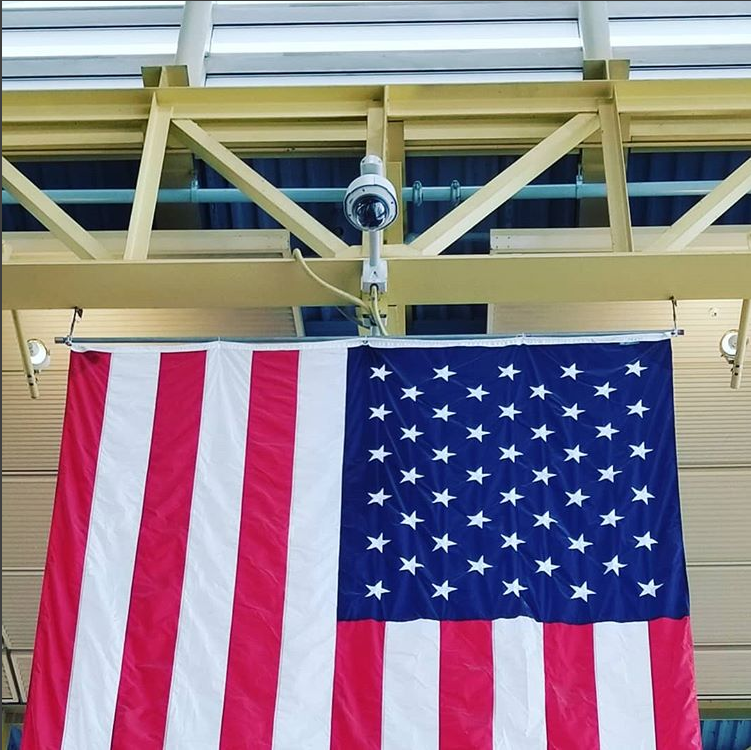
Picture taken and titled by Connor Tabarrok yesterday at Ronald Reagan National airport.
Minimum wage up, fringe benefits down
Gordon Tullock used to make this claim, as have I on many occasions:
This paper explores the relationship between the minimum wage, the structure of employee compensation, and worker welfare. We advance a conceptual framework that describes the conditions under which a minimum wage increase will alter the provision of fringe benefits, alter employment outcomes, and either increase or decrease worker welfare. Using American Community Survey data from 2011-2016, we find robust evidence that state-level minimum wage changes decreased the likelihood that individuals report having employer-sponsored health insurance. Effects are largest among workers in very low-paying occupations, for whom coverage declines offset 9 percent of the wage gains associated with minimum wage hikes. We find evidence that both insurance coverage and wage effects exhibit spillovers into occupations moderately higher up the wage distribution. For these groups, reductions in coverage offset a more substantial share of the wage gains we estimate.
That is from a new NBER working paper by Jeffrey Clemens, Lisa B. Kahn, and Jonathan Meer.
Streetcars, Subways and Segregation
In the NBER reporter, Allison Shertzer and Randall P. Walsh summarize some of the recent research on urban segregation. As a cause of early 20th century segregation, Shertzer and Walsh put somewhat more weight on white flight and local land use regulations and somewhat less on redlining and discrimination by the Federal government (although all causes were important).
One point which I had not previously considered is that technology interacted in important but unintended ways with preferences for segregation:
We hypothesize that public transportation was critical for the acceleration of white flight because streetcars and subways significantly reduced the cost of living further away from employment centers. Household preferences for racial composition could have interacted with municipal infrastructure investments to increase residential segregation. Such a finding would further underscore the lesson that policies that were race-neutral on their face likely contributed to the development of segregated cities.
*Accounting for Capitalism: The World the Clerk Made*
That is the title of a new and excellent book by Michael Zakim. Here is one bit:
A single block fronting Wall Street in 1850 was thus home to seventeen separate banking firms, as well as fifty-seven law offices, twenty-one brokerage houses, eleven insurance companies, and an assortment of notaries, agents, importers, commission merchants, and, of course, stationers. A rental market for office “suites” developed apace “fitted up with gas and every other convenience,” which also included newly invented “acoustic tubes” that allowed managing partners to communicate with porters in the basement and clerks in the salesroom without ever having to leave their desks…
All this office activity spurred a flurry of technological spillovers that included single standing desks and double-counter desks, sitting desks featuring nine or, alternately, fifteen pigeonholes, and drawers that could or could not be locked. “Office chairs capable of swiveling and tilting became available as well, together with less costly “counting house stools” that lacked any upholstery. Paperweights, check cutters, pen wipers (the woolen variety being preferable to silk or cotton, which tended to leave fibers on the nib), pencil sharpeners, rulers, copying brushes, dampening bowls, blotting paper (less important for absorbing excess ink than for protecting the page from soiled hands), wastepaper baskets, sealing wax (including small sticks coated with a combustible material ignited by friction and designed to be discarded after a single use), seal presses, paper fasteners, letter clips (for holding checks while entering them into the daybook), writing pads, billhead and envelope cases, business cards, receiving boxes for papers and letters, various trays (for storing pins, wafers, pencils, and pens), and “counting room calendars” spanning twelve- or sixteen-month cycles — all became standard business tools. So did the expanding inventory of “square inkstands,” “library inkstands,” and “banker inkstands” designed with narrow necks which prevented evaporation and shallow bodies that kept the upper part of the pen from becoming covered in ink, thus avoiding blackened fingers and smudged documents.
There is then a whole other paragraph about the different kinds of paper that developed and their importance for clerical work. This is perhaps the most thorough book I know on the importance of “small” innovations, and it is also a useful book on the history of accounting.
Legalize pot, but don’t normalize it
That is the topic of my latest Bloomberg column. Here is one bit:
You might wonder why we should be so worried about public marijuana use. To put it bluntly, I see intelligence as one of the ultimate scarcities when it comes to making the world a better place, and smoking marijuana does not make people smarter. Even if you think there is no long-term damage, right after smoking a person is less able to perform most IQ-intensive tasks (with improvisational jazz as a possible exception). By having city streets filled with pot, pot stores and the odor of pot, we are sending a signal that our society isn’t so oriented toward the intellect or bourgeois values. Even if that signal is reflecting a good bit of truth, it would be better not to acknowledge it too openly, just as most advocates of legalized prostitution don’t want to allow brothels on Main Street.
Basically I want full legality, but in some locales (California, Colorado) stronger restrictions on its place in the public sphere. Do read the whole thing.
Money for Blood is Good for All
The Economist: For years [Barzin Bahardoust] has been trying to pay Canadians for their blood plasma—the viscous straw-coloured liquid in blood that has remarkable therapeutic powers. When his firm, Canadian Plasma Resources (CPR), tried to open clinics in Ontario in 2014, a campaign by local activists led to a ban by the provincial government on paid plasma collection. Undeterred, he tried another province, Alberta—which also banned the practice last year. Then, on April 26th, when CPR announced a planned centre in British Columbia, its government said it too was considering similar legislation. CPR has managed to open two centres, in far-flung Saskatchewan and New Brunswick. Even these have faced opposition.
The global demand for plasma is growing, and cannot be met through altruistic donations alone. Global plasma exports were worth $126bn in 2016—more than exports of aeroplanes.
…Only countries that pay for plasma are self-sufficient in it. (Italy, where donors are given time off work, is close to self-sufficiency.) Half of America’s plasma is shipped to Europe—20m contributions-worth. Canada imports 80% of its plasma products from America. Australia imports 40% of its plasma products, too.
It’s a very odd “ethical policy” that leads Canadian provinces to ban paying Canadians for plasma but then import paid plasma from the United States. I am one of the signatories (along with Al Roth, Vernon Smith and Gerald Dworkin among others) of a letter that argues for the efficiency and ethics of allowing compensation for blood plasma donation. The Economist riffs of this letter in a very good op-ed:
The aversion to paid plasma rests on three reasonable-sounding but largely groundless propositions. The first is that it is unsafe. Payment might encourage donors to conceal dangerous behaviour—such as intravenous drug use. In the 1980s and 1990s, tainted blood products infected half the world’s haemophiliacs with HIV, along with tens of thousands of plasma donors in China. But modern plasma products do not carry such risks. They are heat-treated and bathed in chemicals to sanitise them (an impossibility for blood for transfusion). Since the adoption of these techniques there has not been a single case of transmission of HIV or hepatitis via plasma products. Doctors agree that plasma products from paid donors are just as safe as those from unpaid ones.
A second argument is that, if people are paid for their plasma, fewer will volunteer to donate whole blood for transfusions. (Paying for whole blood would be unwise, since it cannot be sterilised as plasma can.) But there is no evidence that paying for plasma diminishes the supply of donated blood. That is why, in Canada, more than 30 economists and philosophers wrote an open letter arguing against bans on paid plasma. Americans voluntarily donate as much blood per person as do Canadians.
A third argument is that paying for plasma preys on the poor. It is possible that those selling plasma need the money and therefore might give too often. In America plasma donors can give twice a week; those in Europe can give just once a week. There is no evidence of harm to their health in either case, but more long-term study would be prudent.
Those against allowing payment suggest using voluntary donors instead. Yet every country that does not pay ends up importing plasma. And the fact that America is by far the dominant supplier carries risks of its own. The dependence on a single source leaves the rest of the world vulnerable to an interruption of supply. To protect their people, therefore, other governments need to diversify their supplies of plasma. Paying for it would make a big difference.
The new UK cap and trade?
High street newsagents are to sell so-called “porn passes” that will allow adults to visit over-18 websites anonymously.
The 16-digit cards will allow browsers to avoid giving personal details online when asked to prove their age.
Instead, they would show shopkeepers a passport or driving licence when buying the pass.
For the pointer I thank a loyal MR reader.
The economics of cousin marriage
The title of the article is “Cousin Marriage Is Not Choice: Muslim Marriage and Underdevelopment,” by Lena Edlund, and here is the abstract:
According to classical Muslim marriage law, a woman needs her guardian’s (viz. father’s) consent to marry. However, the resulting marriage payment, the mahr, is hers. This split bill may lie behind the high rates of consanguineous marriage in the Muslim world, where country estimates range from 20 to 60 percent. Cousin marriage can stem from a form of barter in which fathers contribute daughters to an extended family bridal pool against sons’ right to draw from the same pool. In the resulting system, women are robbed of their mahr and sons marry by guarding their sisters’ “honor” heeding clan elders.
From the new May American Economic Review.
Low-skilled immigration seems to boost support for Republicans
In this paper we study the impact of immigration to the United States on the vote for the Republican Party by analyzing county-level data on election outcomes between 1990 and 2010. Our main contribution is to separate the effect of high-skilled and low-skilled immigrants, by exploiting the different geography and timing of the inflows of these two groups of immigrants. We find that an increase in the first type of immigrants decreases the share of the Republican vote, while an inflow of the second type increases it. These effects are mainly due to the local impact of immigrants on votes of U.S. citizens and they seem independent of the country of origin of immigrants. We also find that the pro-Republican impact of low-skilled immigrants is stronger in low-skilled and non-urban counties. This is consistent with citizens’ political preferences shifting towards the Republican Party in places where low-skilled immigrants are more likely to be perceived as competition in the labor market and for public resources.
Here is the NBER paper by Anna Maria Mayda, Giovanni Peri, and Walter Steingress.
Euthanasia and bargaining power within the family
Let’s say more of the world moves to a Netherlands-style euthanasia law. While euthanasia is at first based on individual consent, it usually evolves into a “in unclear cases your spouse or guardian has the actual say.”
How will this affect bargaining power within the family? Here are a few options:
1. Family members will be much nicer to each other, ex ante, so they will be kept around for longer if they come down sick.
1b. Because of time consistency problems, family members won’t be much nicer with each other.
1c. You fear that family members aren’t willing enough to pull the plug on you, so you become actively less nice.
2. Family members will be much more anxious with each other, because they will so often be wondering how the others will wish to dispose of them, and when.
3. Some family members will make explicit ex ante deals, such as: “You can send me to my doom when the time comes, with a clear conscience, but on Tuesday nights we’re going to watch my game shows, not your reality TV.”
4. “It stresses me out that you are stressed out over my dying, so I will apply for euthanasia right here and now, even though I still have nine months to live with my cancer. Except I will tell you that I just don’t want to live any longer, so you don’t feel bad about why I am doing this.”
5. You have no family and given your illness you are a net revenue drain on your nursing home. If you go back to live out your final days, you’ll end up with the worst room and less spicy food and no private TV. You agree to euthanasia, granted that they send $20,000 to your favorite charity. You leave this earth with a warm glow, feeling that 20k probably saved at least one life. In reality, with p = 0.68 it subsidized someone’s overhead.
What else?
Rooftop Solar is Expensive and Inefficient
Noted UC Berkeley energy economist Severein Borenstein writes against the proposal to make solar required on all new residential construction:
Dear Commissioner Weisenmiller:
I just became aware in the last few days of the proposal in the new building energy efficiency standards rule making to mandate rooftop solar on all new residential buildings. I want to urge you not to adopt the standard. I, along with the vast majority of energy economist, believe that residential rooftop solar is a much more expensive way to move towards renewable energy than larger solar and wind installations. The savings calculated for the households are based on residential electricity rates that are far above the actual cost of providing incremental energy, so embody a large cross subsidy from other ratepayers. This would be a very expensive way to expand renewables and would not be a cost-effective practice that other states and countries could adopt to reduce their own greenhouse gas footprints.
Because I, and most other economists studying California’s energy policy, just became aware of this proposal, we have not had time to participate in the policy process or write public documents on the subject. At the least, I would urge you to delay adopting such a rule until independent analysis from energy experts can be made part of the record.
I will add that I have no financial interest in any energy company. I am expr essing my views purely in the interestof moving forward with California’s fight against climate change in a cost-effective way that can be exported to other states and countries.
Sincerely, Severin Borenstein
I agree and would add that allowing more building near transit and other hubs as with California’s rejected SB827 would not only lower housing prices, rather than raise them as with this proposal, it would also be a much better way of reducing carbon emissions and saving energy.
Germany fact of the day
Germany recorded an almost 10 per cent drop in crime last year to its lowest level since the early 1990s despite perceptions that the arrival of more than a million asylum seekers would lead to a rise in offences.
…Overall, violent crime was down by 1.7 per cent last year, the Interior Ministry said, although refugees and asylum seekers were proportionately over-represented in sexual assault cases.
Here is the (gated) Times of London piece. Ahem…
For the pointer I thank a loyal MR reader.