Category: Law
Happy public domain day!
I received this email from James Boyle at Duke:
Dear Tyler, An early Happy New Year to you and your family — I hope all is well? You may remember our annual survey of the stuff that would be entering the public domain if we had the copyright laws from 1976.
The list this year is a particularly scrumptious one. The mouseover of the book covers is another pleasure.· Samuel Beckett, Endgame (“Fin de partie”, the original French version)· Jack Kerouac, On the Road (completed 1951, published 1957)· Ayn Rand, Atlas Shrugged· Margret Rey and H.A. Rey, Curious George Gets a Medal· Dr. Seuss (Theodor Geisel), How the Grinch Stole Christmas and The Cat in the Hat· Eliot Ness and Oscar Fraley, The Untouchables· Northrop Frye, Anatomy of Criticism: Four Essays· Walter Lord, Day of Infamy· Studs Terkel, Giants of Jazz· Corbett H. Thigpen and Hervey M. Cleckley, The Three Faces of Eve· Ian Fleming, From Russia, with Love· A.E. Van Vogt, Empire of the Atomhttp://web.law.duke.edu/cspd/publicdomainday/2014/pre-1976
Movies:
The Incredible Shrinking Man, The Bridge on the River Kwai, A Farewell to Arms, Gunfight at the O.K. Corral, 3:10 to Yuma, 12 Angry Men, Jailhouse Rock, Funny Face, An Affair to Remember, Nights of Cabiria and The Seventh Seal..
(Is this list depressing when set against 2013?)
In the world of fine arts, Picasso’s Las Meninas set of paintings… only themselves legal because no copyright covered Velazquez’s.. would also be entering the public domain.
John Cochrane on portable health insurance
The entire Op-Ed is interesting and noteworthy, but the part on health insurance is perhaps the cutting edge of the piece analytically:
Health insurance should be individual, portable across jobs, states and providers; lifelong and guaranteed-renewable, meaning you have the right to continue with no unexpected increase in premiums if you get sick. Insurance should protect wealth against large, unforeseen, necessary expenses, rather than be a wildly inefficient payment plan for routine expenses.
People want to buy this insurance, and companies want to sell it. It would be far cheaper, and would solve the pre-existing conditions problem. We do not have such health insurance only because it was regulated out of existence. Businesses cannot establish or contribute to portable individual policies, or employees would have to pay taxes. So businesses only offer group plans. Knowing they will abandon individual insurance when they get a job, and without cross-state portability, there is little reason for young people to invest in lifelong, portable health insurance. Mandated coverage, pressure against full risk rating, and a dysfunctional cash market did the rest.
Rather than a mandate for employer-based groups, we should transition to fully individual-based health insurance. Allow national individual insurance offered and sold to anyone, anywhere, without the tangled mess of state mandates and regulations. Allow employers to contribute to individual insurance at least on an even basis with group plans. Current group plans can convert to individual plans, at once or as people leave. Since all members in a group convert, there is no adverse selection of sicker people.
I suppose my worry is this. As individuals age, they will become greater health risks and that will hold even if Cochrane keeps Medicare going. That means a higher price for their individual portable insurance. It is not clear to me under what conditions premia can be raised legally (what does “unexpected increase” mean?), but it seems the result is much higher premia for sick people, or legally-mandated low premia, but then providers will restrict access and lower the quality of care, as another means of raising the price of course. Contractually speaking, price is verifiable but quality of care is not. The overall problem is not one of “adverse selection” but rather simply that the good information of the suppliers means that insurance is hard to sell at all for many conditions.
I do understand the option of letting the premia rise, and selling insurance against that event too, and maybe that could work. Still, it is surprising how many insurance markets don’t really blossom even if it seems they would make economic sense. Just ask Robert Shiller or look at the earlier history of failed CPI futures. I’d like to experiment with Cochrane’s idea, which I think has real promise, but on a trial basis first. The question is what such a trial might actually mean, and who would be willing to give up their current arrangements to make such an experiment possible. If the recent Obamacare reactions show anything, it is that status quo bias is getting stronger all the time in matters of health care.
Might this be another “doubly stupid” economic policy?
The first part is this:
Thousands of disgruntled horse and pony riders rode through the French capital to complain about tax increases they say will put many of them out of business and send 80,000 animals to the abattoir.
The “cavaliers” blocked roads from the symbolic Paris squares, Place d’Italie, Place de la Bastille and Place de la Nation, in protest at government plans to almost treble VAT on equestrian centres.
The response of the government is this:
France has about 700,000 horse-riding instructors and 2.3 million people who ride, 82% of them women. It is the third most popular sport in France.
The government has promised subsidies to prevent riding schools from going under…
The article is here, and I thank Phil Steinmeyer for the pointer. Here is a previous example of a multiply stupid policy, strange how they both involve horses…
Another Obamacare glitch
Stella Paul reports:
Millions are losing their health insurance policies and being forced onto the ObamaCare exchanges, where most plans only provide local medical coverage. As Americans realize they must pay for all non-emergency medical care when they leave their home county.
The pointer is from Arnold Kling.
What will the ECB banking union look like?
Wolfgang Münchau has the scoop:
This banking union will produce the financial sector equivalent of austerity – a secular credit crunch.
To see this, one needs to understand how banking union is going to work. The European Central Bank, in its role as supervisor, has started a comprehensive assessment of the banking sector. As part of this exercise, it assesses financial risks, takes an in-depth look at balance sheets, and subjects banks to stress tests. This exercise is going to end with a demand that some banks raise their capital.
But without a common fiscal backstop, it lacks credibility. The ECB will be in no position to demand that banks raise capital if there is no backstop. It would risk financial instability if it exposed a bank as undercapitalised that has no access to outside capital. The resolution fund will not be able to help because it will not be fully mutualised for a decade. At the start all risks will remain within the member states.
Unlike the Federal Deposit and Insurance Corporation of the US, the eurozone’s resolution fund will have no credit line.
…Economically, this is 1990s Japan all over again, probably worse given the periphery’s dire economic state. The banking system in the eurozone will not be able to supply the economy with sufficient credit, except in creditor countries. The economic consequences of what finance ministers hailed as a “historic” decision will be substantially negative.
A Few Favorite Books from 2013
Tom Jackson asked me for a couple of best books for his year end column. I don’t read as many books as Tyler so consider these some favorite social science books that I read in 2013.
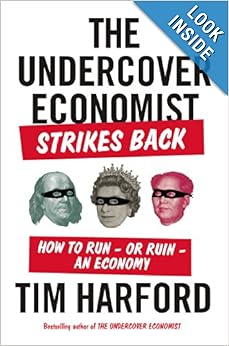 In The Undercover Economist Strikes Back, Tim Harford brings his genius for storytelling and the explanation of complex ideas to macroeconomics. Most of the popular economics books, like The Armchair Economist, Freakonomics, Predictably Irrational and Harford’s earlier book The Undercover Economist, focus on microeconomics; markets, incentives, consumer and firm choices and so forth. Strikes Back is that much rarer beast, a popular guide to understanding inflation, unemployment, growth and economic crises and it succeeds brilliantly. Mixing in wonderful stories of economists with exciting lives (yes, there have been a few!) with very clear explanations of theories and policies makes Strike Back both entertaining and enlightening.
Stuart Banner’s American Property is a book about property law, which sounds like an awfully dull topic. In the hands of Banner, however, it is a 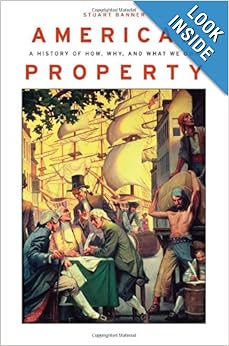 fascinating history of what we can own, how we can own it and why we can own it. Answers to these questions have changed as judges and lawmakers have grappled with new technologies and ways of life. Who owns fame? Was there a right to own one’s own image? Benjamin Franklin, whose face was used to hawk many products, would have scoffed at the idea but after the invention of photography and the onset of what would later be called the paparazzi thoughts began to change. In the early 1990s, Vanna White was awarded $403,000 because a robot pictured in a Samsung advertisement turning letters was reminiscent of her image on the Wheel of Fortune. American Property is a great read by a deep scholar who writes with flair and without jargon.
On June 3, 1980, shortly after the Soviet Union’s invasion of Afghanistan, the U.S. president’s national security adviser was woken at 2:30 am and told that Soviet submarines had launched 220 missiles at the United States. Shortly thereafter he was called again and told that 2,200 land missiles had also been  launched. Bomber crews ran to their planes and started their engines, missile crews opened their safes, the Pacific airborne command post took off to coordinate a counter-attack. Only when radar failed to reveal an imminent attack was it realized that this was a false alarm. Astoundingly, the message NORAD used to test their systems was a warning of a missile attack with only the numbers of missiles set to zero. A faulty computer chip had inserted 2’s instead of zeroes. We were nearly brought to Armageddon by a glitch. If that were the only revelation in Eric Schlosser’s frightening Command and Control it would be of vital importance but in fact that story of near disaster occupies just one page of this 632 page book. The truth is that there have been hundreds of near disasters and nuclear war glitches. Indeed, there have been so many covered-up accidents that it’s clear that the US government has come much closer to detonating a nuclear weapon and killing US civilians than the Russians ever did. Thankfully, we have reduced our stockpile of nuclear weapons in recent years but, as in so many other areas, we are also more subject to computers and their vulnerabilities as we make decisions at a faster, sometimes superhuman, pace. Command and control, Schlosser warns us, is an illusion. We are one black swan from a great disaster and if this is true about the US handling of nuclear weapons how much more fearful should we be of the nuclear weapons held by North Korea, Pakistan or India?
The Israel boycott is endorsed by the American Studies Association and Corey Robin
By a 2-1 margin, “An association of American professors with almost 5,000 members has voted to endorse an academic boycott of Israeli colleges and universities…” My earlier criticism of the boycott was here. A good Michael Kazin critique is here. Corey Robin defends the proposed boycott here. Robin’s argument is that change has to start somewhere, and we cannot boycott everything, so we might as well start with some boycotts that could work, even if that means singling out some targets unfairly.
I would start by applying a different standard. I would focus on the demands of the boycotters, and ask what is the chance that meeting those demands would work out well. The demands of the boycotters, in this case, include having Israel grant the “right of return” to Palestinians to the current state of Israel.
Now I understand the justice-based case for such a right, but what about the practicalities of such a change? The most striking feature of Robin’s boycott defense is that he doesn’t bother to argue this point.
In my untutored view, the chances that granting such rights would lead to outright civil war is at least p = 0.1, possibly much more, and the chances that such a change leads to a better outcome, in the Benthamite sense, are below p = 0.5. I readily grant these estimates may be wrong, but I don’t think they are absurdly wrong or implausible and in fact they represent a deliberate attempt on my part to eschew extreme predictions. An educated person or even a specialist might arrive at similar estimates or even more pessimistic ones. I would be curious to read Robin’s assessment.
By the way, you might think that the potential for bad outcomes is “the fault of the Israelis,” but that bears on the justice question, not on the Benthamite question. Don’t use “emotional allocation of the blame” to distract your attention from the positive questions at hand.
Why don’t we look at the world of science, where academic collaboration is actually um…useful?:
In science, however, the boycott movement has so far made comparatively few inroads.
“For us, it’s meaningless,” said Yair Rotstein, the executive director of the United States-Israel Binational Science Foundation (BSF), which was established in 1972 with an endowment funded by both countries. The boycott, he said, is something blown up in the media: for all practical purposes, “there really is no boycott.” Rotstein said that of about 7,000 requests to prospective external reviewers it sends each year, the foundation gets just one response on average from a scientist declining for political reasons.
Meanwhile, the BSF grants about $16 million in awards each year to American and Israeli scientists working on joint projects, having funded over the years, according to Rotstein, 42 Nobel Laureates. And since 2012, the BSF has partnered with the National Science Foundation to support collaborative research in biology, chemistry, computational neuroscience and computer science (The BSF gets an additional $3 million a year from the Israeli government to support these joint BSF-NSF projects.)
I still say this is not a boycott worth supporting. If we are going to do boycotts, and if we need to do boycotts, let’s do boycotts whose terms have a clearly positive Benthamite value with a minimum of extreme downside risk. There are plenty of those, and remember, we’ve been told that we need to be selective.
We’re back again to this whole thing being a lot of posturing. Note that the Palestinian government does not itself support boycotts of Israel. How about a small amount of solidarity with them?
Who disapproves of Obamacare?
I was somewhat surprised by these numbers:
Fifty-three percent of the uninsured disapprove of the law, the poll found, compared with 51 percent of those who have health coverage. A third of the uninsured say the law will help them personally, but about the same number think it will hurt them, with cost a leading concern.
I wonder if any of this poll was conducted in Spanish, and if not whether that would have changed the results. I found this interesting too:
Of the uninsured who said they were not likely to sign up by the deadline, fully half said it was because of the high cost. Twenty-nine percent said they planned to go without coverage because they object to the government’s requiring it, and 11 percent said they did not need health insurance.
And this:
Seventy-seven percent of the uninsured said they disapproved of the mandate, compared with 65 percent of those who already have health insurance.
China moves against Bitcoin
China’s biggest Bitcoin exchange was forced to stop accepting renminbi deposits on Wednesday, sending the price of the virtual currency tumbling in one of its biggest markets globally.
You will find more here, and FT coverage here. Since Tuesday, the price of Bitcoin in China has fallen more than thirty percent. Here is my earlier post on China and Bitcoin., where I wrote “If Beijing shuts down BTC China, the main broker, which by the way accounts for about 1/3 of all Bitcoin transactions in the world, the value of Bitcoin very likely will fall.” And here is Hal Varian on Bitcoin.
From the comments, on lotteries and education
John S. wrote:
States don’t use lottery proceeds to *increase* funding to schools. They tie the lottery to education as a marketing gimmick, both to sell it to the voters initially, and then to deflect criticism (what do you mean you don’t like the lottery — are you anti-education?) See http://goo.gl/f5b55R
We’re told we need lotteries because people would gamble anyway, and yet a large fraction of lottery revenues go toward advertising, presumably so that people don’t lose interest in it.
I also liked the remarks from ant1900:
This (http://en.wikipedia.org/wiki/Racino) suggests that the appeal of racinos is being able to bring in slot machines to an existing race track. After reading only a few pages of ‘Addiction by Design’ I can see why. The smart machines are now subsidizing the humans and the horses. The horses are probably the hook that convinces voters to allow horse tracks to expand into slot machines (‘we have had the hose track for many years and that has worked out ok, and they are already regulated and already in the gambling business, so let’s let them expand into slot machines, which is not a huge leap from betting on horses’).
Software Patents
Excellent column by Gordon Crovitz in the WSJ on patents and the prospects for reform:
Today’s patent mess can be traced to a miscalculation by Jimmy Carter, who thought granting more patents would help overcome economic stagnation. In 1979, his Domestic Policy Review on Industrial Innovation proposed a new Federal Circuit Court of Appeals, which Congress created in 1982. Its first judge explained: “The court was formed for one need, to recover the value of the patent system as an incentive to industry.”
The country got more patents—at what has turned out to be a huge cost. The number of patents has quadrupled, to more than 275,000 a year. But the Federal Circuit approved patents for software, which now account for most of the patents granted in the U.S.—and for most of the litigation. Patent trolls buy up vague software patents and demand legal settlements from technology companies. Instead of encouraging innovation, patent law has become a burden on entrepreneurs, especially startups without teams of patent lawyers.
…A system of property rights is flawed if no one can know what’s protected. That’s what happens when the government grants 20-year patents for vague software ideas in exchange for making the innovation public. In a recent academic paper (pdf), George Mason researchers Eli Dourado and Alex Tabarrok argued that the system of “broad and fuzzy” software patents “reduces the potency of search and defeats one of the key arguments for patents, the dissemination of information about innovation.”
…For now, the best prospect for real reform is in the Supreme Court, which earlier this month agreed to hear CLS Bank v. Alice Corp., a case about whether a bank’s computerized process for settling transactions via an escrow can be patented. A judge on the appeals court noted this idea was “literally ancient,” developed during the Roman Empire, and should not get a patent now just because a computer is involved.
I think it is too early to call CLS Bank v. Alice Corp. an obituary for software patents as The Economist does but real patent reform is stronger than I thought it would be even 6 months ago.
Addendum: Here is my 2 minute video on some of the problems with patents.
Triply stupid policies
Doubly stupid policies are pretty common, but here is a triply stupid one:
Unique to racino legislation is the allocation of a statutorily set percentage of gaming revenue to purses to support racing and breeding operations in the state.
So what are the three layers of stupidity here? First, there shouldn’t, as a special legal category, be racinos (that’s casino-style gaming at racetracks). Second, this legislation is a response to competition from state lotteries, which in general I do not favor. Third, the money from a dubious policy should not be spent “to support racing and breeding operations in the state.” Those operations can pay their own way: how about spending the money on poor people, rather than on sectors which extract money from a disproportionately lower income clientele? Or spending money on animal welfare without at the same time having to subsidize a “legally privileged against competitors” commercial sector?
So what is the background here?
A key theme of the enabling legislation in most states permitting casino-style gaming at racetracks [i.e., racinos] is preservation of the racehorse and greyhound racing and breeding industries in light of competition from other forms of gaming, such as state lotteries and casinos.
In other words, the racinos receive special legal exemptions to help the racetracks compete with state lotteries. (Why not opt for the simpler solution of no state lottery in the first place? Or some other notion of a regulatory level playing field? Oh, how my brain HURTS to ponder how this “problem” arose in the first place.) But it gets worse. Often “racino gaming devices” are placed under the state lottery’s regulatory authority. (Note to self: when attempting to protect B against competitive ravages from A, do not appoint A as regulatory overseer of B.)
So might we have a quadruply stupid policy here?
But wait, on second thought government lotteries, while I do not favor them, perhaps should not be described as “stupid” policies, since there are some reasonable albeit in my view misguided arguments on their behalf. So maybe we are just back to triply stupid after all, I am not sure.
That is all from Richard Thalheimer’s “The Economics of Racetrack-Casino (Racino) Gambling,” from The Oxford Handbook of the Economics of Gambling, edited by Leighton Vaughan Williams and Donald S. Siegel.
Dear readers, can you think of examples of triply or even quadruply stupid laws and policies?
Guns, Suicides and Natural Experiments
Slate has a number of articles today on guns and violence including It’s Simple: Fewer Guns, Fewer Suicides by Justin Briggs and myself. The Slate article is based on our paper that I covered in an earlier post but here is some new material including one stunning fact that got cut from the Slate piece:
Suicide kills more people than all of the world’s armed conflicts combined.
and the results of two important natural experiments:
..our findings appear robust and are consistent with a series of “natural experiments” from around the world. For example, following the 1996 killing of 35 people in Port Arthur, Australia, a strong movement for gun control developed in Australia. States and territories made uniform and more stringent regulations for the possession of firearms, and instituted a buy-back of the newly illegal guns, most of which were rifles and shotguns. As Andrew Leigh and Christine Neill determined in a paper published in the American Law and Economics Review, these changes resulted in a reduction of the country’s firearm stock by 20 percent, or more than 650,000 firearms, and evidence suggests that it nearly halved the share of Australian households with one or more firearms. The effect of this reduction was an 80 percent fall in suicides by firearm, concentrated in regions with the biggest drop in firearms. Meanwhile there was little sign of any lasting rise in non-firearm suicides.
Suicide is a leading cause of death among adolescents and young adults, and limiting access to guns during those formative, sometimes unsteady years can have a real effect on suicides. In Israel most 18- to 21-year-olds are drafted into the Israeli Defense Forces and provided with military training—and weapons. Suicide among young IDF members is a serious problem. In an attempt to reduce suicides, the IDF tried a new policy in 2005, prohibiting most soldiers from bringing their weapons home over the weekends. Dr. Gad Lubin, the chief mental health officer for the IDF, and his co-authors estimate that this simple change reduced the total suicide rate among young IDF members by a stunning 40 percent. It’s worth noting that even though you might think that soldiers home for the weekend could easily delay suicide by a day or two, the authors did not find an increase in suicide rates during the weekdays. These results are consistent with interviews with near-fatal suicide survivors, who often say their decision was spontaneous and who typically go on to live long lives.
Our Slate article also includes a cost-benefit calculation that will probably upset many people.
Addendum: By popular demand Elsevier has given us a link to our research article, Firearms and Suicides in US states (pdf), that should work for everyone until late January.
Does Basel III encourage banking fragmentation in Europe?
I had not considered this point before:
Basel III and related regulation generally work against building scale. Larger capital charges based on size, leverage and complexity, and a bias toward ringfenced subsidiaries, may make for a safer global banking system, but applied across euro area countries, and in the absence of a strong banking union, they constitute a recipe for less efficiency and greater fragmentation.
It is an excellent piece by Gene Frieda (FT gated), here is more, on the consequences of an imperfect banking union:
Banks will continue to hold primarily national assets and their size will be constrained by their resident deposit bases. Any reconvergence of funding costs comes not as a function of greater confidence, but from the forced reimposition of national financing constraints.
Loan pricing, on the other hand, will remain highly differentiated amid elevated periphery default risk, as highly indebted economies will be unable to grow their way out of a debt trap. A complete banking union would remove these national financing constraints and promote a greater flow of credit to viable entities.
This will lead to strong deflationary pressures and indeed you will note that private loan growth in the eurozone remains negative, a sign the crisis is not over. And then there is this:
Finally, given the lack of common fiscal backstops for the banking sector, the ECB’s independence is compromised. Indeed, without a credible backstop, supervisory responsibilities cannot be separated, giving rise to conflicts between monetary policy and financial stability objectives.
I would add that a full and perfect banking union probably is politically impossible, not just by a small amount but by a long mile. Berlin/Brussels cannot guarantee a country’s banks without also guaranteeing the sovereign as well, either directly or indirectly (in the limiting case, imagine that sovereign nationalizing a bank to get the guarantee explicitly). I just don’t see that in the cards.
From the comments, on Dodd-Frank
This is on the Volcker Rule:
My own view (and I’m a banking lawyer) is that the ban on proprietary trading will have an immaterial effect on the asset size of banking organizations. It might reduce their complexity.
An overlooked issue is that Volcker applies throughout the banking organization. That is, the ban on proprietary trading is not limited to the federally insured depository institution and restricts the activities of all of the affiliates of the depository institution. That’s a dramatic expansion in scope, with questionable policy justifications.
Another overlooked issue is that Volcker also bans investments in certain types of investment funds. Some think this is simply a ban on investments in private equity and hedge funds that is intended to avoid regulatory arbitrage around the proprietary trading restrictions. The statutory definition of covered funds was sloppy, and so the covered fund restrictions are actually much broader – and without any apparent policy purpose. This is particularly a problem for foreign banking organizations, as it looks that Volcker will have a broad extraterritorial scope.
To me, one of the more interesting aspects of Volcker is its implications for administrative law. There are many who would prefer that Congress delegate less to the administrative agencies and instead legislate with particularity. The Volcker experience suggests that might not always work well. The statute defines “private equity and hedge fund,” “proprietary trading,” “solely outside the United States,” etc. with particularity, but those definitions are generally not well-connected to the underlying policy concerns. The statutory language really left the regulators with few options to salvage a good and sensible rule. We probably would have been better off had Congress deferred more to the agencies here.
Finally, as a general matter, the difference between “security” (subject to the proprietary trading ban) and “loan” (not subject) probably isn’t a distinction that matters when it comes to the safety and soundness of banking organizations. Stepping back a bit, it’s hard to imagine what, why and how Volcker is up to.