Category: Science
Superconducting Levitation
You have probably seen a super-cool levitation video before but this one has a nice explanation of the effect and a Mobius strip.
Hat tip: Boing Boing.
What is the political equilibrium when insect-sized drone assassins are available?
Not bee drones, rather drone drones, with military and terrorist capabilities. There is already a (foiled) terror plot using model airplanes. How easy would it be to stop a mechanical “bee” which injects a human target with rapidly-acting poison? You can see the problem.
I have considered a few possibilities:
1. Insect-sized drones won’t make a big difference, because there are few wannabe assassins in any case. Similarly, not many people organize random attacks in shopping malls today, or try to drop poison in supermarket jars, even though such attacks are not technologically difficult.
2. Not getting caught makes all the difference, and the insect-sized drones will be hard to trace. All high-status figures who appear in public will be assassinated, so they stop appearing in public. (Where does this line get drawn? Can lieutenant governors appear in public? Or does the highest status individual who appears in public get assassinated in any case?)
3. We set up drone zappers around the rings of all major cities and high status figures stay within the confines of these safety zones. The travel industry takes a hit, as does the population of starlings. Still, some hostile drones get through the zappers and conduct some assassinations.
4. As with nuclear weapons, only the United States and other wealthy, respectable countries will have access to insect-sized drones.
5. Terror groups will be negligible in size, insider trading motives will be weak (CEOs are potential victims too), and a rationale of mutually assured insect destruction will prevail.
None of these sound especially assuring. Here is a brief survey on insect-sized drones. Here are additional readings.
As I once wrote, someday we may be longing for the era of the great stagnation.
Where this all is leading
I.B.M.’s Watson, the supercomputing technology that defeated human Jeopardy! champions in 2011, is a prime example of the power of data-intensive artificial intelligence.
Watson-style computing, analysts said, is precisely the technology that would make the ambitious data-collection program of the N.S.A. seem practical. Computers could instantly sift through the mass of Internet communications data, see patterns of suspicious online behavior and thus narrow the hunt for terrorists.
Both the N.S.A. and the Central Intelligence Agency have been testing Watson in the last two years, said a consultant who has advised the government and asked not to be identified because he was not authorized to speak.
There is more here, pointer is from Claudia Sahm.
The innovations issue of *The New York Times*
You will find it here, and clicking through the side show of previous innovations, and their history, is fascinating. I enjoyed this part of the accompanying write-up from Hugo Lindgren:
On his blog, Marginal Revolution, Cowen furthers his point by declaring sarcastically that “there is no great stagnation” and providing links to silly products or applications of technology, like a machine that tosses popcorn into your mouth from up to 15 feet away. It’s called The Popinator. Someone thought this up — first as a marketing stunt, but now they’re trying to make an actual product. Someone also thought up the Ostrich Pillow, a big, comfy thing that you can stick your head into and nap in public places. My favorite of Cowen’s collection is a gun for shooting salt pellets at insects — the Bug-A-Salt! I also like the remote-controlled cockroach, a technology which has not yet been commercialized. But maybe one day.
Cowen’s point is that under the hood of our hallowed free market is a bazaar of nutty, half-cocked ideas which do not advance the greater cause of humanity one tiny bit. But there’s another interpretation, too, which is: The sheer volume and range of these inventions demonstrate a rapidly growing range of problem solvers with the tools to turn their ideas into tangible things.
You can read about the history of the ant farm here.
Astro Teller
Dennis is not more likely to be a dentist. Nevertheless, are you surprised that the head of Google[x] lab–the lab bringing you electronically chauffeured vehicles and googles–is called Astro Teller? I kid you not. Named Eric Teller at birth, he has been called Astro since high school. Would you also be surprised to learn that Astro’s grandfathers both made notable contributions? The first grandfather you have probably already guessed, physicist Edward Teller. The second? Gerard Debreu.
What technology exists that most people probably don’t know about & would totally blow their minds?
That is the title of a new Reddit thread, reproduced here. Overall I am not blown away by the nominations and I find few of them in my own everyday life. Here is one example:
ALON – transparent aluminium, you can have a window that don’t break!!!
Here is further information, with photos. Cool enough, but not as good as cheap quality education and health care. And it costs 20k per square meter, at least according to that article.
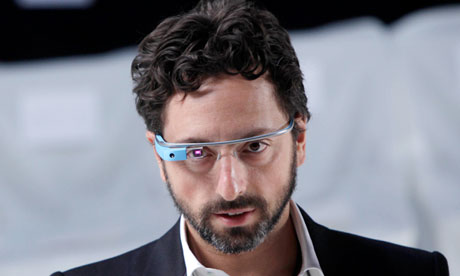
I’m ready to call the great stagnation over when driverless cars are in the hands of the middle class, but that’s still a while away. Steady deflation for education and health care expenditures would do it too, and I can see this will come for education but not for health care. As for Google Glass, I will review it once they sell me one. I’d also claim the end of stagnation if we saw a 2% yearly rise in the median real wage on a sustained basis, say most of the years out of a ten-year period.
In the meantime, here is a robot which pours you a beer.
For the pointer I thank Max Roser.
The economics of Indian cows and globalized cow patronage
The cow’s status as a sacred being in Hinduism is increasingly being threatened as more wealthy Indians, even Hindus, are turning carnivorous, as Gardiner Harris of The New York Times recently reported. Meanwhile, the increasing demand for beef is driving gangs to steal cows that are wandering around Delhi so that the animals can be sold to slaughterhouses.
Still, cows have plenty of protectors in India, and even beyond its borders. Thousands of miles away, Indian citizens living in the United States regularly send money to cow shelters in India like Mataji Gaushala, located in Barsana, near Mathura in Uttar Pradesh.
Mataji Gaushala is one of the biggest cow shelters in northern India, spread over 42 acres. It houses 20,000 cows, most of them old and no longer providing milk. Brijinder Sharma, manager of Mataji Gaushala, said the shelter’s objective is to let the animals live a natural life and die from natural causes.
Subhash Puri, 69, a civil engineer who retired from the American government in 2011, lives in Laurel, Maryland, but sends money, after collecting it from other Indian patrons, and visits Mataji Gaushala often, spending four to six months out of the year.
“The cow is our mother,” he said. “It is our duty to give them a dignified life. We try to save them from the slaughterhouses.”
Mr. Puri said Indians in the United States who support the shelter include doctors, engineers and IT professionals. “They give new ideas to run the place,” he said.
The article is here, and for the pointer I thank Michelle Dawson.
The virtual therapist
The virtual therapist sits in a big armchair, shuffling slightly and blinking naturally, apparently waiting for me to get comfortable in front of the screen.
“Hi, I’m Ellie,” she says. “Thanks for coming in today.”
She laughs when I say I find her a little bit creepy, and then goes straight into questions about where I’m from and where I studied.
“I’m not a therapist, but I’m here to learn about people and would love to learn about you,” she asks. “Is that OK?”
Ellie’s voice is soft and calming, and as her questions grow more and more personal I quickly slip into answering as if there were a real person in the room rather than a computer-generated image.
…With every answer I’m being watched and studied in minute detail by a simple gaming sensor and a webcam.
How I smile, which direction I look, the tone of my voice, and my body language are all being precisely recorded and analysed by the computer system, which then tells Ellie how best to interact with me.
Right now there are two assistants guiding the avatar, in essence standing behind a screen, but that will not always be the case:
Real people come in to answer Ellie’s questions every day as part of the research, and the computer is gradually learning how to react in every situation.
It is being taught how to be human, and to respond as a doctor would to the patients’ cues.
Soon Ellie will be able to go it alone.
The full article is here, and for the pointer I thank Michelle Dawson.
The Battle over Junk DNA
Last year the ENCODE Consortium, a big-data project involving 440 scientists from 32 laboratories around the world, announced with great fanfare that 80% of the human genome was functional or as the NYTimes put it less accurately but more memorably “at least 80 percent of this DNA is active and needed.” What the NYTimes didn’t say was that this claim was highly controversial to the point of implausibility. A fascinating, sharply-worded critique, On the immortality of television sets: “function” in the human genome according to the evolution-free gospel of ENCODE has recently been published by Graur et al. Here is some of the flavor:
This absurd conclusion was reached through various means, chiefly (1)
by employing the seldom used “causal role” definition of biological function and
then applying it inconsistently to different biochemical properties, (2) by committing
a logical fallacy known as “affirming the consequent,” (3) by failing to appreciate
the crucial difference between “junk DNA” and “garbage DNA,” (4) by using
analytical methods that yield biased errors and inflate estimates of functionality, (5)
by favoring statistical sensitivity over specificity, and (6) by emphasizing statistical
significance rather than the magnitude of the effect. Here, we detail the many logical
and methodological transgressions involved in assigning functionality to almost
every nucleotide in the human genome. The ENCODE results were predicted by one
of its authors to necessitate the rewriting of textbooks. We agree, many textbooks
dealing with marketing, mass-media hype, and public relations may well have to be
rewritten.
Graur et al. make a number of key points. ENCODE essentially defined “functional” as sometimes involved in a specified set of biochemical reactions (I am simplifying!). But every microbiological system is stochastic and sooner or later everything is involved in some kind of biochemical reaction even if that reaction goes nowhere and does nothing. In contrast, Graur et al. argue that “biological sense can only be derived from evolutionary context” which in this case means that functional is defined as actively protected by selection.
There are a variety of ways of identifying whether a sequence is actively protected by selection. One method, for example, looks for sequences that are highly similar (conserved) across species. Once evolution has hit on the recipe for hemoglobin, for example, it doesn’t want that recipe messed with–thus the chimp and human DNA that blueprints hemoglobin is very similar and not that different from that of dogs. In other areas of the genome, however, even closely related species have different sequences which suggests that that portion of the DNA isn’t being selected for, it’s randomly mutating because there is no value to its conservation. When functional is defined using selection, most human DNA does not look functional.
It’s also interesting to note that the size of the genome varies significantly across species but in ways that appear to have little to do with complexity. The human genome, for example, is about 3GB, quite a bit more than the fruit fly at 170MB, But the onion is 17GB! (One of the reasons that onions are used in a lot of science labs, by the way, is that the onion genome is so big it makes onion nuclei large enough so that you can easily see them with low-powered microscopes.) Now one could argue that this lack of correlation between genome size and complexity is simply a result of an anthropocentric definition of complexity. Maybe an onion really is complex. Two points counter this view, however. First, similar species can have very different genome sizes. Second, we know why the genome of some species is really large. It’s filled with transposons, so-called jumping genes, sometimes analogized to viruses, that cut and paste themselves into the genome. Some of these transposons, like Alu in humans, are short sequences that repeat themselves millions of times. It’s very difficult to believe that these boring repetitions are functional (n.b. this is not to say that they don’t have an effect.) The fact that it’s this kind of repetitious, not-conserved DNA that accounts for a large fraction of the differences in genome size is highly suggestive of non-functionality.
Why discuss such an esoteric (for economists) paper on a (nominally!) economics blog? The Graur et al. paper is highly readable, even for non-experts. It’s even funny, although I laughed somewhat sheepishly since some of the comments are unnecessarily harsh. Many of the critiques, such as the confusion between statistical and substantive significance, arise in economics and many other fields. The Graur paper also makes some points which are going to be important in economics. For example they write:
“High-throughput genomics and the centralization of science funding have enabled Big Science to generate “high-impact false positives” by the truckload…”
Exactly right. Big data is coming to economics but data is not knowledge and big data is not wisdom.
Finally, the Graur paper tells us something about disputes in economics. Economists are sometimes chided for disagreeing about the importance of such basic questions as the relative role of aggregate demand and aggregate supply but physicists can’t even find most of the universe and microbiologists don’t agree on whether the human genome is 80% functional or 80% junk. Is disagreement a result of knaves and fools? Sometimes, but more often disagreement is just the way the invisible hand of science works.
Hat tip: Monique van Hoek.
Questions that are rarely asked
In my email, from Eric Crampton:
Imagine the following deal, which is entirely not on any PPF so it’s not really a deal anyway. But imagine it. Genie offers a button. Push the button, and it burns the last n years of every journal in economics, along with all knowledge that those results ever existed, though they can be rediscovered. At the same time, every potential voter is brought up to a thorough Econ 101 level of understanding of Economics. At what value of n is the deal no longer worthwhile? A decade? Two?
Here is a related blog post by Eric. And here is Eric in praise of New Zealand health care institutions.
For how long will the U.S. suicide rate remain elevated?
In the United States, Julie Phillips, a sociologist at Rutgers University, was among the first researchers to frisk these middle-age suicides for deeper meaning. In 2010 she and a colleague declared the age range a new danger zone for self-harm. Many commentators took this as another fun fact about the boomers, not a cause for general alarm. But earlier this month, Phillips presented the results of a second paper, an attempt to settle the question of whether the boomers were especially suicidal. She sifted through eight decades of U.S. suicide data, wrenching it to separate the influence of absolute age, peer effects, and the events of the moment, and she found something shocking: the boomers have the highest suicide rate right now, but everyone born after 1945 shows a higher suicide risk than expected—and everyone is on pace for a higher rate than the boomers.
Here is more on that topic. There is also this:
In her next bundle of research, Phillips hopes to pinpoint the massive, steam-rolling social change that matters most for self-harm. She has a good list of suspects: the astounding rise in people living alone, or else feeling alone; the rise in the number of people living in sickness and pain; the fact that church involvement no longer increases with age, while bankruptcy rates, health-care costs, and long-term unemployment certainly do.
I would think also that these days committing suicide involves less shame than it used to. Here is one of the cited papers. Here is her home page.
The ABCs of Bitcoin Secrets
You may perhaps have heard of the intriguing mathematician Shinichi Mochizuki who has produced an alleged proof of an important theorem that is so difficult and involves the creation of so much original mathematics and notation that no one is sure whether the proof is valid. Here is one description:
On August 31, 2012, Japanese mathematician Shinichi Mochizuki posted four papers on the Internet.
The titles were inscrutable. The volume was daunting: 512 pages in total. The claim was audacious: he said he had proved the ABC Conjecture, a famed, beguilingly simple number theory problem that had stumped mathematicians for decades.
Then Mochizuki walked away. He did not send his work to the Annals of Mathematics. Nor did he leave a message on any of the online forums frequented by mathematicians around the world. He just posted the papers, and waited.
…The problem, as many mathematicians were discovering when they flocked to Mochizuki’s website, was that the proof was impossible to read. The first paper, entitled “Inter-universal Teichmuller Theory I: Construction of Hodge Theaters,” starts out by stating that the goal is “to establish an arithmetic version of Teichmuller theory for number fields equipped with an elliptic curve…by applying the theory of semi-graphs of anabelioids, Frobenioids, the etale theta function, and log-shells.”
This is not just gibberish to the average layman. It was gibberish to the math community as well.
“Looking at it, you feel a bit like you might be reading a paper from the future, or from outer space,” wrote Ellenberg on his blog.
“It’s very, very weird,” says Columbia University professor Johan de Jong, who works in a related field of mathematics.
Mochizuki had created so many new mathematical tools and brought together so many disparate strands of mathematics that his paper was populated with vocabulary that nobody could understand. It was totally novel, and totally mystifying.
But there may be more secrets, secrets upon secrets because Ted Nelson has recently argued that this same mathematician, Shinichi Mochizuki, is also the elusive Satoshi Nakamoto who unleashed bitcoin on the world and then disappeared. Now this is almost too delicious to be true so take it with more than a grain of salt. Mochizuki, for example, has bona fides as a mathematician but he does not appear to have a record of sophisticated software creation. But if true, this would be awesome.
Hat tip: Barry Klein
On the proper interpretation of “The Great Stagnation”
Will Hutton writes:
At least Summers sees some underlying economic dynamism. For techno-pessimists such as economist Professor Tyler Cowen the future is even darker. It is not only that automation and robotisation are coming, but that there are no new worthwhile transformational technologies for them to automate. All the obvious human needs – to move, to have power, to communicate – have been solved through cars, planes, mobile phones and computers. According to Cowen, we have come to the end of the great “general purpose technologies” (technologies that transform an entire economy, such as the steam engine, electricity, the car and so on) that changed the world. There are no new transformative technologies to carry us forward, while the old activities are being robotised and automated. This is the “Great Stagnation”.
Such views make for a convenient target, but that is not close to what I wrote in The Great Stagnation. For instance on p.83 you will find me proclaiming, after several pages of details, “For these reasons, I am optimistic about getting some future low-hanging fruit.” Those are not Straussian passages hidden like the extra Nirvana audio track at the end of Nevermind. The very subtitle of the book announces “How America…(Eventually) Will Feel Better Again.”
I also argue in the book that the internet is the next transformational technology, and that it is already here, though it needs some time to mature and pay off. I devoted an entire separate book to this theme, namely The Age of the Infovore, which suggests that for autistics and other infovores massive progress already has arrived.
It is also odd that Hutton mentions robots and automation. My next book considers those factors in great detail, but you won’t find either term or variants thereof in the index of The Great Stagnation. Nor do I have the dual worry that both everything will be automated and there is nothing left to automate, as stated by Hutton.
The lesson perhaps is that if a book has a pessimistic-sounding title, mentions of optimism will go unheeded, even if they are in the subtitle. Might that be an example of the fallacy of mood affiliation?
Further results on hypergamy
This paper, by Marianne Bertrand, Jessica Pan, and Emir Kamenica, was pointed out by Matt Yglesias on Twitter, the abstract is this:
We examine causes and consequences of relative income within households. We establish that gender identity – in particular, an aversion to the wife earning more than the husband – impacts marriage formation, the wife’s labor force participation, the wife’s income conditional on working, marriage satisfaction, likelihood of divorce, and the division of home production. The distribution of the share of household income earned by the wife exhibits a sharp cliff at 0.5, which suggests that a couple is less willing to match if her income exceeds his. Within marriage markets, when a randomly chosen woman becomes more likely to earn more than a randomly chosen man, marriage rates decline. Within couples, if the wife’s potential income (based on her demographics) is likely to exceed the husband’s, the wife is less likely to be in the labor force and earns less than her potential if she does work. Couples where the wife earns more than the husband are less satisfied with their marriage and are more likely to divorce. Finally, based on time use surveys, the gender gap in non-market work is larger if the wife earns more than the husband.
Their title is “Gender Identity and Relative Income within Households.” There is a non-gated copy here.
Attempted fish markets in everything, economies of scope edition
The headline is: “Desperately Seeking Cichlid: Fish Species Down to Last 3 Males, No Known Females.”
Once upon a time the Mangarahara cichlid (Ptychochromis insolitus) lived in a single habitat: a river in Madagascar from which the species gets its name. That river has now been dammed and the habitat has dried up. Today there are just three Mangarahara cichlids left—all males. Two reside at the Zoological Society of London’s (ZSL) London Zoo Aquarium; the third lives at the Berlin Zoo.
Although the species appears to be extinct in the wild, ZSL London Zoo hopes that somewhere, somehow a female or two might exist in private hands. “We are urgently appealing to anyone who owns or knows someone who may own these critically endangered fish, which are silver in color with an orange-tipped tail, so that we can start a breeding program here at the zoo to bring them back from the brink of extinction,” aquarium curator Brian Zimmerman said in a press release last week.
The zoo has already reached out to other facilities around the world, with no luck. Now the only hope lies in private aquarium owners, fish collectors and hobbyists who might see the zoo’s appeal and realize that they own a female cichlid. The zoo has even set up a dedicated e-mail address for anyone with information: [email protected].
Of course you can’t count on the market alone, as there are cultural preconditions for cooperation:
…even if a female does turn up, breeding won’t be guaranteed. Zimmerman told the BBC News that the Berlin Zoo used to have a female that it had hoped to breed with its male. Instead, the male killed its potential mate. “It’s a fairly common thing with cichlids,” Zimmerman said.
We’ll see how the supply elasticity works out on this one…
For the pointer I thank Chris MacDonald.