Category: Uncategorized
Milton Friedman was once a Keynesian
In the early 1940s, Friedman’s own analysis of monetary policy adhered closely to the dismissive tone prevalent in much other Keynesian literature of that vintage. His solo-authored contribution to 1943’s Taxing to Prevent Inflation, written while he was at the Treasury, plotted growth rates of the nominal money stock and nominal income for the United States for the period 1899-1929. To the modern reader, the scatter plot in Friedman’s paper indicates that the monetary growth/income relationship is clearly positive, and reasonably tight by the standards of rate-of-change data. That was not, however, the judgment Friedman reached in his 1943 paper, in which he concluded instead that the relationship was “extremely unstable.”
That is from p.95 of the recent Edward Nelson two-volume set on Milton Friedman — one of the best books written on any economist!
USA fact of the day
The average U.S. customer loses power for 214 minutes per year. That compares to 70 in the United Kingdom, 53 in France, 29 in the Netherlands, 6 in Japan, and 2 minutes per year in Singapore. These outage durations tell only part of the story. In Japan, the average customer loses power once every 20 years. In the United States, it is once every 9 months, excluding hurricanes and other strong storms.
Here is the full article, via Ray Lopez.
What should I ask Zeynep Tufekci?
I will be doing a Conversation with her. So what should I ask?
Monday assorted links
1. Cacti poaching.
2. Chinese feminimization vs. Chinese manosphere.
3. Hard to find cross-state evidence that shelter-in-place policies worked. And lockdowns can take more lives than they save in low-income countries.
5. Culture Ministry says all music used by government services will feature Quebec artists.
The CDC is broken, our regulatory state has been failing us
I was surprised by how good this NYT piece was, for instance here is one of the better diagnoses of the problem, or at least part of it:
Allen disputes the notion that she and her colleagues are doing work that the C.D.C. itself should be doing; in fact, she says, the task force and the federal agency have worked closely together. But she acknowledges that the interdisciplinary approach of the collaborative — it consists not only of doctors and public-health professionals but also of political scientists, economists, lawyers and M.B.A.s — enables it to spot problems that the federal institution can’t necessarily see. Infection control is a good example. “This is not a public-health problem, or even a medical one,” she says. “It’s an issue of organizational capacity.” The C.D.C. is not equipped to identify organizational issues, let alone resolve them.
And:
Around half of the agency’s domestic budget is funneled to the states, but only after passing through a bureaucratic thicket. There are nearly 200 separate line items in the C.D.C.’s budget. Neither the agency’s director nor any state official has the power to consolidate those line items or shift funds among them. “It ends up being extremely fragmented and beholden to different centers and advocacy groups,” says Tom Frieden, who led the C.D.C. during the Obama administration.
How about this?:
This funding system also hobbles emergency-response efforts, because there is no real budget for the unexpected.
Highly recommended, one of the best pieces of this year, here is the full article by Jeenen Interlandi.
Sunday assorted links
The looks gap in earnings
…the magnitude of the earnings disparities along the perceived attractiveness continuum, net of controls, rivals and/or exceeds in magnitude the black-white race gap and, among African-Americans, the black-white race gap and the gender gap in earnings.
Here is the full paper. Here is an earlier MR post on lookism, and here. Two points are worth making here:
1. It is often the educated (and often left-wing) coastal elite that commits the most lookism and also enforces it through internal norms of dress, thinness, etc.. Yet they are so desperate to believe they are better people than competing white interest groups (amazing how unself-aware they are about how obvious this is) that they just don’t want to bring looksism to your attention. Upon presentation, this will receive the “yes, that’s bad too” treatment, and then it won’t be talked about any more. Looksism will continue unabated, and indeed it may intensify as some other isms decline.
2. It is worth keeping this information in mind when trying to hire people or find untapped sources of talent.
Long-term gene–culture coevolution and the human evolutionary transition
It has been suggested that the human species may be undergoing an evolutionary transition in individuality (ETI). But there is disagreement about how to apply the ETI framework to our species, and whether culture is implicated as either cause or consequence. Long-term gene–culture coevolution (GCC) is also poorly understood. Some have argued that culture steers human evolution, while others proposed that genes hold culture on a leash. We review the literature and evidence on long-term GCC in humans and find a set of common themes. First, culture appears to hold greater adaptive potential than genetic inheritance and is probably driving human evolution. The evolutionary impact of culture occurs mainly through culturally organized groups, which have come to dominate human affairs in recent millennia. Second, the role of culture appears to be growing, increasingly bypassing genetic evolution and weakening genetic adaptive potential. Taken together, these findings suggest that human long-term GCC is characterized by an evolutionary transition in inheritance (from genes to culture) which entails a transition in individuality (from genetic individual to cultural group). Thus, research on GCC should focus on the possibility of an ongoing transition in the human inheritance system.
That is by Timothy M. Waring and Zachary T. Wood, via a loyal MR reader.
Basil Halperin on sticky wage vs. sticky price models
Here is a long post, full of insight and citations, basically arguing that sticky wage models are better for macro than sticky price models. Sticky wage models had been deemphasized because real wages seemed to be acyclical, but sticky prices can’t quite do the work either. The post is hard to summarize, but my reading of it is a little different than what the author intends. My takeaway is “Sticky wages for new hires are the key, and we didn’t have real evidence/modeling for that until 2020, so isn’t this all still up in the air?” I am a big fan of the Hazell and Taska piece, which I consider to be one of the best economics contributions of the last decade, but still…I don’t exactly view it as confirmed and all nailed down. I do believe in nominal stickiness of (many not all) wages, but I still don’t think we have a coherent model matching up the theory and the empirics for how nominal stickiness drives business cycles. I thus despair when I see so many dogmatic pronouncements about labor markets.
For the pointer I thank João Eira.
North vs. South India?
The data set used by Paul and Sridhar starts with the year 1960, when per capita income in Tamil Nadu was 51 per cent higher than UP’s. In the early 1980s, this difference had narrowed to 39 per cent. However, over the following decades the gap began to rapidly grow, and in 2005 an average resident of Tamil Nadu earned 128 per cent more than an average resident of Uttar Pradesh. (Statistics available online suggest that by 2021 the gap has increased to almost 300 per cent.)
Taking the South as a whole and the North as a whole, the book found that while the two regions differed only by 39 per cent in terms of per capita income in 1960-61, forty years later the gap had widened to 101 per cent. Now, in 2021, the gap has widened much further. Currently, the average annual per capita income of the four northern states profiled by Paul and Sridhar is about US $4,000, and of the four southern states, in excess of US $10,000, or roughly 250 per cent higher.
The data analysed by Paul and Sridhar show that there are two areas in which the South has done much better than the North. First, with regard to human development indicators such as female literacy rate, infant mortality and life expectancy. Second, in areas critical to economic development such as technical education, electricity generation, and quality and extent of roads. The first set of factors prepares healthier and better educated citizens to participate in the modern economy, while the second set enables much higher rates of productivity and efficiency in manufacturing and services.
Paul and Sridhar also found that the South fares substantially better than the North on governance indicators.
Here is the full piece by Ramachandra Guha, interesting throughout, with a pointer to Alice Evans, via Paul Novosad.
Saturday assorted links
China fact of the day
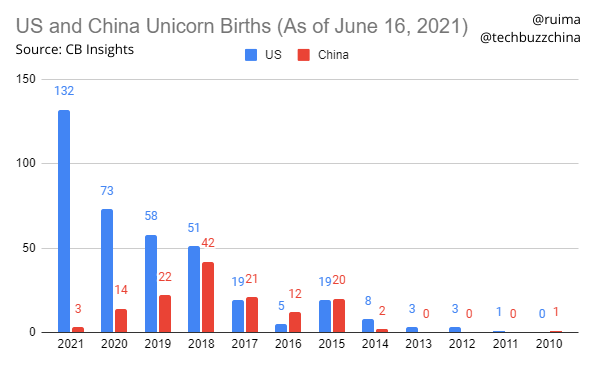 Here is the link and source.
Friday assorted links
The Edward Nelson books on Milton Friedman
Two volumes, such a wonderful book, for sure one of the best of the year. Not quite a biography, more a study of Friedman’s career, but his career was his life so this is a wonderful biography too. Here is one excerpt:
Friedman was a student of business cycles who was prone to say that he did not believe there was a business cycle. He was a trenchant critic of reserve requirements as a monetary policy tools and a strong advocate of financial deregulation, yet he had many favorable things to say about moving to a regime of 100 percent reserve requirements. he stressed the looseness of the relationship between money and the economy, yet critics saw his policy prescriptions as predicated on a tight relationship. He criticized in detail the way the Federal Reserve allowed the money stock to adjust to the state of the economy, yet he was often characterized as treating empirical money-stock behavior as exogenous. He made fundamental contributions to the development of Phillips-curve theory, yet he was averse to conducting discussion of inflation prospects using Phillips-curve analysis. He spent much of his first two decades as a researcher working on labor unions and the use of market power in setting prices, yet for the subsequent five decades he found himself accused by critics of predicating his economic analysis on an atomistic labor market, a one-good model, or perfectly competitive firms.
Here is Scott Sumner on the book. Highly recommended, here is the Amazon link, and volume II.
John Stuart Mill on the English
From causes which might be traced in the history and development of English society and government, the general habit and practice of the English mind is compromise. No idea is carried out to more than a small portion of its legitimate consequences. Neither by the generality of our speculative thinkers, nor in the practice of the nation, are the principles which are professed ever thoroughly acted upon; something always stops the application half way. This national habit has consequences of very various character, of which the following is one. It is natural to minds governed by habit (which is the character of the English more than of any other civilized people) that their tastes and inclinations become accommodated to their habitual practice; and as in England no principle is ever fully carried out, discordance between principles and practice has come to be regarded, not only as the natural, but as the desirable state. This is no an epigram, or a paradox, but a sober description of the tone of sentiment commonly found in Englishman. They never feel themselves safe unless they are living under the shadow of some convention fiction — some agreement to say one thing and mean another.
That is from Mill’s Vindication of the French Revolution of February 1848.