Category: Web/Tech
How decentralized really are blockchains?
At this point, there are basically two companies. Almost all dApps use either Infura or Alchemy in order to interact with the blockchain. In fact, even when you connect a wallet like MetaMask to a dApp, and the dApp interacts with the blockchain via your wallet, MetaMask is just making calls to Infura!
These client APIs are not using anything to verify blockchain state or the authenticity of responses. The results aren’t even signed. An app like Autonomous Art says “hey what’s the output of this view function on this smart contract,” Alchemy or Infura responds with a JSON blob that says “this is the output,” and the app renders it.
This was surprising to me. So much work, energy, and time has gone into creating a trustless distributed consensus mechanism, but virtually all clients that wish to access it do so by simply trusting the outputs from these two companies without any further verification. It also doesn’t seem like the best privacy situation. Imagine if every time you interacted with a website in Chrome, your request first went to Google before being routed to the destination and back. That’s the situation with ethereum today. All write traffic is obviously already public on the blockchain, but these companies also have visibility into almost all read requests from almost all users in almost all dApps.
Here is the full essay by Moxie, interesting throughout. And more generally:
One thing that has always felt strange to me about the cryptocurrency world is the lack of attention to the client/server interface. When people talk about blockchains, they talk about distributed trust, leaderless consensus, and all the mechanics of how that works, but often gloss over the reality that clients ultimately can’t participate in those mechanics. All the network diagrams are of servers, the trust model is between servers, everything is about servers. Blockchains are designed to be a network of peers, but not designed such that it’s really possible for your mobile device or your browser to be one of those peers.
Recommended. Via Nabeel.
There is now an Android app for Marginal Revolution
As a Marginal Revolution reader, I wanted an Android App. Then one day I realized, wait a second, I’m a programmer — why not just make one myself? I couldn’t think of a good reason not to, so I did. It went better than expected, and resulted in Fractional. Here are five reflections on the process.
Here is the rest from Lifan Zeng. This app is not from us, but if it is useful to you — great!
Samsung markets in everything
What would Marshall McLuhan say?:
Staring at your non-fungible tokens on a smartphone or laptop screen is fine and all, but why not remind everyone who visits your home of the money you spent on digital art NFTs by showcasing them on your TV screen? Somehow we’re in a world where that’s about to become reality: Samsung says it’s planning extensive support for NFTs beginning with its 2022 TV lineup.
Here is the full story, via the excellent Samir Varma.
Dan Wang’s 2021 letter
Here it is, one of the better written pieces of this (or last) year. It is mostly about China, manufacturing, and economic policy, but here is the part I will quote:
But Hong Kong was also the most bureaucratic city I’ve ever lived in. Its business landscape has remained static for decades: the preserve of property developers that has created no noteworthy companies in the last three decades. That is a heritage of British colonial rule, in which administrators controlled economic elites by allocating land—the city’s most scarce resource—to the more docile. Hong Kong bureaucrats enforce the pettiest rules, I felt, out of a sense of pride. On the mainland, enforcers deal often enough with senseless rules that they are sometimes able to look the other way. Thus a stagnant spirit hangs over the city. I’ve written before that Philip K. Dick is useful not for thinking about Hong Kong’s skyline, but its tycoon-dominated polity: “governed by a competent but fundamentally pessimistic elite, which administers a population bent on consumption. Instead of being hooked on drugs and television like in PKD’s novels, people in Hong Kong are addicted to the extraordinary flow of liquidity from the mainland, which raises their asset values and dulls their senses.”
And then on Mozart:
Among these three works, Figaro is the most perfect and Don Giovanni the greatest. But I believe that Cosi is the best. Cosi is Mozart’s most strange and subtle opera, as well as his most dreamlike. If the Magic Flute might be considered a loose adaptation of Shakespeare’s Tempest—given their themes of darkness, enchantment, and salvation—then Cosi ought to be Mozart’s take on A Midsummer Night’s Dream.
Donald Tovey called Cosi “a miracle of irresponsible beauty.” It needs to be qualified with “irresponsible” because its plot is, by consensus, idiotic. The premise is that two men try—on a dare—to seduce the other’s lover. A few fake poisonings and Albanian disguises later, each succeeds, to mutual distress. Every critic that professes to love the music of Cosi also discusses the story in anguished terms. Bernard Williams, for example, noted how puzzling it has been that Mozart chose to vest such great emotional power with his music into such a weak narrative structure. Joseph Kerman is more scathing, calling it “outrageous, immoral, and unworthy of Mozart.”
I readily concede that the music of Cosi so far exceeds its dramatic register.
Recommended! There is much more at the link, substantive throughout. Though I should note I am less bullish on both manufacturing and China than Dan is. I fully agree about Bleak House, however, and at times I think it is the greatest novel written…
Watching economics on TikTok
For my latest Bloomberg column, I ran the experiment of typing “economics” into the TikTok search function, and here is what came up:
The first video I saw was about the high pay of economics majors in the job market, relative to softer majors. The speaker has a strange British accent, and it is possible that he was deliberately trying to look and sound stupid. It has been liked more than 32,000 times. The next was a rant about the outrageous price of beer at sporting events. There is no obvious intelligence or analysis in the video. It has been liked almost 32,000 times.
I also saw a video called “Why I left economics,” in which a student who took an economics class at Brown explains how his professor taught about inequality but lived in a mansion with servants. He argues that economics as a subject distracts our attention from “what the **** we’re supposed to do.” The number of likes exceeds 258,000.
I watched a video of a woman loudly sighing in relief as a caption explains she has just dropped her economics class. Likes: more than 22,000. Then there was one mocking the idea of being an economics major, calling it another religion and suggesting the demand for economist friends is quite low. It had more than 34,000 likes.
But I am not upset at TikTok:
I think of TikTok as a useful wake-up call for economists.
First, TikTok is one of the dominant modes of presenting and debating issues and ideas, including economics, yet it is hardly used or even discussed by professional economists. (University of Houston Professor Chris Clarke is a notable exception.) Economists are ignoring the market signals — to our own detriment.
Second, TikTok’s preoccupation with the status and morality of economics exists beyond TikTok. TikTok offers economists a view of ourselves as much of the world sees us. We are judged not for our analytics, but rather by how we fit into various moral codes. Like it or not, that is something we economists have to come to terms with. Maybe we should thank TikTok for making this so clear.
Recommended. And whether or not you like TikTok, you all should be spending a non-zero amount of time with it.
What should I ask Sam Bankman-Fried?
I will be doing a Conversation with him, here is an excerpt from Wikipedia, shorn of footnotes:
Samuel Bankman-Fried (born March 6, 1992), also known by his initials SBF, is an American businessman and effective altruist. He is the founder and CEO of FTX, a cryptocurrency exchange. He also manages assets through Alameda Research, a quantitative cryptocurrency trading firm he founded in October 2017. He is ranked 32nd on the 2021 Forbes 400 list with a net worth of US$22.5 billion. In addition, Bankman-Fried a supporter of effective altruism and pursues earning to give as an altruistic career.
SBF is also well-known for his interests in veganism and utilitarianism and philanthropy. So what should I ask him?
Twice the speed, half the time, no loss of learning
We presented participants with lecture videos at different speeds and tested immediate and delayed (1 week) comprehension. Results revealed minimal costs incurred by increasing video speed from 1x to 1.5x, or 2x speed, but performance declined beyond 2x speed. We also compared learning outcomes after watching videos once at 1x or twice at 2x speed. There was not an advantage to watching twice at 2x speed but if participants watched the video again at 2x speed immediately before the test, compared with watching once at 1x a week before the test, comprehension improved. Thus, increasing the speed of videos (up to 2x) may be an efficient strategy, especially if students use the time saved for additional studying or rewatching the videos, but learners should do this additional studying shortly before an exam. However, these trends may differ for videos with different speech rates, complexity or difficulty, and audiovisual overlap.
See my piece, Why Online Education Works, for more on time and cost savings. Try MRU for great economics videos.
From the comments
How to figure out where crypto is headed
That is the topic of my latest Bloomberg column, the piece has a number of ideas. You can start with this:
…the concept of relevance is focality, by which I mean the part of the system at which consumers direct their attention. Focality could determine whether crypto ushers in an era of dystopian inequality, or whether most of its benefits accrue to broader society.
That all sounds quite abstract, so consider a simple example from the world of music. Famous artists such as the Beatles or Taylor Swift attract attention with their very names — in other words, they have become focal. Then there are performance spaces or bars that are known for putting on good music, such as the Blue Note or, in an earlier era, the Fillmore. In this case, the venue is focal.
So the question is this: When people patronize crypto institutions, will they attach significance to the “innovator” or to the “intermediary”? Or, to continue the analogy with the music industry, the artist or the venue.
One scenario is that ordinary Americans will simply find crypto too confusing to deal with directly. Rather than choosing their favorite crypto assets, DeFi investments and NFT providers, they will outsource their decisions to well-known intermediaries. Imagine entering into a crypto contract with a company you have an established relationship with, such as a social media company, your bank or perhaps your labor union. The intermediary would deliver a “crypto package,” tailored to the needs of a broad swath of customers.
Significant parts of the crypto world would be relatively centralized….
I think you can imagine which problems would arise in that scenario, including the reemergence of de facto censorship. Alternately:
Another very different scenario: Users focus their attention on the crypto assets themselves, such as Bitcoin, Ether or Dogecoin. That kind of user focus would mean many of the gains of crypto accrue to the early crypto asset holders. Intermediaries (e.g., Coinbase) can earn a return, but the real brand name value would be held by the crypto asset itself.
Much of today’s crypto world looks like this, though it may not last as crypto broadens in applications and use. If you are long current crypto assets, you may be hoping for this kind of scenario to extend itself, because those assets will accumulate much of the value from higher crypto demand.
Yet another scenario: What if the attention of consumers were focused on the crypto innovators, who in this case would be analogous to better-known musical artists? One person may think “I like the DeFi options at Uniswap,” while another may say, “I am going to use the prediction markets over at Hedgehog.” In this scenario there is relatively little intermediation and heavy competition for consumer attention. Thus most of the gains from competition accrue to the users.
Customers would use or own or invest in crypto in a variety of ways, just as they listen to music on LPs, CDs, MP3s and streaming services. And in the same way that people share their playlists, crypto users could issue their own tokens (currencies) if they wanted, or serve as their own banks in the sense of making their own lending decisions and executing them autonomously.
I don’t know if people are up to all this work (or is it fun?). But in my view this is the best-case scenario — and the most technologically ambitious. Interestingly, crypto’s radical ability to disintermediate, if extended to its logical conclusion, could bring about a radical equalization of power that would lower the prices and values of the currently well-established crypto assets, companies and platforms.
So you can be bullish on crypto’s future without being bullish on current crypto prices. For a simple analogy, Spotify and YouTube have greatly expanded music’s reach, but overall the price of recorded music has fallen, and many performers earn much less than did their peers in the LP era. Or consider the agriculture sector, defined broadly: It has done very well over the last few centuries, but food prices have fallen rather than risen, due to higher output and greater competition.
Recommended.
Which search engine does the most to limit conspiracy theorizing?
Web search engines are important online information intermediaries that are frequently used and highly trusted by the public despite multiple evidence of their outputs being subjected to inaccuracies and biases. One form of such inaccuracy, which so far received little scholarly attention, is the presence of conspiratorial information, namely pages promoting conspiracy theories. We address this gap by conducting a comparative algorithm audit to examine the distribution of conspiratorial information in search results across five search engines: Google, Bing, DuckDuckGo, Yahoo and Yandex. Using a virtual agent-based infrastructure, we systematically collect search outputs for six conspiracy theory-related queries (“flat earth”, “new world order”, “qanon”, “9/11”, “illuminati”, “george soros”) across three locations (two in the US and one in the UK) and two observation periods (March and May 2021). We find that all search engines except Google consistently displayed conspiracy-promoting results and returned links to conspiracy-dedicated websites in their top results, although the share of such content varied across queries. Most conspiracy-promoting results came from social media and conspiracy-dedicated websites while conspiracy-debunking information was shared by scientific websites and, to a lesser extent, legacy media. The fact that these observations are consistent across different locations and time periods highlight the possibility of some search engines systematically prioritizing conspiracy-promoting content and, thus, amplifying their distribution in the online environments.
Here is the full paper by Aleksandra Urmana, Mykola Makhortykhb, Roberto Ulloac, and Juhi Kulshrestha. Of course it is also worth investigating which search engine does the most to “censor” true conspiracy theories. Are there any?
Via Aleksandra Urman.
What should I ask Stewart Brand?
I will be doing a Conversation with him — so what should I ask?
Stewart is difficult to summarize (a virtue!), but if you wish here is his Wikipedia page.
*The Founders*
The author is Jimmy Soni, and the subtitle is The Story of Paypal and the Entrepreneurs Who Shaped Silicon Valley.
It is illuminating on start-ups, the earlier history of Silicon Valley, and it is a fair treatment of Peter Thiel. It is an actual history of the company, based on a great deal of information, rather than a polemic on tech or the company’s founders.
Lessons for remote work, from professional chess
During the COVID-19 pandemic, traditional (offline) chess tournaments were prohibited and instead held online. We exploit this unique setting to assess the impact of remote–work policies on the cognitive performance of individuals. Using the artificial intelligence embodied in a powerful chess engine to assess the quality of chess moves and associated errors, we find a statistically and economically significant decrease in performance when an individual competes remotely versus offline in a face-to-face setting. The effect size decreases over time, suggesting an adaptation to the new remote setting.
Here is the Economic Journal paper by . Via tekl.
Do AI-powered mutual funds outperform the market?
We evaluate the performance of artificial intelligence (AI)-powered mutual funds. We find that these funds do not outperform the market per se. However, a comparison shows that AI-powered funds significantly outperform their human-managed peer funds. We further show that the outperformance of AI funds is attributable to their lower transaction cost, superior stock-picking capability, and reduced behavioral biases.
I am not sure “AI-powered” is entirely well-defined here, but the result is of interest nonetheless. Here is the paper by Rui Chen and Jinjuan Ren, via the excellent Kevin Lewis.
*Where is My Flying Car?*
Engineer J. Storrs Hall is the author of this new Stripe Press book. Let’s be honest: you might think this is just the usual blah blah blah, heard it a thousand times since 2011 kind of treatment. But no, it is a detailed and nuanced and original treatment — at times obsessively so — of why various pending new physical technologies, such as nuclear power and nanotech, never really came to pass and transform our world as they might have.
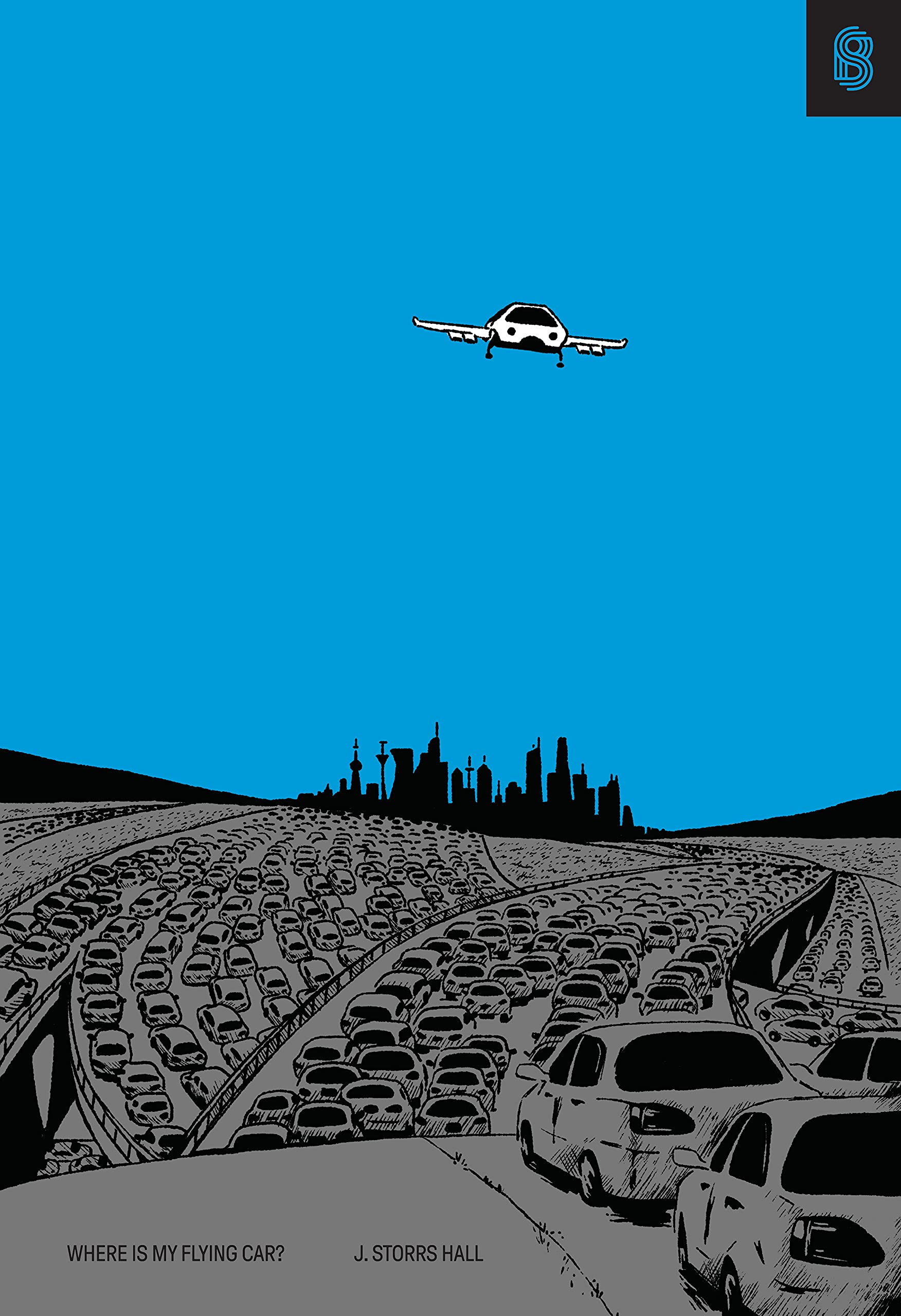
Definitely recommended, worthy of the best non-fiction of the year list. Here is the Stripe Press website for the book.
That is from Naveen K.