Polycentric Status Contests
As societies become richer, and basic needs are satisfied, zero-sum positional contests gain more prominence, while the regular positivesum benefits of markets subside in the background. As long argued by Hirsch, Frank and others, the institutions for managing resource scarcity and spurring economic growth, i.e. the institutions of capitalism, may not be particularly well-suited for managing the type of scarcity associated with positional goods. The long-term equilibrium of rich societies may not be as peaceful as many assume if they become overrun by status competitions. This paper provides a typology of positional goods, explaining why some positional competitions are worse than others, and a rent-seeking model of the supply response to positional goods’ price changes. The model leads to surprisingly optimistic predictions: markets tend to fragment the worst kinds of positional goods into competing hierarchies of status, tend to dissipate and eliminate some positional goods, and tend to turn the most damaging status competitions into more beneficial prestige competitions. Government interventions, by contrast, often attempt to prop-up monopolistic status hierarchies.
That is from a new paper by Vlad Tarko.
Twin studies data and the link between social media and well-being
This recently published paper by Selim Sametoğlu, Dirk H. M. Pelt, and Meike Bartels, is based on a clever idea, namely to look at twin studies to see if heavy social media users have innate tendenciees toward lower social well-being. Overall the results are not encouraging for seeing a strong causal connection here:
Meta-analyses report small to moderate effect sizes or inconsistent associations (usually around r = -0.10) between wellbeing (WB) and social media use (SMU) and between anxious-depressive symptoms (ADS) and SMU (also around r = 0.10). This study employs the classical twin design, utilizing data from 6492 individuals from the Netherlands Twin Register, including 3369 MZ twins (893 complete twin pairs, 1583 incomplete twin pairs) and 3123 DZ twins (445 complete, 2233 incomplete) to provide insights into the sources of overlap between WB/ADS and SMU. Both hedonic and eudaimonic WB scales were used. SMU was measured by (1) the time spent on different social media platforms (SMUt), (2) the frequency of posting on social media (SMUf), and (3) the number of social media accounts individuals have (SMUn). Our results confirmed the low phenotypic correlations between WB and SMU (between r = -0.09 and 0.04) as well as between ADS and SMU (between r = 0.07 and 0.10). For SMU, heritability estimates between 32 and 72% were obtained. The small but significant phenotypic correlations between WB/ADS and the SMU phenotypes were mainly determined by genetic factors (in the range of 80-90%). For WB and SMU, genetic correlations were between -0.10 and -0.0, and for ADS and SMU genetic correlations were between 0.10 and 0.23. Genetic correlations implied limited but statistically significant sets of genes that affect WB/ADS and SMU levels. Overall, the results indicate that there is evidence that the small associations between WB/ADS and SMU are partly driven by overlapping genetic influences. We encourage researchers and experts to consider more personalized approaches when considering the association between WB and SMU, as well as understanding the reasons for individuals’ observed SMU levels.
One lesson (once again) is that the correlation between well-being and social media usage is modest. A second and newer lesson is that the existing connection is partly driven by overlapping genetic influences.
What do intelligence analysts do?
The people who are really good understand sourcing and how important it is for critical thinking. The education should be focused on helping people recognize and refute bullshit. Step one is the critical thinking necessary to say, “This makes no sense,” or “This is just fluff.” The people who are professionally trained to be really good at understanding the quality and history of a source, and to understand the source’s access to information or lack of, are librarians. We should probably steal shamelessly from librarians. Data journalism, same thing. There are lots of parallel professions where we could be learning more to improve our own performance.
The folks that I’ve seen who crush it, they’re like a dog with a bone. They will not let go. They’ve got a question, they’re going to answer the question if it kills them and everybody else around them. It’s a kamikaze thing. Those people, the tenacious ones who care about sources and have critical thinking skills, or at least tools to help them think critically, seem the highest performers to me. As a rule, they all keep score. It’s part of their process.
That is from Santi Ruiz interviewing Rob Johnston, interesting throughout.
Sunday assorted links
1. Australia’s great stagnation.
2. Ezra Klein interviews Natasha Sarin (NYT). She is not only an excellent economist, but she avoids exaggeration, an increasingly rare trait in public discourse.
4. Economists are using ChatGPT to write their abstracts.
5. “Our findings challenge the common assumption that automation exposure equates to wage losses.”
6. Two sheep dogs and their marginal product.
7. Bolivia might be shifting to the right at the pending election.
The Danger from Japan
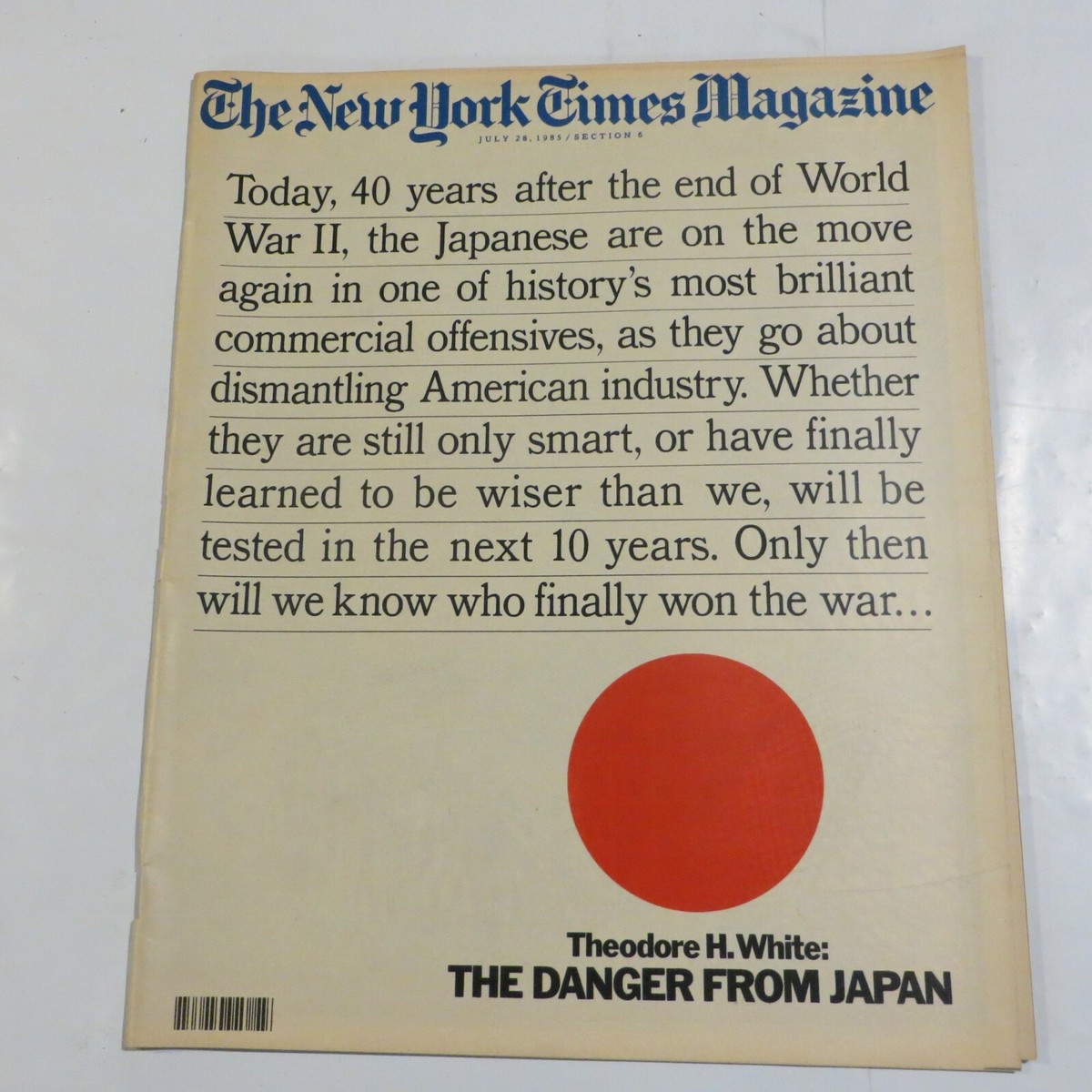
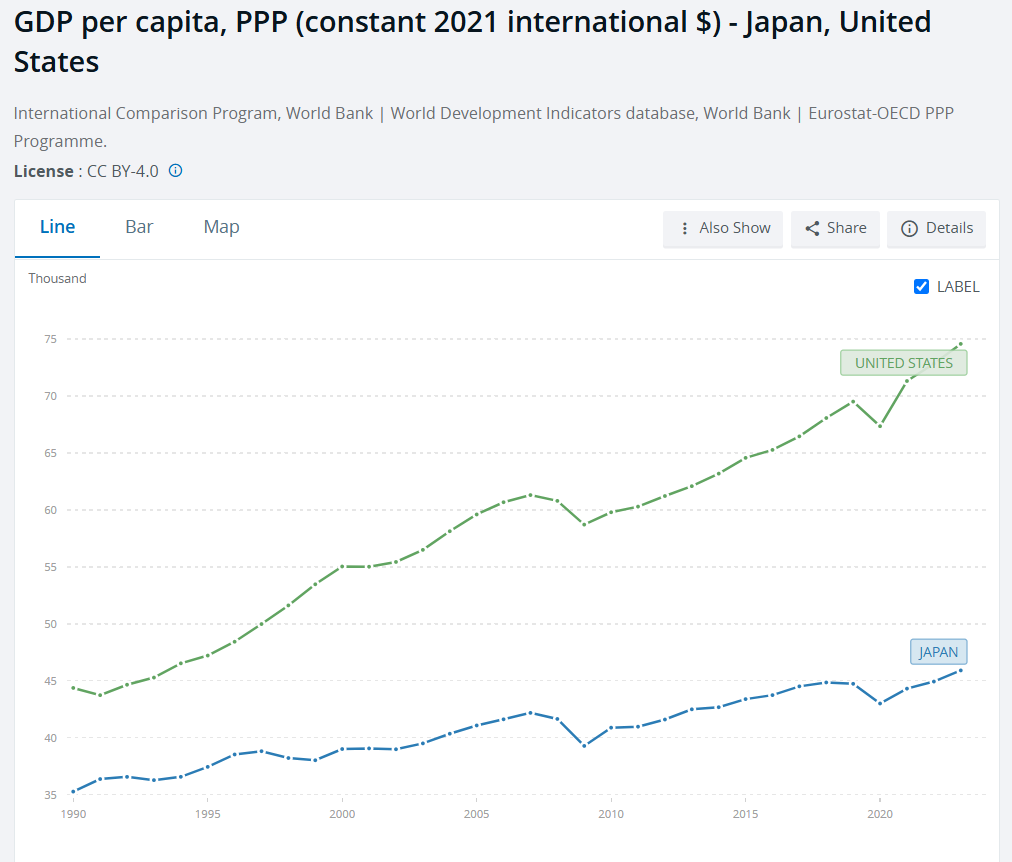
Every generation launches a new competitor to America and the people who don’t like capitalism and America’s individualist, free market economy trumpet that now the American way is being left in the dust. In the progressive era it was the Germans (how did that work out?), then it was the Russians (remember Sputnik?), then it was the Japanese (buying up Rockefeller center! the horror!), then it was the Chinese (look at those high speed rail lines!). My message to Americans is to double down on America. Double down on immigration, entrepreneurship, innovation, building for tomorrow, free markets, free speech and individualism and America will take all new competitors as it has taken all comers in the past. The world should be more like America not the other way around.
Hat tip: Mike Bird.
Service sector jobs for the future — bonding and friend-making
At Camp Social, creating chemistry is everything: campers are divided by age, which range from 20s to 60s, into bunks of eight to 10. Each is staffed with a trained counselor who serves as a camp concierge and bonding facilitator—they are even tasked with coming up with a bunk cheer. During the day, campers create their own schedules from a buffet of traditional activities including boating, archery, ropes course, bracelet making, waterfront, tie-dye and tennis. But there are adult embellishments too: paint-and-sip and a mixology class are on the schedule.
Not for me, but the article claims these methods are effective. Via Michael Rosenwald.
Jeff Asher on manipulating crime data
Jeff Asher: Within a city, within a district, there are times, either by mistake or by intention, that an agency will manipulate a certain type of crime. There are times where things will get underreported. There will be mistakes. There are times where things will get over reported and there will be mistakes. But because there’s 18,000 individual agencies reporting data, usually when the data is wrong, it’s obviously wrong.
It’s like Chicago reporting, you know, six murders in a month when the city averages over 20, and in some years more than that. Way more than that. It’s when you’ve seen these sharp drops in crime all of a sudden when a data reporting system changed. But to manipulate national crime data would be virtually impossible. I think that’s the value of being able to go and get it from each individual city. You can draw your conclusions and audit agencies that look wrong and still come to the correct conclusion. And I’ll note the FBI has seven major categories of crime that they collect. And there are ten different population groups. Every one of those population groups in every category of crime reported a decline in 2024, per the FBI. So it’s not a big blue city thing. It’s a small city thing. It’s a suburb thing. It’s a rural county thing. It’s a big city thing. It’s everywhere…
But of the 30 cities that reported the most murders to the FBI in 2023, murders are down in 26 of them. We’re seeing a 20% drop in murder, a 10% drop in violent crime, a 13% drop in property crime. Whereas in 2024 murder fell a lot and auto theft fell a lot, now it’s pretty much that everything is falling a considerable amount.
Here is his full dialogue with Paul Krugman. And here is Jeff’s YouTube channel on the same topics. Yes, I know public disorderliness is up in some regards. But do not use that as an excuse to mood affiliation with an extremely negatively view of the trends!
Model this?
The gap between US companies’ borrowing costs and US Treasury yields has shrunk to its smallest since 1998, after a red-hot rally in global credit markets that investors warn is underplaying threats to the world economy.
The cost of borrowing for investment-grade companies in US and Eurozone credit markets is 0.75 and 0.76 percentage points above benchmark government bond yields, respectively, according to Ice BofA data. This took spreads in the two markets — a proxy for the risk of default — on Friday to their lowest levels since 1998 and 2018, respectively.
Here is more from the FT, macroeconomics remains an art not a science. In any case, this is yet another sign that current volatility is perhaps not as high as it might feel from reading social media?
Scott Sumner is still the greatest movie critic in the world
Here is the intro:
Over time, I’ve noticed that an unusual number of important films came out in the late 1950s and early 1960s. In this post, I’ll argue that the period from 1958 to 1963 is the artistic peak of filmmaking. So what is the evidence for this claim? I certainly won’t argue that the films discussed below are the most popular among the general public. Rather this period is especially important for serious film buffs. [I’ll conclude this post with an contrary view.]
In contrast to the general public, film buffs see a close correlation between “great films” and “films made by great directors.” And almost any list of the greatest directors of all time is going to be dominated by people who did much of their best work around 1960. For instance, in one list of the 250 greatest directors of all time, 11 of the top 13 directors were doing important work around 1960. (The other two were Coppola and Scorsese.) But why 1960? It’s not nostalgia on my part; I was too young to see these films when they came out. And note that the 1958-63 period of great films immediately preceded the golden age of pop music (roughly 1964-69.)
Go through Scott’s list in the post people, you have treasures awaiting you! I should add that I see another, arguably equally valid peak period in the early to mid-1970s, and for popular music too.
Saturday assorted links
1. Ten year old Indian girl beats grandmaster in chess.
2. Low birthrates today forecast low house price appreciation in the future.
3. Dubov on working with Magnus (subtitles in English).
4. One hypothesis about the best news in America right now.
5. TFR in Heilongjiang, Manchuria is about 0.52.
6. No, conscientiousness has not collapsed amongst the young.
Bird trivia
Potvin’s team dissected and examined the bodies of nearly 500 birds belonging to five common Australian species: the Australian magpie, laughing kookaburra, crested pigeon, rainbow lorikeet, and the scaly breasted lorikeet(…)In addition to identifying the birds’ reproductive organs, researchers also tested their DNA to reveal their genetic sex.
The team was surprised to find sex-reversed individuals in all five species, at rates of 3% to 6%. Nearly all these discordant birds were genetically female but had male reproductive organs. However, the researchers also found a few genetic males with ovaries—including a genetically male kookaburra with a distended oviduct, indicating it had recently laid an egg(…)
Here is the full article by Phie Jacobs. Via John.
A median voter theory of right-wing populism
From a recent paper:
Populists are often defined as those who claim that they fill “political representation gaps” -differences between the policymaking by established parties and the “popular will.” Research has largely neglected to what extent this claim is correct. I study descriptively whether representation gaps exist and their relationship with populism. To this end, I analyze the responses of citizens and parliamentarians from 27 European countries to identical survey policy questions, which I compile and verify to be indicative of voting in referendums. I find that policymaking represents the economic attitudes of citizens well. However, I document that the average parliamentarian is about 1SD more culturally liberal than the national mean voter. This cultural representation gap is systematic in four ways: i) it arises on nearly all cultural issues, ii) in nearly all countries, iii) nearly all established parties are more culturally liberal than the national mean voter, and iv) all major demographic groups tend to be more conservative than their parliamentarians. Moreover, I find that demographic differences between voters and parliamentarians or lack of political knowledge cannot fully account for representation gaps. Finally, I show that right-wing populists fill the cultural representation gap.
That is by Laurenz Guenther. I am myself (largely) a cultural liberal, so I am not siding with the right-wing populists here. But let us be clear what is going on. The right-wing populists are gaining ground in so many countries because the cultural liberals in various parliaments and congresses are extremely reluctant to meet the preferences of their median voters. On the immigration issue most of all. And then they wish to talk about threats to democracy!
The whole thing is really quite tragic. Whether you are willing to admit this state of affairs to yourself is one of the better measures of self-awareness in our current political environment. tekl.
“A bunch of economists”

Here is the link.
Friday assorted links
3. Using drones to study sperm whales (NYT).
4. Some pointers for whether something is AI-written.
5. MIE: New app lets people buy tickets for strangers wedding. “Generally, there could be five to 10 paid strangers at one of the ceremonies, costing an average of €100 to €150 per guest.”
6. Text as data in economic analysis.
7. Can space gas help repair damaged Old Masters?
9. New Dan Klein book, The Spirit of Smithian Laws, with free pdf download.
What should I ask David Commins?
Yes, I will be doing a Conversation with him. David recently published Saudi Arabia: A Modern History, a very good and useful book. He has numerous other books on Wahhabism, the history of the Gulf region, and also Syria. Currently he teaches at Dickinson College.
So what should I ask him?