Assorted links
Twenty questions?
Or forty questions, as the case may be. One of my favorite methods of giving a talk is to have the audience write out questions in advance, and then during the talk I have to try to answer them (without peeking at them beforehand). The goal is not only to address the queries, but also to weave the answers together into the form of a broader talk with underlying themes.
I did this recently, and I thought the best question was something like this:
“If you were designing a ten question True-False test to fool the American public and induce the greatest number of wrong answers, which questions should go on the test? Which question would people get wrong the most often? How many questions of the ten would the American public get right on average?”
I also was asked which of my habitual errors I would most want to change, looking forward in life.
I was asked about Jeremy Lin, and whether he or LeBron James did more to maximize global wealth. I suggested that Lin did more to maximize utility, as his fame in Asia did not much detract from the fame of any other NBA player, but that LeBron did more to maximize wealth, in part through endorsement income.
Another good question was “How far do you think real interest rates will fall into negative territory?”, or something like that.
Can you pass this Turing test?
What did they think about the weather that morning?
Three different responses came from a male human, a female human and a machine. Which is which? Keep in mind that the event was held in October 2008 and they all knew it was autumn/fall in England. The responses were:
A.”I do tend to like a nice foggy morning, as it adds a certain mystery.”
B. “Not the best, expecting pirates to come out of the fog.”
C. “The weather is not nice at the moment, unless you like fog.”
So which is which?
That is from a paper by Kevin Warwick, “Not Another Look at the Turing Test.” I will offer the answer when I get back home. For the pointer I thank Michelle Dawson.
Has India solved the problem of banking regulation?
Forget Glass-Steagall:
The branches are run almost entirely by and for the children, with account holders electing two volunteer managers from the group every six months.
“Children who make money by begging or selling drugs are not allowed to open an account. This bank is only for children who believe in hard work,” said Karan, a 14-year-old “manager”.
During the day, Karan earns a pittance washing up at wedding banquets or other events. In the evening, he sits at his desk to collect money from his friends, update their pass books and close the bank.
“Some account holders want to withdraw their money. I ask them why and give it to them if other children approve. Everyone earns five per cent interest on their savings.”
This system now has over two hundred branches in half a dozen countries. The article is here, hat tip goes to Kottke. If I understand the account correctly, it is also run largely by street children.
Manila notes
How the mothers talk to, smile at, and elevate their small children reminds me uncannily of Mexico. It was actually Mexico, not Spain, that ruled the Philippines for centuries. You can tell how bad the traffic or the flooding is by the clucking sounds made by the taxi drivers. There is a lot of boxing on TV, and you will regularly be surprised by which food items turn out to taste the best. Don’t rule out the baked goods or the chicken minestrone soup.
This is a surrealistic dream country, combining fractured elements of an earlier global economy in strange and unpredictable ways. If you’re not paying attention you can think you are somewhere else — Acapulco? Lima? Los Angeles? but in which years? — and yet you are regularly pulled back to the Filipino reality, if only by seeing the Chinese dragons perched in front of the Spanish colonial church. “My Favorite Things Filipino” would all be moments of disorientation. The traditional exotic spots now seem pseudo-exotic to me, at least compared to Manila, which forces you to rethink everywhere else you have visited.
Someone should write a New Yorker article about how Filipinos use music in public spaces. The mango is superb, even by the standards of tropical countries. If I lived here, I would learn how to talk with my eyebrows. They don’t like to criticize each other. Martha Stewart is brought up and discussed by high status Filipinos without irony.
The ability to appreciate the Philippines is a Turing test of some sort, but I am not yet sure for what.
300 Million Without Electricity In India After Restoration Of Power Grid
According to estimates, roughly one-third of a billion Indian citizens were left without power Wednesday after workers successfully repaired the nation’s electrical grid and brought all of its systems back online. “Since restoring our infrastructure to 100 percent capacity following Monday and Tuesday’s blackouts, vast swaths of India are now completely without access to electricity,” said the country’s power minister, Veerappa Moily, who confirmed that three out of every four residents lacked access to such basic amenities as lighting, food refrigeration, and the use of simple appliances now that the country’s grid had fully recovered. “We are currently not monitoring the situation, as everything appears to be functioning normally again in India.” Government officials also stated that the widespread power outage had in no way compromised their ability to provide adequate sanitation to 31 percent of India’s citizens.
The Onion hits on a hard truth.
An event study of ACA winners and losers
I have not had the chance to read through this paper, by Jonathan Hartley, but thought I should pass along the abstract and link:
Abstract:
The Patient Protection and Affordable Care Act of 2010 marked a substantial shift in US healthcare policy. We create an event study observing the returns of healthcare stocks in the S&P 500 when on June 28, 2012 the US Supreme Court very unexpectedly ruled that the individual mandate, a provision requiring that Americans maintain a certain level of health insurance or face a monetary penalty, was not unconstitutional. The paper finds that as a result of the upheaval, over two days following the ruling the cumulative average abnormal return of managed care stocks was -6.7% (equal to -$6.9 bn in market capitalization), while the same metric was -1.2% (-$1.5 bn) for biotechnology companies, 3.2% ($0.4 bn) for hospital firms, 1.9% ($1.6 bn) for healthcare service firms, and 0.5% ($4.8 bn) for pharmaceutical companies. Healthcare equipment, distribution, and technology sub-industry stocks had relatively flat cumulative abnormal returns over the period.
Do those results make you more or less favorable toward ACA?
Iran fact of the day
In public universities, female students now outnumber males 65% to 35%, leading to calls in parliament for affirmative action for men.
Here is more.
Assorted links
2. More from Diamond, Acemoglu, and Robinson.
4. The charcoal industry in Manila, a photo essay.
“Back to the Future of Green Powered Economies”
From Juan Moreno Cruz and M. Scott Taylor:
The purpose of this paper is to introduce the concept of power density [Watts/m²] into economics. By introducing an explicit spatial structure into a simple general equilibrium model we are able to show how the power density of available energy resources determines the extent of energy exploitation, the density of urban agglomerations, and the peak level of income per capita. Using a simple Malthusian model to sort population across geographic space we demonstrate how the density of available energy supplies creates density in energy demands by agglomerating economic activity. We label this result the density-creates-density hypothesis and evaluate it using data from pre and post fossil-fuel England from 1086 to 1801.
Many of you have been asking for more coverage of this topic, so here is a starter. Ungated copies are here.
What’s with the eurozone update?
A few of you have emailed and asked. I understand the latest as follows: Draghi basically understands the problem, but is hemmed in by Germany. He is now to some extent freelancing and daring Germany to pull him back in. He’ll print money to target short-term yields for the debt of the periphery, which he feels Germany might eventually accept, for lack of better alternatives and because it also keeps up the pressure for policy reforms. He’s rather audaciously trying to redefine what the ECB’s mandate should be taken to mean by defining a lot of “extracurricular” activity as keeping the system up and running. He’ll push for the banking license for ESM (which would allow them to significantly expand what they do and in essence bypass some of the charter restrictions on the ECB itself), which he probably feels Germany won’t accept but what the heck he’s gotten this far so why not keep on trying? It’s easy enough to criticize him for not having made any kind of full commitment, but he’s already played more of a dare game than most observers thought possible. I say he is doing a high-quality tightrope act which probably will fail but which increases the chance of the whole thing pulling through.
He’s daring the Germans to zap him, knowing he stands some chance of going down in history as the central banker who saved the eurozone, knowing that he has nowhere else to go, knowing the Germans have nowhere else to go, and knowing that he has nothing to lose from being fired or otherwise emasculated. He also knows he has a lot of other eurozone nations on his side.
Just not the ones who will end up paying the bills.
Brad Plumer adds useful comment with a survey of opinion.
Stephen L. Carter has a new novel out
The Impeachment of Abraham Lincoln. I should teach it next year for my Law and Literature class…
EconJobRumors.com
That site specializes in…economics job market rumors. It is also a more general bulletin board for discussing matters involving the economics profession.
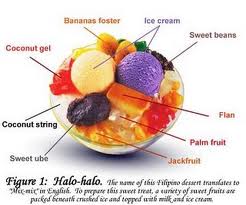
Halo-halo (yes I am in the Philippines)
Assorted links
2. Overview of why the Romney tax plan doesn’t add up.
3. The business of Bond, flip the toggle to adjust for inflation.
4. China markets in everything, hire a prison proxy.