Questions that are rarely asked
Is there even a single #NetNeutrality activist who is pro free speech today? https://t.co/IA6jY80rRK
— Marc Andreessen 🇺🇸 (@pmarca) April 26, 2022
What should non-native readers read in German?
Dmitry asked me:
Tyler, what else in addition to Thomas Bernhard would you suggest in German for non-native speaker?
Books in this category should be relatively short, modest in terms of vocabulary demands, and possess enough redundancy that you can miss some points and still know what is going on. Plus it should be good. Along these lines, I would recommend the following:
1. Friedrich Schiller plays.
2. Heinrich Böll novels.
3. Friedrich Dürrenmatt, Die Physiker, a play.
4. Various Max Frisch.
5. Herta Müller, from Rumanien but writes in German. Her work comes across as quite flat in English, so the relative return to reading it in German is high.
6. Arthur Schnitzler plays. And Brecht plays.
7. Strauss/Hofmannstahl libretti. And Schubert song lyrics, for instance by Goethe.
I would stay away from Günther Grass, for multiple reasons. There is much else I would recommend for other reasons, for instance Thomas Mann or Robert Musil, but not for the reasons listed in this post. Or Bernhard Schlink fits the standards outlined above, except it isn’t really that good? Remarque and Zweig maybe, but a lot of it is swill. Michael Ende perhaps? Martin Suter? Christa Wolf seems like it ought to be easy when you view it on the page, but in fact it is fairly tough going.
Swiss fact of the day
Two months into Vladimir Putin’s brutal war of aggression in Ukraine, however, what is remarkable is just how little Russian capital actually seems to be in the Alps. Neutral, inscrutable Switzerland was, perhaps more than any other country, presumed to be the treasure house of the Putin kleptocracy.
But despite Bern having mirrored all of the US and EU sanctions against Russian oligarchs — measures that apply to around 900 people globally — just $8bn of Russian assets in the country have so far been frozen.
Consider, by comparison, that the channel island of Jersey alone has frozen $7bn of assets linked to a single Russian tycoon, Roman Abramovich.
Here is more from the FT.
Wednesday assorted links
1. NFTs for tots? (NYT)
2. Book of Mormon, first edition, up for auction. “Printed only two weeks prior to the formal establishment of the Mormon Church, this is the only edition where Joseph Smith is identified as the “author” rather than as the “translator,” as it appears in subsequent editions.” Yes you can bid, the estimated range is 40k-60k.
3. “…the average Twitter employee generates $677k in revenue….” That is from Ben Thompson, gated but do subscribe.
4. Join Philip Tetlock’s new Hybrid Forecasting-Persuasion Tournament. Or just read about it!
5. “Questioning the Entrepreneurial State” — new book, free and on-line, on the Mazzucato thesis, 364 pp.
David Theroux, RIP
I was saddened to hear of the sudden passing of David Theroux, the President of the Independent Institute. I was a professor of economics at Ball State University in Muncie, Indiana when David approached me to be the research director (later Vice-President) of II. I had great colleagues at Ball State but was never happy about living in Muncie. Nevertheless, leaving academia was a big leap. My career at the time, however, was in the doldrums and when things aren’t happening it’s good to throw some variance into the mix…so I leapt. David and his wife Mary made my wife and I feel very welcome in Oakland. I remember fondly my young children playing in their garden in their beautiful house in the Oakland hills.
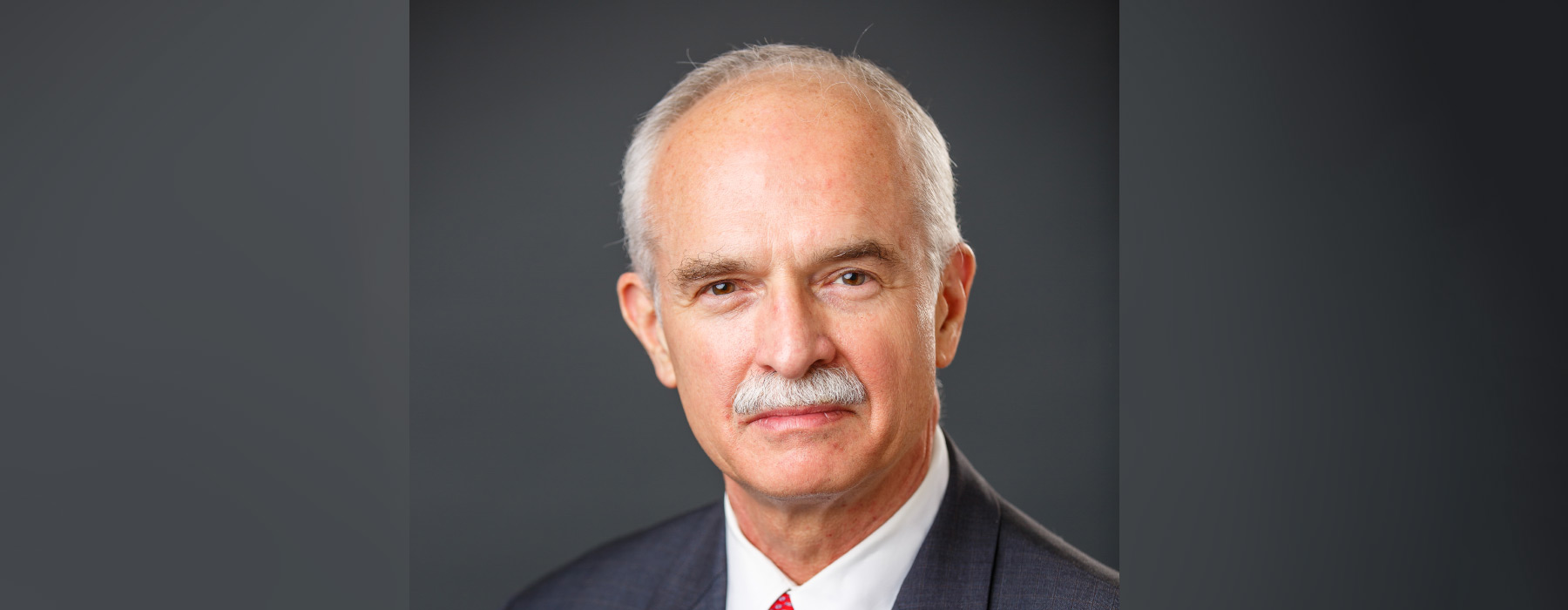
David was a great intellectual entrepreneur. He was the founding Vice President for the Cato Institute and the founding President of the Pacific Research Institute for Public Policy. He started the Independent Institute on a shoestring budget in 1986, building it into a major institute that produced many important books and research articles.
Among the highlights of Independent’s extraordinary publications are Crisis and Leviathan: Critical Episodes in the Growth of American Government by Robert Higgs (1986, with a 25th anniversary edition in 2012); Antitrust and Monopoly, by Dominick Armentano (1990); Beyond Politics: The Roots of Government Failure, by Randy Simmons (updated edition 2011); Out of Work, by Lowell E. Gallaway and Richard Vedder (1997); Entrepreneurial Economics, by Alexander Tabarrok (2002); The Empire Has No Clothes, by Ivan Eland (2004); Making Poor Nations Rich, edited by Benjamin Powell (2007); The Enterprise of Law, by Bruce Benson (2011); Living Economics, by Peter J. Boettke (2012); Liberty in Peril, by Randall Holcombe (2019); and many more.
All told, Independent Institute books produced under David’s direction received more than 50 prestigious book awards, including three Eric Hoffer Book Award Grand Prizes, the Templeton Freedom Award, two Mencken Awards for Best Book, eight Sir Antony Fisher International Memorial Awards for Best Book, three Benjamin Franklin Awards, ten Independent Publisher Book Awards, the Peter Shaw Memorial Award, and three Choice Magazine Awards for Outstanding Book.
David spotted talent in other people, encouraged them, and made things happen. He was a prime mover in launching Bruce Benson’s important work on the law merchant and a big supporter of the great Robert Higgs (who started The Independent Review).
I learned a lot from David, especially about militarism and libertarian foreign policy, the marketing of ideas, and also about what it means to be an entrepreneur. I recall two instances in particular. The first was during the Microsoft trial when we had published the excellent book Winners, Losers & Microsoft: Competition and Antitrust in High Technology by Stan Liebowitz and Stephen Margolis. II opposed the antitrust case against Microsoft, seeing it as waste of resources in a rivalrous industry (in retrospect, yup we got that one right). Larry Ellison at Oracle (a Microsoft competitor) didn’t like our work and hired detectives to buy the Independent Institute’s garbage and sift through it (yes, really!) to try to discredit us. The story become a page one headline in the New York Times (Independent Institute not really Independent!). I was worried about the impact on the Institute but David always saw the positive even in “bad news.” At the time I found this frustrating as this seemed to me like a failure to see reality but David had the entrepreneur’s faith that vision, a positive attitude, and hard work can make reality. He kept calm and steered us through the difficulties to further strengths. I was wrong. David was right. He made it happen. The second time was when II was launching its scholarships for low-income children to attend private schools in Oakland. I sketched out a careful, well-thought out plan to get us ready to go in a year. David said no, “I want it ready in six weeks!”. I thought this was insane. But we did it! No surprise that David was an entrepreneur and I was an academic. Ultimately, of course, I returned to academia by moving to GMU but not before learning many valuable lessons from David and my years at the Independent Institute.
He will be missed.
The first and also twentieth Emergent Ventures cohort
I am pleased to be able to announce that the very first Emergent Ventures winner, several years ago, was Tymofiy Mylovanov, an Ukrainian economist affiliated with the University of Pittsburgh. Bloomberg covered Tymofiy’s all-important logistics activities in Ukraine here as explained by MR. And here is a good Pittnews profile.
Tymofiy has been so impactful he gets a cohort of his own, in addition to being the very first winner. The early EV grant to Tymofiy was to encourage him to write on the Ukraine economy, in Ukrainian, and this led in turn to his being appointed the Economy Minister in the Zelensky cabinet, which later morphed into his current set of responsibilities in Ukraine. (Not all EV grants are publicized up front, for a variety of reasons).
Very recently Emergent Ventures made a grant to the Kyiv School of Economics, led by Tymofiy, and if you wish you can support them here. We are delighted to be helping his efforts and to have him and the School as our twentieth cohort.
My YouTube viewing habits
Abe emails me:
Tyler, I really enjoyed your recent podcast with Russ Roberts talking about favorite books and reading strategies. On the podcast, you mentioned YouTube a couple of times. I was hoping Russ would ask you about your YouTube habits, but he didn’t, so I thought I’d email to ask. What type of things do you watch on YouTube? Do you have any favorite channels or strategies for finding good content? I think it would be interesting to hear your thoughts on the subject.
My habits here are primitive, and not recommended for most of you sophisticates, but here goes:
1. I don’t subscribe to YouTube channels.
2. I watch some reasonable percentage, at least in part, of what people send me.
3. I watch prospective guests for CWT, to experience their conversational rhythms and mannerisms and “tics.”
4. I listen to music, especially when I am traveling, mostly classical music recitals or “world music,” to use a much-abused phrase. For many “world musics,” the visual element is all-important. I love Led Zeppelin, but I don’t click on them in this medium. Piano and guitar recitals I enjoy much more than orchestral music, at least on YouTube.
5. Sometimes I watch videos on science, or occasionally econometrics. It is often the best way to learn new concepts in these areas.
6. I watch Magnus Carlsen play BanterBlitz and engage in related chessboard antics in other forums, mostly while I am exercising on the Peloton. If you understand chess reasonably well, he is one of the greatest entertainers of our time, in addition to being the best chessplayer ever.
7. I don’t listen on speeds other than 1x. Doing so would disrupt the purposes mentioned above! If I am just trying to absorb information rapidly, typically I would prefer a book. The information from #5 usually is difficult enough for me to stick with 1x. If it is just someone blabbing, typically I care about the true human rhythms of speech, or I just won’t do it.
What else?
New evidence on schooling and pandemic learning
We estimate the impact of district-level schooling mode (in-person versus hybrid or virtual learning) in the 2020-21 school year on students’ pass rates on standardized tests in Grades 3–8 across 11 states. Pass rates declined from 2019 to 2021: an average decline of 12.8 percentage points in math and 6.8 in English language arts (ELA). Focusing on within-state, within commuting zone variation in schooling mode, we estimate districts with full in-person learning had significantly smaller declines in pass rates (13.4 p.p. in math, 8.3 p.p. in ELA). The value to in-person learning was larger for districts with larger populations of Black students.
That is from a new paper by Rebecca Jack, Claie Halloran, James Okun, and Emily Oster.
Tuesday assorted links
1. Discussion of linear TFP growth and its possible implications.
3. Vaclav Smil interview (NYT).
4. Modeling landscape formation on Titan.
6. On yield farming (Bloomberg).
7. On pessimism.
The Myth of Primitive Communism
AEON: Today, many writers and academics still treat primitive communism as a historical fact. To take an influential example, the economists Samuel Bowles and Jung-Kyoo Choi have argued for 20 years that property rights coevolved with farming. For them, the question is less whether private property predated farming, but rather why it appeared at that time. In 2017, an article in The Atlantic covering their work asserted plainly: ‘For most of human history, there was no such thing as private property.’ A leading anthropology textbook captures the supposed consensus when it states: ‘The concept of private property is far from universal and tends to occur only in complex societies with social inequality.’

In fact, although some tribes had communal sharing of (some) food, most did not. Private property, far from being unknown, was normal among all hunter-gatherers that have been studied. Manvir Singh writing in Aeon continues:
Agta hunters in the Philippines set aside meat to trade with farmers. Meat brought in by a solitary Efe hunter in Central Africa was ‘entirely his to allocate’. And among the Sirionó, an Amazonian people who speak a language closely related to the Aché, people could do little about food-hoarding ‘except to go out and look for their own’. Aché sharing might embody primitive communism. Yet, Hill admits, ‘the Aché are probably the extreme case.’
…More damning, however, is a starker, simpler fact. All hunter-gatherers had private property, even the Aché….Individual Aché owned bows, arrows, axes and cooking implements. Women owned the fruit they collected. Even meat became private property as it was handed out. Hill explained: ‘If I set my armadillo leg on [a fern leaf] and went out for a minute to take a pee in the forest and came back and somebody took it? Yeah, that was stealing.’
Some proponents of primitive communism concede that foragers owned small trinkets but insist they didn’t own wild resources. But this too is mistaken. Shoshone families owned eagle nests. Bearlake Athabaskans owned beaver dens and fishing sites. Especially common is the ownership of trees. When an Andaman Islander man stumbled upon a tree suitable for making canoes, he told his group mates about it. From then, it was his and his alone. Similar rules existed among the Deg Hit’an of Alaska, the Northern Paiute of the Great Basin, and the Enlhet of the arid Paraguayan plains. In fact, by one economist ’s estimate, more than 70 per cent of hunter-gatherer societies recognised private ownership over land or trees.
Moreover, the sharing that some hunter-gatherers practiced was functional rather than ethical.
Whatever we call it, the sharing economy that Hill observed with the Aché does not reflect some lost Edenic goodness. Rather, it sprang from a simpler source: interdependence. Aché families relied on each other for survival. We share with you today so that you can share with us next week, or when we get sick, or when we are pregnant.
take away the function and the sharing disappeared, often brutally:
In their book Aché Life History (1996), Hill and the anthropologist Ana Magdalena Hurtado listed many Aché people who were killed, abandoned or buried alive: widows, sick people, a blind woman, an infant born too soon, a boy with a paralysed hand, a child who was ‘funny looking’, a girl with bad haemorrhoids. Such opportunism suffuses all social interactions. But it is acute for foragers living at the edge of subsistence, for whom cooperation is essential and wasted efforts can be fatal.
None of this should be surprising to anyone familiar with the property-rights tradition of Demsetz and Barzel. The primitive communism of hunter-gatherers is no different in principle from the primitive communism of the wifi service at Starbucks, the modern day police and fire departments, or the use of Shakespeare’s works. As Barzel put it, “New rights are created in response to new economic forces that increase the value of the rights.” Thus, in this respect, there are no major differences among peoples, only differences in transaction costs, externalities, and technologies of inclusion and exclusion.
France analysis of the day
Macron had promised to reduce state spending — then a record at more than 56 per cent of gross domestic product — by about 5 percentage points. Instead, under pressure from protests and the pandemic, state spending rose to a staggering 60 per cent of GDP. France’s government spending is 15 points above the average for developed economies.
Moreover, that gap is explained less by heavy spending on education, health or housing than on welfare programmes, which at 18 per cent of GDP is nearly double the average for developed economies. France is stuck in a welfare trap, spending generously on income transfers but pushed by voters to spend even more, given discontent with the rising cost of living and with inequality.
Here is more from Ruchir Sharma at the FT. And this:
Total billionaire wealth doubled under Macron to 17 per cent of GDP, and nearly 80 per cent of French billionaires’ wealth is inherited — among the highest in the world.
On Nebraska (from the comments)
How much can one shift the Twitter equilibrium?
the free speech compromises twitter and fb have made are a delicate balance between users, employees, governments, and ad buyers. this is what they’ve had to do to run them. i think “glorious leaders” can help on the margin but it’s not the same as an engineering megaproject
— roon (@tszzl) April 25, 2022
Monday assorted links
Friston’s theory of everything
Bayesian Brain theory flips this idea around again so that cognition is a cybernetic or autopoietic loop. The brain instead attempts to predict its inputs. The output kind of comes first. The brain anticipates the likely states of its environment to allow it to react with fast, unthinking, habit. The shortcut basal ganglia level of processing. It is only when there is a significant prediction error—some kind of surprise encountered—that the brain has to stop and attend, and spend time forming a more considered response. So output leads the way. The brain maps the world not as it is, but as it is about to unfold. And more importantly, how it is going to unfold in terms of the actions and intentions we are just about to impose on it. Cognition is embodied or enactive…
Friston is largely a modest person, but he is not afraid to bang the table a little more these days. At the 2021 Brain Connectivity Workshop, Friston asserted he has done nothing less than found a fourth branch of physics. You have Newtonian mechanics, quantum mechanics, and statistical mechanics (that is, thermodynamics), and now you can have Bayesian mechanics—the physics of systems which can exert a predictive control over their worlds. We can debate the truth of this claim. However, I applaud the ambition. Neuroscience establishing its own deep mathematical foundation at last. This is why I pitch the Bayesian Brain as the big thing of the past 20 years.
That is John McCrone summarizing Friston in a short piece. And if you wish to read further, here is one famous paper by Friston. I do not have an opinion of my own here, but am always happy to pass along (relatively) new ideas. And here is Friston (with co-authors) applying his framework to autism.
Via Michelle Dawson.
That is from Harvey Bungus.