Saturday assorted links
That was then, this is now — Pakistan edition
Ayub Khan ended the political turmoil to become the country’s first military ruler in 1958. He revived the economy, carried out agrarian reforms, provided stimulus to the industry and encouraged foreign investment. State-backed capitalism and alliance with the US powered a ‘golden age’ of high growth rates under Ayub Khan’s reign. The growth was significant enough for the international media to take a note of it. In January of 1965, New York Times went on to predict that Pakistan might be on its way towards an economic milestone reached ‘by only one other populous country, the United States’. A year later, The Times, London, called Pakistan’s survival and development ‘one of the most remarkable examples of state and nation-building in the post-war period’. Pakistan was ‘considered to be one of the few countries at the time that would achieve developed-country status’.
That is from Sameer Arshad Khatlani’s recent and really quite good The Other Side of the Divide: A Journey into the Heart of Pakistan.
Neil Tambe on Courage Studies (from my email)
Most importantly, happy holidays to you and your family. Thank you (and Alex) for another year of MR and CWT.
I wanted to suggest that you involve the theme of courage into your various projects. For the purpose of this message, my working definition of courage is the capability to do the right or needed thing, even though one knows it will be difficult.
Several recent posts in MR have a question of courage at their foundation. For example, reasonable people could agree that accelerating vaccine approvals by eliminating conventional but unnecessary bureaucracy, crossing the fault lines of polarized political issues, taking a risk to start a business, implementing provocative new ideas for democracy and liberalism, or launching a project within a corporation that improves productivity might all be “right” to do.
And yet they don’t happen. Why?
To be sure, there are many explanations. That said, I’ve spent my career operating in large organizations and I’ve come to observe a common thread – courage.
Teams and individuals often have motivation, skill, and even the power to do the “hard but important stuff” like the ones I’ve listed. But we pass. We aren’t willing to go out on a limb. We follow conventional courses of action even though they don’t live up to our ideals. If we only had the courage to act.
Again, there are many other reasons why hard stuff doesn’t get done. Courage, in my observation, is a fundamental one but not an idea that is well understood.
Much like you’ve suggested “Progress Studies” as a discipline in its own right, I’d suggest “Courage Studies” (the study of what courage is and how to cultivate it) as a relevant sub-discipline within the domain of Progress.
I’m particularly interested in this area, and doing my own writing here, so I acknowledge that this point of view is biased by my own interests. I won’t be shy about submitting my work to Emergent Ventures once a manuscript is transcribed from my handwritten notebook!
In the meantime, I’m happy to share more detailed ideas on “Courage Studies” if they’d be helpful to you or your team.
Vaccine incentives matter (from my email)
I am a physician in private practice in [redacted]. We have just been approved to order and administer the vaccine to tier-appropriate patients. Medicare has approved a payment of 18$ for the first shot and 28$ for the second. As far as we can determine we will not be allowed to bill for an office visit so that is the entire amount we will receive for registering the patients, screening then for covid outside of the office, taking their vital signs, taking a history to see if there are any contraindications to the vaccine, administering the vaccine, observing them in the clinic for a minimum of 15 minutes up to 30 minutes depending on their history, and recalling them in 28 days and going through most of the same procedure again, minus the registration and history. There is also an extensive regime of recording and reporting all vaccination data daily to the state government. We had anticipated hiring someone to manage this new service due to the amount of new work that is required. At this rate we might be able to give 10 shots an hour in each of our 3 clinics if we see no other patients for illness, injury, or covid testing.
Do I need to say that we cannot possibly afford to do this for the reimbursement offered. The alternative is for patients to receive the vaccine in some state funded site or clinic. That may take a very long time to roll out.
We need many more economists complaining about this, right? Other than John Cochrane, where will we find them? Why do we not find them?
Christmas assorted links
1. Black-footed ferrets are getting their own Covid-19 vaccine.
3. David Brooks’s Sidney awards (NYT).
4. In memory of Richard Cooper, Harvard economist.
5. When Larry Summers is trending on Twitter, he is usually correct.
6. My Bloomberg column on all the scientific developments of 2020. Hail computation!
7. Vaccine envy (NYT). And “NBA memo warns teams about obtaining, administering COVID-19 vaccine early.”
8. One Texas health district received 900 doses of the COVID-19 vaccine. Then, it closed for Christmas.
10. Turkey Finds Chinese Vaccine Efficacy Rate of 91.25% in Trial.
Happy Holidays!
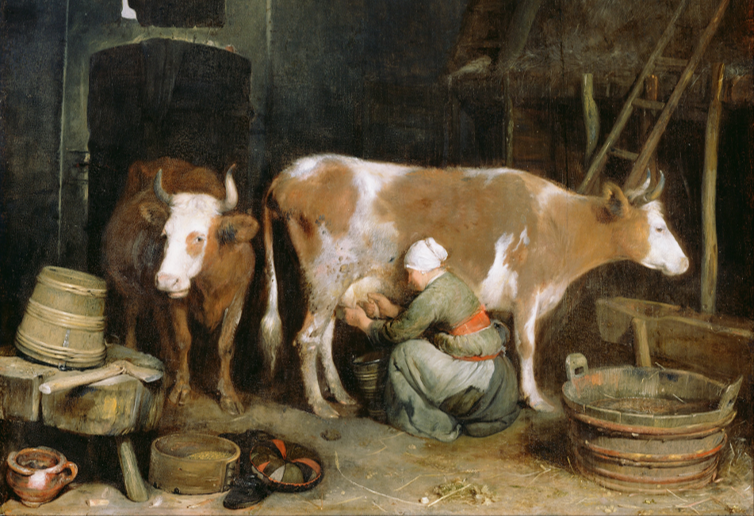
Gerard ter Borch (Dutch, 1617 – 1681) been thinking a lot about this lately.

Happy Holidays!

Dr. Fauci, Straussian
Recently, a figure to whom millions of Americans look for guidance — Dr. Anthony S. Fauci, an adviser to both the Trump administration and the incoming Biden administration — has begun incrementally raising his herd-immunity estimate.
In the pandemic’s early days, Dr. Fauci tended to cite the same 60 to 70 percent estimate that most experts did. About a month ago, he began saying “70, 75 percent” in television interviews. And last week, in an interview with CNBC News, he said “75, 80, 85 percent” and “75 to 80-plus percent.”
In a telephone interview the next day, Dr. Fauci acknowledged that he had slowly but deliberately been moving the goal posts. He is doing so, he said, partly based on new science, and partly on his gut feeling that the country is finally ready to hear what he really thinks.
Hard as it may be to hear, he said, he believes that it may take close to 90 percent immunity to bring the virus to a halt — almost as much as is needed to stop a measles outbreak.
Asked about Dr. Fauci’s conclusions, prominent epidemiologists said that he might be proven right…
Dr. Fauci said that weeks ago, he had hesitated to publicly raise his estimate because many Americans seemed hesitant about vaccines, which they would need to accept almost universally in order for the country to achieve herd immunity.
Here is the full NYT story. A few points:
1. Surely Straussianism by now should be persuasive as a general theory.
2. Fauci is idolized by many as a kind of anti-Trump, but he is a terrible risk communicator, as evidenced also by his recent attacks on some of the “lesser” vaccines (which still would work if applied collectively). Not to mention his earlier remarks on masks, and also the mid-March safety of cruises. How a person understands Fauci is in fact a pretty good litmus test.
3. Should you be trusting everything the insiders are telling you about FDA processes?
4. I genuinely do not know what the herd immunity threshold is, but I assure you I am trying to tell you the truth on this one (and other matters). My Straussianism is not a normative theory of my own communication, but rather a positive theory of how the world works, and it has been vindicated once again.
New blood-test device monitors blood chemistry continually
“A blood test is great, but it can’t tell you, for example, whether insulin or glucose levels are increasing or decreasing in a patient,” said Tom Soh, a professor of electrical engineering and of radiology at Stanford. “Knowing the direction of change is important.”
Now, Soh, in collaboration with Eric Appel, an assistant professor of materials science and engineering, and colleagues have developed a technology that can provide this crucial piece of missing information. Their device, which they’ve dubbed the “Real-time ELISA,” is able to perform many blood tests very quickly and then stitch the individual results together to enable continuous, real-time monitoring of a patient’s blood chemistry. Instead of a snapshot, the researchers end up with something more like a movie.
In a new study, published in the journal Nature Biomedical Engineering, the researchers used the device to simultaneously detect insulin and glucose levels in living diabetic laboratory rats. But the researchers say their tool is capable of so much more because it can be easily modified to monitor virtually any protein or disease biomarker of interest…
Technologically, the system relies upon an existing technology called Enzyme-linked Immunosorbent Assay – ELISA (“ee-LYZ-ah”) for short. ELISA has been the “gold standard” of biomolecular detection since the early 1970s and can identify virtually any peptide, protein, antibody or hormone in the blood. An ELISA assay is good at identifying allergies, for instance. It is also used to spot viruses like HIV, West Nile and the SARS-CoV-2 coronavirus that causes COVID-19.
“We do ELISA continuously,” Soh said.
The Real-time ELISA is essentially an entire lab within a chip with tiny pipes and valves no wider than a human hair. An intravenous needle directs blood from the patient into the device’s tiny circuits where ELISA is performed over and over.
Here is the full story, via Malinga Fernando.
UK fact of the day, those not always so new service sector jobs
Britain’s fishing industry adds less value to the UK economy than the Harrods department store. But its importance to coastal communities almost prevented a Brexit trade deal between the UK and EU.
Here is the full FT story, via Adam Tooze.
This is us, that is them, China antitrust suit of the day
Chinese regulators said Thursday they have launched an antitrust investigation into Chinese e-commerce giant Alibaba Group Holding Ltd. BABA 0.14% and separately said they would summon affiliate Ant Group for discussions on competition and consumer rights.
Taken together, the two actions mark the strongest enforcement action by Beijing against the country’s biggest technology giant and Jack Ma, its billionaire founder.
The Alibaba investigation was revealed Thursday by China’s antimonopoly regulator, the State Administration for Market Regulation, which said in a brief statement that it was acting on reports that Alibaba was pressuring merchants who sell goods on its platforms to commit to not selling on its competitors. Alibaba’s e-commerce platforms, Taobao and Tmall, compete with domestic rivals JD.com Inc. and Pinduoduo Inc.
Here is the full story, via the excellent Kevin Lewis.
The Tony Blair “one dose” idea
Here is the source, of course Alex Tabarrok was there first. For now give everyone one dose rather than two, and enjoy the partial but more broadly spread protection. Here are the reactions from two epidemiologists:
Professor Wendy Barclay, from the department of infectious disease at Imperial College London, said Mr Blair’s idea was interesting but agreed it was “too risky” to try without further evidence.
And Professor Neil Ferguson, also from Imperial, added that the UK regulator had authorised the vaccine on the basis that people would receive two doses.
Administering one dose only would require “an entirely different regulatory submission”, he told a Commons committee.
A Department of Health and Social Care spokesperson said: “Over the coming weeks and months, the rate of vaccinations will increase as more doses become available and the programme continues to expand.”
Where are their cost-benefit analyses? Letting people get infected at current and indeed accelerating rates is also “too risky,” yes? Is there an epidemiologist or public health expert out there willing to show his or her work, either for or against this idea? A genuine query, and of course comments are open. How about one dose for Moderna only? If we are to defer to their expertise, they do actually have to step up and be the experts, right?
Update on the new Covid-19 strain
Here is a very good article with many points, here are two in particular that caught my attention:
People with a weakened immune system may give the virus this opportunity, as Gupta’s data show. More evidence comes from a paper published in The New England Journal of Medicine on 3 December that described an immunocompromised patient in Boston infected with SARS-CoV-2 for 154 days before he died. Again, the researchers found several mutations, including N501Y. “It suggests that you can get relatively large numbers of mutations happening over a relatively short period of time within an individual patient,” says William Hanage of the Harvard T.H. Chan School of Public Health, one of the authors. (In patients who are infected for a few days and then clear the virus, there simply is not enough time for this, he says.) When such patients are given antibody treatments for COVID-19 late in their disease course, there may already be so many variants present that one of them is resistant, Goldstein says.
And:
These could impact the binding of the virus to human cells and also its recognition by the immune system, Farrar says. “These South African mutations I think are more worrying than the constellation of the British variant.” South African hospitals are already struggling, he adds. “We’ve always asked, ‘Why has sub-Saharan Africa escaped the pandemic to date?” Answers have focused on the relative youth of the population and the climate. “Maybe if you just increase transmission a bit, that is enough to get over these factors,” Farrar says.
Developing…the speed premium of course is rising…
The age of polarization ended some while ago
The coronavirus-relief bill racing through Congress contains a fair amount of economic relief as well as a wide array of unrelated measures that were thrown into the bill with little or no public debate. Included in the latter category is something shocking: a huge package of energy reforms that will result in major greenhouse-gas reductions.
How big a deal are the climate provisions? The World Resources Institute has called the bill “one of the most significant pieces of climate legislation that Congress has passed in its history.” Grant Carlisle, a senior policy adviser at the Natural Resources Defense Council, says, “This is perhaps the most significant climate legislation Congress has ever passed.”
To be sure, the “most significant climate legislation Congress has ever passed” designation is a little bit misleading. Congress hasn’t passed much climate legislation. The climate provisions in the coronavirus-relief bill might add up to more than President Obama’s 2009 stimulus bill, which included $90 billion in green-energy subsidies and helped seed the boom in wind, solar, batteries, and other tech over the past decade. They likely won’t be as significant as the 1970 Clean Air Act, which created the regulatory authority that does most of the heavy lifting in reducing carbon pollution.
But the amount of good climate policy in this bill is shocking, especially given the fact that it is about to be signed by Donald J. Trump. The major provisions include: a $35 billion investment in new zero-emission energy technology (including solar, wind, nuclear, and carbon-capture storage); an extension of tax credits for wind and solar energy, which were set to expire; and, most significantly, a plan for phasing out hydrofluorocarbons, a small but extremely potent greenhouse gas used as a coolant.
The rhetoric, however, will continue. That article is from Jonathan Chait. And here is my March 2019 Bloomberg column on polarization:
If I had to describe 2019 so far, I would characterize it as The Year Political Polarization Started to Erode. I know that sounds counterintuitive — aren’t partisans at each other’s throats on social media all the time? — but bear with me.
There is some data to support my point. A recent poll about regulating the tech industry, an issue which could prove to be one of the most important of our time, asked: “Do you agree or disagree that tech companies have too much power and should be more regulated?” Some 16 percent of Republicans said they “strongly agree,” while 13 percent of Democrats did. And combining those who “strongly agree” and “somewhat agree” gives an identical figure for both parties — 46 percent. This is the near-opposite of polarization.
More generally, both parties also seem to have converged in thinking that fiscal deficits are fine and more government spending is a good thing.
Ahem.