Free Tool to Run the Double Oral Auction Experiment
The double oral auction was one of the first experiments that Vernon Smith ran. He was expecting to find that the supply and demand model didn’t work. Instead, the results changed his life and led to a Nobel prize:
I am still recovering from the shock of the experimental results. The outcome was unbelievably consistent with competitive price theory. … But the result can’t be believed, I thought. It must be an accident, so I will take another class and do a new experiment with different supply and demand schedules. (Smith 1991)
I’ve run similar experiments in my principles class. The exercise is fun for the students and it’s always amazing to see how quickly the equilibrium is attained even though none of the participants has any idea what the equilibrium price and quantity are. The experiment can be run with paper and pencil or a laptop in a small class but that gets cumbersome for a larger class. Fortunately, there are some free tools.
Here’s Hampton and Johnson describing Kiviq.us.
Kiviq.us provides an online version of the double oral auction that works on all student Internet-enabled devices, including smartphones and iPads, without requiring students or instructors to download any special software. Results can be projected on a screen for debriefing. Instructors can set key parameters. A version with price controls can be setup. The use of the experiment is free for instructors and students. Students do not have to give their email address to play.
The design is the classic market experiment for introducing students to demand and supply. Joseph (1970) makes a strong case for the benefits of the “market experiment” in teaching based on experience with high school and undergraduate students. The original experiment was created by Smith (1962).
….After a trading session, instructors can debrief showing dynamically the history of bids, asks, trades, individual attribution of bids/asks (by clicking the chart), individual total earnings, and the underlying demand and supply curves.
Modern Principles of Economics introduces the supply and demand model and Smith’s classic experiment and thus is an ideal accompaniment.
A coronavirus conundrum, on the percentage of asymptomatic cases
New reports suggest that the coronavirus has been spreading in Washington state for at least six weeks, infecting hundreds or maybe more. At the same time, other reports suggest a high “R0 value,” sometimes 3 or more, reflecting that the coronavirus is highly contagious and it spreads very quickly.
It is then possible to have hundreds of cases in Washington state if most cases are asymptomatic, or with only slight symptoms. Yet when we look at the experiences of the coronavirus cruise ships, it seems a reasonable number of cases have symptoms of distress. For instance, on the Diamond Princess six people died and only about half are listed as having the virus but asymptomatic (see the previous link on the rhs). So many others seem to have reported being sick or requiring treatment.
So what gives? I see a few options, none of them obviously convincing:
1. People on the cruise ship were hit especially hard.
2. Significantly different strains of the virus are circulating (all of the sequence that has been done seems to run counter to this).
3. Washington state local public health infrastructure has in fact been overwhelmed as of late, we just thought it was all a very bad flu season.
4. Many of the people on the cruise ship who showed symptoms “thought they were supposed to” but were not actually so sick.
5. Most of the detected cases on the cruise ship in fact were asymptomatic, but the media has been misreporting the extent of actual illness among the passengers.
Any other suggestions? It is quite likely the cruise ship people are older than usual, but will that make up for the entire difference? People, what do you think is going on here?
Please restrict your comments to attempting to resolve this particular issue, as you can put your more general coronavirus observations on other posts.
Recession risk is rising
2020 @PredictIt recession prediction market probabilities are now above 40% amid #Coronavirus concerns.
That is from Jon Hartley, and here is his closely related new paper “Recession Prediction Markets and Macroeconomic Risk in Asset Prices.” Here is the prediction market page, at 47 as I am writing.
Why have stock markets been falling so much?
That is the topic of my latest Bloomberg column, note first of all that the virus is a kind of referendum on global response capabilities, and so far we have been failing (with Singapore as a possible exception). Here is another bit:
…investors now have a better sense of what other investors think about risk. Before Covid-19, investors did not have much direct information about what other investors thought about the robustness of the global economy. Their expectations were not seriously being tested.
When a new shock to the system comes along, however, everyone gets to observe everyone else’s selling behavior. And investors have learned that the faith of their fellow investors is not as strong as they had thought. That raises the risk premium on holding stocks, and in turn causes share prices to fall more. Given how much this pandemic is a truly new event, and that the process of trading itself generates information about the forecasts of other investors, price volatility can be expected to continue.
And this:
The stock market is scared by the fact that it took so long for the stock market to be scared.
Developing…
Sunday assorted links
Öffentlichebibliotheksumbaurenovierungssammlungsbeschränkungsangst
My neologism for: The act of seeing a public library under renovation/expansion, and rightfully fearing that upon reopening the book collection will be smaller rather than larger.
This time it is Mary Riley Styles Library in Falls Church City.
Emergent Ventures winners, seventh cohort
Nicholas Whitaker of Brown, general career development grant in the area of Progress Studies.
Coleman Hughes, travel and career development grant.
Michael T. Foster, career development grant to study machine learning to predict which politicians will succeed and advance their careers.
Evan Horowitz, to start the Center for State Policy Analysis at Tufts, to impose greater rationality on policy discussions at the state level.
John Strider, a Progress Studies grant on how to reinvent the integrated corporate research lab.
Dryden Brown, to help build institutions and a financial center in Ghana, through his company Bluebook Cities.
Adaobi Adibe, to restructure credentialing, and build infrastructure for a more meritocratic world, helping workers create property rights in the evaluation of their own talent.
Shrirang Karandikar, and here (corrected link), to support an Indian project to get the kits to measure and understand local pollution.
Jassi Pannu, medical student at Stanford, to study best policy responses to pandemics.
Vasco Queirós, for his work on a Twitter browser app for superior threading and on-line communication.
Saturday assorted pandemic links
Age and high-growth entrepreneurship
Many observers, and many investors, believe that young people are especially likely to produce the most successful new firms. Integrating administrative data on firms, workers, and owners, we study start-ups systematically in the United States and find that successful entrepreneurs are middle-aged, not young. The mean age at founding for the 1-in-1,000 fastest growing new ventures is 45.0. The findings are similar when considering high-technology sectors, entrepreneurial hubs, and successful firm exits. Prior experience in the specific industry predicts much greater rates of entrepreneurial success. These findings strongly reject common hypotheses that emphasize youth as a key trait of successful entrepreneurs.
That is from a newly published AER paper by Pierre Azoulay, Benjamin F. Jones, J. Daniel Kim, and Javier Miranda.
Markets: Not in Everything
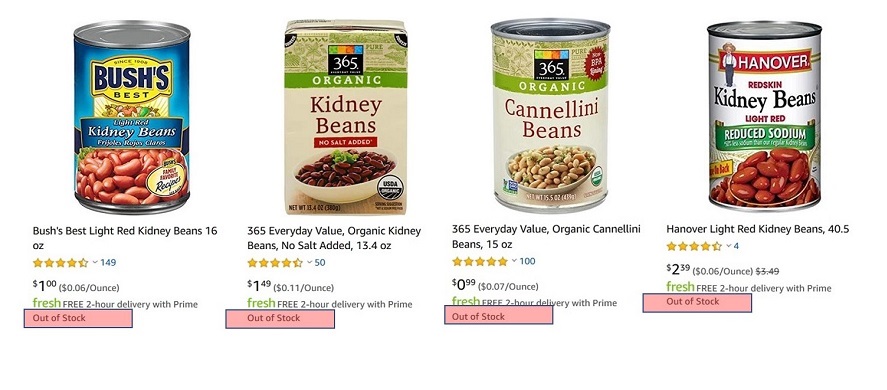
Hat tip: Randall Parker.
My 2013 NYT column on pandemics
The government should resist the strong temptation to skimp on rewards. Many health care breakthroughs come through university research programs and government grants, but bringing an innovation to fruition and managing wide and rapid distribution usually requires the profit-seeking private sector. In any single instance, the government could save money by confiscating rights, but in the longer run this would discourage the search for additional remedies.
If anything, the American government — or, better yet, a consortium of governments — should pay more for pandemic remedies than what market-based auctions would yield. That’s because, if a major pandemic does arise, other countries may not respect intellectual property rights as they scramble to copy a drug or vaccine for domestic distribution. To encourage innovations, policy makers need to bolster the expectation of rewards.
I agree with the circulating critiques of current Trump administration policy, but the Democrats are no angels in this matter either. For instance:
Unfortunately, the United States lacks strong political coalitions for many beneficial public health measures. The Democratic Party has focused on insurance coverage and Medicaid expansion as political issues, while often wishing to lower prices of drugs or to weaken patent protection. The Obama administration’s new budget lowers spending on pharmaceuticals by an estimated $164 billion over 10 years, mostly through bargaining down Medicare drug prices. That makes it hard for the Democrats to embrace lucrative rewards for pharmaceutical companies or vaccine producers.
Here is the full column.
Cultural biases in equity analysis
Vesa Pursiainen covers this topic in a new paper. Most concretely:
My estimates suggest that a Norwegian analyst is 8.4 %-points more likely to assign a buy rating to a Danish firm than an Austrian analyst. Similarly, a Norwegian analyst is 6.7 %-points more likely to assign a buy-recommendation to a British firm than a French analyst.
And here is the abstract:
A more positive cultural trust bias by an equity analyst’s country of origin toward a firm’s headquarter country is associated with significantly more positive stock recommendations, controlling for analyst-month and firm-month fixed effects. The cultural bias effect is stronger for eponymous firms whose names mention their home country. The bias effect varies over time, increasing with negative sentiment. I find evidence of a negative North-South bias emerging during the European debt crisis, a UK-Europe divergence amid Brexit, and a Franco-British bias during the Iraq war. The share price reaction to buy recommendations by more positively biased analysts is weaker.
And from the conclusion:
This paper provides evidence that cultural biases have a significant effect on equity analysts’ stock recommendations. I further find that there is substantial time variation in the effect of such biases, and that the strength of the bias effect is highly correlated with the general sentiment. In other words, bad economic times, when the level of pessimism is high and con- sumer confidence low, are also the times when cultural biases have the largest effect. These findings are all the more significant since equity analysts are financial market professionals that are often supposed to be less susceptible to behavioral biases than non-professionals. To the extent that these results generalize to the rest of the population, they suggest a link between times of economic hardship and increased cultural biases. This might contribute to the rise of nationalism and populism during economic downturns.
My finding that the salience of the firm’s nationality affects the strength of analysts’ cultural biases is also novel in the finance literature. While there is a vast literature on priming effects in psychology literature and, to a lesser extent, in experimental economics, my results suggest that there might be interesting new applications in financial markets and in non-experimental settings that have not been fully explored.
Finally, I find evidence that significant political events can introduce new cultural biases that are strong enough to affect stock recommendations. The much-discussed North-South divide in Europe and the stereotypes of lazy Mediterraneans invoked during the European debt crisis created a clearly visible negative bias in the stock recommendations of North European analysts on South European companies. Similarly, the diplomatic rifts between the UK and the rest of Europe amid the Brexit process, as well as between France and the UK over the Iraq war can be seen in analyst stock recommendations.
For the pointer I thank the excellent Samir Varma.
Coronavirus sentences to ponder
From a reader email:
I work at a large health care system on the west coast and the communication we have gotten from leadership is that we are only allowed to test for COVID-19 after discussion with and approval of the appropriate regulatory agencies.
How can this persist?
Friday assorted links
1. How Cuba manipulates infant mortality and life expectancy statistics.
2. “Drivers of higher cost cars were less likely to yield to pedestrians at a midblock crosswalk.” And: “Of 461 cars, 27.98% yielded to pedestrians. Cars yielded more frequently for females (31.33%) and whites (31.17%) compared to males (24.06%) and non-whites (24.78%). Cost of car was a significant predictor of driver yielding (OR = 0.97; p = 0.0307); odds of yielding decreased 3% per $1000 increase.”
3. New biosciences stuff you can buy on-line.
4. Path-dependence in 18th century jury decisions?
5. Why are women running more and running faster? (NYT) “He also cited the Shalane Flanagan Effect, noting how women, in particular, are pulling one another up to new levels of sub-elite running through communities found both online and in real life.” Quite an interesting thesis.
6. How Chinese bookstores are surviving the coronavirus (awesome photos too).
Contagion Themes
Good post from Nicholas Bagley in 2016 at the Incidental Economist.
Every disease provokes its own unique dread and its own complex public reaction, but themes recurred across outbreaks.
- Governments are typically unprepared, disorganized, and resistant to taking steps necessary to contain infectious diseases, especially in their early phases.
- Local, state, federal, and global governing bodies are apt to point fingers at one another over who’s responsible for taking action. Clear lines of authority are lacking.
- Calibrating the right governmental response is devilishly hard. Do too much and you squander public trust (Swine flu), do too little and people die unnecessarily (AIDS).
- Public officials are reluctant to publicize infections for fear of devastating the economy.
- Doctors rarely have good treatment options. Nursing care is often what’s needed most. Medical professionals of all kinds work themselves to the bone in the face of extraordinary danger.
- In the absence of an effective treatment, the public will reach for unscientific remedies.
- No matter what the route of transmission or the effectiveness of quarantine, there’s a desire to physically separate infected people.
- Victims of the disease are often thought to deserve the affliction, especially when those victims are mainly from marginalized groups.
- We plan, to the extent we plan at all, for the last pandemic. We don’t do enough to plan for the next one.
- Historical memory is short. When diseases fall from the headlines, the public forgets and preparation falters.
Not every one of those themes was present for every disease; the doughboys who died of the Spanish flu, for example, were not thought to deserve their fate. But the themes were persistent enough over time to establish a pattern.
The books we assigned were outstanding. If you want to learn about the intersection of infectious disease, history, and public health, you could do worse than to start with them:
- Charles Rosenberg, The Cholera Years: The United States in 1832, 1849, and 1866.
- Alfred W. Crosby, America’s Forgotten Pandemic: The Influenza of 1918.
- David Oshinsky, Polio: An American Story.
- Randy Shilts, And the Band Played On.
- Thomas Abraham, Twenty-First Century Plague: The Story of SARS.
- David Quammen, Ebola: A Natural and Human History of a Deadly Virus.
- Laurie Garrett, Ebola’s Lessons: How the WHO Mishandled the Crisis.