What should I ask Abhijit Banerjee?
I will be recording a Conversation with him, no associated public event. So what should I ask him?
I thank you all in advance for the assistance.
Sir Rod Stewart
He’s one of rock’s biggest stars, but Sir Rod Stewart has finally revealed the fruits of his other great passion – model railways.
In between making music and playing live, Sir Rod has been working on a massive, intricate model of a US city for the past 23 years.
He unveiled it as part of an interview with Railway Modeller magazine.
He then phoned in to Jeremy Vine’s BBC Radio 2 show to rebuff the host’s suggestion he had not built it himself.
“I would say 90% of it I built myself,” he insisted. “The only thing I wasn’t very good at and still am not is the electricals, so I had someone else do that.”
Sir Rod has released 13 studio albums and been on 19 tours during the time it took to build the city, which is modelled on both New York and Chicago around 1945.

Here is more, via the BBC. Via Ilya Novak.
$1 billion in talent identification and support from Schmidt Futures
Eric Schmidt, that is:
Rise cohort members, who will apply between the ages of 15 and 17, will be eligible for various types of support. They will be invited to attend a residential fellowship before their final year of high school that will support them as they consider how to serve others, how to become leaders, and how to transition to higher education and careers. Participants may also receive scholarships to continue their education, mentorship and other assistance tailored to their specific needs and interests, and a variety of career services as part of the Rise network.
To encourage service, Rise will invite its community members to make service commitments together and develop a platform to match network members with common interests. Among a range of pursuits, we envision that Rise winners will create policy, build new enterprises that benefit the public, catalyze new interdisciplinary areas of study, and develop new solutions to the world’s hardest problems.
Here is more information.
Thursday assorted links
1. “OK Boomer” escalated rapidly.
2. Blackpink has 31.3 million YouTube subscribers, more than any other musical group. Do you even know who they are? By the way, are they feminist or anti-feminist?
3. Wherein lies Otomí intellectual property? (NYT)
4. Markets in everything cereals that should not exist (Twinkies).
Bonus CWT episode with Fuchsia Dunlop
Here is the transcript and audio, and wonderful photos, over a Chinese meal at Mama Chang in Fairfax, run by the famous Peter Chang. I am not acting as lead interviewer, so this is more like a “Conversation with Tyler chiming in,” nonetheless numerous D.C. area food luminaries are present, as are other members of the Cowen family. Here is one brief excerpt:
T. COWEN: You learned Chinese food in China, of course, much of it in Sichuan province, Hunan province. As Chinese teach food, how is the method of education and training different from, say, Great Britain or the United States?
DUNLOP: Well, I haven’t been to culinary school in Great Britain or the United States, so I’m not sure.
T. COWEN: You’ve been to school in these countries.
DUNLOP: The first thing is that when you go to cooking school, you are learning the building blocks of a cuisine, which is like the grammar of a language. So the basic components, the basic processes and flavors, which you then put together to make a multitude of dishes.
Whereas, I guess, if you were studying French cuisine, you will learn some classic sauces, a bit of knife work, techniques of pastry making. In China, in Sichuan, absolutely fundamental was dao gong (刀工), the knife skills.
[Lydia] CHANG: I actually have a story to share about Dad’s cutting knife. He said when he first started learning, in school, there’s only limited time, but he wants to really excel at it. So he returned back to the dorm, started cutting, using cleaver to cut newspaper to practice.

Some of you will like this a lot, but don’t expect a normal CWT episode. And here is Fuchsia’s wonderful new book The Food of Sichuan, a significantly updated new edition of the old.
The Google checking account?
Google will soon offer checking accounts to consumers, becoming the latest Silicon Valley heavyweight to push into finance.
The project, code-named Cache, is expected to launch next year with accounts run by Citigroup Inc. C -0.70% and a credit union at Stanford University, a tiny lender in Google’s backyard.
Big tech companies see financial services as a way to get closer to users and glean valuable data. Apple Inc. introduced a credit card this summer. Amazon.com Inc. has talked to banks about offering checking accounts. Facebook Inc. is working on a digital currency it hopes will upend global payments…
Google’s approach seems designed to make allies, rather than enemies, in both camps. The financial institutions’ brands, not Google’s, will be front-and-center on the accounts, an executive told The Wall Street Journal. And Google will leave the financial plumbing and compliance to the banks—activities it couldn’t do without a license anyway.
Here is more from Peter Rudegeair and Liz Hoffman at the WSJ.
Wednesday assorted links
1. Can Republicans afford to be pro-immigrant?
3. Deirdre.
4. Maps of American restaurant quality.
5. NBA-China update.
6. Electricity and structural transmission, tweet version here.
The Anarchy
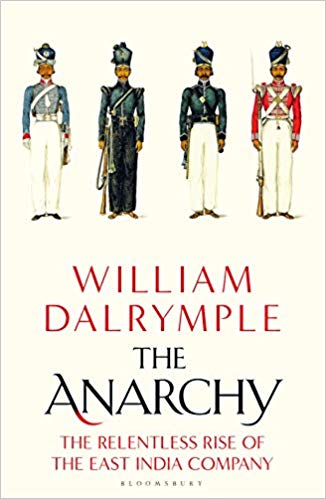 William Dalrymple is one of my favorite writers of non-fiction. He burst upon the scene in 1989 as a precocious, if occasionally a bit snotty travel writer, with In Xanadu in which he traced the path of Marco Polo from the Church of the Holy Sepulchre in Jerusalem to Xanadu in Inner Mongolia. He really hit stride, however, with City of Djinns: A Year in Delhi, an essentially perfect example of the “Year in” genre that combines humor, history and analysis and remains to this day an excellent guide to historical Delhi. In From the Holy Mountain Dalrymple traveled from Greece to Turkey, Syria, Lebanon and Egypt to understand the ancient roots of the Christian populations in these countries. Sadly, Dalrymple’s trip has become in some respects a last document of cultures now disappearing under the stress of war, revolution and suppression. As Dalrymple aged he turned more and more to pure history. In The Last Mughal and Return of a King: The Battle for Afghanistan, Dalyrmple gives what I think are the definitive accounts of the Indian mutiny of 1857 and the British invasion of Afghanistan of 1839-1842. Especially notable in both of these books is that Dalyrmple draws on previous ignored or underused Indian and Afghani accounts. There are other books, collections of journalistic essays, photographs and more but I will mention just one more, Nine Lives: In Search of the Sacred in Modern India, a beautiful and unforgettable account of nine people in modern India each walking a unique religious path.
In his latest book, The Anarchy, Dalrymple recounts the remarkable history of the East India Company from its founding in 1599 to 1803 when it commanded an army twice the size of the British Army and ruled over the Indian subcontinent. I review The Anarchy at EH.net. Here’s one bit from my review:
The Mughal emperor Shah Alam, for example, had been forced to flee Delhi leaving it to be ruled by a succession of Persian, Afghani and Maratha warlords. But after wandering across eastern India for many years, he regathered his army, retook Delhi and almost restored Mughal power. At a key moment, however, he invited into the Red Fort with open arms his “adopted” son, Ghulam Qadir. Ghulam was the actual son of Zabita Khan who had been defeated by Shah Alam sixteen years earlier. Ghulam, at that time a young boy, had been taken hostage by Shah Alam and raised like a son, albeit a son whom Alam probably used as a catamite. Expecting gratitude, Shah Alam instead found Ghulam driven mad. Ghulam took over the Red Fort and cut out the eyes of the Mughal emperor, immediately calling for a painter to immortalize the event.
Read the whole review and buy the book. It’s a hell of a story.
Imperfect optimization
Paul Ohm, a former prosecutor in the Justice Department’s computer crime and intellectual property section, said the laws governing child sexual abuse imagery were among the “fiercest criminal laws” on the books.
“Just the simple act of shipping the images from one A.I. researcher to another is going to implicate you in all kinds of federal crimes,” he said.
Social Security isn’t doomed for younger generations
No, it is not one of the great Boomer rip-offs, as I argue in my latest Bloomberg column. Here is one excerpt:
According to his [Blahous’s] estimates [link here], if no further steps are taken to shore up the finances of Social Security, the system will stop being able to meet its scheduled payment obligations sometime in the 2030s. (Note that benefit hikes are part of the schedule.) That would be bad, but even under this scenario the system is still paying out a roughly constant level of inflation-adjusted benefits over time, at least as those benefits are defined as a percentage of workers’ taxable earnings (about 13%). Of course, to the extent those taxable earnings rise, the benefits will be rising too, even if not at a spectacular pace.
Keep in mind that this is the worst-case scenario offered by a relative pessimist.
Another way to describe the problem is that, over the next 75 years, about 17% of scheduled benefits are currently unfinanced. Blahous estimates that the U.S. could cover that gap if the Social Security payroll tax were raised from 12.4% to 15.1%.
Now, you might have strong views about the wisdom of that kind of tax increase, but you should acknowledge that this is a very different reality than a bankrupt system. With Social Security on full cruise control, and with no forward-looking reforms, today’s younger earners still are slated to receive more than their parents did — just not very much more.
Dean Baker, an economist to the left of Blahous, also has studied Social Security. He estimates that retirees 30 to 40 years from now will receive monthly checks that are about 10% higher in real terms than today’s benefits. And keep in mind those are estimates per year. To the extent life expectancy rises, total benefits received will be higher yet.
The winners and losers from Airbnb
Overall, renters in New York City suffer a loss of $178mm per annum, as the losses from the rent channel dominate the gains from the host channel. I find that the increased rent burden falls most heavily on high-income, educated, and white renters, because they prefer housing and location amenities most desirable to tourists. Moreover, there is a divergence between the median and the tail, where a few enterprising low-income households obtain substantial gains from home-sharing, especially during demand peaks.
That is from the job market paper of Sophie Calder-Wang of Harvard. You will note there still are likely net gains once you count tourist demand, but of course this helps explain why Airbnb rentals are unpopular in some cities.
Tuesday assorted links
1. How much did the trade war and health care affect the 2018 election?
2. Amazon to offer a new grocery store separate from Whole Foods.
3. “Matt Hancock, the British health secretary, publicly apologized to a teenager with autism who has spent close to three years in near total seclusion.” Worse than slavery (NYT).
5. ‘Bookshops pass on anything to the right of Tony Blair’.
6. New (expensive) book on the economics of Michael Polanyi.
Politically Incorrect Paper of the Day: The United Fruit Company was Good!
The United Fruit Company is the bogeyman of Latin America, the very apotheosis of neo-colonialism. And to be sure in the UFC history there is wrongdoing and plenty of fodder for conspiracy theories but the UFC also brought bananas (as export crop), tourism, and in many cases good governance to parts of Latin America. Much, however, depends on the institutional constraints within which the company operated. Esteban Mendez-Chacon and Diana Van Patten (on the job market) look at the UFC in Costa Rica.
The UFC needed to bring workers to remote locations and thus it invested heavily in worker welfare:
…the UFC invested in sanitation infrastructure, launched health programs, and provided medical attention to its employees. Infrastructure investments included pipes, drinking water systems, sewage system, street lighting, macadamized roads, a dike (Sanou and Quesada, 1998), and by 1942 the company operated three hospitals in the country.
… Given the remoteness the plantations and to reduce transportation costs, the UFC provided the majority of its workers with free housing within the company’s land. This was partially motivated by concerns with diseases like malaria and yellow fever, which spread easily if the population is constantly commuting from outside the plantation. By 1958 the majority of laborers lived in barracks-type structures… [which] exceeded the standards of many surrounding communities (Wiley, 2008).
 The UFC wasn’t just interested in healthy workers, they also needed to attract workers with stable families:
… One of the services that the company provided within its camps was primary education to the children of its employees. The curriculum in the schools included vocational training and before the 1940s, was taught mostly in English. The emphasis on primary education was significant, and child labor became uncommon in the banana regions (Viales, 1998). By 1955, the company had constructed 62 primary schools within its landholdings in Costa Rica (May and Lasso, 1958). As shown in Figure 6a,spending per student in schools operated by the UFC was consistently higher than public spending in primary education between 1947 and 1963.21 On average, the company’s yearly spending was 23% higher than the government’s spending during this period.
…The UFC did not provide directly secondary education although offered some incentives. If the parents could afford the first two years of secondary education of their children in the United States, the UFC paid for the last two years and provided free transportation to and from the United States.
A key driver of UFC investment was that although the UFC was the sole employer within the regions in which it operated, it had to compete to obtain labor from other regions. Thus a 1925 UFC report writes:
We recommend a greater investment in corporate welfare beyond medical measures. An endeavor should be made to stabilize the population…we must not only build and maintain attractive and comfortable camps, but we must also provide measures for taking care of families of married men, by furnishing them with garden facilities, schools, and some forms of entertainment. In other words, we must take an interest in our people if we might hope to retain their services indefinitely.
This is exactly the dynamic which drove the provision of services and infrastructure in unjustly maligned US company towns. It’s also exactly what Rajagopalan and I found in the Indian company town of Jamshedpur, built by Jamshetji Nusserwanji Tata.
The UFC ended in Costa Rica in 1984 but the authors find that it had a long-term positive impact. Using historical records, the authors discover a plausibly randomly-determined boundary line between UFC and non-UFC areas and comparing living standards just inside and just outside the boundary they find that households within the boundary today have better housing, sanitary conditions, education and consumption than households just outside the boundary. Overall:
We find that the firm had a positive and persistent effect on living standards. Regions within the UFC were 26% less likely to be poor in 1973 than nearby counterfactual locations, with only 63% of the gap closing over the following 3 decades.
The paper has appendixes A-J. In one appendix (!), they show using satellite data that regions within the boundary are more luminous at night than those just outside the region. The collection of data is especially notable:
For a better understanding of living standards and investments during UFC’s tenure, we collected and digitized UFC reports with data on wages, number of employees, production, and investments in areas such as education, housing, and health from collections held by Cornell University, University of Kansas, and the Center for Central American Historical Studies. We also use annual reports from the Medical Department of the UFC describing the sanitation and health programs and spending per patient in company-run hospitals from 1912 to 1931. We also collected data from Costa Rican Statistic Yearbooks, which from 1907 to 1917 contain details on the number of patients and health expenses carried out by hospitals in Costa Rica, including the ones ran by the UFC. Export data was also collected from these yearbooks, and from Export Bulletins. 19 agricultural censuses taken between 1900 and 1984 provide information on land use, and we use data from Costa Rican censuses between 1864-1963 to analyze aggregated population patterns, such as migration before and during the UFC apogee, or the size and occupation of the country’s labor force.
Overall, a tremendous paper.
Television facts of the day
There were 496 scripted TV shows made in the US last year, more than double the 216 series released in 2010. In the past eight years the number of shows grew by 129 per cent, while the US population rose only 6 per cent. The trend is set to deepen, as groups like AT&T’s WarnerMedia commission dozens of new series to convince people to sign up for their streaming services.
…In the span of about six months, Disney, Apple, AT&T and Comcast are launching new streaming services, asking people to pay nothing for some services or up to $15 a month to watch their libraries of films and shows.
Here is more from Anna Nicolaou and Alex Barker at the FT. Yes, you might be tempted to short this sector and perhaps I am too. Still, another possible part of the equilibrium adjustment is simply that the market swallows the content and factor prices fall, a’la music streaming. That would be one way to get all of those costly special effects out of so many movies.
A Coasean solution for New Delhi?
If the late Ronald Coase could be called upon to advise the Delhi government, he would persuade chief minister Arvind Kejriwal to pay farmers in Punjab and Haryana to stop burning crop residue.
In recent times, air quality in Delhi has remained poor throughout the year for various reasons, including the rapid loss of green cover, construction of homes and infrastructure projects, and vehicular as well as industrial pollution. But for a few weeks every November, it gets almost impossible to breathe. The last straw has been the crop residue burning (CRB) by farmers in Punjab and Haryana, which causes a heavy smog to settle over Delhi…
The good news is that these [health] costs—avoidable by Delhi residents if CRB were eliminated—are about 10 times the cost that would be incurred by farmers in adopting substitutes to crop burning. Where policymakers see costs, Coase saw potential for gains from trade.
Here is more from Shruti Rajagopalan.