Saturday assorted links
Dead heavy metal musician will tour as holograph
The latest instance of the musical death and resurrection show is none other than Ronnie James Dio, who died in 2010. Thanks to a hologram (actually a high-tech version of an old parlor trick), the former Black Sabbath frontman will start touring Europe the November 30th before hitting the States next spring. “His” set will change nightly, according to Rolling Stone, and audio recordings were pulled from his entire career. “He” will play each night with a backing band and some dates will have singers Tim “Ripper” Owens (Judas Priest) and Oni Logan (Racer X) on stage as well.
Here is more, via the excellent Samir Varma. How about Peter Cushing and Carrie Fisher as the warm-up act?
An Era of Darkness: The British Empire in India
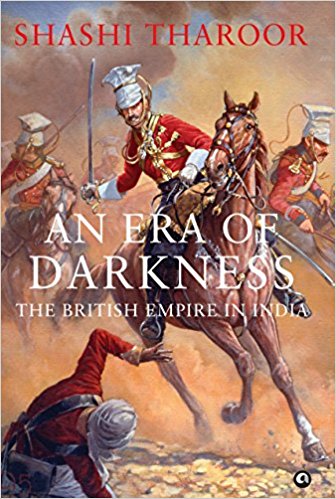 Shashi Tharoor, former Under-Secretary-General at the United Nations, bestselling author, Indian politician and current member of the Indian parliament has written a powerful brief against the British in An Era of Darkness: The British Empire in India (also published as Inglorious Empire). It’s an enjoyable read but some of the economic history is wrong and a number of the social arguments implausible.
I offer no defense of the British empire which was cruel, rapacious and racist but I do correct the record in my long-form review at the Indian journal Pragati.
Here is one bit:
Hindu and Muslim divisions run deeper than the ink marks of colonial census takers. Emperor Aurangzeb killed his brother Dara Shikoh for apostasy in 1659 and the echoes of that fratricide travel down the centuries to Partition. Aurangzeb’s tax on non-Muslims, the jizya tax, abolished in the 16th century by his great-grandfather, the third Mughal emperor Akbar, but re-imposed a hundred years later is another sign of deteriorating interreligious relations. Even some events outside of India, such as the rise of the Wahhabi branch of Sunni Islam in the 19th century, were clearly more important for Hindu-Muslim relations than were the census takers (Allen 2005, Dalrymple 2008). The rise of Wahhabism and the decline of Sufism were bound to upset Hindu-Muslim relations no matter what the British did.
Read the whole thing.
The Coasian culture that sometimes is India
Even if the traveller hasn’t pre-selected her seat before the flight, the airline claims it will “ensure only a window or aisle seat is assigned at check-in” to its female passengers.
Here is the full piece, via the excellent Samir Varma.
Which books do the British steal?
No, it’s not Michael Oakeshott:
At the London Review Bookshop, John Clegg reports a fondness for philosophers. “Our most-stolen authors, in order, are Baudrillard, Freud, Nietzsche, Graham Greene, Lacan, Camus, and whoever puts together the Wisden Almanack. The appetite for Greene (which seems to have died down a little now) was particularly surprising, but I suppose they identify with Pinkie,” said Clegg.
“We caught a gent last Christmas with £400-worth of stolen books in his trousers and elsewhere. We grabbed all of the bags back, but he returned about half an hour later to reclaim a half-bottle of whisky and his dream journal, which had been at the bottom of one of the bags of stolen books. As we showed him the door he told us: ‘I hope you’ll consider this in the Žižekian spirit, as a radical reappropriation of knowledge.’”
Daunt says that the kleptomaniacal customers in Waterstones have always had a penchant for Kierkegaard, à la Renton in Irvine Welsh’s novel Trainspotting. “You slightly wonder when it’s always books by the likes of Sartre and Kierkegaard – there must be an awful lot of people working their minds out so much that they don’t have any money,” says Daunt. “Whenever I’d go past Kierkegaard I’d make sure they and Wittgenstein were all there, but often the odd one or two would be gone and it always made me smile.”
Here is the full story.
Sentences about cellophane
Cellophane gets an entire chapter in Hisano’s book. As she explains in the paper, cellophane packaging let food vendors manipulate the appearance of foods by controlling the amount of moisture and oxygen that touched a product, thus preventing discoloration. “Cellophane played a big part in how the color of food started to be controlled and standardized,” she says.
…Cellophane, the world’s first transparent packaging film, was invented in 1908 by the Swiss engineer Jacques Brandenberger. He dubbed it “cellophane” as a combination of the words “cellulose” (of which it was made) and “diaphane” (an archaic form of the word “diaphanous,” which is a fancy word for “transparent”). He assigned his patents to La Cellophane Societe Anonyme, a French company formed for the sole purpose of marketing the invention. In 1923, the company licensed to DuPont the exclusive rights to make and sell cellophane in the United States.
…Initial versions of cellophane were waterproof, but not moisture-proof. So, while it was effective for wrapping products like candy and cigarettes, it wasn’t effective for packaging fresh food. In 1927, DuPont developed moisture-proof cellophane, food manufacturers started using it to package items like cakes and cheeses, and cellophane sales tripled between 1928 and 1930.
Here is the full story, interesting throughout, via the estimable Chug.
Geoffrey Gurrumul Yunupingu, RIP
Age 46, a Torres Strait Islander, here are various obituaries.
What I am hearing about Republican tax reform
“The goal is a plan that reduces tax rates as much as possible, allows unprecedented capital expensing [for businesses], places a priority on permanence, and creates a system that encourages American companies to bring back jobs and profits trapped overseas,” it said.
No Border Adjustment Tax, even Ryan says that, lower rates for small business than for big business, full investment expensing, and an emphasis on permanence (how can they possibly manage that one?). Will there be a “skinny” version of this bill too?
Here is one article, plus I’ve been trawling Twitter, presumably more details are on the way or maybe not.
What I’ve been reading
1. Yiyun Li, Dear Friend, from My Life I Write to You in Your Life. One of the few books that have a perfect title. These are a cross between short stories, ruminations, and essays. Yiyun Li is from China, yet she refuses to write in Chinese or to have her work published in Chinese. At times you wonder what is really in here, but her voice and vision stick with you.
2. Yaroslav Trofimov, The Siege of Mecca: The 1979 Uprising at Islam’s Holy Shrine. Compulsively readable, and also excellent background on both the Gulf region and the Saudi-Iran conflict.
3. William R. Cline, The Right Balance for Banks: Theory and Evidence on Optimal Capital Requirements. Not for the unconverted, but a good guide for anyone with a prior interest. Capital requirements should be higher, but it is wrong to think the American economy currently has “too much finance.”
4. Regulating Wall Street: Choice Act vs. Dodd-Frank, published by NYU, with many notable contributors including multiple essays by Lawrence J. White. Balanced, judicious, the best look so far at pending reforms to banking and finance.
5. Slavoj Žižek, The Fragile Absolute: Or Why is the Christian Legacy Worth Fighting For? A lot of this book is only so-so, but the Preface — “A Glance into the Archives of Islam” — counts as one of the better works I’ve read this year, even though it comes in at only 27 pp. It covers Hagar and Sarah, how Muslim and Christian understandings of the Abraham story differ, and the intellectual sources of institutional problems with Islam and political order. That’s the secret to reading SZ, not to let yourself get distracted by the bad stuff or empty pages. Amongst those who do not revere him, he remains underrated.
Arrived in my pile is the exhaustive and comprehensive Edward N. Wolff, A Century of Wealth in America. This is likely to prove an important work for many researchers.
What also appears valuable, but I cannot read right now, is Kevin R. Brine and Mary Poovey, Finance in America: An Unfinished Story.
Betting markets inside corporations
There is a new paper in the JPE on this, with encouraging results:
A Pari-Mutuel-Like Mechanism for Information Aggregation: A Field Test inside Intel
Benjamin Gillen, Charles Plott & Matthew Shum
Journal of Political Economy, August 2017, Pages 1075-1099Abstract:
A new information aggregation mechanism (IAM), developed via laboratory experimental methods, is implemented inside Intel Corporation in a long-running field test. The IAM, incorporating features of pari-mutuel betting, is uniquely designed to collect and quantize as probability distributions dispersed, subjectively held information. IAM participants’ incentives support timely information revelation and the emergence of consensus beliefs over future outcomes. Empirical tests demonstrate the robustness of experimental results and the IAM’s practical usefulness in addressing real-world problems. The IAM’s predictive distributions forecasting sales are very accurate, especially for short horizons and direct sales channels, often proving more accurate than Intel’s internal forecast.
Hat tip goes to the excellent Kevin Lewis. Here are earlier, ungated versions.
Occupational Licensing Video
Here’s the video of the Heritage session on occupational licensing. All the talks were good; short and to the point. Maureen Ohlhausen, Acting Chairman of the Federal Trade Commission leads off, Paul Larkin discusses some of the legal issues and legislation, my comments begin around 28:20 followed by Dexter Price who talks about his personal experience trying to get a DC license–he is more than qualified for his job in property management but DC requires that in order to manage property he needs a very expensive and time consuming realtor’s license even though he has no interest in buying and selling property.
Thursday assorted links
1. Roombas are mapping your home, and they will sell that information to the highest bidder.
2. Registration link for Sept. 6 Conversation with Larry Summers.
3. China markets in everything Bob Dylan potato chips.
4. Is Baltimore the coolest city on the east coast?
5. Why aren’t businesses more interested in IQ tests?
6. More on India, China, and Bhutan (NYT).
Those new manufacturing sector jobs
Since 2008, Ford has been continually expanding its Asia Pacific odor laboratory in Nanjing, China. Today, the team consists of 18 ‘super smellers’, who conduct about 300 odor tests each year on materials and components that go into its Asia Pacific vehicles.
…Every year Ford runs an application process to select its team of super smellers in China. Would-be testers can come from any department within the company and are asked to judge material samples in 16 jars. They are judged on their smelling ability and consistency, but must also meet other requirements to qualify for a spot on the prestigious panel.
“You can’t smoke or have allergies and sinus issues,” says Mike Feng, a Ford smell tester for four years. “Wearing perfume, leather jackets or nail polish is also not allowed, and you shouldn’t use strongly scented shampoo to ensure your senses aren’t compromised.”
Ford’s super smellers must requalify annually to maintain their position on the panel and must be available to attend regular odor tests throughout the year. A small group of six panelists form the smell jury for each test and an average of their scores is given to each material sample.
“I’ve always been able to smell things before other people,” adds Feng. “My colleagues say that I can smell what the canteen is serving for lunch before anyone else.”
Here is the full story, via John Chilton.
Will robots really boost productivity all that much?
That is the topic of my latest Bloomberg column, here is one bit:
…consider the general logic of labor substitution. Machines and software are often very good at “making stuff” and, increasingly, at delivering well-defined services, such as when Alexa arranges a package for you. But machines are not effective at persuading, at developing advertising campaigns, at branding products or corporations, or at greeting you at the door in a charming manner, as is done so often in restaurants, even if you order on an iPad. Those activities will remain the province of human beings for a long time to come.
How much is this shift of labor into marketing a step forward? To be sure, a lot of commercial persuasion is useful. Marketing informs consumers about new products and their properties, or convinces them that one product is better for them than another. It was marketing that got me to stop watching baseball and switch to the more exciting NBA. Sometimes the very existence of an ad — even apart from any direct informational value — makes a product more enjoyable. If a particular basketball sneaker is associated with LeBron James, through an endorsement and TV commercials, some people will enjoy wearing that sneaker more.
That all said, a lot of marketing is a zero- or negative-sum game. Each business tries to pull customers away from the other brands, and while the final matching of customers to products is usually closely attuned to what people want, more is spent on these business battles than is ideal for social efficiency. My bank might make me feel better about being a customer there, but its services just aren’t much superior to those of the nearest competitor, if at all. Maybe Coke really is better than Pepsi, or vice versa, but it’s not that much better — and billions are spent trying to persuade consumers to make one switch or the other.
I don’t take the Galbraithian view, but still consumers only enjoy extra marketing so much. I conclude with this:
Don’t be surprised if you see a lot of robots in daily life, and in news stories, but not huge productivity gains in the published statistics. That’s exactly the American economy right now.
Do read the whole thing.
A good sentence fragment
Nothing in Arrow predicts higher expenditures. In fact, it predicts fewer expenditures because markets will partially breakdown (not exist)
That is from Jeremy Horpedahl on Twitter.