Results for “bob dylan” 67 found
Why I write for Bloomberg View
A while ago I promised you my take on Bloomberg View [BV], and why I decided to work for them. They don’t know I am doing this post, I don’t in any official or even unofficial way speak for Bloomberg View or for the broader company, and I hope they don’t get mad at me for attempting this brief capsule treatment. And it is fine if you wish to dismiss this as biased pleading, because it is.
One of the most striking features of BV, from my personal point of view, is how many of the writers I was actively reading and following before they started with BV. For instance:
1. A few years ago I tracked down Adam Minter for a Sichuan lunch in Shanghai, to talk with him about recycling, China, the metals trade and used goods, and his general take on things. Adam is one of the very best writers for mastering small, apparently obscure details, based on years of personal travel and research, and then showing how they reflect broader and more important truths. Adam later started writing for Bloomberg.
2. Megan McArdle and I have had periodic lunches and chats since I first met her in 2004 (?), when I was presenting an early version of Stubborn Attachments to Victor Niederhoffer’s Junto seminar in New York City. She was one of the very first economics bloggers, along with John Irons and Brad DeLong. The next time I see her we will again debate when and whether the world is going to end, and whether Panda Gourmet really does have the best cold noodles in Washington, D.C. (yes).
3. I met up with Christopher Balding for a lunch in Hong Kong, as he came over from Shenzhen. I was a fan of his China blog and research, and lo and behold Christopher ended up writing for Bloomberg. Here are his New Year’s resolutions.
4. Cass Sunstein is one of the polymaths of our time, and the #1 cited legal scholar, not to mention a Star Wars fan, and I interviewed him for Conversations with Tyler. I don’t have to tell you where he writes now, or that his favorite musician is Bob Dylan.
5. I’ve had periodic email contact with Stephen R. Carter, of Yale Law School, as the two of us share many common interests and reading habits. He’s now with Bloomberg View.
6. Virginia Postrel is a “dynamist” thinker of major significance, and I’ve been following her work for more than twenty years. I hope she does more with the topic of textiles. Here is a 2014 video she and I did together (mostly her) on the topic of glamour.
7. A few years ago, Noah Smith and I decided to get together at the AEA meetings, most of all to talk about Japan (Noah is fluent in Japanese and lived there for a good while). He was then still a professor before he made the decision to work for Bloomberg full-time. Last year, I took a long Uber ride to meet Noah for Thai food in Berkeley.
8. Conor Sen started blogging, and I thought: “This guy is awesome and has unique perspectives rooted in finance and housing and demographics and Atlanta.” Soon enough, Bloomberg hired him. Conor deservedly made this list of the year’s most interesting people.
8. I was a fan of Stephen Mihm’s work on history and economic history, before he started with BV.
9. And now we have Ramesh Ponnuru and Michael Strain, two of the very best market-oriented, right of center yet also eclectic columnists.
I don’t mean to neglect all the other people who write for Bloomberg View, as this list is determined by whom I knew before there was any Bloomberg connection. As for some of the others, Leonid Bershidsky is an amazing polymath, the “every column is full of information” Noah Feldman has a new and wonderful book on James Madison, there is Joe Nocera and Justin Fox and Barry Ritholz, and I am trying to schedule a Conversation with the great Matt Levine, who always knows more than you think he does, even after taking this clause into account. When I met Matt I simply uttered: “Matt Levine, only you can do what you do!” Is any other greeting required?
One day I woke up and realized these people write for Bloomberg View, or that people like them were going to, and then it occurred to me that maybe I should too. And there are still Bloomberg View writers I haven’t really discovered yet. (By the way, one reason all these people are so good is because of the consistently excellent editors.)
What is the common element behind all of these writers? I would say that Bloomberg View tends to hire reading-loving, eclectic polymaths, with both academic knowledge and real world experience, and whose views cannot always be predicted from their other, previous writings.
Over the last year, I think I would nominate Ross Douthat as The Best Columnist. But overall I think Bloomberg View has assembled the most talented and diverse group of opinion contributors out there, bar none.
On top of all that, BV is perhaps the least gated major opinion website.
In addition to the writing, I also very much enjoy working for a great company. Not all media outlets can offer that.

Anyway, forgive the biased rant, that is my take for today! They also serve nice snacks and have an amazing art collection in the NYC building.
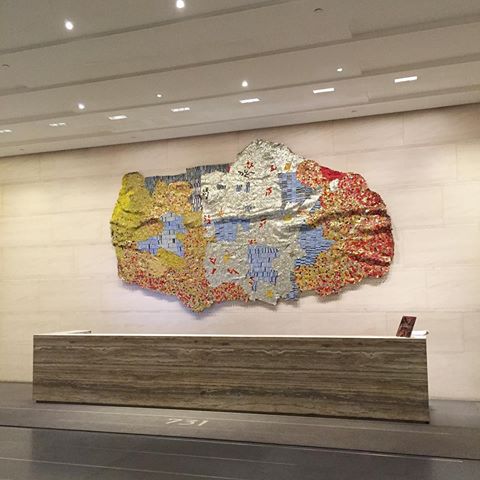
We now return to your regularly scheduled programming.
Favorite popular music from 2017
It’s wrong to call this “popular music,” because most of it isn’t that popular, but we certainly can’t call it rock and roll any more, can we?
First, here are the ones that everyone else recommends too:
Run the Jewels 3, not a let down.
Kendrick Lamar, Damn, a common pick for best of the year.
Tyler the Creator, the album has an obscene name, which I won’t reproduce, but I can list the name of the Creator.
King Krule, Ooz, “The world is a filthy, utterly debased place, his music suggests, but there are rewards of sorts for those determined to survive it. In this spirit, The OOZ drops at our feet like a piece of poisoned fruit, a masterpiece of jaundiced vision from one of the most compelling artists alive.”
Migos, Culture, rap from Atlanta.
Vince Staples, Big Fish Theory, but not theory as they do it as Northwestern.
SZA- Cntrl, from New Jersey, “Her forebears are more Keyshia Cole and Mary J. Blige, who have hurt and have been fearless enough to sing about that hurt…”
Lorde, Melodrama, “the New Zealand century” is gaining on “the Norwegian century.”
Taylor Swift, Reputation. This one is kind of popular.
Perfume Genius, No Shape, “The body has become sturdier, less despotic.”
My summary remark is that I didn’t intend to listen to so much rap/hip-hop, but it remains the most vital genre.
Here are some more original selections:
Jlin, Black Origami, “…a gorgeous and overwhelming piece of musical architecture, an epic treatise on where rhythm comes from and where it can go.”
Juana Molina, Halo. Argentina, avant-garde songstress, vivid vocal and instrumental textures, she has almost abolished lyrics.
The Secret Sisters, You Don’t Own Me Any More, folk for 2017, “They went from opening shows for Bob Dylan and Paul Simon to cleaning houses to make ends meet.”
Django Bates, Saluting Sgt. Pepper. A jazzy, big band, music hall take on the album, works surprisingly well, one of the freshest takes on the Beatles since Laibach.
Paul McCartney, Flowers in the Dirt, remastered, an underrated album to begin with, this release also includes the previously unavailable acoustic demo tapes with Elvis Costello.
Death Grips, Bottomless Pit. Has the information density and partial unpleasantness of the old Skinny Puppy recordings, “seesawing from grit to gloss to back again.”
Beach Boys, Wild Honey, titled 1967 — Sunshine Tomorrow. This remix brings out what was supposed to be just a “blues/soul/Brian cooling his heels” album as an acoustic masterpiece and proper successor to Pet Sounds and Smile.
Philip Glass, Piano Works, by Víkingur Ólafsson. One of the two or three best Glass recordings I know, here is an interview with the pianist.
Overall, if I had to push any of these on you it would be the last two. Soon I’ll cover jazz and world music.
My Conversation with Sujatha Gidla
Here is the transcript and podcast, I enjoyed this chat very much. Here is part of the opening summary:
Sujatha Gidla was an untouchable in India, but moved to the United States at the age of 26 and is now the first Indian woman to be employed as a conductor on the New York City Subway. In her memoir Ants Among Elephants, she explores the antiquities of her mother, her uncles, and other members of her family against modern India’s landscape.
Our conversation considered the nature and persistence of caste, gender issues in India, her time as a revolutionary, New York City lifestyle and neighborhoods and dining, religion, living in America versus living in India, Bob Dylan and Dalit music, American identity politics, the nature of Marxism, Halldor Laxness, and why she left her job at the Bank of New York to become a New York City subway conductor, among other topics.
Here is one sequence:
GIDLA: Actually, the only relation I have with my family members is political views.
[laughter]
GIDLA: If we have to connect on familial links, we will always be fighting and killing each other. All that we talk about with my mother is politics and untouchability and caste and Modi and things like that.
It’s the same thing with my sister also. This is where we connect. Otherwise, we are like enemies. My brother, we’re completely alienated from each other, firstly because he goes to church now. We never used to go to church before. He’s into this Iacocca. Is there a name . . . ?
COWEN: Iacocca?
GIDLA: Yeah.
COWEN: Lee Iacocca?
GIDLA: Yeah.
COWEN: The former Chrysler chairman?
GIDLA: Yeah. He reads that kind of books.
COWEN: Management books.
GIDLA: He’s into that kind of stuff.
COWEN: You don’t?
GIDLA: No.
GIDLA: He read Freakonomics and he liked it. I don’t relate to that stuff.
And this toward the end:
COWEN: Your most touching memory of your mother?
GIDLA: I don’t know. When I was arrested, she was very worried. She said, “I wish I could take you back into my womb.”
Strongly recommended. I was pleased to see that Publisher’s Weekly named Sujatha Gidla’s book as one of the ten best of 2017, you can order it here.
Thursday assorted links
1. Roombas are mapping your home, and they will sell that information to the highest bidder.
2. Registration link for Sept. 6 Conversation with Larry Summers.
3. China markets in everything Bob Dylan potato chips.
4. Is Baltimore the coolest city on the east coast?
5. Why aren’t businesses more interested in IQ tests?
6. More on India, China, and Bhutan (NYT).
Tuesday assorted links
1. Tankersley Vox interview with Bernanke.
2. The Bob Dylan Nobel Prize speech shows he deserved the prize.
3. Gavyn Davies praises Marvin Goodfriend (FT blog).
4. Again, a new feature, AEA research highlights.
5. Will Nevada create “Medicaid for all”?
*Dreaming the Beatles*
The author is Rob Sheffield and the subtitle is The Love Story of One Band and the Whole World. So far this year this is my favorite book, in part because it stretches genres in a creative way. In addition to being a study of fandom, celebrity, 1960s history, “how boys think about girls,” and of course the music itself, it is most of all a splendid take on small group cooperation, management, and the dynamic between John and Paul. I enjoyed every page of this book, and learned a great deal, despite having read many other books on the Beatles. Here is a typical passage”
The Beatles invented most of what rock stars do…They invented breaking up. They invented drugs. They invented long hair, going to India, having a guru, round glasses, solo careers, beards, press conferences, divisive girlfriends, writing your own songs, funny drummers. They invented the idea of assembling a global mass audience and then challenging, disappointing, confusing this audience. As far as the rest of the planet is concerned, they invented England.
A few of the more specific things I learned were:
1. For a while Stanley Kubrick was planning on making a movie version of Lord of the Rings with Paul as Frodo, Ringo as Sam, and John as Gollum. George was to be Gandalf.
2. When the cops raided Keith Richards’s mansion in 1967 and found cocaine, they threw it away because they had never seen it before and didn’t know what it was.
3. When Paul McCartney played an acetate of “Tomorrow Never Knows” for Bob Dylan, Dylan’s response was “Oh, I get it. You don’t want to be cute anymore.”
4. The French title for “A Hard Day’s Night” was Quatre Garcons Dans Le Vent, which translates roughly as “Four Boys in the Wind.”
The book is funny too:
I always loved this sentence in Our Bodies, Ourselves, the Eighties edition I had in college: “The previous edition of Our Bodies, Ourselves included a brief section on astrological birth control, which just doesn’t work.” So much going on in that sentence, dispatched with no drama. Maybe a shade of irony, but no hand-wringing — just a change of mind announced as efficiently and discreetly and decisively as possible.
And:
Paul has a compulsive need to feed his enemies all the ammunition they could want. The software of “don’t take the bait” was never installed in his system. No celebrity has ever been easier to goad into gaffes. I love that.
And:
As Lennon snapped in 1980, after getting asked one too many times if they [he and Paul] still spoke, “He’s got 25 kids and about 20,000,000 records out. How can he spend time talking? He’s always working.”
On the revisionist upswing in this book are Rubber Soul, “I’m so Tired,” “It Won’t Be Long,” and John Lennon’s “God.” On the revisionist downswing is Let It Be and Paul McCartney’s “My Love.”
Not for the unconverted, but I’m glad to see people writing books with me as the intended audience. Here is a quite insightful review, in which Chris Taylor writes: “…it may be the first book to encompass the entire Beatlegeist. If aliens land tomorrow, and demand to know why we keep on pumping this particular brand of music into space, this is the first book you would hand them.”
Monday assorted links
1. David Rockefeller as economist.
2. Should military training be gender-integrated?
6. How many books will you read before you die? (Doesn’t work for everyone)
Faux Quebec village markets in everything
Canadiana Village, about an hour north of Montreal near Rawdon, Que., has been on the market since the fall. The nearly 60 hectares of land and 45 buildings are going for $2.8 million.
The village is designed to resemble a pioneer settlement from the 19th century, and includes a church, a general store, a mill, a cemetery, a saloon and 22 houses.
However, most of the buildings are just for show.
…”There’s only one livable home.”
Kaija said most of the buildings were shipped to the village over the years.
In its heyday, the village welcomed close to 30,000 tourists per year and was a popular destination for school field trips.
It was also featured in more than 110 film and TV productions, including Radio-Canada’s Pays d’en haut and I’m Not There, a Bob Dylan biographical drama.
Here is the full story, with photos, and for the pointer I thank Michelle Dawson.
Sunday assorted links
1. Ursula Le Guin profile. And Bob Dylan as Richard Wagner.
2. Tom Sietsema on the Michelin picks for D.C.
3. Maria Konnikova reviews Tim Harford at NYT.
4. Inaction markets in everything, age of television college football edition.
5. David Warsh on the Laureates.
6. If you could get everyone to read one book, what would it be? I find most of the listed answers strange, and overly specific, and dependent on the readers already knowing plenty of other books. Surely your selection needs to be a bestseller if indeed by “everyone” you mean everyone. I find The Bible, Krishnamurti’s Think on These Things, or even Jonathan Livingston Seagull, or perhaps a book about the enjoyment of sex, to be more plausible picks. Which book would you recommend?
My Conversation with Ezra Klein
The very beginning is a little slow, but I thought Ezra was one of the very best guests. The topics include the nature and future of media, including virtual reality, the nature of leadership (including Ezra’s own), how running a project shapes your political views, a wee bit on health care, what he thinks are the Obama and Clinton models of the world, Robert Putnam’s research on the costs of diversity, the proper role of shame in society, animal welfare, and of course Ezra’s underrated and overrated, with takes on Bob Dylan, The Matrix, William F. Buckley, Joe Biden, and more. There is no video but here is the podcast and transcript. Here is one excerpt:
COWEN: …Now Putman, let me ask you about Putnam, and how Putnam relates to Donald Trump. As you know, Robert Putnam at Harvard, he has some work showing that when ethnic diversity goes up that there’s less trust, less cooperation, less social capital.
If you think of yourself in the role of an editor, so you have an American society, diversity has gone up, and a lot of people have reacted to this I would say rather badly — and I think you would agree with me they’ve reacted rather badly — but there’s still a way in which the issue could be framed that while diversity is actually a problem, we can’t handle diversity.
Putnam almost says as such, and do you think there’s currently a language in the media where you have readers who are themselves diverse, where it’s possible not to just be blaming the bigots, but to actually present the positive view, “Look, people are imperfect. A society can only handle so much diversity, and we need to learn this.” What’s your take on that?
KLEIN: I strongly agree. We do not have a language for demographic anxiety that is not a language that is about racism. And we need one. I really believe this, and I believe it’s been a problem, particularly this year. It is clear, the evidence is clear. Donald Trump is not about “economic anxiety.”
COWEN: A bit, but not mainly, I agree.
KLEIN: That said, I think that the way it’s presented is a choice between economic anxiety and racism. And one I don’t think that’s quite right, and two I don’t think that’s a productive way of having that conversation.
COWEN: Why don’t we have that language? Where did it go, or did we ever have it?
And:
COWEN: You see this with Medicaid. A lot of people don’t sign up. They don’t have addresses. You can’t even get them, whatever.
KLEIN: They don’t like doctors. They’re afraid of doctors.
COWEN: This is me.
KLEIN: You’re afraid of doctors?
COWEN: “Afraid” isn’t the word.
KLEIN: Averse. [laughs]
COWEN: Maybe dislike. Averse. [laughs] They should be afraid of me, perhaps.
Definitely recommended. The same dialogue, with a different introduction, is included in The Ezra Klein Show podcast.
My Conversation with Cass Sunstein
There is audio, video, and transcript at the link. I introduced Cass like this:
The Force is strong with this one. Cass is by far the most widely cited legal scholar of his generation. His older book, Nudge, and his new book on Star Wars are both best sellers, and he was head of OIRA [Office of Information and Regulatory Affairs] under President Obama from 2009 to 2013. Powerful, you have become.
So tonight I’d like to start with a survey of Cass’s thought. We’re going to look at legal theory and then go to Nudge and then consider Star Wars, how it all ties together, and then we’re going to talk about everything.
On every point Cass responded clearly and without evasion. We talked about judicial minimalism, Bob Dylan’s best album, the metaphysics of nudging, Possession, the ideal size of the Supreme Court, the wisdom of Yoda, Hayek, why people should choose their own path, the merits of a banned products store, James Joyce, why the prequels are underrated, and which of the first six movies is the worst of the lot. Here is one bit:
COWEN: Let’s take a concrete example from real life: Jedi mind tricks. Obi-Wan comes along and says, “These aren’t the droids you’re looking for.” And what does the stormtroooper do? He goes away. Now, is that a nudge?
SUNSTEIN: No, it’s a form of manipulation. So — .
[laughter]
COWEN: OK, but how do you draw the metaphysical categories? It seems like a nudge that just happens to work all the time.
SUNSTEIN: OK. I’ll give you a quick and dirty way of getting at that…
Here is another:
COWEN: If you were to pick one character from Star Wars who would nudge you — you get to elect them; you’re the only vote. Even Samantha doesn’t get a vote, just Cass — not your children — which character would you pick? Whom would you trust with that nudge? It’s a universe full of Jedi here, right?
SUNSTEIN: Yoda.
COWEN: Yoda?
SUNSTEIN: I trust that guy.
COWEN: But I worry about Yoda.
SUNSTEIN: I trust him.
Finally:
SUNSTEIN: Thank God for libertarian paternalism, that Luke has a choice. The Sith, by the way, like the Jedi, respect freedom of choice. In the crucial scene in Episode III where the question is whether Anakin is going to save the person who would be emperor, he says, “You must choose.” And so there’s full respect for freedom of choice. Nudgers have that. Good for them.
COWEN: Bad guys always tell you the deal, and then they say, “Choose evil.” It seems the good guys always mislead you.
There’s this funny tension. Star Wars makes me more nervous about nudge. I’m not like this huge anti-nudge guy, but when I look at Obi-Wan and Yoda lying to Luke — “Ben, Ben, Ben, why didn’t you tell me?” How many times have I heard that in these movies?
…SUNSTEIN: It’s fair to ask whether Obi-Wan and Yoda had it right.
There is much, more more…self-recommending!
https://medium.com/conversations-with-tyler/cass-sunstein-star-wars-nudge-a7c874f3ce8c#.am5grz4nh
Robert Whaley speaks
On my iPhone are 55 albums by Bob Dylan, 16 albums by Leonard Cohen and 34 albums by Steve Earle. That’s all I listen to. It’s the storytelling in their lyrics. Dylan’s album “Tempest” is one of his best. The title song is a haunting 14-minute song about the sinking of the Titanic. I have every one of his albums except the last one where he interprets Frank Sinatra. That was out of line. He must have needed money. And I actually bumped into Steve Earle at the airport and introduced myself. My wife was just disgusted that I’d go and bother him, but he was very receptive. No, I did not tell him I developed the volatility indices.
Here is the rest of the interview.
Why is there no Milton Friedman today?
You will find this question discussed in a symposium at Econ Journal Watch, co-sponsored by the Mercatus Center. Contributors include Richard Epstein, David R. Henderson, Richard Posner, Daniel Houser, James K. Galbraith, Sam Peltzman, and Robert Solow, among other notables. My own contribution you will find here, I start with these points:
If I approach this question from a more general angle of cultural history, I find the diminution of superstars in particular areas not very surprising. As early as the 18th century, David Hume (1742, 135-137) and other writers in the Scottish tradition suggested that, in a given field, the presence of superstars eventually would diminish (Cowen 1998, 75-76). New creators would do tweaks at the margin, but once the fundamental contributions have been made superstars decline in their relative luster.
In the world of popular music I find that no creators in the last twenty-five years have attained the iconic status of the Beatles, the Rolling Stones, Bob Dylan, or Michael Jackson. At the same time, it is quite plausible to believe there are as many or more good songs on the radio today as back then. American artists seem to have peaked in enduring iconic value with Andy Warhol and Jasper Johns and Roy Lichtenstein, mostly dating from the 1960s. In technical economics, I see a peak with Paul Samuelson and Kenneth Arrow and some of the core developments in game theory. Since then there are fewer iconic figures being generated in this area of research, even though there are plenty of accomplished papers being published.
The claim is not that progress stops, but rather its most visible and most iconic manifestations in particular individuals seem to have peak periods followed by declines in any such manifestation.
The new Nobel Prize in literature odds
The Japanese novelist Haruki Murakami has emerged as the early favourite to win this year’s Nobel prize for literature.
The acclaimed author of titles including Norwegian Wood, The Wind-Up Bird Chronicle and, most recently, IQ84, Murakami has been given odds of 10/1 to win the Nobel by Ladbrokes.
Last year the eventual winner of the award, the Swedish poet Tomas Tranströmer, was the betting firm’s second favourite to take the prize, given initial odds of 9/2 behind the Syrian poet Adonis, at 4/1. This year Adonis has slipped down the list, given odds of 14/1 alongside the Korean poet Ko Un and the Albanian writer Ismail Kadare.
New names in Ladbrokes list this year include the Chinese author Mo Yan and the Dutch writer Cees Nooteboom, both coming in with strong odds of 12/1 to win the Nobel prize.
And:
Britain’s strongest contender for the Nobel this year, which goes to “the most outstanding work in an ideal direction”, is – according to Ladbrokes – Ian McEwan, who comes in at 50/1, behind the singer-songwriter Bob Dylan, at 33/1. American novelist Philip Roth is at 16/1, alongside his compatriot Cormac McCarthy, the Israeli author Amos Oz and the highest-placed female writer, the Italian Dacia Maraini.
The article is here.
“Getting a good meal in D.C. requires some ruthless economics”
This piece is by me, in The Washington Post. Here is one bit:
The key is to hit these restaurants in the “sweet spot” of their cycle of rise and fall. At any point in time Washington probably has five to 10 excellent restaurants; they just don’t last very long at their highest levels of quality.
Here’s how it works. A new chef opens a place or a well-known chef comes to town and starts up a branch. Good reviews are essential to get the place off the ground, and so they pull out all stops to make the opening three months, or six months, special. And it works. In today’s world of food blogs, Twitter and texting, the word gets out quickly.
…Through information technology, we have speeded up the cycle of the rise and fall of a restaurant. Once these places become popular, their obsession with quality slacks off. They become socializing scenes, the bars fill up with beautiful women (which attracts male diners uncritically), and they become established as business and power broker spots. Their audiences become automatic. The transients of Washington hear about where their friends are going, but they are less likely to know about the hidden gem patronized by the guy who has been hanging around for 23 years, and that in turn means those gems are less likely to exist in the first place.
In economic terms, think of this as a quest for the thick market externalities. Search and monitoring are most intense in the early stages of a restaurant’s life, and so that is the best time to go. There is an analogy in music: Bob Dylan and Chuck Berry do not always give the very best concerts, because they do not have to. You may or may not like up-and-coming bands, but at least they will be trying very hard.
The full article is here.