One Reason Why American Health Care is Expensive
tl/dr; Canadian woman is diagnosed with cancer, told she has 2 years to live at most, that she is not a candidate for surgery but would she like medical help committing suicide? She declines, comes to the United States, spends a lot of money, and is treated within weeks. Her health insurance is refusing to pay.
Global News: Ducluzeau said her family doctor told her that with this type of cancer, they usually do a procedure called HIPEC, which involves delivering high doses of chemotherapy into the abdomen to kill the cancer cells. But when she saw the consulting surgeon at the BC Cancer Agency in January, she said she was told she was not a candidate for surgery.
“Chemotherapy is not very effective with this type of cancer,” Ducluzeau said the surgeon told her. “It only works in about 50 per cent of the cases to slow it down. And you have a life span of what looks like to be two months to two years. And I suggest you talk to your family, get your affairs in order, talk to them about your wishes, which was indicating, you know, whether you want to have medically assisted dying or not.”
…Her brother contacted his mother-in-law who lives in Taiwan and she was able to get some advice from an oncologist there, after only waiting an hour. That oncologist confirmed that HIPEC was the treatment for Ducluzeau’s cancer. She set up a Zoom call with that oncologist later that week but then she found out about Dr. Armando Sardi at the Mercy Medical Center in Baltimore, Maryland.
“I had an appointment to speak with him via Zoom as well within a week and then also in Washington State,” she explained. “So there were two hospitals in Taiwan, one in Washington State and one in Baltimore that were able to take me as a patient.”
Ducluzeau decided to get treatment with Sardi in Baltimore.
…“I had to fly to California to get one of my diagnostic scans done there, a PET scan, because I wasn’t getting in here and I had to pay to have another CT scan done when I got to Baltimore because they couldn’t get it in time before I left,” she said.
Before she left, Ducluzeau said she called BC Cancer to ask how long it might be to see the oncologist was told it could be weeks, months, or longer, they had no idea.
“And I said, ‘Well, will it help if my doctor phones on my behalf?’ And they said, ‘no’. And my doctor submitted my referral again and still no word. No word at all from (BC Cancer) until after I flew to Baltimore, had my surgery and got home.”
With the help of a surgeon in Vancouver, Ducluzeau finally got a telephone appointment with an oncologist at BC Cancer for the middle of March – two-and-a-half months after receiving her diagnosis and the news that she may only have two months to two years to live.
…The BC Cancer Agency is refusing to provide documentation that would allow Ducluzeau to be reimbursed for the cost of out-of-country care, citing she did not proceed with additional investigations, such as a colonoscopy and laparoscopy.
“Universal healthcare really doesn’t exist,” Ducluzeau said. “My experience is it’s ‘do it yourself’ health care and GoFundMe health care.
Immigration Backlash
In a new paper Ernesto Tiburcio (on the job market) and Kara Ross Camarena study the effect of illegal immigration from Mexico on economic, political and cultural change in the United States. Studying illegal immigration can be difficult because the US doesn’t have great ways of tracking illegal immigrants. Tiburcio and Camerena, however, make excellent use of a high-quality dataset of “consular IDs” from the Mexican government. Consular IDs are identification cards issued by the Mexican government to its citizens living in the United States, regardless of US immigration status. Consular IDs are used especially, however, by illegal immigrants because they can’t easily get US IDs whereas legal migrants have passports, visas, work authorizations and so forth. Tiburcio and Camarena are able to track nearly 8 million migrants over more than a decade.
Our main results point to a conservative response in voting and policy. Recent inflows of unauthorized migrants increase the vote share for the Republican Party in federal elections, reduce local public spending, and shift it away from education towards law-and-order. A mean inflow of migrants (0.4 percent of the county population) boosts the Republican party vote share in midterm House elections by 3.9 percentage points. Our results are larger but qualitatively similar to other scholars’ findings of political reactions to migration inflows in other settings (Dinas et al., 2019; Dustmann et al., 2019; Harmon, 2018; Mayda et al., 2022a). The impacts on public spending are consistent with the Republican agenda. A smaller government and a focus on law-and-order are two of the key tenets of conservatism in the US. A mean inflow of migrants reduces total direct spending (per capita) by 2% and education spending (per child), the largest budget item at the local level, by 3%. The same flow increases relative spending on police and on the administration of justice by 0.23 and 0.15 percentage points, respectively. These impacts on relative spending suggest that the decrease in total expenditure does not simply reflect a reduction in tax revenues but also a conservative change in spending priorities.
The main reason for this, however, appears not to be economic losses such as job losses or wages declines–these are mostly zero or small with some exceptions for highly specific industries such as construction. Rather it’s more about the salience of in and out groups:
We study individuals’ universalist values to capture preferences for redistribution and openness to the out-group. Universalist values imply that one is concerned equally with the welfare of all individuals, whether they are known or not. By contrast, people with more communal values assign a greater weight to the welfare of ingroup members relative to out-group members. We find that counties become less universalist in response to the arrival of new unauthorized migrants. A mean flow of unauthorized migrants shifts counties 0.06 standardized units toward less universalist, i.e., more communal (Panel B, Column 5, std coeff: -0.16). This result is the most direct indication that some of the shift to the political right occurs because migrants trigger anti-out-group bias and preferences for less redistribution. Although this evidence is based on a smaller subset of counties, the impact is large. The change toward more communal values is consistent with theories that hinge on out-group bias. Ethnic heterogeneity breaks down trust, makes coordination more difficult, and reduces people’s interest in universal redistribution (Alesina et al., 1999).
These results are consistent with the larger literature that finds “Across the developed world today, support for welfare, redistribution, and government provision of public goods is inversely correlated with the share of the population that is foreign-born and diverse.” (Nowrasteh and Forreseter 2020). Similarly, one explanation for the smaller US welfare state is that white-black salience reduces people’s interest in universal redistribution.
Contra Milton Friedman, it is possible to have open borders and a significant welfare state but it may be true that the demand for a welfare state declines with immigration, especially when the immigrants are saliently different.
Constructing Influence
VoxDev: A pervasive politician-developer nexus exists in Indian cities, where politicians receive illicit financial support from real estate developers in exchange for favourable building policies and accelerated approvals. This “quid pro quo” facilitates the flow of “black money” — income hidden from tax authorities — into campaign coffers. The nexus is difficult to discern in detail due to the opacity of the system, but we uncover what is plausibly a natural consequence: when politicians turnover, building construction slows down.
From a summary in VoxDev of my Journal of Development Economics piece (with Tandel and Gandhi) on the politics of development in Mumbai.
Addendum: See also my Journal of Urban Economics piece on the dangers of public interest litigation in slowing development and also my videos Skyscrapers and Slums and Rent Control in Mumbai for more on these issues.
Why Housing is Unaffordable: The Elasticity of Supply
We have a great new MRU video on housing and why it’s so expensive in many dynamic cities. The video is a good introduction to the economics and also to the politics of housing supply. A highlight is a wonderful animation illustrating how increasing demand coupled with inelastic supply leads to competitive bidding among buyers, driving up prices. Anyone teaching economics should take a look.
Of course, the video pairs perfectly with our textbook, Modern Principles. Indeed, this is the initial video in a two-part series exploring the elasticity of supply, transforming a traditionally mundane topic into a relevant and fun discussion. Check it out!
The Big Fail
The Big Fail, Joe Nocera and Bethany McLean’s new book about the pandemic, is an angry book. Rightly so. It decries the way the bien pensant, the self-righteously conventional, 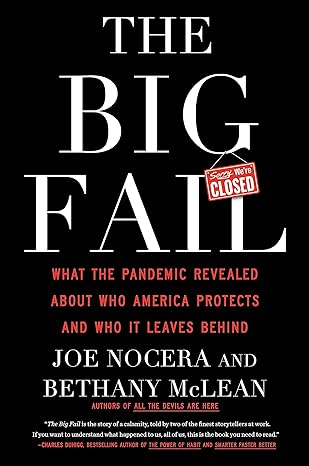 were able to sideline, suppress and belittle other voices as unscientific, fraudulent purveyors of misinformation. The Big Fail gives the other voices their hearing— Martin Kulldorff, Sunetra Gupta, Jay Bhattacharya and Emily Oster are recast not as villains but as heroes; as is Ron DeSantis who is given credit for bucking the conventional during the pandemic (Nocera and McLean wonder what happened to the data-driven DeSantis, as do I.)
Amazingly, even as highly-qualified epidemiologists and economists were labelled “anti-science” for not following the party line, the biggest policy of them all, lockdowns, had little to no scientific backing:
…[lockdowns] became the default strategy for most of the rest of the world. Even though they had never been used before to fight a pandemic, even though their effectiveness had never been studied, and even though they were criticized as authoritarian overreach—despite all that, the entire world, with a few notable exceptions, was soon locking down its citizens with varying degrees of severity.
In the United States, lockdowns became equated with “following the science.” It was anything but. Yes, there were computer models suggesting lockdowns would be effective, but there were never any actual scientific studies supporting the strategy. It was a giant experiment, one that would bring devastating social and economic consequences.
The narrative lined up “scientific experts” against “deniers, fauxers, and herders” with the scientific experts united on the pro-lockdown side (the following has no indent but draws from an earlier post). But let’s consider. In Europe one country above all others followed the “ideal” of an expert-led pandemic response. A country where the public health authority was free from interference from politicians. A country where the public had tremendous trust in the state. A country where the public were committed to collective solidarity and public welfare. That country, of course, was Sweden. Yet in Sweden the highly regarded Public Health Agency, led by state epidemiologist Anders Tegnell, an expert in infectious diseases, opposed lockdowns, travel restrictions, and the general use of masks.
It’s important to understand that Tegnell wasn’t an outsider marching to his own drummer, anti-lockdown was probably the dominant expert opinion prior to COVID. In a 2006 review of pandemic policy, for example, four highly-regarded experts argued:
It is difficult to identify circumstances in the past half-century when large-scale quarantine has been effectively used in the control of any disease. The negative consequences of large-scale quarantine are so extreme (forced confinement of sick people with the well; complete restriction of movement of large populations; difficulty in getting critical supplies, medicines, and food to people inside the quarantine zone) that this mitigation measure should be eliminated from serious consideration.
Travel restrictions, such as closing airports and screening travelers at borders, have historically been ineffective.
….a policy calling for communitywide cancellation of public events seems inadvisable.
The authors included Thomas V. Inglesby, the Director of the Johns Hopkins Center for Health Security, one of the most highly respected centers for infectious diseases in the world, and D.A. Henderson, the legendary epidemiologist widely credited with eliminating smallpox from the planet.
Nocera and McLean also remind us of the insanity of the mask debate, especially in the later years of the pandemic.
But by the spring of 2022, the CDC had dropped its mask recommendations–except, incredibly, for children five and under, who again, were the least likely to be infected.
…Once again it was Brown University economist Emily Oster who pointed out how foolish this policy was…The headline was blunt: Masking Policy is Incredibly Irrational Right Now. In this article she noted that even as the CDC had dropped its indoor mask requirements for kids six and older, it continued to maintain the policy for younger children. “Some parents of young kids have been driven insane by this policy,” Oster wrote, “I sympathize–because the policy is completely insane…”
As usual, her critics jumped all over her. As usual, she was right.
Naturally, I don’t agree with everything in the Big Fail. Nocera and McLean, for example, are very negative on the role of private equity in hospitals and nursing homes. My view is that any theory of what is wrong with American health care is true because American health care is wrong in every possible way. Still, I don’t see private equity as a driving force. It’s easy to find examples where private equity owned nursing homes performed poorly but so did many other nursing homes. More systematic analyses find that PE owned nursing homes performed about the same, worse or better than other nursing homes. Personally, I’d bet on about the same overall. Covid in the Nursing Homes: The US Experience (open), my paper with Markus Bjoerkheim, shows that what mattered more than anything else was simply community spread (see also this paper for the ways in which I disagreed with the GBD approach). More generally, my paper with Robert Omberg, Is it possible to prepare for a pandemic? (open) finds that nations with universal health care, for example, didn’t have fewer excess deaths.
The bottom line is that vaccines worked and everything else was a sideshow. Had we approved the vaccines even 5 weeks earlier and delivered them to the nursing homes, we could have saved 14,000 lives and had we vaccinated nursing home residents just 10 weeks earlier, before the vaccine was approved, as Deborah Birx had proposed, we might have saved 40,000 lives. Nevertheless, Operation Warp Speed was the shining jewel of the pandemic. The lesson is that we should fund further vaccine R&D, create a library of prototype vaccines against potential pandemic threats, streamline our regulatory systems for rapid response, agree now on protocols for human challenge trials and keep warm rapid development systems so that we can produce vaccines not in 11 months but in 100 days.
The Big Fail does a great service in critiquing those who stifled debate and in demanding a full public accounting of what happened–an accounting that has yet to take place.
Addendum 1: I have reviewed most of the big books on the pandemic including the National Covid Commission’s Lessons from the COVID WAR, Scott Gottlieb’s Uncontrolled Spread, Michael Lewis’s The Premonition, Andy Slavitt’s Preventable and Abutaleb and Paletta’s Nightmare Scenario.
Addendum 2: I also liked Nocera and McLean’s All the Devils are Here on the financial crisis. Sad to say that the titles could be swapped without loss of validity.
Bona Vacantia
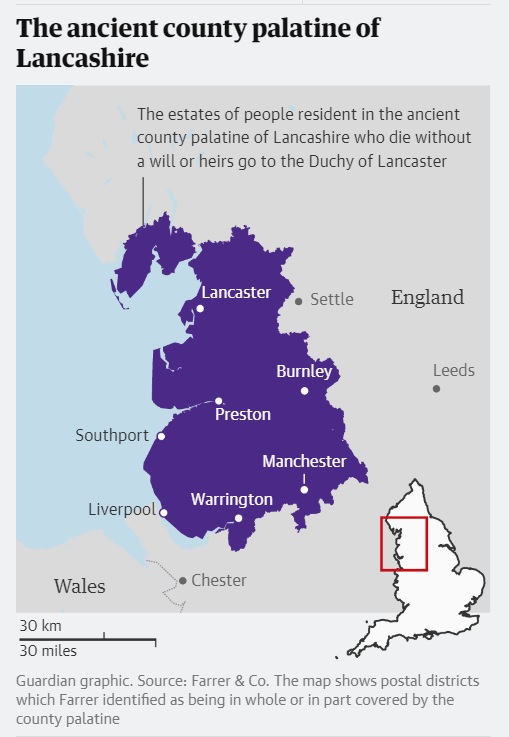 Bona vacantia are unowned assets–primarily the assets of people who die without a will and without heirs. In Britain, as in the United States, unowned assets generally pass to the government but Britain is full of ancient and strange traditions and one of them is that the estates of people resident in the “ancient county palatine of Lancashire” who die without a will or heirs go to the Duchy of Lancaster.
The Duchy of Lancaster is “a portfolio of lands, properties, and assets held in trust for the sovereign.” The Duchy dates back to 1265 but in 1461 Edward IV made it a distinct and private inheritance of the reigning monarch. As such the reigning monarch is not allowed to sell the Duchy but is due any returns. To be clear, this is all different from the Crown Estate which are a bunch of land and property nominally owned by the monarch and dedicated to funding the monarchy but yet not owned by the monarch privately. Having fun yet?
Periodically someone discovers the duchies and kicks up a fuss and there is a debate about making the revenues public and giving the monarch a stipend instead. The latest fuss was kicked up by the Guardian with an article that describes the whole thing in accurate but lurid terms:
The king is profiting from the deaths of thousands of people in the north-west of England whose assets are secretly being used to upgrade a commercial property empire managed by his hereditary estate, the Guardian can reveal.
Great stuff! It could only have been improved by adding “the king and his son” are profiting from the deaths of thousands of people because there is another Duchy in Cornwall which is owned by the eldest son of the reigning monarch, in this case Prince William, where the same rules apply. Prince William also has the rights to all the royal fish caught off the shores of the Duchy—namely to whales, porpoises, and sturgeon (obviously).
Despite having once read a book on the subject, I am obviously not an expert in the intricacies of British inheritance law. Who is? But I found the back story very amusing.
Internalize your externalities loser economists and politicians!
To me, this is @JMilei's best speech so far, every sentence is a memorable quote!
I cut and translated it so the international audience can enjoy our Philosopher-President too 🇦🇷 pic.twitter.com/Hl2T3jPOBb
— TremendaCarucha (@TremendaCarucha) November 23, 2023
For prebendary businessmen you can read rent-seeking businessman.
Canada Poaches Talent that Competes with American Workers
As I wrote earlier, Canada is poaching talent that should be American! A new working paper by Agostina Brinatti (on the job market) and Xing Guo studies this in detail. The paper first documents that Canada attracted more immigrants when America shut the door but then it traces the consequences through the growth in Canadian firms and on through international trade to American firms and workers. Computer scientists were especially affected by the US policy and the bottom line is that when the US started to deny many more H-1B visas computer scientists went to Canada, increasing the creation of Canadian businesses, jobs and exports. American computer scientists gained because they had less competition but they gained less than the direct effect because they faced more Canadian imports. Moreover, other lower-skilled Americans were harmed because they had fewer higher-skilled workers to work with.
By the end of 2018, there was a decrease of 140,000 H-1B approvals (relative to trend) and an unprecedented spike in H-1B denial rates. Denial rates increased from about 6% in 2016 to 16% in 2018….Immediately following this policy change, Canada experienced a surge in the number of skilled immigrant admissions, equivalent to 76,000 additional admissions in the period between 2018 and 2019. This inflow represents 3.5% of the stock of college-educated immigrants in Canada, or about 2% of all workers in the high-skilled service sector.
…Our event-study estimates imply that a 10 percentage point increase in H-1B denial rates increases Canadian applications by 30%. A back of-the-envelope calculation suggests that for every four forgone H-1B visas, there is an associated increase of one Canadian application.
[the inflow was especially large in computer science]….This inflow decreases the welfare of Canadian computer scientists because they are relatively close substitutes to the incoming immigrants. However, the inflow increases the welfare of workers in other occupations because Canadian sectors expand, especially high-skilled service sectors. For instance, in these sectors, the welfare of computer scientists decreases by 2.9% and that of lower-skilled workers increases by 0.9% approximately.
In the U.S., immigrant labor decreases by 1.6% and is particularly pronounced among computer scientists. As a result, we find that the drop in U.S. approval rates benefits primarily American computer scientists but tend to harm American workers employed in other occupations, especially if their sector contract. For instance, computer scientists in high-skilled service sectors experience a 0.7% welfare increase, while lower-skilled workers experience a 0.3% welfare decrease. These effects on American workers include both direct and indirect effects.
Addendum: Tyler reminds us that in the long-run, immigrants who get Canadian citizenship may immigrate to America! The basic point that Canada and the US are in a more or less free trade area is well taken and so we can thank Canada for making US immigration policy less harmful than it might otherwise be. Still, I’d rather see fewer artificial barriers distorting the allocation of talent.
The Indian Challenge to Blockchains: Digital Public Goods
In my post, Blockchains and the Opportunity of the Commons, I explored the potential of blockchains to create new commons:
Blockchains and tokenization are a way to incentivize the creation of a commons. A commons is an unowned place, platform, or protocol that helps people to meet, communicate and transact. Commons underlying modern life include TCP/IP, SMTP, HTTP, GPS and the English language. We don’t see these commons clearly because they are free, ubiquitous and, like air, taken for granted. What we do see are platforms like Airbnb, Uber and the NYSE and places to meet and communicate like OkCupid, Twitter, Facebook and YouTube. What blockchain and tokenization offer is the possibility of creating commons to replace all of these services and much more.
For the most part, the potential has not been realized. But the core idea of substituting a protocol for a firm has been taken in a different direction in India. Instead of blockchains, India has been experimenting with digital public goods. A digital public good is open source software with open data and open standards–available for use or even modification and adaption by anyone. The blockchain community, for example, has long aspired to develop a blockchain-based Uber, connecting drivers and riders without a corporate intermediary. India has achieved this through digital public goods instead.
Namma Yatri is an open-source, open-data Uber-like protocol with 100% of the commission flowing directly from rider to driver. Namma Yatri is built on the Beckn Protocol, a product of the Beckn Foundation which is backed by Infosys co-founder Nandan Nilekani (Tyler and I had the opportunity to talk with many people behind the project including Nandan on a recent trip to India). Namma Yatri has booked over 15 million trips in just one year of operation, mostly in one city, Bangalore. I expect it will expand rapidly.
Namma Yatri is only one example of a digital public good in the India Stack, a collection that includes identity (Aadhaar), payments (UPI) and digital data sharing (e.g. digital lockers). Since its launch in 2008, for example, India’s Aadhaar system has created a digital identity for over 1.2 billion people allowing them to open some 650 million bank accounts. This has enhanced financial inclusion and facilitated direct government payments of pensions and rations, reducing corruption. Likewise, the UPI system built modern payment rails which are then leveraged by banks and firms such as Google Pay and WhatsApp. The resulting payments system does some 10 billion transactions a month and is one of the fastest and lowest cost in the world.
Challenges remain. The development of digital public goods relies on funding from non-profits, governments, and private consortiums, raising questions about long-term sustainability. These goods need regular maintenance and updates, and some require backend support. Namma Yatri began as a completely free app for drivers and users but if there is a problem who do you call? To support the back-end office, and to pay for updated inputs (such as maps) the service has started to use a subscription fee. Nothing wrong with that but it’s a reminder that firms are not so easily dispensed with. Privacy is another concern. While blockchains offer privacy at the technology layer, privacy for digital public goods depend on legal and normative frameworks. For instance, India’s Aadhaar system is legally restricted from police use, a smart balance that needs to be maintained in changing times.
Despite these challenges, there is no denying that India has built digital public goods at scale in a way that demonstrates an alternative pathway for digital infrastructure and a challenge to blockchains.
A Tax Puzzle
Analyze the following four images. For each image, guess what is being taxed. Use only the information in the image.

FYI ChatGPT was not able to solve this question directly, although it was very good at analyzing what was distinctive or odd about each image and thus suggesting some possible answers.
Hat tip: Lionel Page, via Shruti Rajagopalan, includes answers and some variants.
The Amazing Vernon Smith
You can find Vernon Smith hard at work at his computer by 7:30 each morning, cranking out 10 solid hours of writing and researching every day.
His job is incredibly demanding — he is currently on the faculty of both the business and law schools at Chapman University. But the hard work pays off: Smith’s research is consistently ranked as the most-cited work produced at the school — a testament to his ongoing academic influence and success. He manages his job and research work while also coauthoring books and traveling around the country to deliver lectures.
It’s a remarkable level of productivity, made all the more remarkable by one simple fact: Vernon Smith is 96 years old.
Smith, who was awarded the Nobel Prize in Economic Sciences at the tender age of 75, says he feels the same passion as he did then, and even as he did when he embarked on his career more than seven decades ago.
That’s from the AARP on SuperAgers. In addition to all that, Vernon “is one of 1,600 participants in the University of California, Irvine’s 90+ Study, a research project examining both successful aging and dementia in people age 90 and older.”
Vernon was always one of our sharpest and most productive colleagues. He remains an inspiration.
Pharmaceutical Price Controls and the Marshmallow Test
The pharmaceutical market is in turmoil. On the one hand we have what looks like a golden age of medicine with millions of lives saved by COVID vaccines, a leap in mRNA technology, excellent new obesity and blood sugar drugs, breakthroughs in cancer treatments and more. On the other hand, the Inflation Reduction Act includes the most extensive price controls on pharmaceuticals we have ever seen in the United States.
In Washington-speak the “Inflation Reduction Act” requires HHS to “negotiate” drug prices for Medicare Part D and Part B to establish a maximum “fair” price. In reality there is no negotiation–firms who refuse to negotiate are hit with huge taxes. The “negotiation,” if you want to call it that, is “your money or your life” and fairness has little to do with it. The IRA also requires very costly inflation rebates, i.e. a price control/tax. In essence, the IRA is a taking; for drugs with a large Medicare market it is similar to abrogating patents to 9 years for small molecule drugs and 13 years for biologics. For the included drugs there will be a significant reduction in revenues. Moreover, we don’t yet know whether the plan will be extended to more and more drugs. There is significant uncertainty affecting the entire market. What will be situation in 10 years? Will the US be like Europe?

Reduced revenues mean less R&D. The value of extending life is very high and so in my view medical R&D is underprovided. Thus, price controls are taking us in the wrong direction.
The positive effects of price controls are immediate and easy to see: Prices are reduced.
The negative effects of price controls take time and are harder to see. Namely:
- Fewer drugs for Medicare market.
- Less research on post-approval indications and confirmatory trials.
- Reduced incentive for generics to enter quickly.
- Most importantly: Less R&D spending leading to fewer new drugs, a reduced pharmaceutical armory, lower life expectancy and higher morbidity. By one calculation, ~135 fewer new drugs through to 2039 (see also here and here and here and here).
- Fewer new drugs means more spending on physicians and hospitals so in the long run price controls may not even save money! (Most prescriptions are for generics. Drugs fall greatly in price when they go generic but physicians and hospitals never go generic!)
Price controls are a classic example of political myopia. Price controls, like rent controls and deficit financing, have modest benefits now and big future costs and thus they are supported by politicians who want to be elected now. Unfortunately, current citizens don’t forecast the future well and future citizens don’t have a vote so it’s easy to create big future costs without engaging an opposition.
The emergence of groundbreaking pharmaceuticals and the increasing implementation of price controls are probably related trends. Everyone wants the great new pharmaceuticals without paying for them. We need to think more long-term–we have much more to gain from a continuing flow of new pharmaceuticals than from lower prices on the last generation. Don’t forget that children who fail the marshmallow test do less well later in life. Well, our government is failing the marshmallow test, big time.
Pharmaceutical price controls driven by myopia and the failure to delay gratification are greatly harming future patients.
Zoning Deregulation Increases Affordable Housing
Geetika Nagpal and Sahil Gandhi study zoning deregulation in Mumbai, India. As I pointed out in my video, Skyscrapers and Slums: What’s Driving Mumbai’s Housing Crisis?, Mumbai has very restrictive floor area ratio regulations (also called Floor Space Index, FSI, regulations, see the video for an explanation) which means taller buildings require more unused land. In 2018, however, FAR was liberalized for some streets:
Mumbai’s stringent FAR limits, which are much lower than those of comparable megacities, are often criticized for causing housing unaffordability (Bertaud, 2004). Despite the criticism, establishing a causal effect has been challenging because of a lack of changes in FAR regulations. The relaxation in 2018 linked a parcel’s FAR to the width of its bordering road, providing incremental FAR relaxation for parcels on roads wider than 12 meters. Parcels on narrower roads remained ineligible for the relaxation. Our reduced-form specification uses a DID design to compare developments built between 2014 and 2022 on wider roads with FAR relaxation with those on narrower roads that remained ineligible.
…The FAR relaxation results in a significant supply response, driven by less expensive, smaller housing units. Developers fully utilize the FAR relaxation, increasing the average
number of apartments in each treated multifamily development by 28% relative to the control.…We develop a structural model of housing supply and demand that incorporates the provision of amenity floorspace and shows that average home buyer incomes are 3.18% lower post-relaxation.
GO YIMBY!
Geetika Nagpal is on the market from Brown.
Low Income Drivers Gain from Congestion Pricing
….there is disagreement about the distributional effects of highway toll lanes. On one side, policymakers refer to dynamic tolling as “value pricing” and emphasize that it provides choice to drivers (Samdahl et al., 2013). On the other side, opponents are concerned that “Lexus lanes” enrich the wealthy at everyone else’s expense (Astor, 2017; Rosendorf, 2018). Evaluation of these perspectives depends on two empirical objects: the distribution of driver preferences and what we call the “road technology”—the relationship between traffic quantities and travel times. When one lane becomes tolled, drivers substitute from the newly priced lane into the remaining unpriced ones, increasing travel times in the unpriced lanes. High peak-hour prices may also induce drivers to substitute toward driving off-peak (or not at all), which can increase average speeds when the road technology is convex. Finally, since tolling changes the predictability of travel times, having the option to take the priced lanes can serve as insurance against worse-than-expected traffic conditions.
In this paper, we study the aggregate and distributional impacts of dynamic tolling. To do this, we bring together data on toll transactions, historical traffic conditions, and driver characteristics from the I-405 Express Toll Lanes in Washington State. We begin by presenting two sets of descriptive facts: first, aggregate speed and throughput increased after the introduction of tolling on this highway, and second, low-income drivers face advantageous trade-offs between price and travel time savings in the toll lanes. Next, to quantify the equilibrium effects of tolling, we build and estimate a model of driver demand, the road technology, and the pricing algorithm. In particular, the demand model incorporates the features of dynamic tolling highlighted above: choices of where and when to drive, as well as uncertainty about prices and travel times. Using the estimated model, we find that low-income drivers in fact gain the most from status-quo tolling, and we explore how equilibrium outcomes would change under counterfactual pricing policies.
Pearl Li from Stanford is on the job market.
Autonomous Vehicles Lower Insurance Costs
The insurance giant Swiss RE did a study comparing human drivers with Waymo autonomous vehicles in the same zip-codes and found that autonomous vehicles generated significantly fewer insurance claims.
This study compares the safety of autonomous- and human drivers. It finds that the Waymo One autonomous service is significantly safer towards other road users than human drivers are, as measured via collision causation. The result is determined by comparing Waymo’s third party liability insurance claims data with mileage- and zip-code-calibrated Swiss Re (human driver) private passenger vehicle baselines. A liability claim is a request for compensation when someone is responsible for damage to property or injury to another person, typically following a collision. Liability claims reporting and their development is designed using insurance industry best practices to assess crash causation contribution and predict future crash contributions. In over 3.8 million miles driven without a human being behind the steering wheel in rider-only (RO) mode, the Waymo Driver incurred zero bodily injury claims in comparison with the human driver baseline of 1.11 claims per million miles (cpmm). The Waymo Driver also significantly reduced property damage claims to 0.78 cpmm in comparison with the human driver baseline of 3.26 cpmm. Similarly, in a more statistically robust dataset of over 35 million miles during autonomous testing operations (TO), the Waymo Driver, together with a human autonomous specialist behind the steering wheel monitoring the automation, also significantly reduced both bodily injury and property damage cpmm compared to the human driver baselines.
The Waymo vehicles are in San Francisco and Phoenix so this doesn’t mean that autonomous vehicles are better everywhere. Also, when we say autonomous vehicles we really mean the entire Waymo system including backup. In addition, there are some differences that are hard to account for such as human drivers use more freeways even in the same zip codes. Nevertheless, it is clear that autonomous vehicles are happening. I predict that some of my grandchildren will never learn to drive and their kids won’t be allowed to drive.