Category: Music
Is country music a countercyclical asset?
In tough times, do happy or sad songs top the charts? Do we prefer music that reflects our fears and hardships, or tunes that allow us to temporarily forget our troubles?
Newly published research suggests the answer varies dramatically by genre. Pop fans reflexively gravitate to music that mirrors their emotions, while country devotees go for escapism.
In an analysis of the most popular country songs over six decades, Jason Eastman and Terry Pettijohn II of Coastal Carolina University finds top hits are “lyrically more positive, musically upbeat, and use more happy-sounding major chords during difficult socioeconomic times.”
In contrast, previous research on best-selling pop songs found that, in times of societal stress, those numbers “are longer, slower, more lyrically meaningful, and in more somber-sounding keys.”
There is more here. And here is the NYT article on how country music has gone totally mainstream. After all, why not lower your systemic risk? Is the higher cyclicality of on-country music due to what is possibly a younger demographic profile of listeners, including many students who may not yet be so worried about the state of the labor market?
Rampage is on a rampage (the most expensive schools are art schools)
After a mere week or so at work, it can no longer be said that Catherine Rampell is the most underrated force in economics writing and journalism (or can it?). Here is her post on which are the most expensive schools. It is art and music schools, when you take all relevant costs and financial aid into account. Excerpt:
Now here’s a list of the top 10 most expensive four-year private nonprofits, after subtracting the average amount of government and institutional grant/scholarship aid at each institution:
1. School of the Art Institute of Chicago
2. Ringling College of Art and Design
3. The Boston Conservatory
4. Berklee College of Music
5. California Institute of the Arts
Do see the earlier MR post “Artists grew up in households w/typically higher incomes than doctors did.” What does this imply about the competitiveness of the sector? About our models of child-rearing?
Male dance moves that catch a woman’s eye
The bottom line seems to be this:
By using cutting-edge motion-capture technology, we have been able to precisely break down and analyse specific motion patterns in male dancing that seem to influence women’s perceptions of dance quality. We find that the variability and amplitude of movements in the central body regions (head, neck and trunk) and speed of the right knee movements are especially important in signalling dance quality. A ‘good’ dancer thus displays larger and more variable movements in relation to bending and twisting movements of their head/neck and torso, and faster bending and twisting movements of their right knee. As 80 per cent of individuals are right-footed, greater movements of the right knee in comparison with the left are perhaps to be expected. In comparative research, there is extensive literature on the signalling capacities of movement…Researchers have suggested that females prefer vigorous and skilled males; such cues are derived from male motor performance that provides a signal of his physical condition.
Robert Ashley has passed away at age 83
The great Robert Ashley, one of the musical geniuses of the last forty years, has passed away. He is one of the few who did something truly new in music. Here is NPR on Ashley. Here is the opera Perfect Lives, perhaps his greatest contribution. Here are parts of that opera on YouTube. Here is Ashley on Wikipedia.
Sadly, Sherwin Nuland has passed away too. His How We Die: Reflections of Life’s Final Chapter is one of my favorite books, recommended to all.
Headlines to warm an economist’s heart
Abba admit outrageous outfits were worn to avoid tax
Here is some explanation:
According to Abba: The Official Photo Book, published to mark 40 years since they won Eurovision with Waterloo, the band’s style was influenced in part by laws that allowed the cost of outfits to be deducted against tax – so long as the costumes were so outrageous they could not possibly be worn on the street.
In 2007 Ulvaeus was wrongly accused of failing to pay 85m kronor (£7.9m) in Swedish taxes between 1999 and 2005, and went on to successfully appeal against the decision.
“I am of course very happy that I have been informed in writing that I have always done the right thing concerning my taxes,” he said after the court victory.
The article is here, via Ted Gioia.
Do scholars produce too much and revise too little?
Art Carden asks me:
…do you think scholars spend too much time producing new content and too little time revising and refining their arguments? I’m thinking about the Scholars of Old (e.g. Smith) taking their work through multiple editions. Thomas Sowell is good about producing revised versions of some of his books, but a glance at my shelf makes me wonder if Eminent Scholar should’ve revised his/her first book instead of writing a second or third or fourth.Do you think books go through the optimal number of revisions? Is the editing process so good today that the first edition usually should be the last?
In music, Brahms is notorious for having spent a lot of time revising his drafts. Pierre Boulez explicitly revised and improved many of his pieces, after adding in years of extra work. Stravinsky’s later 1947 version of Petrouchka is much sharper and cleaner than his 1911 release. In all of these cases the revisions are worthwhile, because these works were very special and worth improving. Brahms’s first symphony might have done better with some further revisions yet.
When it comes to economics, individual works are less and less special all the time, unlike in the days of Adam Smith. Smith waited, more or less perfected his book, and in the meantime he was not really scooped. Today it is the collective body of work which carries the force. We also live in the age of the working paper, where it is the first released draft which matters most. There is an institutional failure that first released drafts are released too soon, for the purposes of receiving attention and credit. Yet I don’t think there is a corresponding problem of too few editions of the working paper. Ideally there should be no more than two. A first “here I am” version, to stimulate discussion and feedback, and eventually a final version which maximizes accuracy.
In fact if scholars had to commit to only two versions of the paper, they might be induced to make the early release more accurate in advance, knowing they cannot magically revise away errors a week later with the magic of word processing and web re-posting. This move toward fewer editions would offset some of the costs of premature release. Again, we do not see a case where a greater number of revisions would be better.
The scarcity of attention is the key reason why a very small number of accuracy-enhancing revisions is more or less optimal.
Markets in everything
For only 23,500 euros (who says you can’t take it with you?):
Sweden’s Catacombo Sound System is a funeral casket that eternally plays the deceased’s choice of tracks while they’re six feet under.
Created by Pause Ljud & Bild, the system consists of three different parts. Firstly, users create an account through the online CataPlay platform, which connects to Spotify and enables customers to curate a playlist for their own coffin or get friends and family to choose the tracks when they’re gone. The CataTomb is a 4G-enabled gravestone that receives the music from CataPlay and display the current track — along with details and tributes to the deceased — through a 7-inch LCD Display. Finally, the CataCoffin is where the parted will themselves enjoy two-way front speakers, 4-inch midbass drivers and an 8-inch sub-bass element that deliver dimensional high-fidelity audio tailored to the acoustics of the casket. The video below explains more about the concept…
Of course I want Brahms’s German Requiem, the Rudolf Kempe recording. I am afraid, however, that I (in some form) will last longer than Spotify does.
For the pointer I thank Michael Rosenwald.
Which kinds of music are encouraged by streaming vs. downloads?
Let’s compare iTunes downloads to a mythical perfect streaming service which lets you listen to everything for a fixed fee each month or sometimes even for free. In the interests of analytical clarity, I will oversimplify some of the actual pricing schemes associated with streaming and consider them in their purest form.
Streaming seems to encourage the demand for variety, so the website vendor wants to make browsing seem really fun, perhaps more fun than the songs themselves. (An alternative view is that the information produced by streaming services, and the recommendations, allow for in-depth exploration of genres and that outweighs the “greater ease of sampling of variety” effect. Perhaps both effects can be true for varying groups of listeners with somehow the “middle level of variety-seeking left in the lurch, relatively speaking.)
The music creators are incentivized to create music which sounds very good on first approach. Otherwise the listener just moves on to further browsing and doesn’t think about going to your concert or buying your album.
Streaming, with its extremely large menu, also means commonly consumed pieces will tend to be shorter or more easily broken into excerpts. This will favor pop music and I think also opera, because of its arias.
Advertising is a more important revenue source for streaming than it is for downloads. The music promoted by streaming services thus should contribute to the overall ambience and coolness of the site, and musicians who can meet that demand will find that their work is given more upfront attention. It encourages music whose description evokes a response of “Oh, I’ve never had that before, I’d like to try it.” Even if you don’t really care about it.
People who purchase advertised products are, on average, older than the people who purchase music. Streaming services thus should slant product and product accessibility on the site toward the musical tastes of older people.
Since streaming divides up revenues among a greater number of artists, that should encourage solo performers with low capital costs, who can keep their (tiny) share all for themselves. It also may require that the artists on streaming services can make a living or partial living giving concerts, even more so than under the previous world order.
This music industry source suggests that streaming boosts album sales in a way that downloads do not. It also questions whether that boost will be long-lived, as streaming services take over more of the market.
When the marginal cost of more music is truly zero, does that make musical choices more or less socially influenced?
Hannah Karp shows that in the new world of streaming, mainstream radio stations are responding by playing the biggest hits over and over again. Ad-supported media require the familiar song to grab and keep the attention of the listener. Risk-aversion is increasing, which probably pushes some marginal listeners, who are interested in at least some degree of exploration, into further reliance on streaming.
The top 10 songs last year were played close to twice as much on the radio than they were 10 years ago, according to Mediabase, a division of Clear Channel Communications Inc. that tracks radio spins for all broadcasters. The most-played song last year, Robin Thicke’s “Blurred Lines,” aired 749,633 times in the 180 markets monitored by Mediabase. That is 2,053 times a day on average. The top song in 2003, “When I’m Gone” by 3 Doors Down, was played 442,160 times that year.
So the differing parts of the market are interdependent here.
What do you think?
Happy public domain day!
I received this email from James Boyle at Duke:
Dear Tyler, An early Happy New Year to you and your family — I hope all is well? You may remember our annual survey of the stuff that would be entering the public domain if we had the copyright laws from 1976.
The list this year is a particularly scrumptious one. The mouseover of the book covers is another pleasure.· Samuel Beckett, Endgame (“Fin de partie”, the original French version)· Jack Kerouac, On the Road (completed 1951, published 1957)· Ayn Rand, Atlas Shrugged· Margret Rey and H.A. Rey, Curious George Gets a Medal· Dr. Seuss (Theodor Geisel), How the Grinch Stole Christmas and The Cat in the Hat· Eliot Ness and Oscar Fraley, The Untouchables· Northrop Frye, Anatomy of Criticism: Four Essays· Walter Lord, Day of Infamy· Studs Terkel, Giants of Jazz· Corbett H. Thigpen and Hervey M. Cleckley, The Three Faces of Eve· Ian Fleming, From Russia, with Love· A.E. Van Vogt, Empire of the Atomhttp://web.law.duke.edu/cspd/publicdomainday/2014/pre-1976
Movies:
The Incredible Shrinking Man, The Bridge on the River Kwai, A Farewell to Arms, Gunfight at the O.K. Corral, 3:10 to Yuma, 12 Angry Men, Jailhouse Rock, Funny Face, An Affair to Remember, Nights of Cabiria and The Seventh Seal..
(Is this list depressing when set against 2013?)
In the world of fine arts, Picasso’s Las Meninas set of paintings… only themselves legal because no copyright covered Velazquez’s.. would also be entering the public domain.
Merry Christmas!
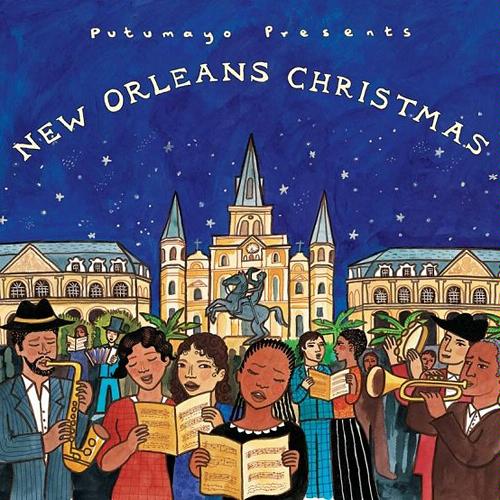
Merry Christmas from New Orleans and best wishes for the New Year to all our readers.
Favorite popular music 2013
These are some favorites from some radically incomplete sampling, not a “best of” list:
1. Kanye West, Yeezus. His best album by quite a bit.
2. MBV, by My Bloody Valentine, there is a good short review here. If you had to ask who did better after a 20-year hiatus, Kevin Shields or Bobby Fischer, this is decisive evidence in favor of Shields. A totally unexpected renaissance.
3. Acid Rap, by Chance the Rapper, available on YouTube here.
4. Wed 21, by Juana Molina. Why isn’t she better known?
5. Matangi, by M.I.A. Her first album had enough posturing that I figured that was it, but by now she has compiled an impressive streak.
I am also starting to like Churches, Bones of What You Believe. My favorite jazz album of the year has been Charles Lloyd and Jason Moran, Hagar’s Song. I have more on order.
The potential for the anti-Nazi music detector in contemporary German culture
Saxony State Police in Germany have developed a smartphone application that can identify neo-Nazi lyrics and racist words in rock songs. Der Spiegel reported Tuesday that German interior ministers will meet this week to discuss whether to implement this new method of policing.
The government said that neo-Nazi music helps radical organizations recruit youth, and it is used as a type of gateway drug to bring in new conscripts. The application, nicknamed “Nazi Shazam,” can identify names of songs just by playing a small sample of a song. The application would allow the police to react instantly if far-right songs are played on radio stations, at concerts, in club nights or at demonstrations.
There is much more here, hat tip goes to MT. This is of course another method of surveillance and measurement of our tastes, and some version of this idea will be picked up by marketers, whether or not this particular example is adopted.
Keith Richards’s *Life*
I very much enjoyed this book, which also gave me an excuse to dig out old Rolling Stones albums and listen to them again (“Dear Doctor” is perhaps my favorite Stones song, an odd choice). If it were a 2013 publication this memoir would make my best books of the year list. Here is p.167:
“The only reason we got a record deal with Decca was because Dick Rowe turned down the Beatles. EMI got them, and he could not afford to make the same mistake twice. Decca was desperate…they thought, it’s just a fad, it’s a matter of a few haircuts and we’ll tame them anyway. But basically we only got a record deal because they could just not afford to fuck up twice.”
The practice habits of Alexandre Tharaud
He is one of my favorite pianists, try his Chopin Preludes. The blog Ionarts reports:
After this residency at the Cité de la Musique, he will take a vacation of three months, during which he will move into a new apartment, with a view of the Seine. He will still not have a piano at home, which he offers as advice to many young musicians. Most important, he says, is not to play on a beautiful piano, because it does not encourage you to work.
Tharaud only practices on pianos in the homes of his friends.
IBM’s Watson will be made available in a more powerful form on the internet
Companies, academics and individual software developers will be able to use it at a small fraction of the previous cost, drawing on IBM’s specialists in fields like computational linguistics to build machines that can interpret complex data and better interact with humans.
That is a big deal, obviously. The story is here.