Category: Travel
Dan Wang’s 2021 letter
Here it is, one of the better written pieces of this (or last) year. It is mostly about China, manufacturing, and economic policy, but here is the part I will quote:
But Hong Kong was also the most bureaucratic city I’ve ever lived in. Its business landscape has remained static for decades: the preserve of property developers that has created no noteworthy companies in the last three decades. That is a heritage of British colonial rule, in which administrators controlled economic elites by allocating land—the city’s most scarce resource—to the more docile. Hong Kong bureaucrats enforce the pettiest rules, I felt, out of a sense of pride. On the mainland, enforcers deal often enough with senseless rules that they are sometimes able to look the other way. Thus a stagnant spirit hangs over the city. I’ve written before that Philip K. Dick is useful not for thinking about Hong Kong’s skyline, but its tycoon-dominated polity: “governed by a competent but fundamentally pessimistic elite, which administers a population bent on consumption. Instead of being hooked on drugs and television like in PKD’s novels, people in Hong Kong are addicted to the extraordinary flow of liquidity from the mainland, which raises their asset values and dulls their senses.”
And then on Mozart:
Among these three works, Figaro is the most perfect and Don Giovanni the greatest. But I believe that Cosi is the best. Cosi is Mozart’s most strange and subtle opera, as well as his most dreamlike. If the Magic Flute might be considered a loose adaptation of Shakespeare’s Tempest—given their themes of darkness, enchantment, and salvation—then Cosi ought to be Mozart’s take on A Midsummer Night’s Dream.
Donald Tovey called Cosi “a miracle of irresponsible beauty.” It needs to be qualified with “irresponsible” because its plot is, by consensus, idiotic. The premise is that two men try—on a dare—to seduce the other’s lover. A few fake poisonings and Albanian disguises later, each succeeds, to mutual distress. Every critic that professes to love the music of Cosi also discusses the story in anguished terms. Bernard Williams, for example, noted how puzzling it has been that Mozart chose to vest such great emotional power with his music into such a weak narrative structure. Joseph Kerman is more scathing, calling it “outrageous, immoral, and unworthy of Mozart.”
I readily concede that the music of Cosi so far exceeds its dramatic register.
Recommended! There is much more at the link, substantive throughout. Though I should note I am less bullish on both manufacturing and China than Dan is. I fully agree about Bleak House, however, and at times I think it is the greatest novel written…
The Jeff Holmes Conversation with Tyler Cowen
Jeff is the CWT producer, and it has become our custom to do a year-end round-up and summary. Here is the transcript and audio and video. Here is one excerpt:
HOLMES: …Okay, let’s go through your 2011 list really quickly.
COWEN: Sure.
HOLMES: All right, number one — in no particular order, I think — but number one was Incendies. Do you remember what that’s about?
COWEN: That is by the same director of Dune.
HOLMES: Oh, is that Denis Villeneuve?
COWEN: Yes, that’s his breakthrough movie. It’s incredible.
HOLMES: I didn’t know that. I’d never heard of it. French Canadian movie, mostly set in Lebanon.
COWEN: Highly recommended, whether or not you like Dune. That was a good pick. It’s held up very well. The director has proven his merits repeatedly, and the market agrees.
HOLMES: I’m a fan of Denis Villeneuve. Obviously, Arrival was great. I can’t think of the Mexican drug movie off the top of my head.
COWEN: Is it Sicario?
HOLMES: Sicario — awesome.
COWEN: It was interesting, yes.
HOLMES: He is one of the only directors today where, when he now makes something, I know I will go and see it.
COWEN: Well, you must see Incendies. So far, I’m on a roll. What’s next?
HOLMES: All right, number two: Uncle Boonmee Who Can Recall His Past Lives.
COWEN: Possibly the best movie of the last 20 years. I’m impressed by myself. It’s a Thai movie. It’s very hard to explain. I’ve seen it three times since. A lot of other people have it as either their favorite movie ever or in a top-10 status, but a large screen is a benefit. If you’re seeing the movie, pay very close attention to its sounds and to the sonic world it creates, not just the images.
There are numerous interesting observations in the dialogue, including about some of the guests and episodes.
Self-recommended!
Patagonia, Argentina — St. Martin de los Andes
One of the lovelier spots on the planet, and with excellent food. Thise town has about 35,000 people, and architecture based on Swiss chalets and northern German churches. It is a jumping off point for exploring the surrounding countryside, but very charming in its own right. And there is no larger population center anywhere nearby!
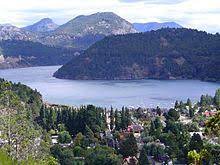 Now I am back!
Why is Patagonia so underpopulated?
 Patagonia has wonderful summers and tolerable winters, amazing fresh water resources, lots of green, plenty of land, and it is just…gorgeous. So why does hardly anyone live there?
Governance there is hardly perfect, but Chile and Argentina are hardly the worst governed countries on this planet.
Maybe you look at the above picture and are tempted to shriek “Not enough rice!” But for how long can that remain a binding constraint?
New Buenos Aires notes
My last and rather lengthy Buenos Aires notes are from 2006, still worth a read. This time my visit was much shorter, but I had three dominant impressions. First, the city seems more “normal” and less Argentine than in times past. The nicer parts of town, as you might find in or near Palermo, seemed more “Pan-Latin” than anything else, as you might find in comparable parts of Mexico City or Bogotá. More hipster. More Brooklyn even. The whole “invisible stories about weird librarians obsessed with their cats” side of the city seems weaker these days. And along similar lines, traditional Argentinean food is harder to find.
Second, the talent of Argentina has been liberated from the country itself. Argentina has more unicorns — eleven! — than any other Latin American nation, though it is not close to tops in population. Yet for the most part these unicorns exist beyond the confines of Argentina. The top talents of Argentina seem to have used the internet more effectively to integrate into global markets than the top talents of other Latin countries. In contrast, Brazilian commercial talent seems best suited to…the rules of the game in Brazil.
Third, the country no longer seems to alternate between glorious hope and extreme despair. It seems more accepted that the country is not going to solve its fiscal or monetary problems, and instead will alternate between “OK enough” periods and “uh-oh inflation is really pretty high now” periods. Currently rates of price inflation are running at about fifty percent, and the black market exchange rate is about two times as favorable for the dollar as the official exchange rate. No one seems very surprised by this, nor is there much uncertainty about how things will end, nor is there great hope that “the reformers” will solve the problems. Yet a bounceback is likely to follow as well, sooner or later. The cyclical nature of the Argentine economy seems more accepted and enshrined in expectations. And the elite are more insulated from it than ever before, through a mix of Miami-based dollar accounts and crypto, and here are some tactics for the middle class (Bloomberg).
Fortunately, the economy is growing at an annualized rate of over eleven percent, though the year before it contracted by more than ten percent. None of that will end the cycle.
Buenos Aires remains one of the very best cities in the world, most of all in their summer.
The expensive version of the flying car?
Blade Air Mobility, the helicopter shuttle company backed by Cathie Wood and David Zaslav, has struck a $12m deal with a Canadian helicopter operator, betting that a wider network will give it a lead if electric air taxis become a reality.
The New York-based group, which makes most of its money from trips to the city’s airports and the Hamptons, has acquired exclusive rights to the scheduled passenger business of Helijet, a Canadian company flying between Vancouver, Victoria and Nanaimo in British Columbia.
The deal is part of a land grab for helipads, routes and customers in expectation that a new generation of quieter, lower-emissions, short-hop aircraft will need to use constrained existing infrastructure, at least initially, according to executives.
JPMorgan predicted in September that the total market could be worth “hundreds of billions” of dollars by the 2030s, but cautioned that only a handful of EVA companies were on track for regulatory certification by 2025 and several planned to compete with Blade.
Here is the full FT story. And I presume a private car picks you up after you land…
What should I ask Russ Roberts?
I will be doing a podcast with him, specifically focusing on his decision to emigrate to Israel. Here are the suggestions that Russ solicited from Twitter. We will release the episode both on EconTalk and on CWT.
So what should I ask him? Keep in mind this is the Conversation with Russ I want to have…
My favorite things Idaho
I used to blog “My Favorite Things…” all the time, but I ran out of new places to go for a while. Now there is Idaho! Boise in particular. Today, I can think of a few “favorite things” from Idaho, here goes and potatoes don’t count:
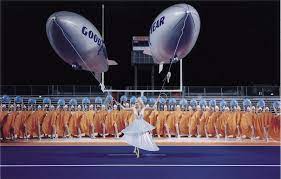
Artist: Matthew Barney. Filmmaker and artist, prominent in the avant-garde but much of his work is quite accessible if you don’t mind the near total absence of dialogue. Is the nine-hour Cremaster cycle his masterpiece? (I’ve only seen parts). According to the internet “Cremaster is a paired muscle of the pelvis and perineum that is fully developed only in the external genitalia of males. Being located between the internal and external layers of spermatic fascia, cremaster covers the testes and spermatic cord.” Many scenes from the movies have been turned into photos and artworks as well.
 Do people in Idaho look like that?
Composer: LaMonte Young. Is he the most underrated twentieth century avant-garde composer? The Well-Tuned Piano is one of my favorite works, though it is a tough slog for many, being about five hours in length, here is a YouTube version. He was even born in a log cabin in Idaho, and grew up LDS. His career blossomed in New York, but he attributed his interest in drone sounds to the Idaho wind and other sounds from his boyhood.
Other music: Built to Spill.
Author: Jerry Kramer, who grew up in Idaho and later played football for the Green Bay Packers. I loved Instant Replay as a kid. But is there a “real author” from Idaho? Is it better or worse to be a “real author”? Marilynne Robinson has never clicked with me.
Poet: Ezra Pound, born in Idaho. A fascist and anti-Semite, and not a true favorite of mine, but he was talented and it seems odd not to list him. Can I name a better poet from Idaho?
Explorer: Sacagewea. I hope she is cancel-proof.
Drum Battle: Idaho. Gene Krupa and Buddy Rich. For some reason, it reminded me of Benny Goodman’s Clarinade (not from Idaho).
Film, set in: My Own Private Idaho and Napoleon Dynamite might be the best known. But perhaps I will go with Smoke Signals, Superman II (the one with Gene Hackman), and Beavis and Butt-Head Do America. Superman II, if I had to say.
Here is more Matt Barney:
 I’ll be sure to report on my visit.
NASA chief Bill Nelson on UFOs
An unprecedented statement by current NASA Director and former Senator Bill Nelson. It is the most honest and forthright commentary to date on the UAP issue from a NASA Director, and perhaps the most thoughtful UAP-related statement ever made by a serving senior U.S. official: https://t.co/2RL4gBuCUD
— Christopher K. Mellon (@ChrisKMellon) October 23, 2021
And more on YouTube, for instance at 55:30.
Lexington, Kentucky notes
Here they have NIMHY rather than NIMBY — “Not in my horse’s yard.” And so the city is ringed by (protected) horse farms and the suburbs are further out. This makes the downtown core denser and more coherent than you might expect, to the benefit of the visitor but perhaps not the resident?
I was struck by how much everyone complains about “the traffic.”
You may recall that Lexington was the setting for Queen’s Gambit.
Overall I would be “long” the city. Downtown has a music and theater scene, albeit on a modest scale. There is a university and a basketball team (Anthony Davis, Rex Chapman, and John Wall, among many others) and lots of health care. And lots of bourbon.
I had an excellent meal in a Peruvian restaurant, saw a plausible Honduran restaurant and also a “West Indies” chicken restaurant under construction. The local steak house was very good, and they offer a $160 wagyu cut, not my order however.
Downtown has more historical plaques than are needed, and they can’t even fit the event descriptions on a single side of the plaque. By the end of the double-sided exposition, you are not sure what they are talking about.
As is common in the Appalachian and near-Appalachian regions, the quality difference between pre-WWII and post-WWII buildings is enormous, even larger than usual.
How many people could, off the top of their heads, name the third largest city in Kentucky? Overall, Louisville is larger and more charming, but Lexington arguably is less Midwest and “more Kentucky.”
Maybe it was just coincidence, but I sure saw and heard a lot of ambulances whizzing by.
Which were the best eras to visit various places?
Francis Quinn emails me:
I’m an American man, 29, arrived in Amsterdam for the first time yesterday, and I am finding it to be the least crowded European city I’ve been to. Is this COVID-related possibly, do you think, or did the city used to be empty? I even thought I was on a college campus, almost. I’m loving it.
I’m now thinking of a new question for Tyler: *when* was the best year to have visited various places? From 1900-2100 (past and present, future possible travel times for all your readers)?
Good idea, let’s put aside Covid, here are a few observations:
1. The best time to visit the United States is now. The country keeps on getting better and more interesting, most of all the latter.
2. New York City is a big exception here. It probably was more interesting to visit NYC in the 1950-1978 period when it was clearly the world’s leading city, culturally and otherwise. San Francisco (1970s?) and Detroit (1960s?) are exceptions also.
3. Most of Western Europe probably was best to visit in the 1970s or 1980s? Modern enough to be comfortable, less ruined by excess tourists, and the internet doesn’t really raise the value of Europe much at all. Note that I am putting aside “visit in 1920 so you can be shocked by the novelty and then brag about it.” That is an interesting plan, but I think not the question at hand. And the danger of disease and poor medical care still would have been high.
4. Much of Eastern Europe was best to visit right after the Iron Curtain came down. Poland is an exception to this, and it is best to visit Poland now.
5. For most of Asia, the best time to visit is right now. Perhaps Japan was more exciting in the bubble years. Some parts of China were wrecked by the Cultural Revolution, and Hong Kong was more fun before the takeover. China was freer and more fun ten to fifteen years ago. So there are exceptions, but mostly the point stands. Asia as a whole is getting better and more interesting.
6. For most of Africa, the best time to visit is right now, wars aside. Ethiopia for instance was obviously much better to visit a few years ago. I am not sure about Nigeria. Obviously, for some anthropological or wildlife-related interests, much earlier times might have been better, but not for the typical educated tourist.
7. Right now is the best time to visit Israel. I suspect some of the Arab countries in the Middle East were better to visit much earlier — Beirut and Cairo for instance. Yemen was clearly better to visit in the early 1990s. Iran during the time of the Shah. And so on. Overall these points are not a promising sign for the region. Dubai and the like are clearly best to visit now.
8. Most of Latin America is best to visit now, as the region remains largely unspoilt. Brazil might be an exception to this, though I have not been lately. Some parts of Brazil seem to be more dangerous, and an earlier visit may well have been superior. Ever see the movie Black Orpheus, set in Rio?
9. The 1960s were the best time to visit Haiti.
What else?
Derry notes, Northern Ireland’s second largest city
People in Derry are still talking about the 1680s…it is bad to be a “Lundy,” namely a traitor to your cause but the bar here has become a high one. You are either with them or against them.
The 17th century city wall seems fully intact, the buildings are splendid, and the green, wet, and hilly natural setting is a perfect fit. The town is long on history, short on things to do. It is perfect for a two-day trip.
I witnessed a Loyalist parade — the men were not feminized, nor did they seem happy. It is now so much “common knowledge” that Britain really does not care about them. So what is their future and with whom? Given differential birthrates, Catholics seem headed to become a majority in NI as well.
Most of the city centre is Catholic, and unlike Belfast it is not difficult to imagine Derry rather easily being swallowed up by the Republic of Ireland, some of which even lies to the north of Derry.
I went to see where Bloody Sunday occurred in 1972, and it shocked me how small the “contested territory” is/was. It feels as if you can count each and every home, and one’s mind starts wandering to the Coase Theorem and Hong Kong real estate billionaires and Special Enterprise Zones.
Real estate in Northern Ireland seems dramatically underpriced, though along a thirty-year rather than a ten-year time horizon. But should you buy closer to Belfast?
In some ways Derry reminded me of parts of West Virginia, including the Scots-Irish faces, the bygone glories, and also the “every family has an addiction” signs in the center of town.
One hundred years ago, in 1921, who would have thought that joining with the Irish Republic would lead to more prosperity than joining with Britain? Therein lies a cautionary note for us all.
My appearance on the Ezra Klein Show
Talking with Ezra is always both fun and enlightening for me, here is his partial summary of the episode:
So we begin this conversation by discussing the case for and against economic growth, but we also get into lots of other things: why Cowen thinks the great stagnation in technology is coming to an end; the future of technologies like A.I., crypto, fourth-generation nuclear and the Chinese system of government; the problems in how we fund scientific research; what the right has done to make government both ineffective and larger; why Cowen is skeptical of universal pre-K (and why I’m not); whether I overestimate the dangers of polarization; the ways in which we’re getting weirder; the long-term future of human civilization; why reading is overrated and travel is underrated; how to appreciate classical music and much more.
Here is the link, full transcript here, definitely recommended!
My Conversation with Ed Glaeser
I did David Cutler and Ed sequentially, based on their new co-authored book, here is the joint episode but there is also a separate link concerning Cutler. Here is one excerpt from the general summary:
They joined Tyler for a special joint episode to discuss why healthcare outcomes are so correlated with education, whether the health value of Google is positive or negative, why hospital price transparency is so difficult to achieve, how insurance coding systems reimburse sickness over health improvement, why the U.S. quit smoking before Europe, the best place in America to get sick, the risks that come from over-treatment, the possible upsides of more businesses moving out of cities, whether productivity gains from remote work will remain high, why the older parts of cities always seem to be more beautiful, whether urban schools will ever improve, why we shouldn’t view Rio de Janeiro’s favelas as a failure, how 19th century fights to deal with contagious diseases became a turning point for governance, Miami’s prospects as the next tech hub, what David and Ed disagree on, and more.
And from my exchange with Ed:
COWEN: Let’s start with a simple question. All this enthusiasm about cities and agglomeration benefits — the pandemic comes along. A lot of people transition to work from a distance, and then we see big measured productivity gains. What has gone on there?
GLAESER: It reminds us that for many jobs, in a static sense, you can do this long-distance. You can make things work. I think many of us found this. We wrote this book in eight months over the pandemic year, distinctly away from each other, partially because there were no distractions, and all that was good.
However, you also need to recognize the limits of long-distance living. The most important of those limits is just it’s much less fun. It’s much less joyful, but while it seems as if it’s fine for static productivity, it seems distinctly more problematic for people learning and for onboarding new talent.
Let me just give you two types of studies, one of which is we have the call center studies. The father of that was the Nick Bloom paper, which was a randomized control trial in China. A more modern version is done by our students, Natalia Emanuel and Emma Harrington, which looks into American call centers.
Both of them find the same thing in terms of static productivity. If anything, it goes up, but the workers who go remote are much less likely to be promoted in both studies. One interpretation of this is that promotion in the call center work means that you actually are given the job of handling more difficult calls.
How would your boss know that you are good at handling difficult calls if they weren’t in the same room with you? How would you learn how to do those difficult calls if you weren’t around other people? So while the static productivity remains, you lose the dynamic benefits of being around other people.
Second piece of evidence it comes from Burning Glass Technologies and new hires. Even though Microsoft tells us that its programmers were just as productive, overall, new hires for programmers were down 42 percent between November 2019 and November 2020. Firms were clearly unwilling to take the same kind of risks of hiring new workers that they couldn’t inculcate in their corporate culture or screen them properly, or do any of those other things.
Even though measured productivity did well during the pandemic, there were still lots of disruptions. In particular, many younger workers who came of age really lost out as a result of this.
COWEN: If work from a distance goes fine in the short run, what’s the cross-sectional prediction about where it will persist in the future? Is it firms facing bankruptcy, firms with immediate projects now, possibly start-ups who will then later transition to all being together in one big happy family, but they’re afraid they’re going to fail before then? What should we expect?
GLAESER: I think we should expect young workers to be more likely to be brought together. Young firms, as well, because you’re very much at this learning, creative phase. I think the optimal work-from-home strategy is a couple of partners who are in an accounting practice and have decided they know each other perfectly well and are delighted to Zoom it in from wherever they are.
I think, unquestionably, working from home will remain a part of the economy. It may well be many workers end up spending 20 percent of their time working from home, even if they’re part of a generally full-time job. But for younger workers, for firms that are just getting started, I think being live is likely to continue being a major part of the work environment.
It also depends a lot on what your home environment is like. If you’re like us — if you are a middle-aged professor who’s likely to have a comfortable home office, and maybe even not having kids at home anymore, certainly not kids who are crying all the time at home anymore — working at home is a lot more pleasant than if you’re a 23-year-old and live in a studio apartment in Somerville or New York or London.
Recommended!
Authoritarian Australia
Australia is now one of the most authoritarian states in the world. Conor Friedersdorf writes:
Australia is undoubtedly a democracy, with multiple political parties, regular elections, and the peaceful transfer of power. But if a country indefinitely forbids its own citizens from leaving its borders, strands tens of thousands of its citizens abroad, puts strict rules on intrastate travel, prohibits citizens from leaving home without an excuse from an official government list, mandates masks even when people are outdoors and socially distanced, deploys the military to enforce those rules, bans protest, and arrests and fines dissenters, is that country still a liberal democracy?
As I noted earlier, Australia is in clear contravention of the UN Declaration of Human Rights, Article 13 of which states:
- Everyone has the right to freedom of movement and residence within the borders of each state.
- Everyone has the right to leave any country, including his own, and to return to his country.
Friedersdorf continues:
To give Australia’s approach its due, temporary restrictions on liberty were far more defensible early in the pandemic…Had it behaved rationally and adequately valued liberty, a rich nation like Australia would have spent lavishly—before knowing which vaccines would turn out to be most effective—to secure an adequate supply of many options for its people. It could afford to eat the cost of any extra doses and donate them to poorer countries. Australia then could have marshaled its military and civil society to vaccinate the nation as quickly as possible, lifted restrictions more fully than Europe and the United States did, and argued that the combination of fewer deaths and the more rapid return to normalcy made their approach a net win.
Instead, Australia invested inadequately in vaccines and, once it acquired doses, was too slow to get them into arms. “Of the 16 million doses of the AstraZeneca vaccine that have been released to the government by manufacturer CSL, only about 8 million have gone into the arms of Australians,” The Age reported on August 21, citing concern about blood clots and a widespread preference for the Pfizer vaccine.
…Because of its geography, Australia is a neighbor and an observer of authoritarian countries as varied as China and Singapore. But its own fate, too, may turn on whether its people crave the feeling of safety and security that orders from the top confer, or whether they want to be free.
Australians largely support the restrictions but to me that makes them all the more disturbing.
Temporary restrictions on liberty can be justified in an emergency if the restrictions produce something else of great value but respecting the great value of liberty and individual rights means doing everything in one’s power to limit the scope of and lift such restrictions as quickly and completely as possible.